What Is the Best Camping Setup for Late-Summer State Park Trips? The Complete Northern Illinois Trailering Guide
When planning a late-summer outdoor escape across Will County and the surrounding Northern Illinois state park system, choosing the right camping configuration is the single most critical decision you will make. Late August and early September bring a very specific set of environmental conditions to regional parks like Starved Rock, Channahon, and Kankakee River. Daytime temperatures frequently hover in the high 80s with thick Midwest humidity, while sudden atmospheric shifts can trigger severe afternoon squalls and torrential downpours. Furthermore, state park campgrounds built decades ago feature narrow back-in pads, mature oak tree canopies, and tight turning radii that quickly punish oversized rigs. So, what is the best camping setup for late-summer state park trips?
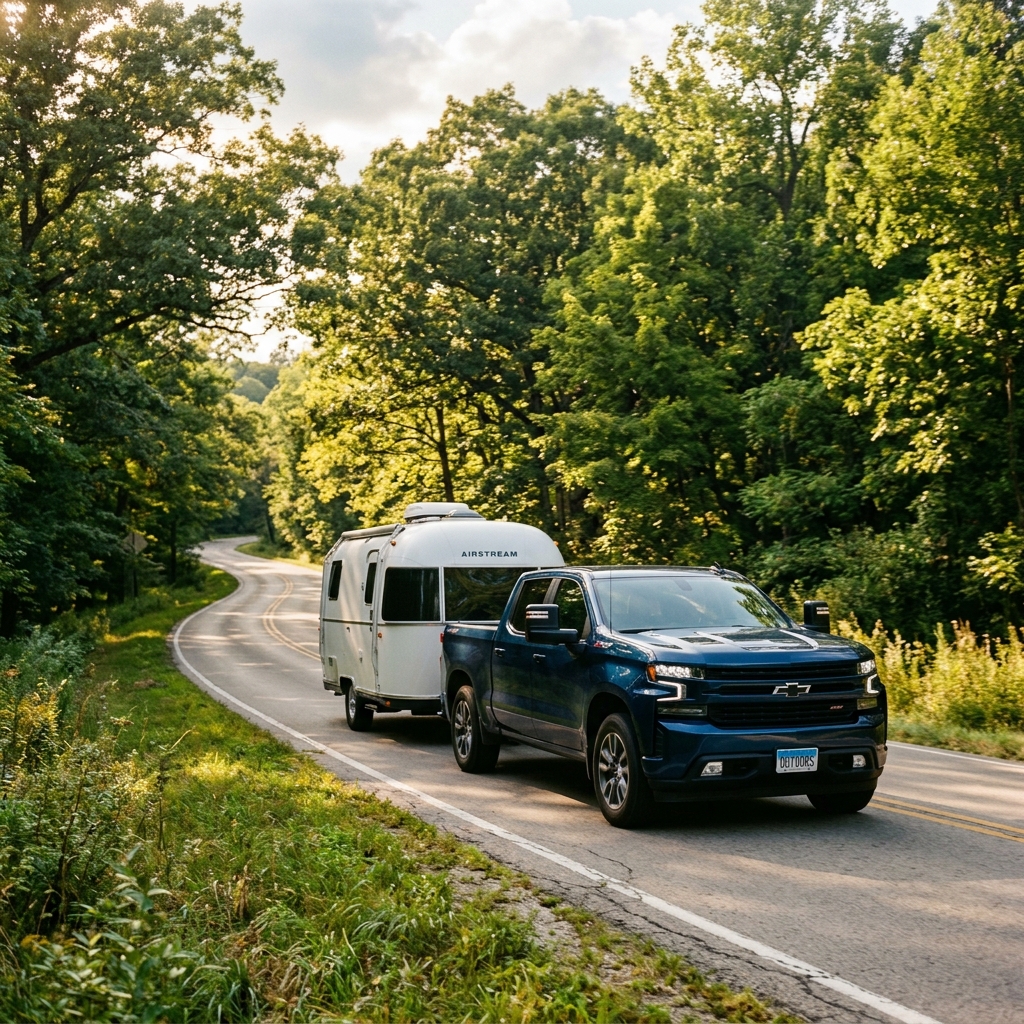
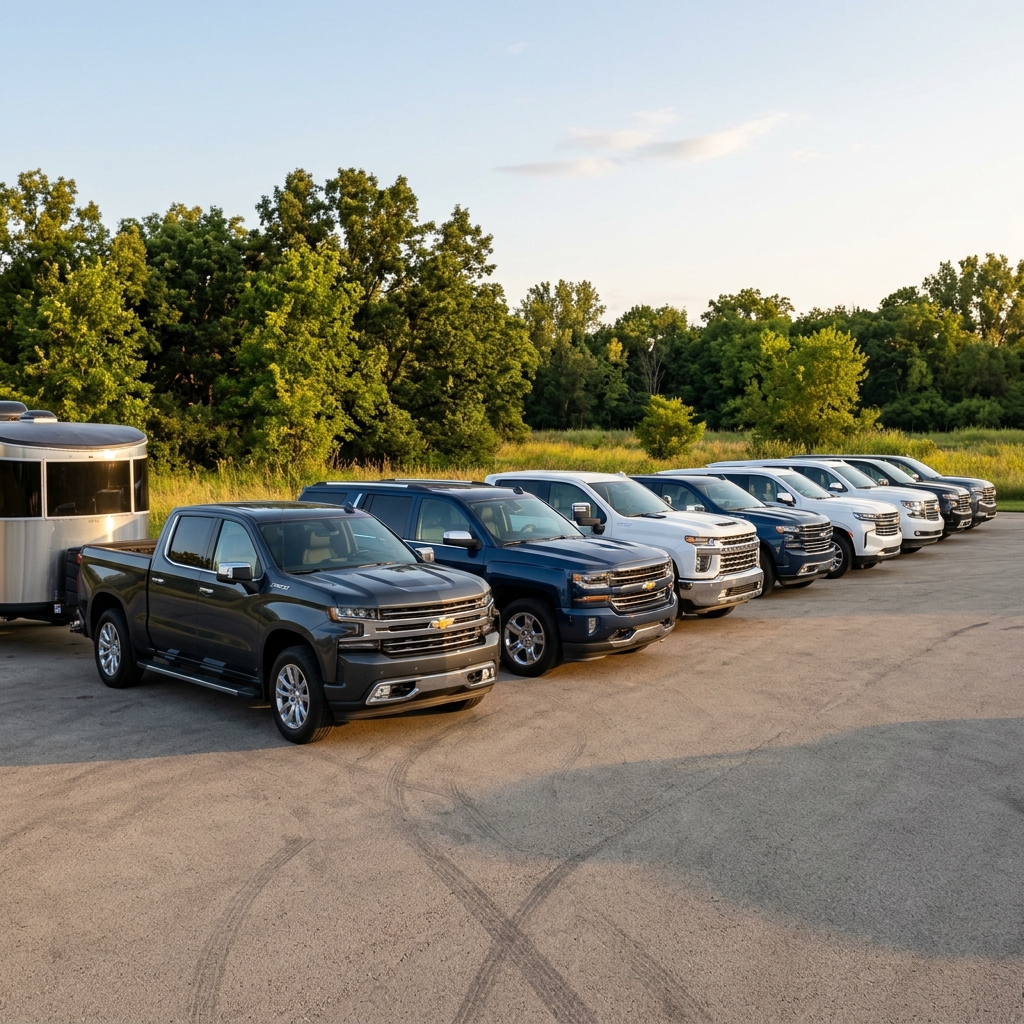
The absolute ideal setup for navigating Northern Illinois state parks during late summer is a mid-sized, hard-sided travel trailer ranging between 18 and 24 feet in total exterior length, paired with a properly spec'd light-duty pickup truck or full-size SUV. Models like the Chevrolet Silverado 1500 or Chevrolet Tahoe equipped with a factory z82 trailering package, an integrated trailer brake controller, and a high-grade weight-distribution hitch provide the perfect equilibrium of structural protection, climate-controlled comfort, maneuverability, and towing stability.
A mid-sized hard-sided camper provides insulated fiberglass or aluminum walls that easily seal out muggy August heat while retaining cold air generated by an overhead air conditioning unit. Unlike canvas-sided pop-up campers or hybrid trailers, hard-sided walls eliminate moisture intrusion, dampen heavy wind buffeting during late-season thunderstorms, and prevent humidity from soaking bedding and clothing. Keeping your total length under 25 feet ensures effortless maneuvering into tight 30-foot state park campsites without risking damage to low-hanging tree branches, campsite boundary markers, or your vehicle's bumper.
Pairing this size trailer with a dedicated tow vehicle ensures you have ample engine cooling capacity, robust transmission gearing, and heavy-duty braking power needed when hauling several thousand pounds in high ambient heat. If you are preparing your vehicle for an upcoming weekend getaway or considering upgrading your tow rig, exploring options at Hawk Chevrolet of Joliet gives you access to expert guidance on Gross Vehicle Weight Ratings (GVWR), towing hitches, and factory-tested towing accessories.
Which Trailer Type Handles Late-Summer Thunderstorms and Heavy Rainfall Better?
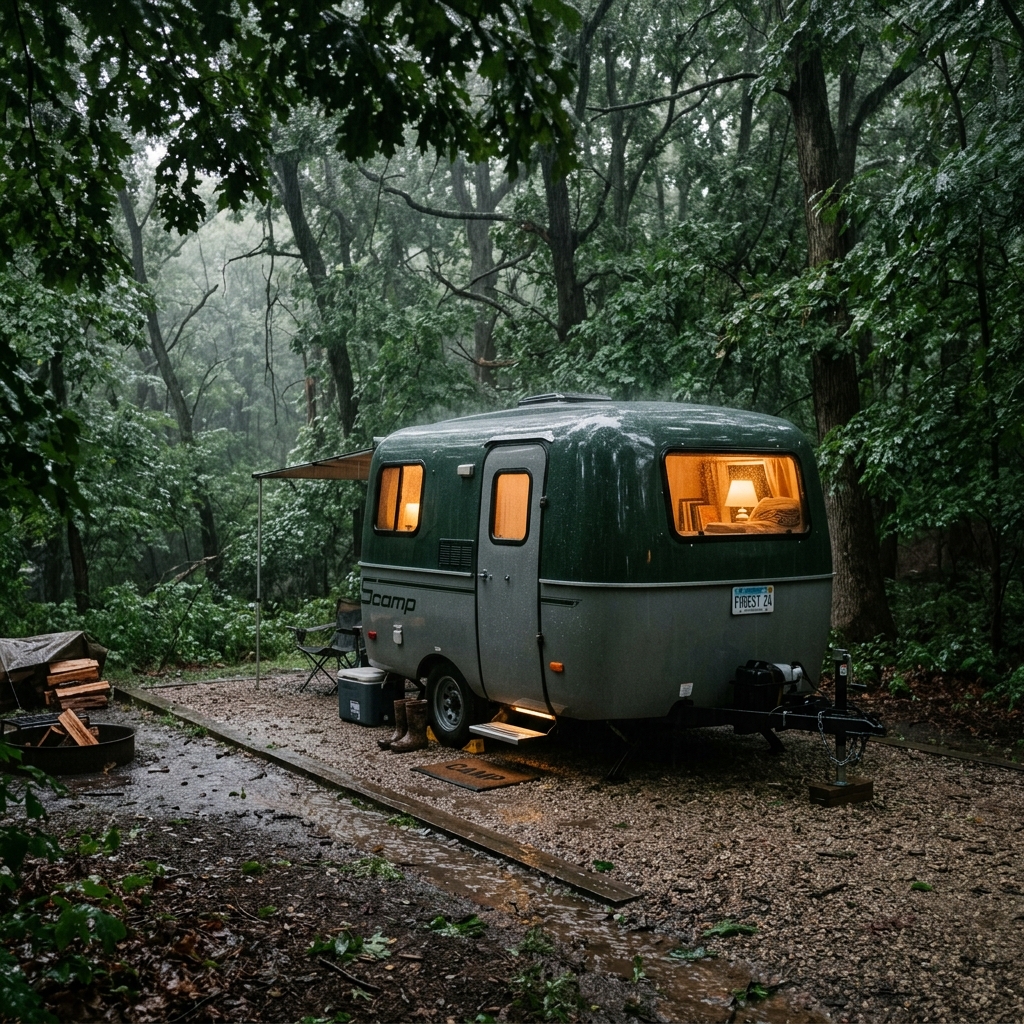
Late August in Northern Illinois is notorious for abrupt atmospheric instability. Warm, moisture-laden air masses pushing up from the Gulf meet cold fronts descending from Canada, creating severe microbursts, heavy rainfall, and high winds across Will, LaSalle, and Kankakee counties. When evaluating which trailer type handles late-summer thunderstorms and heavy rainfall better, hard-sided travel trailers outperform canvas pop-ups, hybrid trailers, and teardrops across every structural and atmospheric metric.
1. Structural Integrity & Wind Resistance: Hard-sided trailers feature vacuum-bonded laminated fiberglass or heavy-gauge corrugated aluminum exterior shells built over rigid aluminum or wood framing. During severe summer storms with wind gusts exceeding 45 mph, a hard-sided trailer maintains structural rigidity without flapping, popping, or dynamic weight transfers that can unsettle tent fabric or pop-up lift arms.
2. Moisture Barrier & Condensation Control: Canvas pop-up campers and expandable hybrid trailers rely on heavy-duty vinyl or woven polyester fabric for bed-end extensions. In torrential rain, canvas can saturate, requiring apply-on seam sealers and water repellents. Furthermore, packing away a damp pop-up canvas in high August heat guarantees mold and mildew growth within 24 to 48 hours unless fully set up again at home to dry. Hard-sided trailers feature seamless rubber or TPO roofing systems with perimeter drip rails that channel water away cleanly.
3. Thermal Insulation & HVAC Efficiency: Late-summer heat index values in Will County can climb past 95°F. Hard-sided trailers feature block-foam insulation within sidewalls and ceilings (typically rated R-7 to R-11), allowing a standard 13,500 BTU roof air conditioner to maintain a crisp 68°F interior temperature with minimal compressor cycling. Pop-ups and hybrids suffer massive thermal loss through canvas walls, causing AC units to run continuously and overload campsite 30-amp breakers.
While teardrop trailers offer hard-sided construction, their cramped interior footprint forces cooking and gear storage outdoors under a rear hatch, leaving campers exposed during persistent rain. Mid-sized hard-sided travel trailers provide full indoor kitchens, dinettes, and dry baths, allowing your family to wait out a 2-hour summer deluge in total dry comfort.
How Do You Calculate Total Payload Capacity When Loading Camping Gear into a Tow Vehicle?
One of the most dangerous misconceptions in recreational trailering is assuming that if your vehicle is rated to tow 9,500 lbs, you can load your truck bed with coolers, firewood, and generator gear without issue. Vehicle payload capacity is almost always exceeded long before maximum towing capacity is reached. When preparing for extended state park trips, understanding how do you calculate total payload capacity when loading camping gear into a tow vehicle is essential for safe highway handling and component longevity.
1. Know Your Vehicle Ratings
Locate the yellow Tire and Loading Information sticker on your driver-side door jamb. This placard lists the exact maximum combined weight of occupants and cargo your specific chassis can carry (e.g., 1,850 lbs for a nicely equipped Chevy Silverado 1500 Crew Cab). Maximum Payload = Gross Vehicle Weight Rating (GVWR) minus Vehicle Curb Weight. Curb weight includes a full tank of fuel and all factory fluids, but zero passengers or aftermarket equipment.
2. Calculate Real Tongue Weight
Trailer tongue weight represents the downward vertical force exerted by the trailer coupler onto your vehicle's hitch ball. A safe, stable trailer setup requires 10% to 15% of the trailer's total fully loaded weight to sit on the tongue. For a 5,000 lb loaded travel trailer, tongue weight will range from 500 to 750 lbs. Crucially, THIS TONGUE WEIGHT COUNTS DIRECTLY AGAINST YOUR TOW VEHICLE'S PAYLOAD CAPACITY.
3. Deduct All Occupants & Gear
Add up the weight of all passengers (driver + family = 600 lbs), personal cabin gear (50 lbs), bed-mounted equipment like tonneau covers or toolboxes (100 lbs), cooler filled with ice and food (80 lbs), and your weight-distribution hitch assembly (75 lbs). Combine this sum with your trailer's tongue weight (650 lbs): 600 + 50 + 100 + 80 + 75 + 650 = 1,555 lbs total payload demand. If your vehicle rating is 1,850 lbs, you have 295 lbs of safe remaining capacity.
Will My Camper Fit a Will County State Park Campsite? Site Dimensions and Clearance Rules
One of the most frustrating experiences for a camper is arriving at a state park after a long drive only to discover that their trailer cannot physically negotiate the campsite access road or back onto the designated parking pad. Campers asking will my camper fit a Will County state park campsite need to evaluate three distinct physical constraints: driveway pad length, turn-radius clearance, and overhead tree canopy height.
Most Class A electric campgrounds in Will County and surrounding state reserves feature asphalt or crushed gravel back-in pads ranging from 25 to 35 feet in total length. Illinois Department of Natural Resources (IDNR) regulations strictly enforce the rule that ALL wheels of both the tow vehicle and the trailer must remain on the hardened pad surface—parking tires on prairie grass or forest soil is prohibited to protect root systems and prevent erosion.
If your total combination length (tow vehicle bumper to trailer rear bumper) is 45 feet, and your campsite pad is 30 feet, you MUST disconnect your tow vehicle and park it angled across the front of the pad or in an overflow parking lot. This is why a mid-sized 20-foot travel trailer coupled to a standard 19-foot pickup truck offers such a massive advantage—it allows you to park both vehicle and camper in single-file on a standard 40-foot pad without unhitching during quick overnight stops.
Overhead clearance is another critical variable. Late-summer foliage in Northern Illinois hardwood forests is at its maximum density. Heavy oak, hickory, and maple branches frequently hang as low as 10 to 12 feet over narrow campsite loops. Standard hard-sided travel trailers have an overall height of 10 feet 2 inches to 11 feet 6 inches including the roof AC shroud. Checking site canopy notes before booking prevents costly roof membrane tears or shattered AC covers.
If you are upgrading your setup to match regional state park dimensions, Browse New Inventory at Hawk Chevrolet of Joliet to find towing-capable trucks and SUVs with short overhangs and outstanding turn radii designed for tight maneuvering.
What State Parks In and Around Will County Offer Campground Sites with Trailer Electrical Hookups?
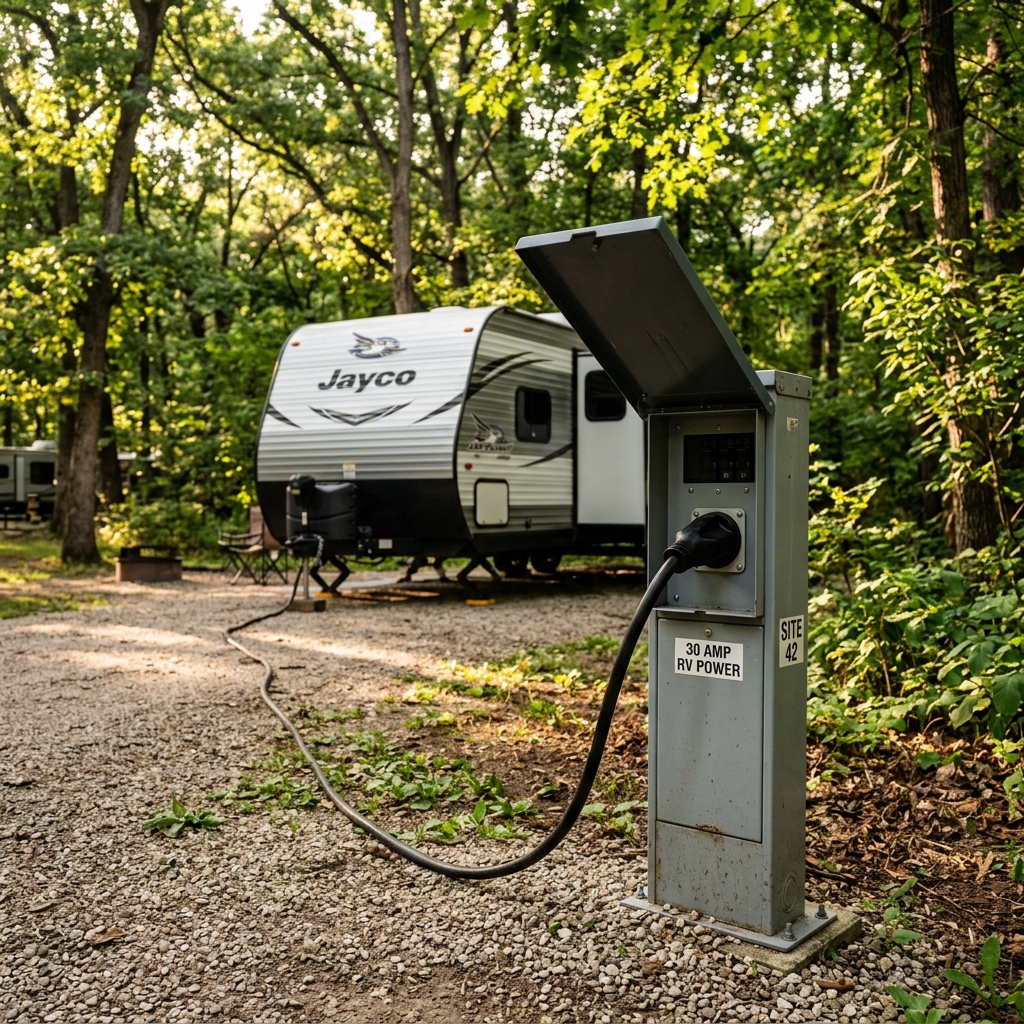
Staying comfortable during humid August nights in Northern Illinois requires steady electrical power to operate your camper's roof air conditioner, freshwater pump, and refrigeration. When researching what state parks in and around Will County offer campground sites with trailer electrical hookups, campers must understand the IDNR classification system: Class A sites offer electrical hookups along with modern flush toilets and shower buildings; Class B-P (Premium) sites provide electrical hookups with vault toilets.
1. Starved Rock State Park (LaSalle County - 45 mins West of Joliet): Offers 133 Class A campsites equipped with 30-amp and select 50-amp electrical pedestals. Nestled among mature timber near the Illinois River bluffs, these sites fill up rapidly for late-summer weekend trips. Full shower facilities and a centralized dump station with freshwater fill make this the flagship RV camping destination in the region.
2. Kankakee River State Park (Kankakee/Will County border - 25 mins South of Joliet): Features two main camping areas—Chippewa Campground and Potawatomi Campground. Potawatomi provides Class A sites with 30-amp electrical connections surrounded by heavy shade, ideal for keeping camper interior temperatures down during peak afternoon sun.
3. Illini State Park (Marseilles - 35 mins West of Joliet): Situated right along the banks of the Illinois River, Illini State Park offers Class A and Class B-E (Electric) sites featuring 30-amp electrical service. High river views and expansive open grassy areas make backing trailers into these sites straightforward for novice trailering enthusiasts.
4. William G. Stratton & Channahon State Parks: While Channahon State Park serves primarily as a historic day-use and tent trail access hub along the I&M Canal, nearby William G. Stratton State Park in Morris offers river access, with extensive RV hookup facilities situated just minutes away at surrounding county forest preserves like Hammel Woods and McKinley Woods.
What Specs Should You Compare Between Trailers, Tow Vehicles, and Campsites?
To prevent mechanical strain, dangerous highway sway, or campsite incompatibility, you must match vehicle capabilities directly against trailer weight profiles and state park physical infrastructure. Asking what specs should I compare between trailers or campsites requires analyzing a clear matrix of weights, hitch classes, electrical service, and driveway dimensions.
A common mistake is matching the trailer's Dry Weight against the vehicle's Maximum Tow Rating. Dry weight excludes propane tanks, batteries, fresh water, and personal gear. Always compare your tow vehicle's ratings against the trailer's Gross Vehicle Weight Rating (GVWR)—the absolute maximum legal weight of the trailer fully loaded.
|
Trailer Class & Size
|
Trailer GVWR
|
Tow Vehicle Class
|
Hitch & Brake Req.
|
Elec Service
|
Max Site Length
|
|
Micro-Teardrop (12-14')
|
2,000–3,000 lbs
|
Mid-Size SUV / Crossover
|
Class II / Standard Ball
|
15-Amp / Solar
|
20 Foot Pad
|
|
Mid-Size Travel Trailer (18-24')
|
4,500–6,800 lbs
|
Light-Duty Truck (Silverado 1500) / Full-Size SUV
|
Class III/IV WDH + Brake Controller
|
30-Amp Service
|
30–35 Foot Pad
|
|
Large Double-Axle (28-34')
|
7,500–10,500 lbs
|
Heavy-Duty Truck (Silverado 2500HD)
|
Class IV/V WDH + Dual-Axle Elec Brakes
|
50-Amp Service
|
45+ Foot Pad
|
Essential Accessories for a Late-Summer Trailering & Camping Setup in Northern Illinois
Weight-Distribution & Sway Control
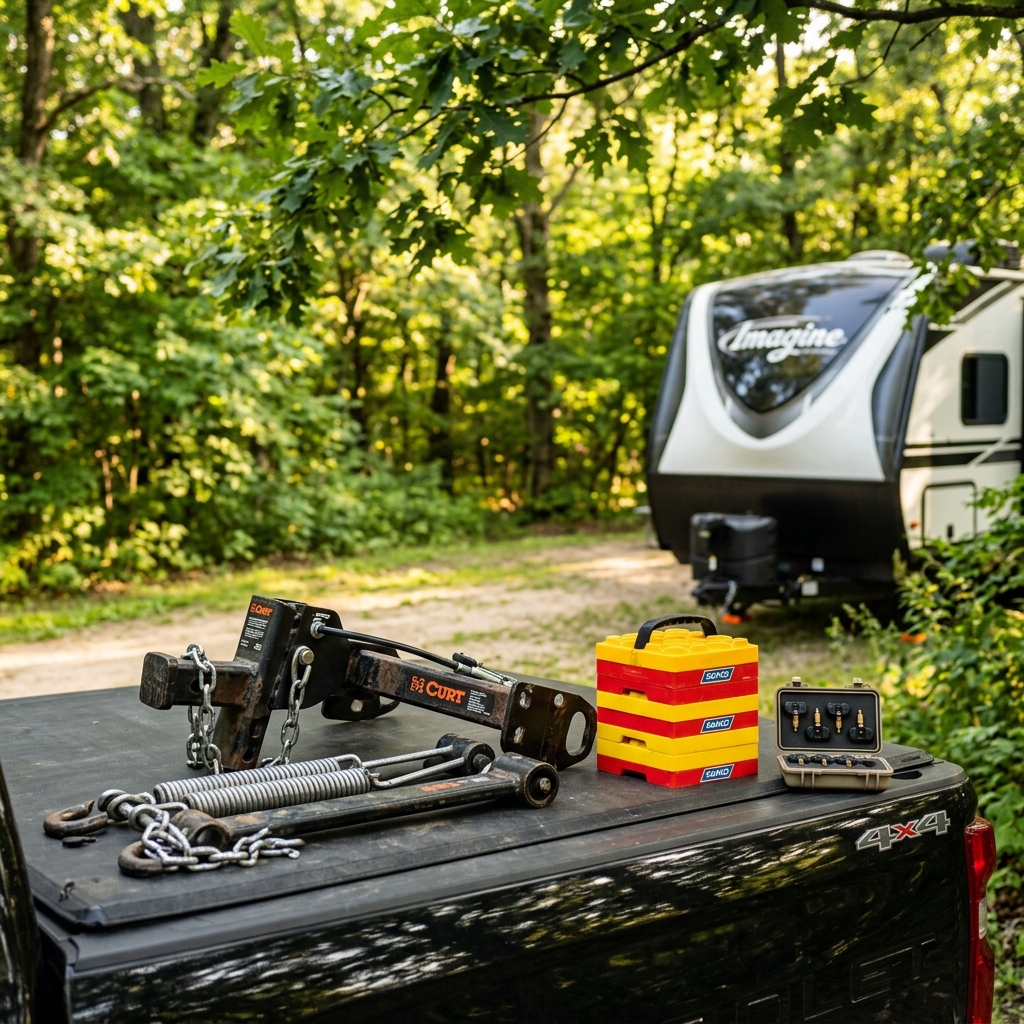
Crosswinds along open stretches of I-80, I-55, and Route 47 can initiate dangerous trailer sway. A high-quality Weight-Distribution Hitch (WDH) with active integrated sway control leverages spring bars to distribute tongue weight evenly across your tow vehicle's front and rear axles, preserving front-wheel steering traction and headlight alignment.
Electrical Protection & Surge Guards
Older state park electrical pedestals can experience severe voltage drops during hot late-summer afternoons when dozens of campers run AC units simultaneously. Low voltage (below 108V) can burn out compressor motors. A heavy-duty surge protector with low-voltage auto-shutdown protects your trailer's sensitive electronics.
TPMS & Brake Controllers: Wireless Tire Pressure Monitoring Systems (TPMS) alert you to sudden pressure drops or overheating tires caused by hot asphalt. Integrated brake controllers allow smooth proportional trailer braking. You can Order Genuine Chevrolet Parts directly through Hawk Chevrolet of Joliet to equip your rig with factory-engineered towing components.
Should I Call the Park Directly Before Booking My Late-Summer Campsite?
While online reservation systems like ReserveAmerica or the IDNR portal make booking quick, asking should I call the park directly before booking my late-summer campsite can save you from unexpected hazards. Online databases update static site dimensions, but they do not reflect real-time physical conditions changes caused by late-summer weather.
Calling the local site superintendent or ranger office directly 24 to 48 hours prior to departure gives you critical ground truth regarding recent severe thunderstorm damage, fallen tree branches blocking specific loops, active construction, or municipal water station maintenance that might require you to fill fresh water tanks prior to arrival.
Quick Phone Interview Checklist for Campers:
• Are all electrical pedestals on my assigned loop fully operational?
• Has recent rainfall created mud or soft ground around the asphalt pad edges?
• Is the dump station and freshwater fill station fully open?
• Are there low-hanging branches under 12 feet on the loop entry turn?
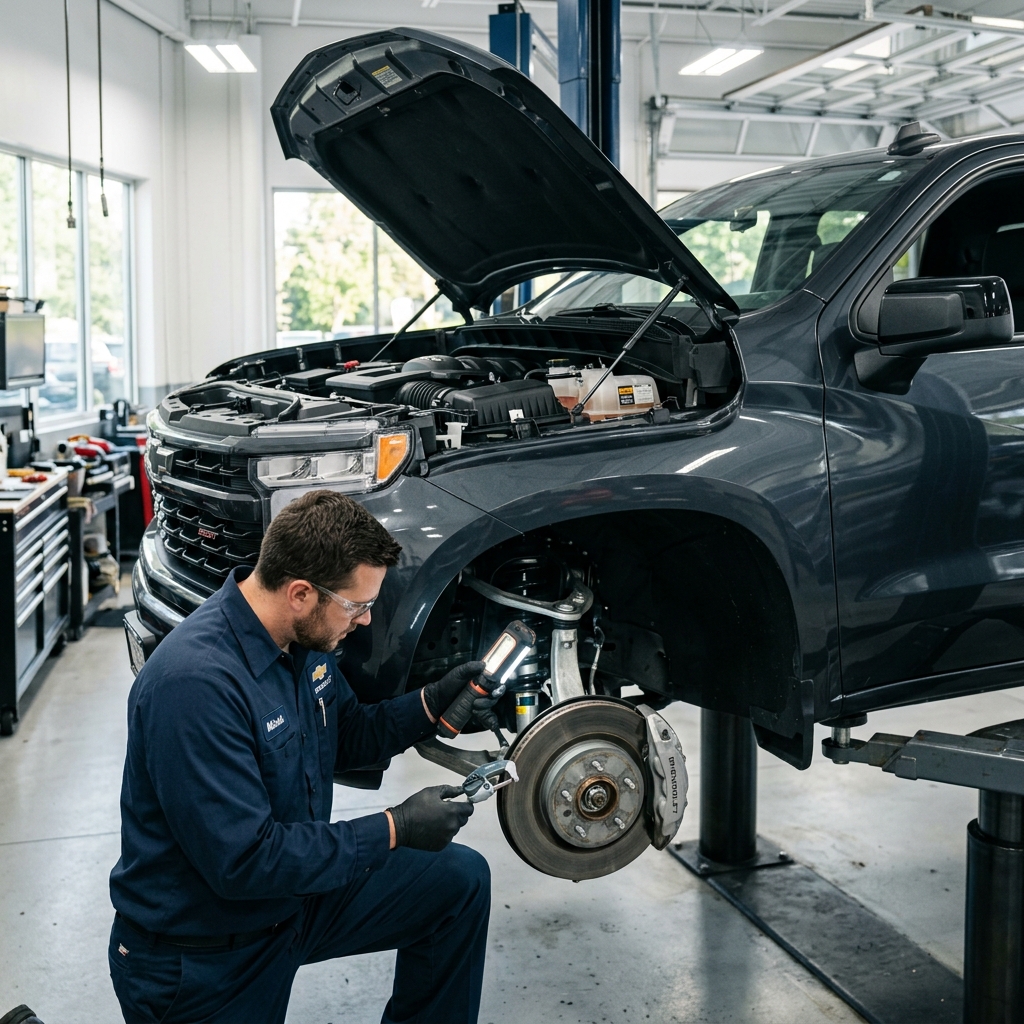
Before taking off on a multi-park Northern Illinois tour, ensure your tow vehicle is in peak mechanical condition. You can Schedule Your Service Today with our factory-certified Chevrolet technicians.
Preparing Your Tow Vehicle's Cooling and Braking Systems for August Heat in Joliet
Towing a 6,000 lb travel trailer down I-80 or I-55 in 90°F+ August weather exerts tremendous thermal stress on your tow vehicle. Engine coolant temperatures can spike rapidly when pulling heavy loads up river valley grade transitions, while automatic transmission fluid breaks down exponentially faster when operating above 220°F.
1. Transmission Fluid & Auxiliary Coolers: Thermal degradation is the primary cause of transmission failure in towing vehicles. Heavy-duty auxiliary transmission fluid coolers lower operating temperatures significantly. Ensuring fresh synthetic transmission fluid with clean filtration prevents slippage and gear overheating during stop-and-go traffic along Jefferson Street or I-80 work zones.
2. Brake System Integrity & Fluid Boiling Points: Hauling total combined weights of 12,000+ lbs requires peak friction performance. Heavy brake usage can boil old brake fluid that has absorbed moisture from humid Midwest air, creating a spongy pedal or complete loss of hydraulic braking pressure. Inspecting pad thickness, rotor runout, and flushing brake fluid before high-heat trips is non-negotiable.
3. Tire Thermal Expansion & Cold Inflation Pressures: High ambient air temperatures combined with heavy payload pressures cause tire internal temperatures to soar. Always set your tow vehicle and trailer tire pressures when cold to the manufacturer's recommended PSI listed on the door placard or trailer VIN tag. Never bleed air out of a hot tire. Have questions about tow prep? Call us at (815) 472-8001 to speak with our service advisors.
Top State Parks Near Joliet, Plainfield, and Naperville for Late-Summer Outdoor Trips
Starved Rock & Matthiessen
Located just 45 miles west of Joliet down I-80, Starved Rock and adjacent Matthiessen State Park feature stunning sandstone canyons, bluff hiking, and Illinois River views. Late August offers smaller weekday crowds, lower river water levels ideal for fishing, and fully equipped Class A campsites with 30/50-amp power.
Kankakee River State Park
Just 25 minutes south of Plainfield and Joliet via Route 53, Kankakee River State Park offers 4,000 acres of pristine river valley. Exceptional smallmouth bass fishing, heavily shaded Class A RV sites, canoe launches, and miles of paved bike trails make this an unmatched weekend getaway for local families.
Des Plaines & William G. Stratton
Des Plaines Fish and Wildlife Area in Wilmington and William G. Stratton State Park in Morris offer immediate proximity for Naperville and Joliet residents. Featuring public boat launches onto the Kankakee and Illinois Rivers, expansive wildlife habitats, and convenient highway access, these sites are ideal for quick short-haul trips.
Upgrading Your Tow Rig: Evaluating Trade-In Value for Your Current Vehicle
If your family is outgrowing a tent setup or lightweight pop-up and stepping up to a modern hard-sided travel trailer, your current crossover or mid-size sedan may no longer possess the payload, cooling capacity, or hitch rating necessary for safe towing. Stepping up to a high-capability tow vehicle like the Chevrolet Silverado 1500, Tahoe, or Suburban transforms your trailering experience from stress-inducing to effortless.
Modern Chevrolet trucks and SUVs feature cutting-edge trailering technologies, including the Advanced Trailering System with in-vehicle app checklists, trailer tire pressure/temperature monitoring, customized trailer profiles, and Hitch Guidance with Hitch View. These automated features eliminate the guesswork when aligning your hitch ball or monitoring trailer dynamics on the highway.
At Hawk Chevrolet of Joliet, evaluating your current vehicle trade-in value is simple and transparent. Our appraisal team provides top-market value for your trade, allowing you to rollover equity directly into a towing-capable truck or SUV with competitive finance rates. You can Value Your Trade online in just a few minutes.
Pre-Departure Trailering Safety Checklist for Illinois State Park Campers
Before pulling out of your driveway or leaving a campsite loop, completing a systematic physical safety walkaround prevents road emergencies. Save this 10-point checklist for your next late-summer expedition:
1. Coupler & Locking Pin: Ensure trailer coupler is fully seated over the hitch ball and the latching lever is locked with a safety pin.
2. Emergency Breakaway Cable: Connect breakaway cable directly to the tow vehicle frame, NOT wrapped around safety chains.
3. Safety Chains Crisscrossed: Cross safety chains under the trailer tongue to form a cradle in case of coupler separation.
4. 7-Pin Electrical Harness: Plug in harness securely; verify brake lights, running lights, hazard flashers, and turn signals.
5. Weight Distribution Tension: Check spring bar L-pins and ensure sway control collar is torqued correctly.
6. Cold Tire Pressure Verification: Check both tow vehicle and trailer tires with a calibrated gauge.
7. Lug Nut Torque: Torque trailer wheel lug nuts to manufacturer specification (typically 90–120 ft-lbs).
8. Trailer Roof & Awnings: Retract and lock all roof vents, TV antennas, slide-outs, and patio awnings.
9. Interior Cargo Security: Latch all cabinet doors, secure refrigerator contents, and lock sliding interior doors.
10. Wheel Chocks & Leveling Blocks: Stow all chocks, blocks, and jack pads before shifting into drive.
Ready for Your Next State Park Adventure? Visit Hawk Chevrolet of Joliet for Towing Vehicles, Parts, and Service
Crafting the ultimate late-summer camping setup comes down to matching a hard-sided trailer under 25 feet with a properly spec'd, high-capacity tow vehicle. Whether you are navigating narrow tree-lined pads at Starved Rock or cruising down I-80 toward Kankakee River State Park, having complete confidence in your vehicle's payload capacity, cooling system, braking power, and hitch configuration ensures a seamless outdoor trip.
At Hawk Chevrolet of Joliet, we are proud to serve as Northern Illinois' premier automotive and trailering resource. From factory-built Chevrolet Silverado pickups and Tahoe SUVs to OEM trailering brake controllers, transmission coolers, and expert mechanical inspections, our team is dedicated to supporting your outdoor lifestyle.