


Will Low Fuel Prevent a Chevy From Remote Starting? The Direct Answer and Key Safety Triggers

Yes, a low fuel level will absolutely prevent your Chevrolet vehicle from engaging its remote start system. If your low fuel warning light is illuminated on the instrument cluster—or if the estimated driving range drops below a factory-set threshold (typically around 30 to 50 miles to empty, or roughly 10% to 15% of tank capacity)—the Engine Control Module (ECM) automatically disables remote start operations. Whether you attempt to start your Chevy Silverado, Equinox, Tahoe, Traverse, or Malibu using the key fob or the myChevrolet mobile app, the vehicle will decline the start command to prevent engine stall or fuel system damage.
This automatic lockout is not a system flaw or key fob error; it is a vital protective safety protocol engineered directly into General Motors' vehicle software. Running an engine on near-empty during a remote start cycle poses severe mechanical risks. Modern electric fuel pumps rely on being submerged in liquid gasoline for cooling and lubrication. Allowing the fuel level to drop too low can draw trapped air and bottom-tank sediment into the fuel delivery lines, leading to fuel pump cavitation, thermal breakdown, or accidental engine shutdown while unattended. By forcing a manual key ignition start when fuel is low, Chevrolet ensures drivers are physically present inside the cabin to monitor fuel alerts and immediately proceed to a refueling station.
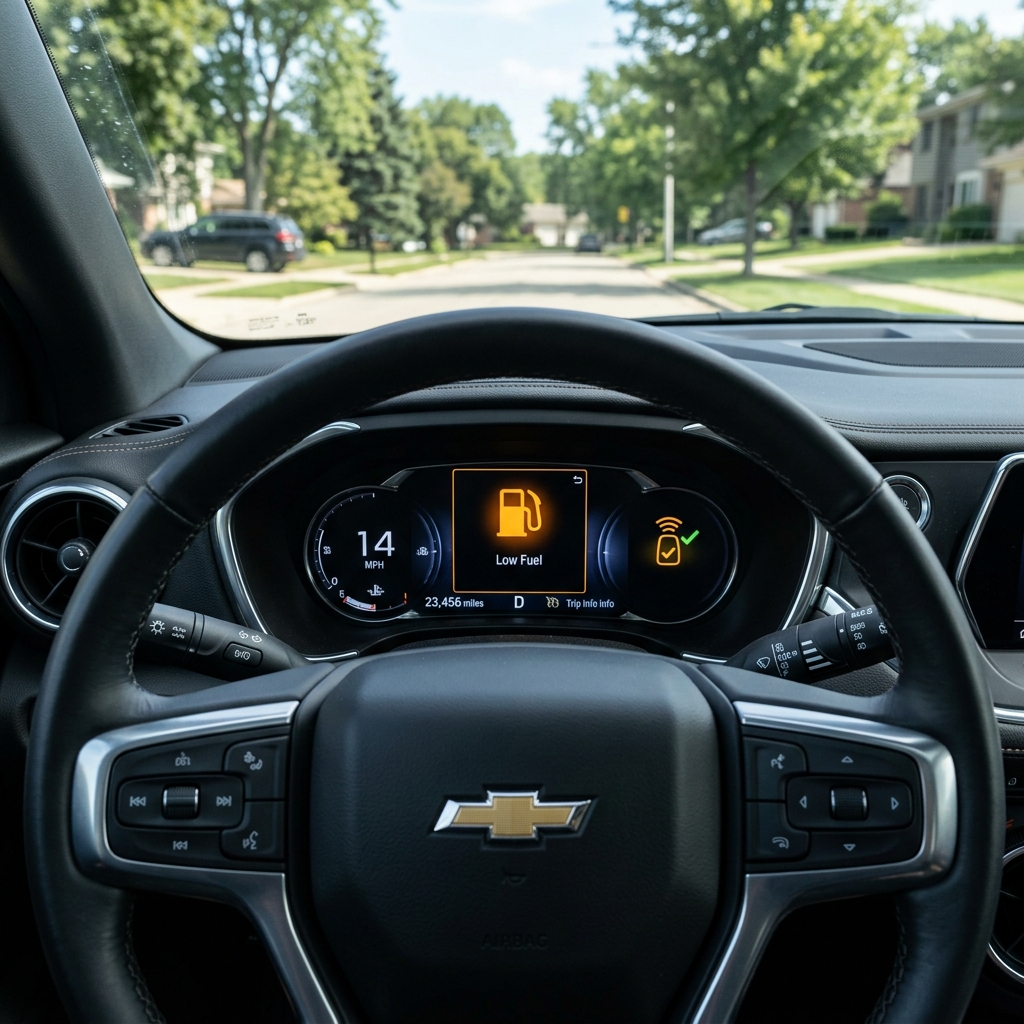
Driver's view inside a Chevy car with a digital low fuel warning displayed on the dashboard instrument cluster. (Representative image for illustration purposes only. Actual vehicle may vary based on trim and configuration.)

Why Chevrolet Remote Start Disables Automatically When Fuel Is Low

To understand why Chevrolet programmed this safeguard, it helps to examine the thermal and mechanical operation of modern fuel injection systems. In modern GM cars, trucks, and SUVs, the fuel pump is an electric motor mounted directly inside the gas tank. Liquid gasoline acts as a coolant and lubricant for the pump motor as it spins at high RPMs to supply high-pressure fuel to the engine rails. When gas levels drop beneath the pump intake, the electric motor runs hotter, accelerating internal wear on brushes and armatures. Repeated low-fuel starts can shorten the lifespan of an in-tank pump by thousands of miles.
Furthermore, Chevrolet remote start allows an engine to idle unattended for up to 15 minutes per cycle (and up to 30 minutes with an extended start cycle). If a vehicle were allowed to remote start with only a half-gallon of gas remaining, it could easily run out of fuel in a driveway, leaving the ignition switched on, draining the 12-volt battery, and leaving the owner stranded without gas when they step outside. In addition, running out of fuel during an unattended idle triggers severe misfires, sending unburnt fuel into the catalytic converter and illuminating the Check Engine Light for EVAP system pressure anomalies. By pairing the low-fuel indicator directly to the remote start disable switch, GM protects your engine, battery, emissions system, and fuel pump simultaneously.

What Is the First Thing You Should Check If Chevy Remote Start Stops Working?
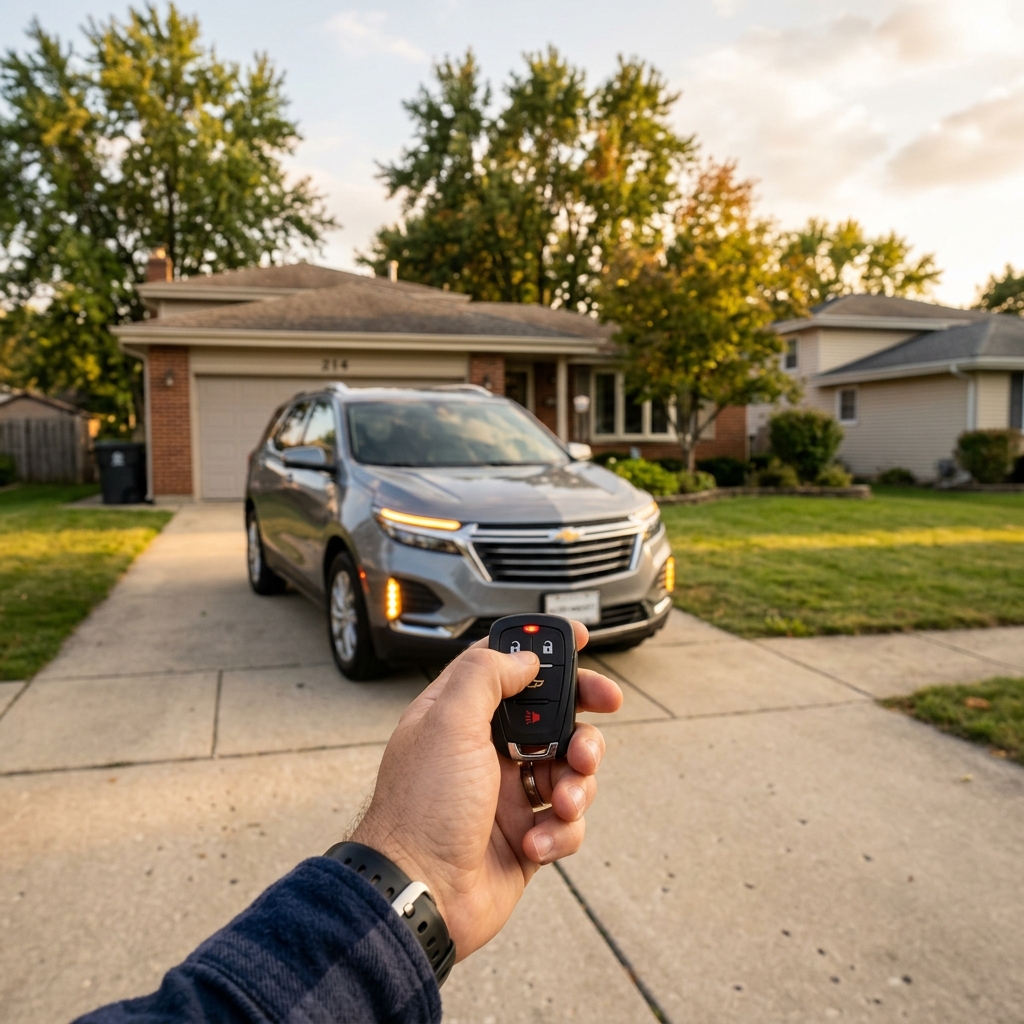
When pressing the remote start button combination on your key fob produces no engine response, systematic troubleshooting will save you time and frustration. Follow this recommended diagnostic checklist before assuming an expensive electrical fault: 1. Fuel Level Indicator: Check if your fuel tank is below 1/8th full or if the low fuel amber light was illuminated during your last drive. Refueling above 1/4 tank instantly clears this safety lockout. 2. Key Fob Battery & Distance: CR2032 coin batteries in GM key fobs typically last 2 to 3 years. A weak fob battery sends a degraded RF signal that may unlock doors but fail to complete the two-stage remote start authorization command. 3. Exterior Hazard Light Flashes: Observe your vehicle's parking lights when pressing the lock button followed by the remote start button. If the exterior lights flash once but the engine does not turn over, the vehicle received the signal but rejected the start due to an active safety trigger (such as low fuel, an open hood latch, or a Diagnostic Trouble Code).
Person holding a Chevy key fob, remote starting a silver Chevrolet SUV parked on a suburban driveway. (Representative image for illustration purposes only. Actual vehicle may vary based on trim and configuration.)
Pro Tip: Always press the Lock button first before holding down the Remote Start curved arrow button for 4 seconds. If the doors are already unlocked, pressing remote start without locking first will cause the command to time out.

Exploring the Most Common Causes of Chevy Remote Start Failure

Check Engine Light (DTCs)

If the Check Engine Light is lit—even for minor issues like a loose gas cap (P0455) or an oxygen sensor fault (P0135)—the Engine Control Module disables remote start. GM engineered this to prevent running an engine unattended that may have an underlying mechanical or emissions issue.

Open Latches & Valet Settings

Remote start will not function if the hood, trunk, tailgate, or any passenger door is open or reporting a false 'ajar' status due to a faulty door latch sensor. Safety regulations require the hood latch switch to kill remote start to protect technicians working under the hood.

Max Start Limit Reached

Chevrolet limits remote starts to two consecutive cycles (totaling up to 30 minutes of idle time). Once two remote starts have been completed, you must physically enter the vehicle, turn the ignition to ON with the brake pedal depressed, and start it manually before remote start resets.

How Does Chevy Remote Start Compare with Ford and Ram Factory Systems?
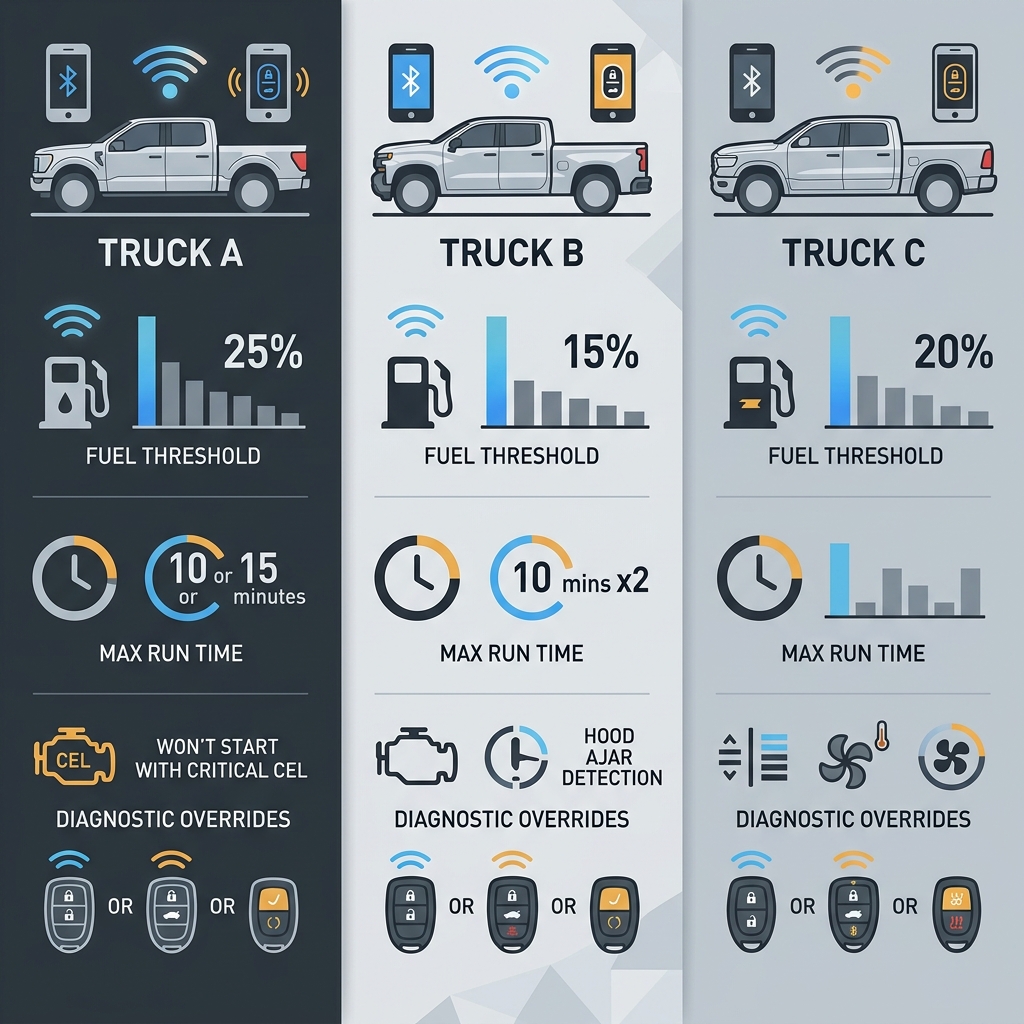
Automakers design remote keyless entry and telematics systems with distinct safety thresholds, idle runtimes, and low-fuel override logic. Chevrolet's system (integrated into Remote Keyless Entry and the myChevrolet app) is renowned for seamless mobile connectivity and tight integration with climate control systems, automatically turning on heated seats, rear defrosters, or cabin air conditioning based on ambient outdoor temperatures.
Below is a side-by-side comparison of standard factory remote start specifications across Chevrolet, Ford (FordPass), and Ram (Ram Connect) modern vehicle platforms:
Infographic comparing fuel thresholds, max run times, and diagnostic overrides for Truck A, Truck B, and Truck C. (Representative image for illustration purposes only. Actual vehicle may vary based on trim and configuration.)

Feature / Safeguard

Chevrolet (myChevrolet)

Ford (FordPass)

Ram (Ram Connect)

Low Fuel Cutoff Threshold

Disabled when Low Fuel Light is ON (~10-15% fuel)

Disabled at ~50 Miles to Empty

Disabled when Low Fuel Light is ON

Standard Engine Run-Time

15 Minutes per cycle

15 Minutes per cycle

15 Minutes per cycle

Max Consecutive Remote Starts

2 Cycles (30 Mins Total)

2 Cycles (30 Mins Total)

2 Cycles (30 Mins Total)

Check Engine Light Lockout

Yes (Any active DTC cancels start)

Yes (Powertrain DTCs)

Yes (Engine/Trans DTCs)

Mobile App Start Capability

Standard with OnStar Access

Standard with FordPass Connect

Standard with Ram Connect

Troubleshooting Common Chevy Tech Issues: Remote Start Failure and Washer Fluid Blockages

For drivers navigating Northern Illinois winters around Joliet, Plainfield, and Naperville, vehicle electrical and mechanical systems face extreme stress. Interestingly, remote start failures and windshield washer fluid blockages frequently occur at the exact same time during cold snaps. When arctic temperatures hit Will County, two major vehicle systems suffer simultaneously:
1. Voltage Drop in 12V AGM Batteries: Below 20°F, a car battery loses up to 50% of its cold-cranking capacity. When cranking the engine during remote start, voltage drop across the Body Control Module (BCM) can drop below 9.5 volts, forcing the ECM to abort the auto-crank process. You may hear a quick click, but no start engine turnover. 2. Washer Fluid Line Freeze-ups: Summer-grade or diluted washer fluid contains higher water concentrations that freeze solid inside the reservoir, pump body, and flexible hood delivery hoses. Attempting to spray ice-blocked washer nozzles draws high electrical current, which can blow the washer pump fuse or burn out the pump motor entirely while you are trying to clean salt spray off your windshield.

What Causes Windshield Washer Fluid to Stop Spraying on a Chevrolet Vehicle?
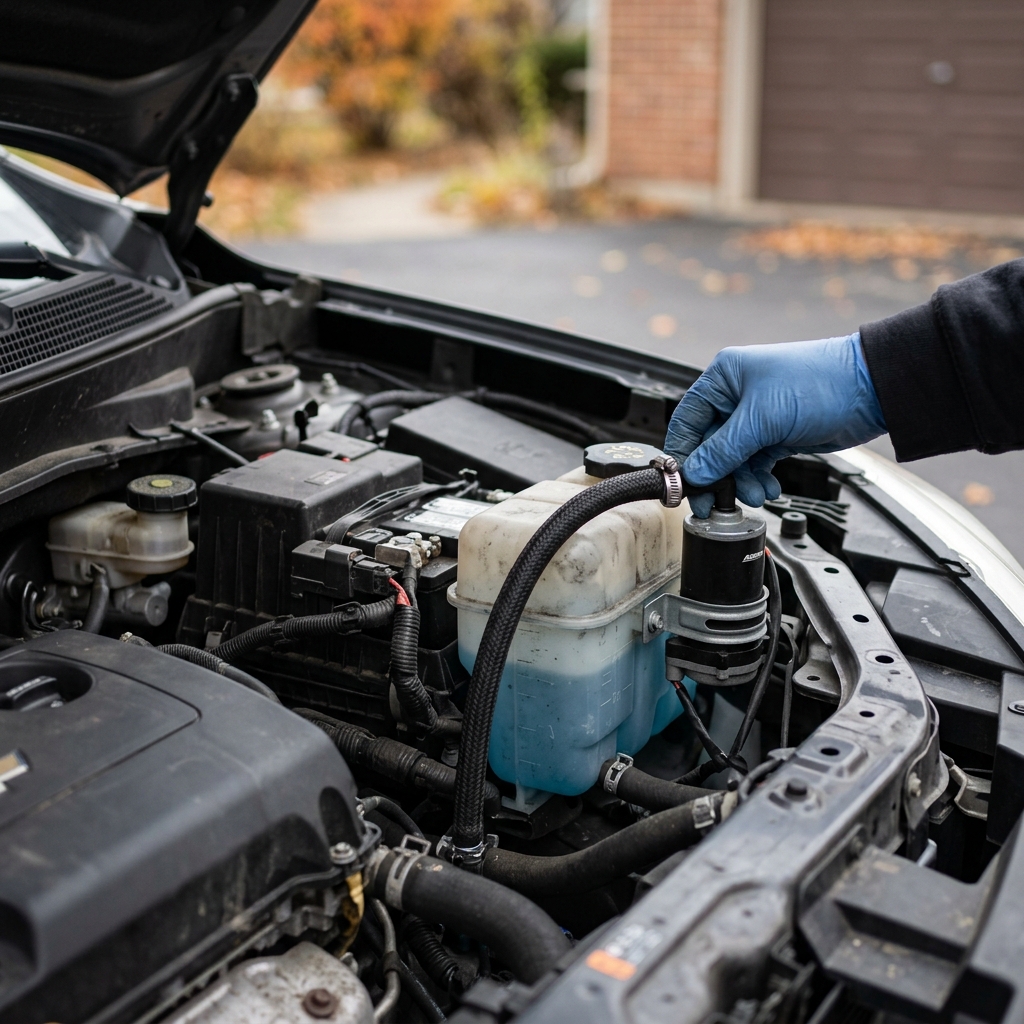
When you pull the wiper stalk on your Silverado 1500, Equinox, or Tahoe and no fluid hits the glass, the problem usually stems from one of five primary failure points in the washer system assembly: • Blown Washer Pump Fuse: Located in the under-hood fuse block (typically designated as 'WSHR' or 'WASHER PUMP'). If the pump motor iced up, high electrical load instantly snaps the fuse element to protect wiring harness circuits. • Clogged Hood Nozzles: Wax, road salt crust, or hard water mineral buildup can seal the tiny fluid orifice openings on the hood spray heads. • Disconnected Fluid Lines: Under-hood rubber hoses expand and contract during extreme temperature shifts. Unclipping hood insulation often reveals a line that pop-disconnected off the barbed T-connector. • Frozen Reservoir Fluid: Using 0°F or +32°F fluid during -10°F Illinois winter blasts freezes the fluid into a solid slush block inside the plastic tank. • Dead Washer Pump Motor: Electric motor failure due to age, dry running, or thermal damage.
A gloved hand attaching a hose to an aftermarket canister near the washer fluid tank under a car hood. (Representative image for illustration purposes only. Actual vehicle may vary based on trim and configuration.)

How Do I Unclog a Windshield Washer Nozzle and Fix Line Blockages?

1. Fine Sewing Pin Clearing

Insert a fine sewing pin or small needle directly into the spray nozzle hole on your hood. Gently wiggle the pin to breakup dried wax, salt crystals, or debris. Take care not to deform or enlarge the plastic orifice nozzle angle.

2. Compressed Air Back-Flush

Disconnect the rubber supply line from the underside of the hood spray nozzle fitting. Use a can of compressed air or an air blow gun to blow compressed air backwards through the nozzle opening to dislodge trapped dirt.

3. Warm Vinegar Flush

To dissolve stubborn calcium deposits from hard tap water, disconnect the nozzle and soak it in warm white vinegar for 20 minutes. Flush thoroughly with warm distilled water before re-attaching the hose.

What Should You Check If the Washer Fluid Is Full But Nothing Sprays?
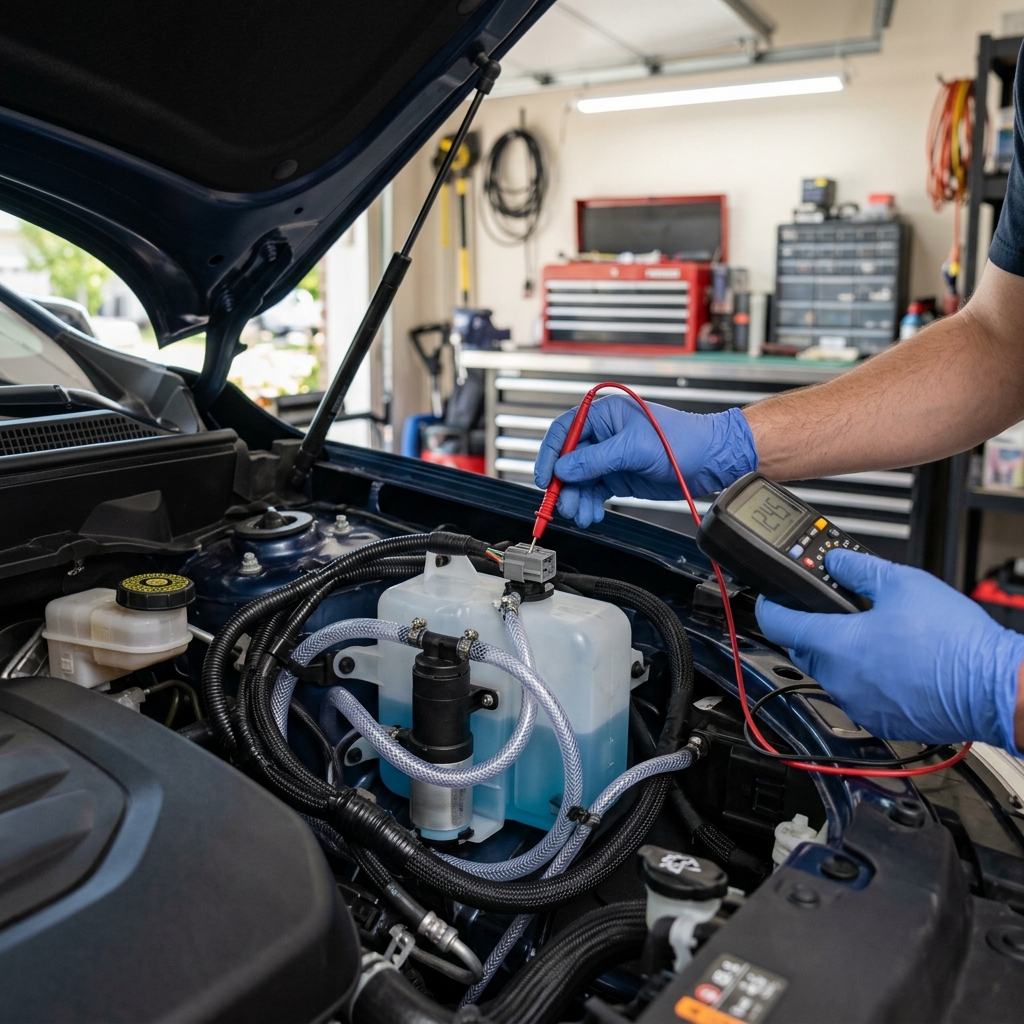
If you confirmed the blue fluid reservoir tank is topped off to the brim, but activating the stalk results in zero liquid delivery onto your windshield, follow this diagnostic flow: Step 1: Perform the Auditory Test: Park in a quiet area with the ignition key turned to RUN (engine off). Have an assistant pull the washer stalk while you stand near the front fender. Listen carefully for a high-pitched buzzing sound coming from the lower reservoir area. Step 2: Evaluate the Sound:If you hear NO buzzing: The electrical circuit is interrupted. Check the 10A/15A washer pump fuse inside the fuse block or inspect the electrical pigtail connector attached to the pump base. •If you HEAR buzzing but NO spray: The pump motor works, but fluid cannot flow. You either have a frozen slush blockage in the lines, a pinched hose along the hood hinge, or a disconnected line dumping fluid into the inner fender liner.
Mechanic testing an electrical connector on a car engine reservoir using a digital multimeter. (Representative image for illustration purposes only. Actual vehicle may vary based on trim and configuration.)

Winter Tech and Fluid Maintenance Checklist for Joliet and Suburban Commuters

Commuters traveling along I-80, I-55, and Route 59 through Joliet, Shorewood, and Plainfield experience demanding weather conditions year-round. Prepare your vehicle for trouble-free operation with this seasonal maintenance protocol:
✔ Switch to -20°F or -30°F Rated De-Icer Washer Fluid: Purge all summer water-based fluids before October. Winter washer fluid formulas contain de-icing alcohols that melt ice on contact and prevent line freezing. ✔ Maintain a 1/4 Tank Minimum Fuel Level: Avoid running on low fuel. Keeping your tank at least 1/4 full ensures remote start remains available during cold morning starts while preventing fuel line condensation ice buildup. ✔ Test Your 12V Battery Cold Cranking Amps (CCA): Have certified GM technicians test your battery conductance annually. Weak battery voltage triggers low-voltage electrical faults in key fob receivers and module startup relays. ✔ Treat Rubber Weatherstripping: Coat door and hood rubber weather seals with silicone lubricant to prevent ice bonding that forces latches to stick open.
Looking to upgrade your ride before winter arrives? Get Pre-Approved for Financing today, or explore our extensive selection when you Browse New Inventory or Browse Used Inventory online.

When to Visit Hawk Chevrolet of Joliet for Professional Electrical & System Diagnostics
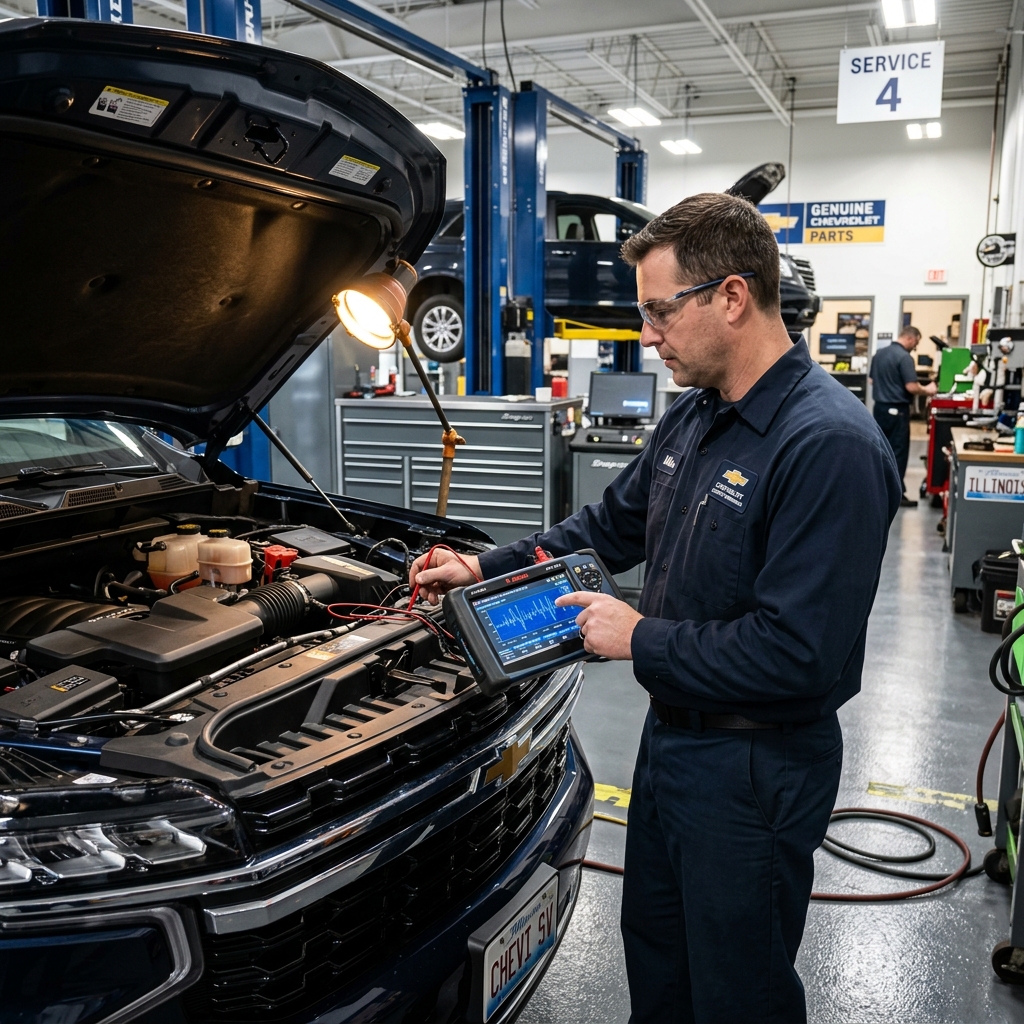
While simple checks like refueling or replacing key fob CR2032 batteries are easy DIY fixes, complex electrical issues require factory-grade GM diagnostic tools. Modern Chevrolet vehicles utilize intricate Controller Area Network (CAN-bus) architecture connecting the Body Control Module, Engine Control Module, and OnStar telematics unit.
Visit our state-of-the-art service department at Hawk Chevrolet of Joliet if you experience persistent issues, such as active Check Engine Lights, unresponsive myChevrolet app signals, blown washer pump relays, or key fob programming losses. Our factory-trained, ASE-certified technicians utilize genuine GM MDI2 hardware, GDS2 software, and ACDelco OEM replacement parts back by full GM warranty coverage.
Get Directions to Hawk Chevrolet of Joliet or Call us at (815) 472-8001 to speak directly with our certified GM service advisors.
A Chevrolet mechanic uses a digital diagnostic tool and probes under the hood of a car in a service bay. (Representative image for illustration purposes only. Actual vehicle may vary based on trim and configuration.)

Schedule Expert Chevy Remote Start and Maintenance Service in Joliet, IL

Don't let remote start failures or frozen windshield washer sprayers interrupt your daily commute. Whether you need an electrical diagnosis, a multi-point winter safety inspection, or routine oil changes and battery replacement, Hawk Chevrolet of Joliet is your trusted local automotive partner.
Ready for an upgrade? Value Your Trade online in minutes and discover how much your current vehicle is worth toward a new Chevy model equipped with remote start technology.
 

Subscribe to Our Blog