


Why Clear Visibility is Your First Line of Defense on Northern Illinois Roads

When we think about automotive safety, our minds immediately jump to advanced driver-assistance systems, anti-lock brakes, and robust airbag systems. However, the most critical safety system on your vehicle is one of the simplest: your windshield wiper blades. Operating a vehicle in Northern Illinois, especially around the busy corridors of Joliet, Naperville, and Plainfield, presents a unique set of meteorological challenges. From sudden, blinding summer downpours in late June to freezing winter slush, your ability to navigate safely depends entirely on your clear line of sight. If you cannot see the road, the vehicle's other safety features cannot prevent an impending collision.

At Hawk Chevrolet of Joliet, we view driver safety as a holistic endeavor. Your windshield wipers sweep away thousands of gallons of water, dirt, road salt, and debris over their lifetime, performing a tireless job under extreme environmental stress. During severe weather, a split-second delay in clearing a sheet of water from your windshield can mean the difference between a safe stop and an unexpected fender-bender on Interstate 80 or Route 59. As your trusted local automotive resource, we are committed to helping you understand the vital mechanics of your wiper system, how local climate patterns impact their longevity, and when it is time to make a replacement.

Our dealership is proud to serve the Will County community by offering not just premium vehicle sales, but also top-tier service, educational resources, and genuine OEM parts. Whether you are driving a brand-new Chevrolet Silverado or a well-loved commuter sedan, maintaining crisp, smear-free visibility is essential for safeguarding your family on every trip. Let us dive deep into the science of wiper blades, the symptoms of their decline, and how you can stay ahead of the weather in Northeast Illinois.
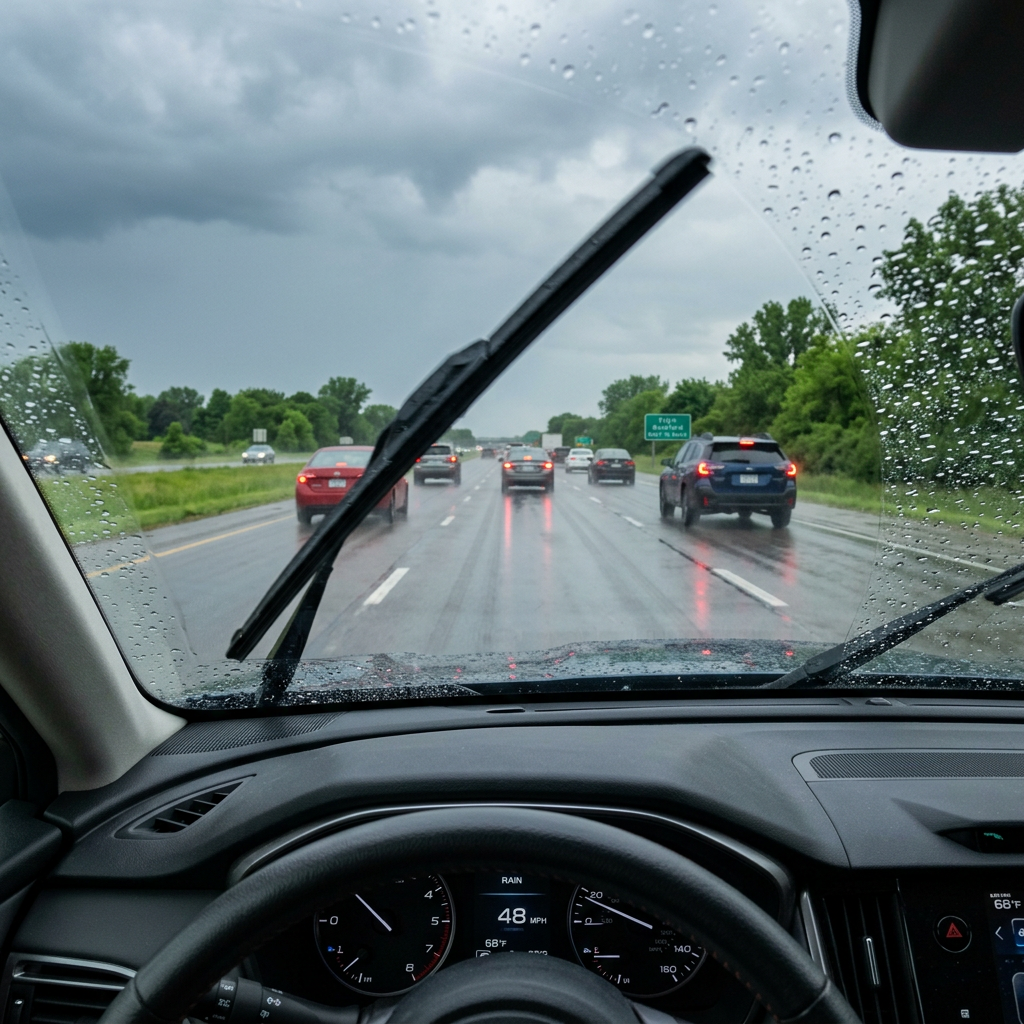
Driver's perspective of a rainy highway with windshield wipers active, showing dashboard and traffic ahead.

How Often Should Windshield Wiper Blades Be Replaced?
The general consensus among automotive manufacturers and safety organizations is that windshield wiper blades should be replaced every6 to 12 months. However, this is not a one-size-fits-all timeline. The actual lifespan of your wipers depends heavily on geographic climate, driving habits, parking conditions, and the quality of the blade material. In Northeast Illinois, our seasonal shifts are notoriously dramatic, swinging from sub-zero winter blasts to humid, high-heat summers. These intense thermal cycles accelerate the chemical degradation of the rubber elements.

During the peak of summer, intense UV radiation and soaring temperatures bake the delicate rubber squeegee against the hot glass of your parked vehicle. This process causes the rubber to lose its elasticity, leading to hardening, cracking, and structural failure. When winter rolls around, the freezing cold makes the hardened rubber brittle, making it highly susceptible to tearing when encountering frost or icy windshield build-ups. If you park your car outdoors in Plainfield or Naperville, exposed to the elements daily, your blades will naturally wear out much faster than a vehicle stored in a climate-controlled garage.

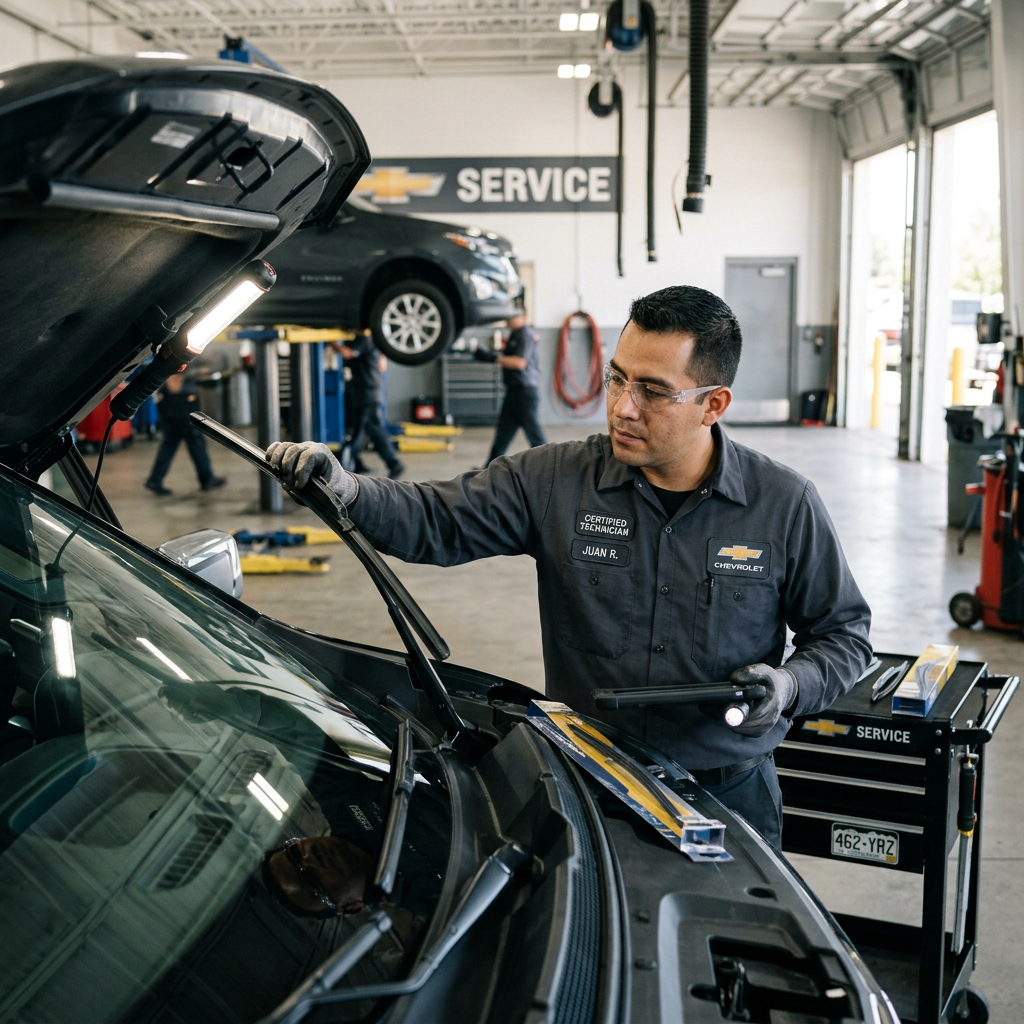
A certified Chevrolet technician wearing safety glasses replacing windshield wiper blades in a service bay.

Because wear occurs gradually, drivers often adjust to deteriorating visibility without realizing how compromised their view has become. Regularly assessing your wipers at least twice a year—ideally in the spring and autumn—ensures that you are never caught unprepared when a sudden Midwestern weather shift occurs.

What Are the Signs That Windshield Wiper Blades Need to Be Replaced?

Your wiper blades are highly communicative; they will actively signal their decline long before they completely fail. Recognizing these physical and audible symptoms early can prevent dangerous driving situations. Here is a breakdown of the primary warning signs that indicate your wipers have reached the end of their functional life:

Squeaking & Skipping

If your wipers emit a high-pitched squeak or chatter across the glass, the rubber has likely hardened or developed a permanent set. Instead of sliding smoothly, the blade bounces and skips, leaving behind alternating bands of wet and dry glass. This irregular contact severely disrupts your concentration and ruins your clearing efficiency.

Streaking & Smearing

Streaking occurs when the wiping edge of the rubber is nicked, torn, or coated with road grime that cannot be washed away. When the wiper sweeps, it leaves narrow lines of water that obscure fine details on the road. Smearing happens when a broad sheet of water is pushed across the glass, creating a cloudy film that distorts oncoming headlights.

Split Rubber & Bent Frames

Physical damage is a definitive sign of failure. If you lift the wiper arm and observe the rubber squeegee peeling away from its metal or plastic backing, it can no longer apply even pressure. Furthermore, a bent metal frame—often caused by heavy snow piles or automated car washes—prevents the blade from making contact with the curved windshield.

Can Old Wiper Blades Damage My Windshield Permanently?
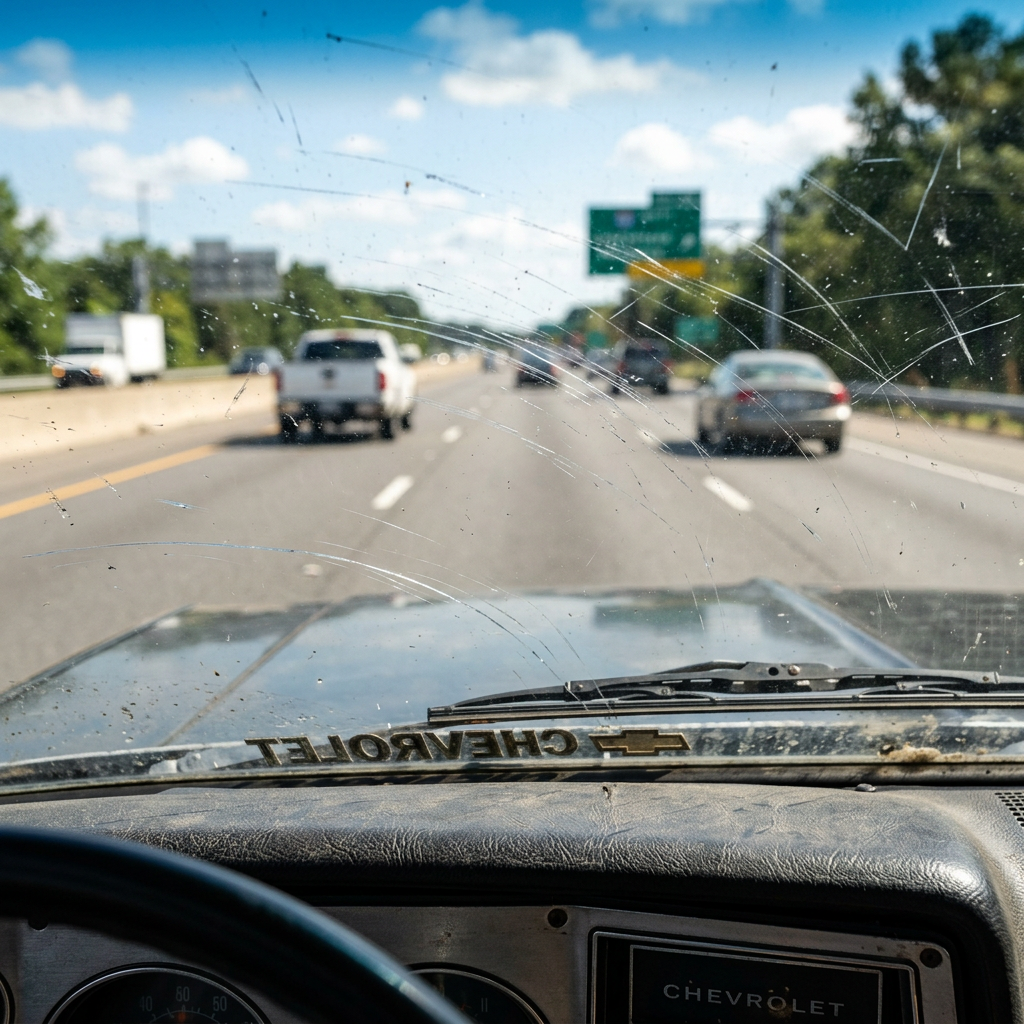
Many drivers view worn-out wiper blades as a minor inconvenience, but ignoring them can lead to substantial financial consequences. When the protective rubber squeegee completely disintegrates or tears away from the wiper arm, the rigid metal or hard plastic structural frame is exposed. When the wiper system is activated, this hard material is pressed directly against the glass with significant spring tension, dragging across your windshield at high speeds.

The result is deep, permanent scratching known as glass scoring. These scratches follow the exact arc of your wiper sweep, carving a semi-circular path right in your direct line of sight. Unlike minor surface haze, deep scratches cannot be polished out; they structurally weaken the glass and create massive glare from streetlights and oncoming vehicles at night. Correcting this damage typically requires a complete windshield replacement, which can cost hundreds of dollars and may disrupt advanced safety cameras mounted behind the glass.

Preventive maintenance is vastly more affordable. Investing in a fresh set of wiper blades today protects your costly windshield glass and preserves your vehicle's structural integrity. If you suspect your blades are scratching your glass, we highly recommend that youSchedule Your Service Todaywith our expert team to avoid escalated repair costs.

What Are Winter Wiper Blades and Do You Need Them?

For drivers navigating the challenging winters of Will County, standard wiper blades can quickly become overwhelmed by heavy snow, freezing rain, and sub-zero temperatures. This is where winter wiper blades come into play. Standard 'beam' blades or traditional bracketed wipers have exposed joints and metal frameworks. When wet snow or slush hits the windshield, it packs into these joints and freezes solid, preventing the wiper from flexing to match the curvature of your glass. The result is a stiff, straight blade that leaves massive un-wiped patches right in your line of vision.

Specialized winter wiper blades are engineered specifically to defeat this freezing hazard. They feature a thick, protective synthetic rubber boot that completely encases the entire structural framework of the blade. This flexible sheath prevents ice, slush, and heavy snow from packing into the joints, allowing the blade to maintain its flexibility and pressure distribution regardless of how low the temperature drops.

Additionally, winter blades are constructed with a heavier, more durable rubber compound infused with silicone or Teflon. This robust compound remains pliable in extreme cold, resisting the tearing that commonly occurs when a blade is accidentally activated over an icy windshield surface. While winter blades are highly beneficial for tough Northern Illinois winter commutes, they should be swapped back to standard or premium beam blades during the hot summer months, as the heavy rubber boot can lift off the glass at high highway speeds when there is no heavy snow to weigh it down.

If you are planning to trade in your current vehicle before the harsh seasons change, it is always a smart financial move to check your vehicle's trade value. You canValue Your Tradeonline to see how much equity you have for a fresh, winter-ready vehicle.

Do Rear Wiper Blades Last as Long as Front Wipers?
Usage vs. Exposure

Many drivers assume that because they use their rear wiper blade significantly less than their front wipers, it does not need to be replaced as frequently. While it is true that the rear motor is activated less often, environmental degradation occurs continuously. Your rear wiper is subjected to the exact same UV rays, temperature swings, and chemical exposure as your front blades.

The Dirt Vortex

In fact, the rear of SUVs, hatchbacks, and crossovers is a magnet for intense dirt and grime accumulation. The aerodynamics of these vehicle shapes create a low-pressure wake that vacuums up road salt, exhaust soot, and fine grit directly onto the rear glass. This abrasive mixture settles on the rear rubber, acting like sandpaper when the rear wiper is eventually turned on.

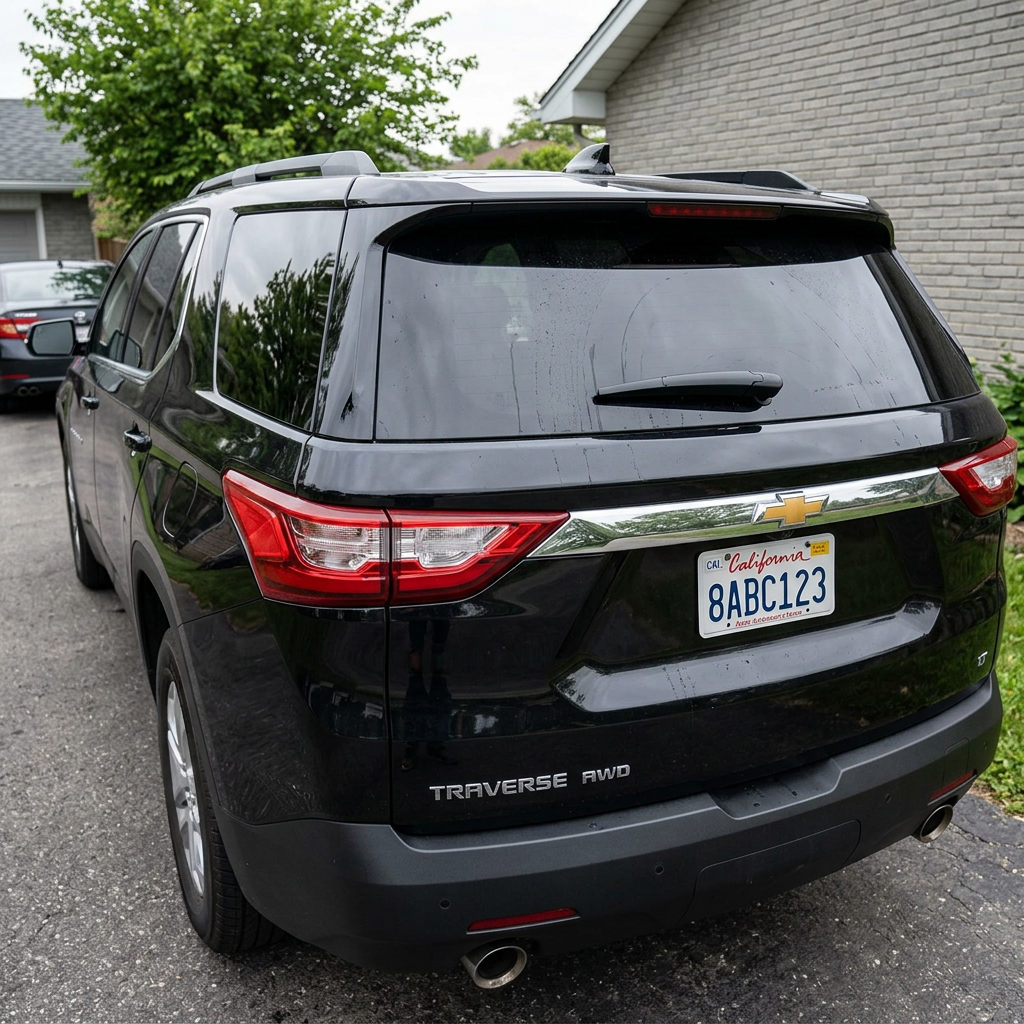
Rear view of a black Chevrolet Traverse AWD SUV with a California license plate parked in a driveway.

To maintain optimal situational awareness, check your rear wiper blade during every oil change. Replacing it alongside your front set guarantees 360-degree clarity when backing out of tight parking spots in crowded Joliet shopping centers.

How Often Should You Clean Your Wiper Blades?

Before you rush out to purchase a brand-new set of wipers, it is worth trying a simple maintenance step that can dramatically extend their life: cleaning the rubber squeegee. Over time, wiper blades collect a microscopic layer of atmospheric road film, sticky tree sap, organic pollen, and acidic bug residue. This accumulation forms a physical barrier on the wiping edge, preventing the rubber from making flat, airtight contact with the windshield, which leads to artificial streaking.

We recommend cleaning your wiper bladesonce every monthor whenever you wash your vehicle. The process is incredibly simple and takes less than five minutes. Dampen a clean microfiber cloth or a paper towel with a small amount of household rubbing alcohol (isopropyl alcohol) or warm, soapy water. Gently pinch the rubber squeegee with the cloth and slide it along the length of the blade. You will likely see a dark, greasy residue transferred onto the cloth—this is the accumulated road film that was causing your visibility issues.

Repeat this wiping process until the cloth runs clean. Once finished, wipe down the windshield glass where the wipers rest, as dirt often pools in this recessed area. If the squeegee is physically intact without cracks or tears, this quick clean can completely restore its wiping efficiency, saving you money and keeping your vision crystal clear. If the streaking persists after a thorough cleaning, the rubber has officially degraded and must be replaced.

For those drivers who enjoy keeping their vehicle in pristine mechanical shape, exploring a new ride with fresh safety features is a great next step. Take a moment toBrowse New Inventoryat our dealership to see the latest in advanced driving technology and integrated wiper systems.

Choosing the Right Blade Type: Conventional, Beam, or Hybrid?

When shopping for replacement wipers, you will encounter three primary design categories: Conventional, Beam, and Hybrid. Understanding their structural differences will help you select the ideal design for your specific vehicle and driving habits. Check out the comparison below to find the perfect style for your driving needs:

Blade Type

Structural Design

Typical Lifespan

Best Suited For

Conventional

Traditional steel frame with articulated pressure claws

6 to 8 Months

Budget-conscious drivers, older vehicles, mild climates

Beam

Bracketless curved tension spring steel within synthetic rubber

9 to 12 Months

Aerodynamic high-speed driving, winter weather, modern vehicles

Hybrid

Hinged steel frame enclosed in an aerodynamic protective shell

8 to 12 Months

All-weather protection, heavy highway commuters, sleek styling

Conventional Frame

Conventional blades utilize a metal skeleton frame featuring jointed links or 'claws' that distribute downward pressure to the rubber squeegee. While highly economical, their external joints are prone to clogging with ice, snow, and road debris, making them less ideal for harsh winters.

Aerodynamic Beam

Beam blades feature a bracketless, aerodynamic design with a continuous curved steel tension spring inside. This allows the blade to conform perfectly to the curve of modern windshields, delivering highly uniform pressure and preventing wind lift at fast highway speeds.

Hybrid Design

Hybrid blades combine the heavy-duty pressure of a conventional frame with the streamlined, ice-resistant casing of a beam blade. The aerodynamic outer shell keeps dirt and moisture away from the internal links, providing excellent all-weather wiping performance.

Unsure which size or connection type your specific vehicle requires? Our experienced parts experts can quickly look up the exact original equipment manufacturer (OEM) specifications for your Chevrolet or any other make and model. To get the perfect match, you can easilyOrder Genuine Chevrolet Partsdirectly through our website.

What Precautions Should You Take When Replacing Wiper Blades DIY?

For many automotive enthusiasts, replacing windshield wiper blades is a quick, satisfying weekend project. While the installation process is generally straightforward, it carries one hidden, highly catastrophic risk that many DIYers learn the hard way: a cracked windshield. When you remove the old wiper blade, you are left with a bare, heavy metal wiper arm. This metal arm is under massive spring tension designed to pull it tight against your glass. If you accidentally bump this arm while it is standing upright without a blade attached, it will snap back down onto your bare glass with extreme force.

This sudden, metal-on-glass impact almost guarantees a severe star crack or deep fracture directly across your windshield, requiring an immediate and costly glass replacement. To prevent this,always place a thick, folded bath towel or a dense foam block flat on your windshielddirectly beneath the wiper arm before you begin. If the arm accidentally slips and snaps down during the swap, it will land safely on the cushioned towel rather than shattering your glass.

Another critical step is ensuring the correct plastic adapter clip is chosen and fully secured. Modern wiper blades are packaged with a variety of plastic adapters to fit different vehicle arm styles (such as J-hook, pinch tab, push button, or bayonet). Carefully compare your old blade's connector to the instruction sheet, select the matching adapter, and push it onto the new blade until you hear a distinct, solid 'click.'

Once installed, gently lower the arm back to the glass, remove your protective towel, and perform a brief test run using your windshield washer fluid to confirm the blade is securely locked in place. If a blade is not properly seated, it can detach at highway speeds, potentially scratching your glass or flying off entirely. If this process feels daunting, our certified service team is always here to handle it for you.

Navigating Plainfield and Naperville Commutes Safely in Severe Weather

For residents of Will and DuPage counties, the daily commute on major arteries like Interstate 55, Interstate 80, Route 59, and the Reagan Memorial Tollway is a demanding task. During peak rush hours, these highways carry thousands of vehicles in tight, fast-moving lanes. When a sudden severe summer thunderstorm rolls through the Chicago metro area, visibility drops from miles to mere feet in a matter of seconds. Under these high-stress conditions, your reaction time is heavily dependent on the performance of your windshield wipers.

If your wipers are worn, they will leave broad smears of water and road oils across your windshield, turning oncoming headlights and brake lights into blinding halos. This visual distortion makes it nearly impossible to accurately judge stopping distances and spot merging traffic. Conversely, a fresh set of premium beam blades will instantly sweep away the deluge, maintaining a clean, clear window of visibility that allows you to react calmly and safely to sudden traffic flow changes ahead.

Maintaining your vehicle's mechanical health is just as important as keeping your view clear. If you are considering upgrading your vehicle's safety profile or trading up to an all-wheel-drive model for your daily commute, we encourage you toBrowse Used Inventoryat our dealership. We stock a diverse selection of high-quality, fully inspected pre-owned SUVs and trucks equipped with advanced automatic rain-sensing wiper systems.
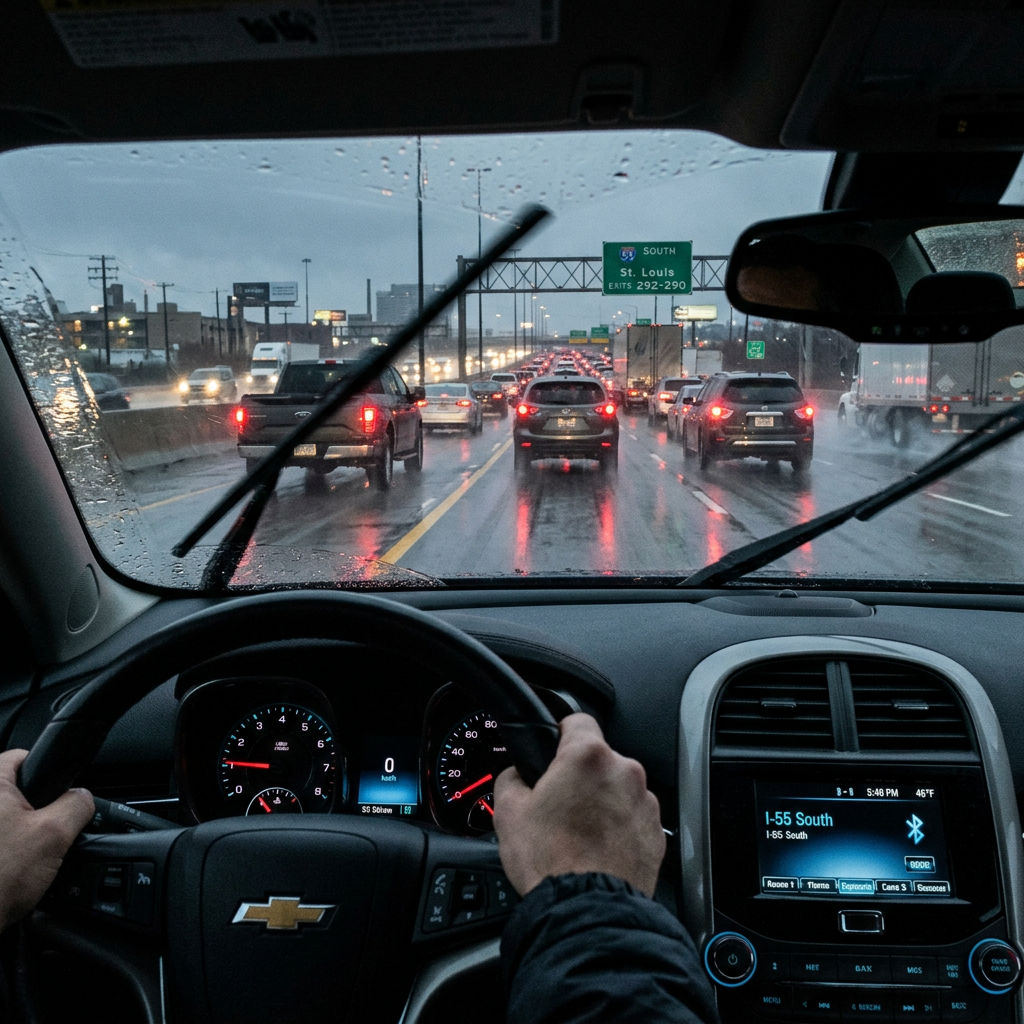
View from inside a car driving in heavy, rainy highway traffic towards St. Louis on I-55 South.

Why Professional Installation at Hawk Chevrolet of Joliet Saves Time and Stress

While changing your own wiper blades might seem like a simple task, taking your vehicle to a certified service center offers distinct advantages in precision, convenience, and safety. At Hawk Chevrolet of Joliet, our factory-trained technicians handle hundreds of wiper replacements every week. We possess deep, model-specific knowledge of the exact adapter clips, lengths, and rubber formulations required for your Chevrolet vehicle, eliminating the guesswork of sorting through generic, low-quality retail options.

When you have your wipers replaced by a professional, we do not just swap the blades and send you on your way. Our technicians perform a comprehensive check of your entire visibility system. We inspect your windshield washer fluid lines for leaks, test the spray nozzle alignment to ensure even fluid distribution, and check the wiper motor tension. If your windshield glass has suffered micro-pitting or small rock chips, we can identify those issues before they spread into major cracks, saving you substantial repair costs down the road.

Furthermore, opting for professional installation during your routine maintenance visit—such as an oil change, tire rotation, or brake inspection—saves you a dedicated trip to an auto parts store. You can relax in our comfortable, modern waiting lounge with complimentary Wi-Fi and refreshments while our team efficiently completes the work. We use premium, factory-approved blades designed to deliver whisper-quiet operation and outstanding longevity, ensuring your vehicle remains in absolute peak condition.

If you are planning to finance your next vehicle service or upgrade your vehicle entirely, we make the process exceptionally simple. You can easilyGet Pre-Approved for Financingonline from the comfort of your home, helping you budget for all your automotive maintenance and purchasing needs with complete clarity.

Schedule Your Wiper Blade Replacement and Safety Inspection in Joliet Today

Do not wait for the next severe storm to reveal that your wiper blades are worn out. Ensure your vehicle is prepared for every season by visiting the professional service team at Hawk Chevrolet of Joliet. We are dedicated to providing the community with premium quality automotive service, genuine parts, and friendly, expert advice.

A blue and white Chevrolet car dealership building with sports cars parked in front under a clear blue sky.

Visit us at our modern dealership located at2001 W Jefferson St, Joliet, IL 60435. For quick turn-by-turn routing, you canGet Directions to Hawk Chevrolet of Joliet. Have questions or want to speak with our service advisors directly?Call us at (815) 472-8001to secure your appointment or speak with our parts specialists.


Subscribe to Our Blog