Direct Answer: At What Ambient Temperature Should You Plug In Your Silverado Engine Block Heater?
When sub-zero Arctic blasts sweep across Will County and Northern Illinois, Chevrolet Silverado owners often ask: at what ambient temperature should you plug in a Silverado engine block heater? The official factory recommendation from General Motors states that you should plug in your engine block heater when ambient temperatures drop to 0°F (-18°C) or below for Duramax diesel models and extreme heavy-duty gas applications. However, experienced Midwest truck operators and technical specialists know that plugging in your Silverado when ambient temperatures hit 15°F (-9°C) or below yields immediate, practical benefits that go far beyond basic engine starting.
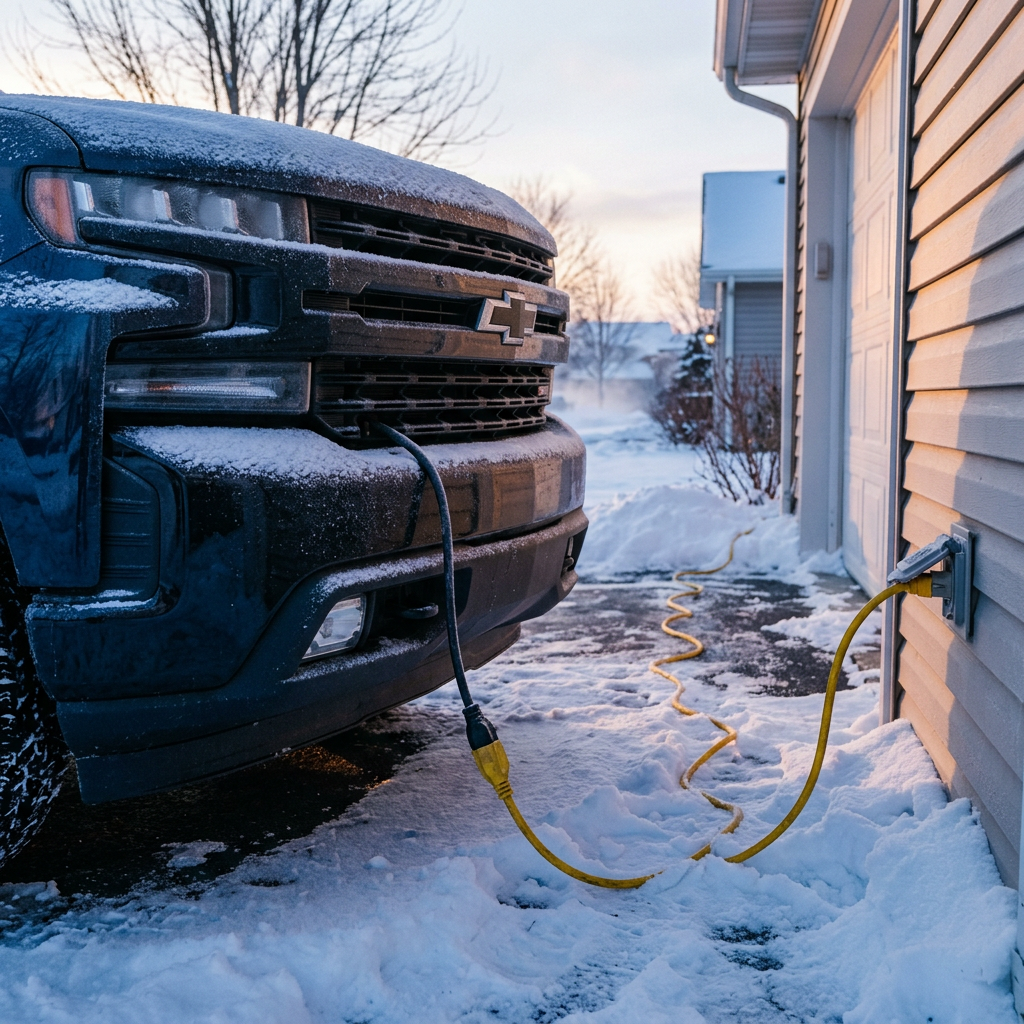
Plugging in your Silverado block heater at 15°F reduces cold-start engine wear by up to 60%, drastically decreases starter motor and battery load during morning ignition, and enables your cabin heating system to deliver warm defroster air almost immediately. For 3.0L LZ0 Duramax Turbo-Diesel and 6.6L L5P Duramax engines, pre-heating the cylinder block maintains fuel atomization efficiency and prevents thermal shock to combustion chambers. Gasoline powertrains—such as the TurboMax 2.7L, 5.3L EcoTec3 V8, and 6.2L EcoTec3 V8—also benefit enormously from reduced oil viscous drag on frosty Joliet mornings. Understanding when and how to deploy this simple system protects your truck investment, improves winter fuel economy, and ensures reliable job-site operation throughout the severe Midwest winter season.
How Cold Weather Affects Your Silverado Engine Oil and Battery in Joliet Winters
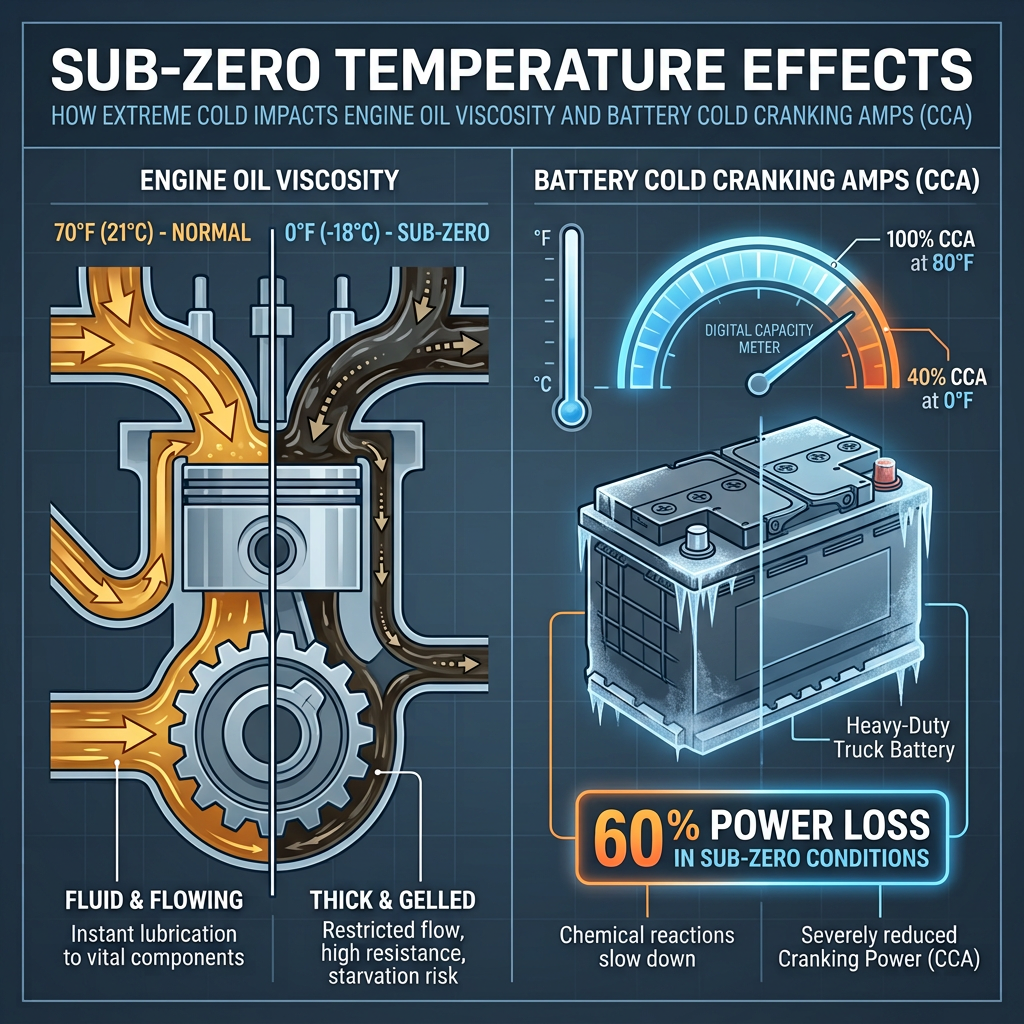
During typical Will County winter snaps, overnight temperatures frequently plummet into single digits or sub-zero ranges. At these cold extremes, motor oil undergoes dramatic physical changes. Standard 5W-30 or 0W-20 multi-viscosity engine oils thicken significantly, while heavy-duty diesel formulations can thicken to molasses-like consistency. When you turn the key or press keyless ignition during an unheated cold start, thick engine oil resists pumping through narrow passages, leaving upper valvetrain components, camshaft lobes, and turbocharger bearings temporarily starved of vital lubrication for the first critical 15 to 30 seconds of operation. Simultaneously, winter temperatures strike a heavy blow against automotive battery chemistry. A fully charged heavy-duty truck battery loses approximately 35% of its Cold Cranking Amps (CCA) capacity at 32°F, and up to 60% of its cranking power when temperatures reach 0°F. Combined with the massive mechanical resistance of gelled engine oil, your starter motor draws twice the electrical current to turn over the crankshaft. This intense electrical load accelerates battery degradation and increases the risk of zero-start conditions on critical workday mornings in Joliet and Plainfield.
By engaging the integrated block heater, an electric heating element submerged in the engine coolant jacket warms the surrounding fluid to approximately 100°F to 140°F. Thermal convection circulates this heat across the entire engine block, warming the cylinder walls, oil gallery paths, and oil pan upper fluid layers. Consequently, when you engage the starter, the engine cranks effortlessly at normal speeds, oil pressure builds within milliseconds, and battery drain is reduced to springtime levels.
How Much Fuel Does Engine Idling Consume While Warming Up a Silverado on Cold Job Sites?
A common habit among commercial trade contractors and daily drivers in Naperville and Joliet is letting their Silverado idle for 20 to 30 minutes in the morning to warm up the engine and cabin. However, extended idling causes substantial hidden operational costs, mechanical wear, and unnecessary fuel expense. On average, a Chevrolet Silverado 1500 equipped with a 5.3L or 6.2L V8 engine consumes approximately 0.5 to 1 gallons of fuel per hour while idling at cold fast-idle speeds. Heavy-duty 6.6L Duramax diesel models can burn up to 1 gallon per hour during initial extended cold warm-up cycles. Over a typical 120-day Northern Illinois winter, idling a truck for 30 minutes twice daily consumes between 60 to 120 gallons of wasted fuel per vehicle—translating to $200 to $450 in avoidable fuel costs per season.
In sharp contrast, running a 1,000-watt Silverado engine block heater draws roughly 1.0 kWh of electricity per hour. At average Northern Illinois residential electric rates (approx. $0.15 to $0.18 per kWh), pre-heating your truck for 2.5 hours costs only $0.38 to $0.45 per morning—saving over 75% compared to extended warm-up idling while significantly reducing engine carbon buildup and Diesel Particulate Filter (DPF) soot loading.
|
Warm-Up Method
|
Time Duration
|
Energy / Fuel Consumed
|
Estimated Daily Cost
|
Engine Wear & Emission Impact
|
|
Extended Morning Idling (Gas V8)
|
30 Minutes
|
0.35 - 0.40 Gallons Gas
|
$1.30 - $1.60
|
High cylinder wash, soot buildup, slow warm-up
|
|
Extended Morning Idling (Duramax)
|
30 Minutes
|
0.45 - 0.50 Gallons Diesel
|
$1.70 - $2.10
|
DPF soot loading, unburnt fuel dilution in oil
|
|
Engine Block Heater Pre-Heat
|
2.5 Hours
|
2.5 kWh Electricity
|
$0.38 - $0.45
|
Zero engine wear during heating, immediate cabin heat
|
Block Heater Operation Guide: Timers, Cord Location, and Duramax MSRP Value
1. Locating the Cord
On late-model Silverado 1500 and Heavy-Duty trucks equipped with factory engine block heaters, the power harness is neatly integrated into the front fascia. On Duramax models and select V8 packages, look for a dedicated weather-sealed power inlet built right into the driver-side lower front bumper cap or tucked near the front driver-side tow hook pocket. On older model years, the cord is tied near the driver-side battery tray under the hood.
2. Outdoor Timer Best Practices
There is no benefit to leaving your Silverado plugged in continuously for 8 to 12 hours overnight. The block reaches maximum thermal equilibrium after 2.5 to 3 hours of heating. Utilizing a heavy-duty, outdoor-rated 15-amp mechanical or smart Wi-Fi timer set to activate 2.5 hours prior to your morning commute optimizes power consumption while ensuring maximum starting comfort.
3. MSRP Option & Value
When ordering a new Silverado 1500 or 2500HD/3500HD, the factory Engine Block Heater (RPO Code K05) adds roughly $100 to $150 to the vehicle MSRP. When pairing a 3.0L LZ0 or 6.6L L5P Duramax diesel engine option (which ranges from ~$2,390 MSRP on 1500 models to ~$9,490 on HD series), adding the factory block heater protects a high-value powertrain investment for negligible incremental cost.
What Engine Options and Towing Capacities Does the 2027 Chevrolet Silverado Offer for Winter Trailering?
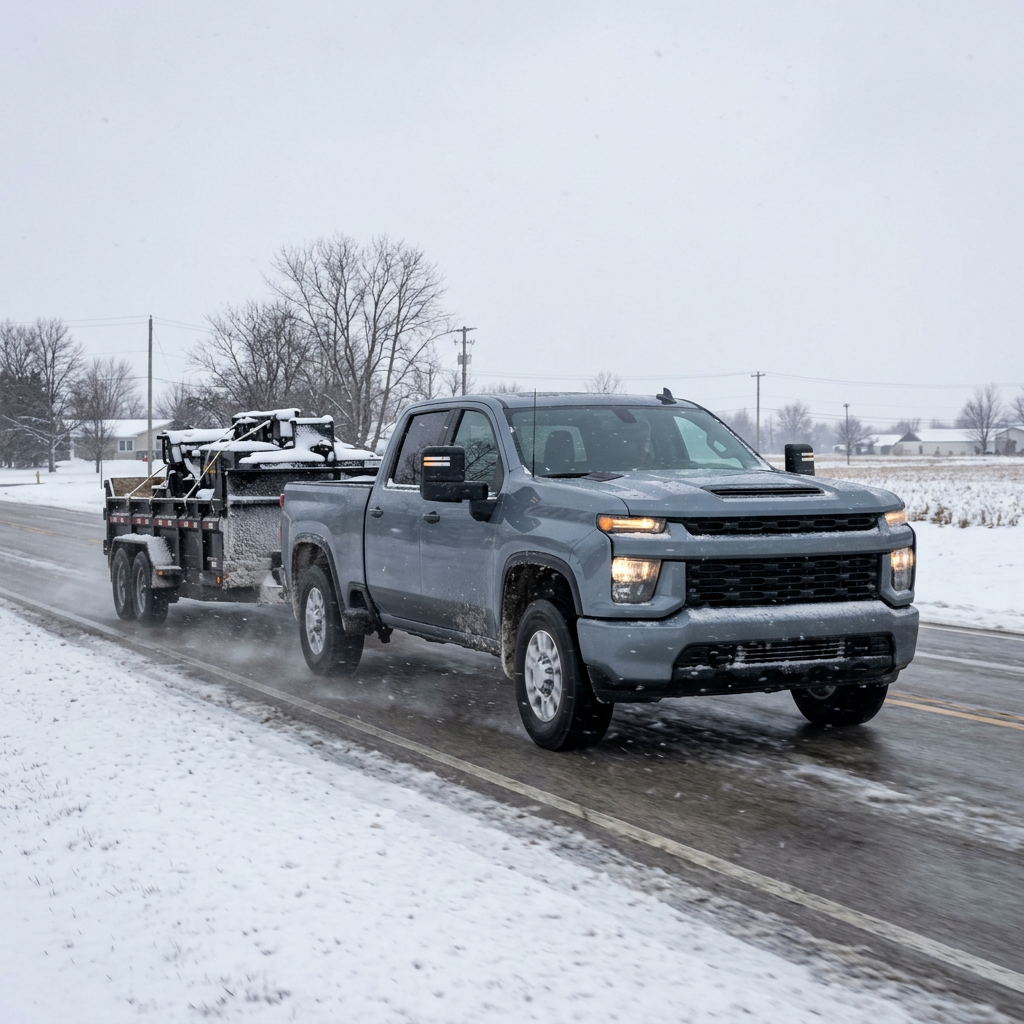
Winter trailering across Illinois highways requires reliable torque output, predictable throttle control, and robust cooling circuit management. The 2027 Chevrolet Silverado lineup provides four distinct engine configurations built to excel under demanding cold-weather towing conditions: • TurboMax 2.7L High-Output Turbo: Delivering 310 horsepower and 430 lb-ft of low-end torque, this engine provides quick boost delivery in freezing conditions, offering up to 9,500 lbs of towing capacity. • 5.3L EcoTec3 V8: Producing 355 hp and 383 lb-ft of torque, equipped with Dynamic Fuel Management (DFM) and robust thermal control, offering max towing up to 11,300 lbs. • 6.2L EcoTec3 V8: Generating 420 hp and 460 lb-ft of torque, paired exclusively with a 10-speed automatic transmission, supporting maximum conventional towing up to 13,300 lbs. • 3.0L LZ0 Duramax Turbo-Diesel: Outputting 305 hp and an impressive 495 lb-ft of torque peaking at low RPMs. This engine yields exceptional winter trailering range, up to 13,300 lbs max towing, and extraordinary fuel economy when pulling enclosed snowmobile or equipment trailers.
All Silverado winter trailering packages feature integrated trailer brake controllers, Tow/Haul mode with automatic grade braking, and available thermal management systems that rapidly bring engine oil and transmission fluid up to optimal operating temperatures even in sub-zero ambient weather.
Which Truck Offers Higher Maximum Towing Capacity Between the Silverado 1500 and Ford F-150?
When comparing cold-weather trailering performance between the Chevrolet Silverado 1500 and Ford F-150, buyers in Will County evaluate maximum towing ratings, chassis strength, torque delivery curves, and winter cold-start reliability. While the Ford F-150 advertises peak theoretical towing numbers under specific light-weight cab layouts, the Silverado 1500 provides superior real-world winter trailering confidence across its standard core trim levels. The Silverado's roll-formed high-strength steel bed deck delivers superior thermal resilience against severe impact damage in sub-zero temperatures compared to aluminum alloy bed construction. Furthermore, Chevrolet's 3.0L Duramax Turbo-Diesel provides smooth, linear low-RPM torque delivery that maintains superior traction control on slippery launch ramps and snow-covered inclines without the high RPM turbo spin and wheelspin risk associated with high-strung gasoline turbo engines.
|
Capability Metric
|
Chevrolet Silverado 1500
|
Ford F-150
|
|
Max Conventional Towing
|
13,300 lbs (6.2L / 3.0L Diesel)
|
13,500 lbs (3.5L EcoBoost)
|
|
Diesel Towing Option
|
3.0L LZ0 Duramax Inline-6 (Available)
|
Discontinued (Gas Only)
|
|
Low-End Torque Delivery
|
495 lb-ft @ 1,500 RPM (Diesel)
|
500 lb-ft @ 3,100 RPM (EcoBoost)
|
|
Truck Bed Material
|
Roll-Formed High-Strength Steel
|
Military-Grade Aluminum Alloy
|
|
Transfer Case Auto Mode
|
Autotrac 2-Speed Active Transfer Case
|
4x4 Auto (Select Trims Only)
|
What Is the Difference Between Autotrac Auto Mode and 4-High Mode on Icy Pavement?
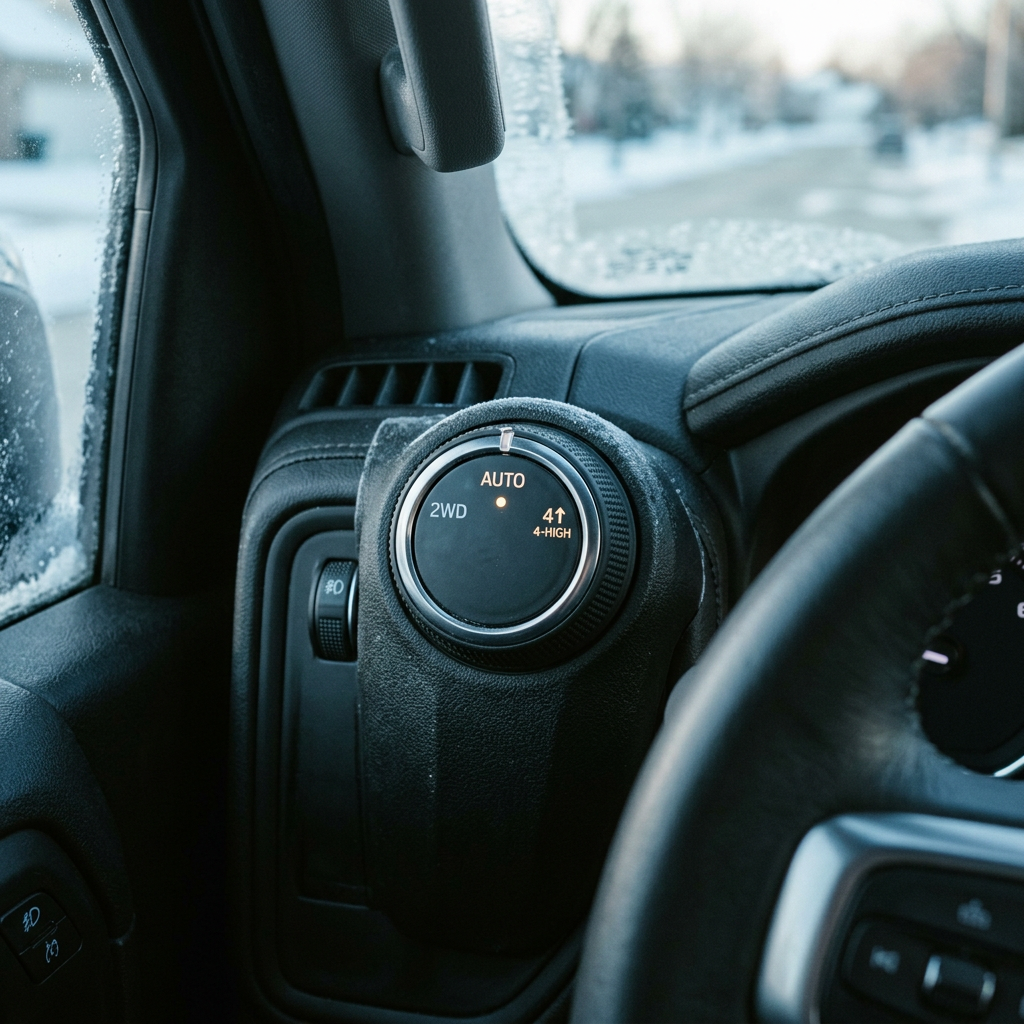
2-High (2WD)
Sends 100% of torque to the rear wheels. Ideal for dry asphalt conditions to maximize fuel efficiency. Should not be used on active black ice or heavy snow accumulation where rear-wheel slip can cause instability.
Autotrac AUTO Mode
Engages the front axle while utilizing an active clutch to dynamically split torque. In AUTO mode, the vehicle operates primarily in 2WD but instantly routes front-wheel power within milliseconds upon detecting rear wheel slip. Perfect for variable patch ice, melting slush, and mixed highway driving on I-55 through Joliet and Plainfield.
4-High (4WD High)
Mechanically locks front and rear driveshafts together in a 50/50 torque split. Must be selected when driving through deep unplowed snow, heavy slush, muddy worksites, or severe icy inclines. Should NOT be driven on dry pavement to prevent driveline binding and tire scrub.
Preparing Your Silverado for Northern Illinois Winter Towing and Worksite Duty
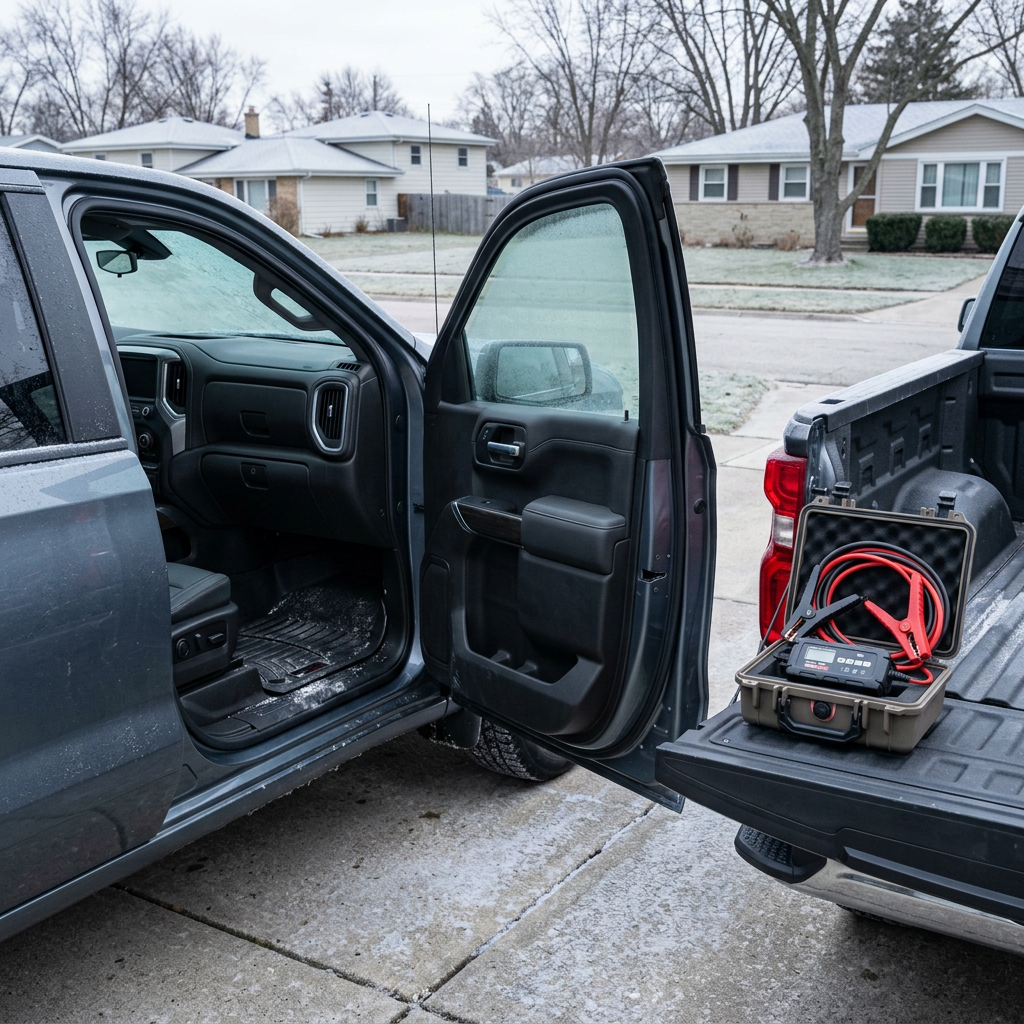
To ensure peak performance, safety, and reliability across Will County throughout the cold months, follow this essential Chevrolet Silverado winterization checklist: 1. Test Engine Coolant Concentration: Verify that your Dex-Cool coolant mixture provides protection down to -34°F. Fresh coolant prevents block heater element scaling and protects internal engine jackets from freeze cracking. 2. Conduct a Battery Load Test: Cold weather reduces battery capacity drastically. Have our certified technicians perform a computerized load test to verify Cold Cranking Amps (CCA) and clean terminal corrosion. 3. Inspect & Upgrade Wiper Blades: Replace worn blades with heavy-duty rubber-armored winter wiper blades and fill your fluid reservoir with sub-zero rated (-20°F or lower) washer fluid. 4. Check Tire Tread Depth & Pressure: Inspect tread depth (minimum 5/32" recommended for winter traction). Remember that tire pressure drops approximately 1 PSI for every 10°F temperature drop. 5. Wash and Protect Chassis: Road salt and liquid magnesium chloride used on Illinois roadways cause aggressive rust. Regular undercarriage high-pressure washes protect frame rails, brake lines, and wiring harnesses. 6. Service Engine Block Heater Harness: Inspect the block heater electrical cord for fraying, cracks, or bent prongs before plugging in for the first freeze of the season.
Winterizing Electrical Systems and Accessories for Naperville and Plainfield Commuters
Modern Silverado trucks feature advanced electrical architectures powering numerous high-draw comfort and utility accessories. When commuting along Route 59 or I-55 between Naperville, Plainfield, and Joliet, driver demand on electrical charging systems spikes dramatically. Simultaneous operation of dual heated front seats, heated steering wheel, rear window defogger, cabin blower fans, and exterior LED lighting places significant amperage load on your alternator. On Duramax diesel models, glow plug pre-heating cycles consume high battery energy prior to engine start. Utilizing genuine GM accessories—such as custom-fit rubber floor liners, commercial snow plow prep electrical harnesses, and OEM battery warmers—ensures electrical compatibility and preserves factory warranty coverage.
If you plan to add auxiliary light bars, winches, or heated trailer gear, consult our factory-trained service specialists at Hawk Chevrolet of Joliet to evaluate your truck's alternator output rating and dual-battery option capability.
Block Heater vs. Extended Remote Start: Fuel Economy and Emission Control Benefits
Many vehicle owners rely heavily on factory remote start systems to warm up their truck cabin. While remote start offers undeniable convenience, relying solely on prolonged engine idling creates several mechanical challenges: • Cylinder Wall Washing: Cold engine cylinders burn rich fuel mixtures. Excessive idling allows unburnt gasoline or diesel fuel to wash down cylinder walls, thinning the oil film and diluting engine oil in the crankcase. • Carbon & Soot Accumulation: Incomplete combustion at low engine temperatures accelerates carbon deposit formation on intake valves, spark plugs, and fuel injectors. • Increased DEF Consumption: On Duramax diesels, low exhaust gas temperatures during extended idle prevent proper Diesel Exhaust Fluid (DEF) dosing and require more frequent active DPF regeneration cycles.
Combining a block heater pre-heat cycle (2 to 3 hours prior to departure) with a brief 5-minute remote start provides the ideal balance. The engine reaches operating temperature quickly upon driving, cabin heat begins blowing almost instantly, fuel dilution is eliminated, and overall tailpipe emissions are drastically minimized.
Commercial Fleet and Work Truck Cold-Weather Solutions in Will County
Commercial Fleet Maintenance
For commercial contractors operating fleets of Silverado 2500HD and 3500HD trucks in Joliet, cold-weather downtime means lost revenue. Establishing scheduled winter fleet inspections—including fuel filter replacements, glow plug testing, and block heater verification—keeps your work crew on the road.
Fleet Trade-In Valuations
Upgrading older work trucks before severe weather strikes reduces fleet maintenance costs. You can easily value your trade online with Hawk Chevrolet of Joliet to receive competitive market appraisals for your pre-owned commercial vehicles.
Heavy-Duty Work Inventory
Explore our robust inventory of snow-plow prep equipped Silverado HD models and commercial chassis cabs. Drivers looking for reliable certified options can also browse our used truck inventory today.
Schedule Your Silverado Winter Inspection or Upgrade at Hawk Chevrolet of Joliet
Don't let sub-zero Midwest weather catch your truck off guard. Whether you need a genuine GM engine block heater installed, a battery health checkup, or are ready to upgrade to a brand-new winter-ready Silverado 1500 or 2500HD, the team at Hawk Chevrolet of Joliet is here to serve you.



 Shop Chevy Red Tag.