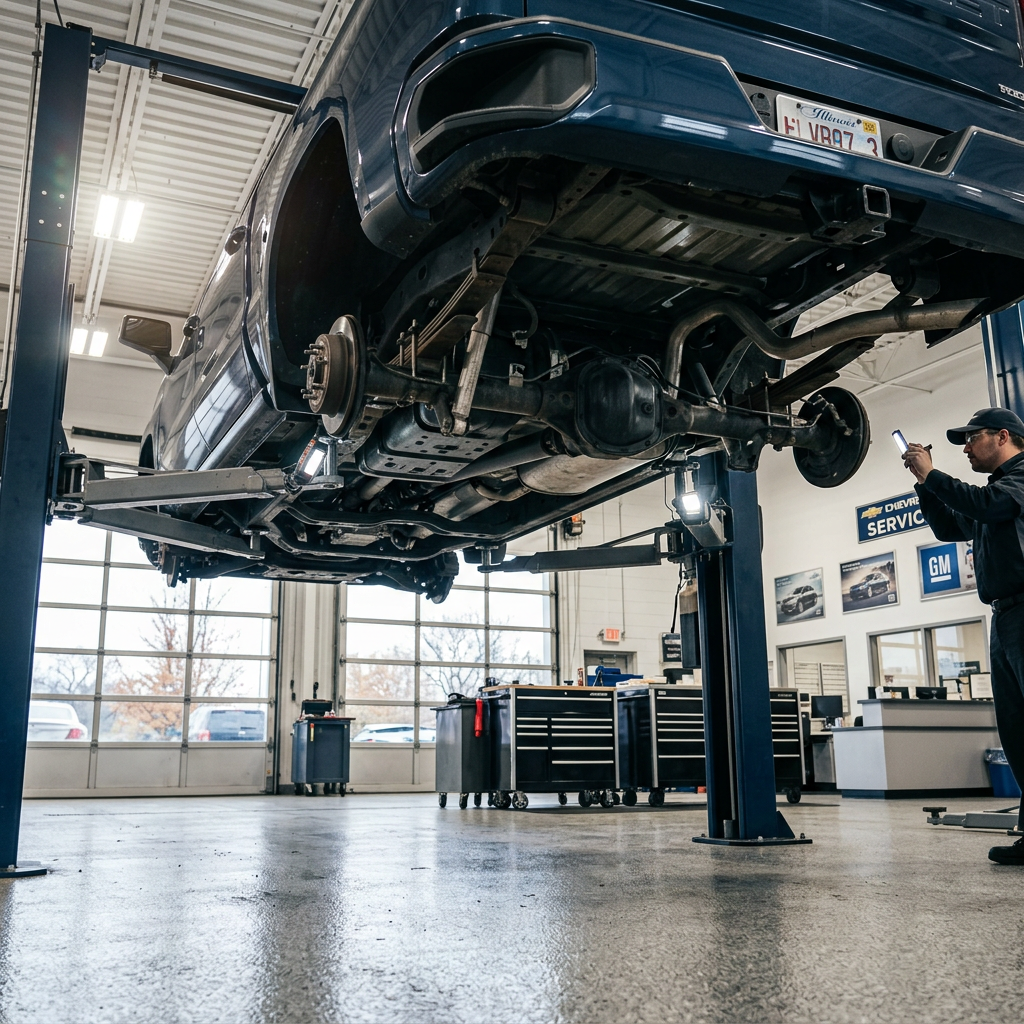
How to Protect Your Chevy's Undercarriage from Chicagoland Road Salt: Pre-Winter Service Essentials
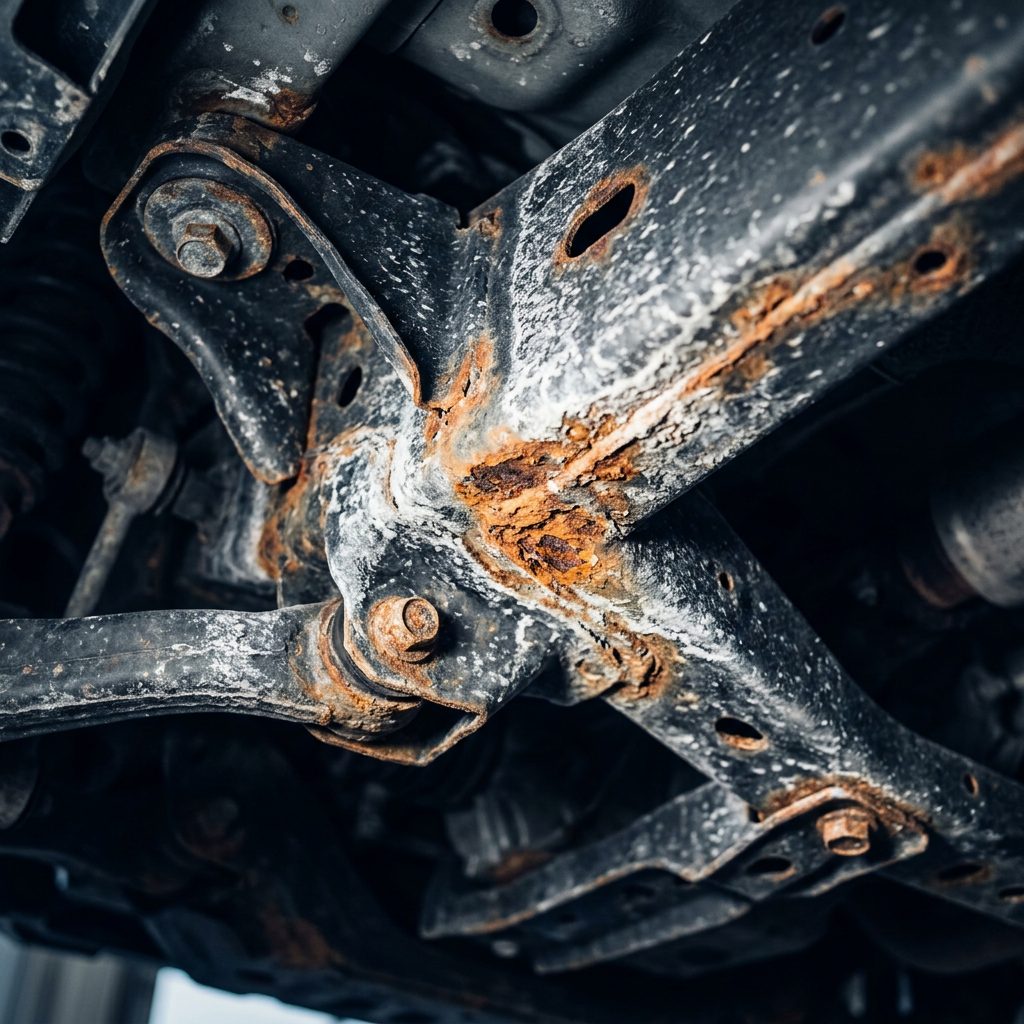
Living in the Chicagoland area means experiencing the full brunt of harsh Midwestern winters. As temperatures plummet across Joliet, Plainfield, and Naperville, municipal highway road crews distribute hundreds of thousands of tons of rock salt and liquid de-icing chemicals onto I-80, I-55, and local thoroughfares. While these treatments are crucial for maintaining traction and highway safety, they create an exceptionally hostile chemical environment beneath your vehicle. Without proactive protection, the salt, slush, and chemical brine bond to your vehicle's frame, brake lines, fuel tank straps, and suspension linkage, initiating rapid corrosion that compromises structural integrity and drastically diminishes resale value.
Key Takeaway: To effectively safeguard your Chevrolet from severe winter corrosion, top automotive technicians advocate applying a high-grade penetrative fluid film or oil-based rust inhibitor prior to the first major freeze. Paired with consistent underbody rinse cycles during winter and annual targeted inspections of high-risk components like boxed frame rails and steel brake lines, you can comfortably preserve your vehicle's mechanical health and chassis structure for decades.
How Chicagoland Road Salt Destroys Your Chevy's Undercarriage and Frame
To understand why Chicagoland road salt is so devastating to metal components, we must examine the chemical reaction taking place beneath your floorboards. Traditional rock salt (sodium chloride) acts as an electrolyte when mixed with water from melted snow or rain. When metal components on your vehicle come into contact with water and oxygen, standard atmospheric oxidation occurs slowly. However, the introduction of sodium chloride dramatically increases the electrical conductivity of water, accelerating the oxidation rate of exposed steel and iron exponentially.
Modern winter road maintenance in Will County has evolved beyond standard granular rock salt. Transportation departments frequently pre-treat roads with liquid calcium chloride and magnesium chloride brines. These chemical compounds lower the freezing point of water even further than sodium chloride, keeping roads ice-free in sub-zero conditions. Unfortunately, these liquid brines are exceptionally sticky and hydroscopic—meaning they absorb ambient moisture and cling to your frame long after the roads have dried out.
When slush containing these concentrated brines gets atomized by your tires, it penetrates into deep internal boxed frame rails, unibody seams, suspension control arm pockets, and exhaust heat shields. Over time, rust eats away at raw structural steel, pitting metallic fuel lines and weakening hydraulic brake lines until failure occurs.
Why Automotive Technicians Recommend Oil Sprays Over Rubberized Sealants in Northern States
For decades, vehicle owners turned to thick, rubberized tar-based undercoatings as a permanent solution to rust. However, master technicians and rustproofing specialists throughout Illinois strongly discourage using rubberized sealants on pre-owned or winter-driven vehicles. Understanding the critical mechanical differences between barrier types is essential before applying protective coatings.
|
Protection Feature
|
Oil-Based Fluid Film Sprays
|
Rubberized Undercoatings
|
|
Application Method
|
Low-viscosity high-pressure atomized spray
|
Thick rubberized sealant coat
|
|
Creeping & Penetration Ability
|
Active creeping into pinch welds and interior frame boxed sections
|
None (sits strictly on outer surface)
|
|
Moisture Trapping Risk
|
Zero risk; displaces existing moisture chemically
|
High risk; traps trapped water/salt underneath if cracked
|
|
Self-Healing Properties
|
Self-heals when scratched by road debris
|
Brittle; cracks and chips from gravel impact
|
|
Service Interval
|
Annual re-application recommended
|
One-time installation (requires frequent patching)
|
The Danger of Rubberized Coatings: When a rubberized coating is applied, it forms a hard, inflexible shell over the underbody. As road gravel and debris strike the chassis during highway driving, minor micro-cracks develop in the hard rubber layer. Moisture and liquid salt brine enter these cracks via capillary action. Once trapped beneath the rubber layer, the salt water cannot evaporate. It acts like a wet sponge against raw steel, rapidly destroying frame rails and floor pans unseen until large sheets of rubber fall off to reveal rusted-through metal.
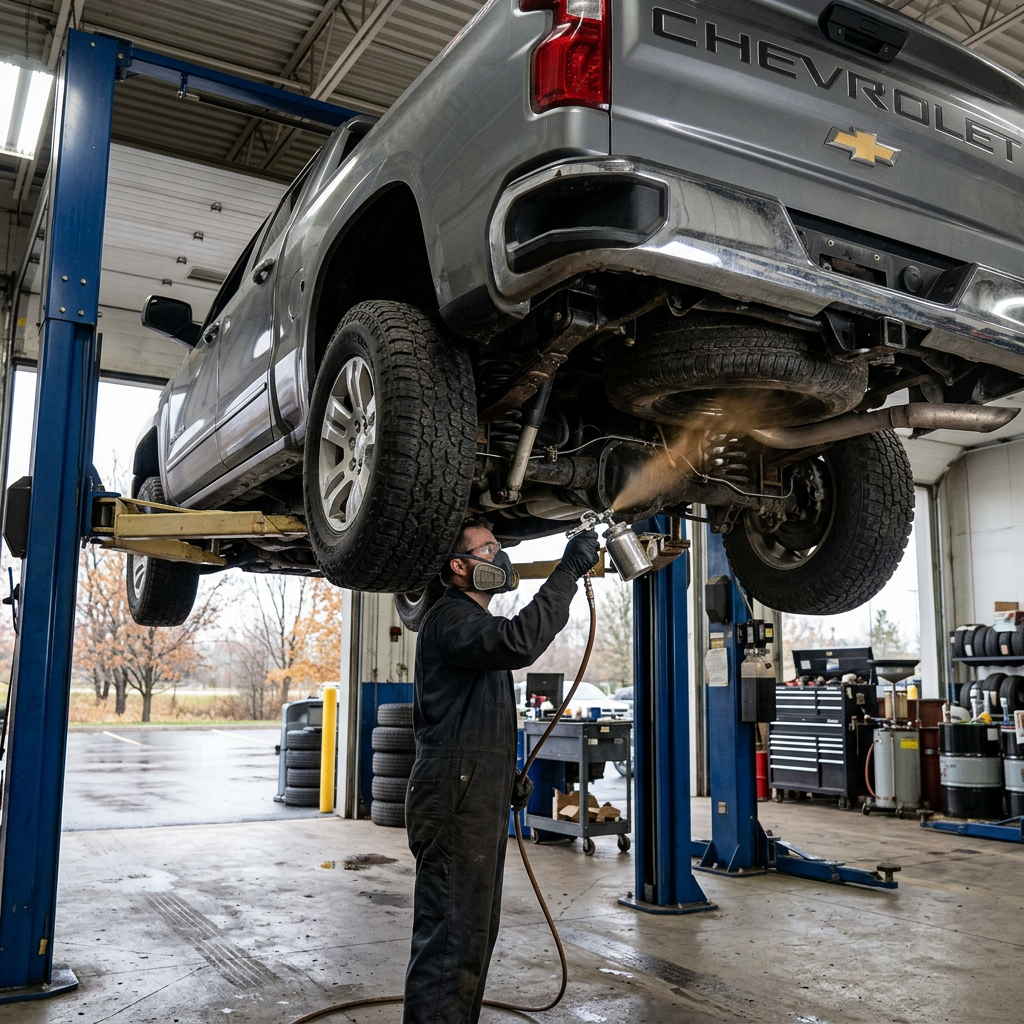
The Superiority of Penetrating Oil Sprays: Modern fluid films and oil-based rust inhibitors do not harden. Instead, they remain active, dynamic liquids suspended on the metal surface. These treatments actively migrate into pinch welds, spot welds, and inner frame cavities. If a rock scratches the coated metal, nearby oil fluid automatically creeps over the bare scratch to re-seal it. Furthermore, oil naturally displaces water, driving existing moisture out of tight metal joints.
How Much Does Professional Underbody Rustproofing Cost in the Chicago Area?
Investing in rust protection yields substantial financial returns over the life of your vehicle by eliminating expensive structural repair bills, rusted brake line replacements, and severe trade-in depreciation. Regional service costs across Joliet, Plainfield, and Naperville vary based on vehicle classification and the coating technology chosen.
Annual Fluid Oil Treatments
$150 – $300 / Year
Professional application of high-grade fluid film barriers. This cost covers thorough underbody cleaning, moisture displacement treatment, and atomized cavity spraying throughout frame rails, doors, and rocker panels.
Permanent Rubberized Sealants
$500 – $1,200 One-Time
Heavy-duty rubber or wax-based hard coatings applied to brand-new vehicles straight from the assembly line. Requires extensive surface masking, degreasing, and cure time in specialized paint booths.
Chassis Size Breakdown
Vehicle Class Variations:
• Compact Cars (Malibu, Trax): ~$150-$180
• Midsize Crossovers (Equinox, Blazer): ~$200-$240
• Full-Size SUVs & Pickups (Silverado, Tahoe): ~$250-$300+
Does the Factory Chevrolet Corrosion Warranty Cover Undercarriage Rust?
A common misconception among new car buyers is that the factory manufacturer warranty protects against all winter rust damage. Chevrolet provides robust limited warranty protection, but vehicle owners must carefully review the distinction between surface rust and rust-through perforation.
Sheet Metal Perforation vs Surface Corrosion: General Motors standard rust-through warranties cover outer body sheet metal panel perforation—meaning an actual hole rusted completely through from the inside out. General surface rust on underlying chassis frame rails, steel suspension control arms, steering linkage, tie rod ends, drive shafts, and exhaust piping resulting from environmental road salt exposure is classified as normal wear and tear.
Because factory warranties do not cover surface corrosion caused by road chemicals, establishing a pre-winter preventative underbody maintenance routine is vital to avoiding out-of-pocket chassis component replacement expenses down the line.
What Safety Equipment Is Required When Spraying Underbody Rust Protection?
If you plan to perform a DIY application of oil-based undercoating or fluid film in your home garage, safety must be your top priority. Atomizing petroleum or lanolin compounds creates dense airborne chemical mists that pose serious health hazards if inhaled or contacted with skin and eyes.
Essential Personal Protective Equipment (PPE):
• NIOSH-Approved Respirator: Standard dust masks are completely inadequate. You must wear a dual-cartridge respirator fitted with organic vapor and P100 particulate filters to protect your lungs.
• Sealed Goggles / Face Shield: Prevent airborne oil mist and dislodged rust debris from entering your eyes.
• Protective Coverall Suit: Disposable Tyvek protective suits prevent oil saturation into clothing and skin absorption.
Environmental & Workshop Setup Rules:
• Ventilation: Always work in a well-ventilated space equipped with cross-draft exhaust fans. Never spray in an enclosed, unventilated garage space.
• Exhaust System Exclusion Zones: Keep all fluid film away from hot catalytic converters, mufflers, and exhaust manifolds to eliminate fire risks.
• Brake Component Masking: Protect brake rotors, calipers, and pads. Getting oil sprays onto braking surfaces will severely compromise braking friction and stopping distance.
What Pre-Winter Washing and Prep Steps Help Protect Your Chevy?
Applying rust protection over dirt, mud, and caked-on salt residue is counterproductive, as it traps corrosive agents against the metal beneath the coating layer. Follow this rigorous 3-step preparation routine before applying any protective underbody barrier.
1. High-Pressure Degreasing Wash
Thoroughly blast the underbody using a high-pressure washer fitted with an undercarriage wand attachment. Use an industrial automotive degreaser to strip away oily road film, grease accumulations, and embedded dirt from frame rails, wheel wells, and subframes.
2. Scale Scraping & Surface Prep
Inspect the undercarriage for existing loose surface rust or flaking paint scale. Use a wire brush or scraper to knock loose debris away down to solid metal. Treat surface rust pockets with a rust converter formula to chemically neutralize iron oxide.
3. Thermal & Ambient Drying
Allow the vehicle's frame and underbody components to dry completely for 24 to 48 hours in a heated environment. Trapped water pockets will impede fluid film adhesion and cause premature coating breakdown.
Mid-Winter Car Wash Guidelines for Driving in Joliet, Plainfield, and Naperville
Maintaining a clean vehicle during a Chicagoland winter is an ongoing battle. Knowing when and how to wash your Chevy during active freezing cycles is critical for preventing salt accumulation while protecting mechanical locks and brake assemblies.
Optimal Wash Frequency & Temperature Thresholds:
• Wash your undercarriage every 10 to 14 days during active winter weather when roads are actively treated with salt brines.
• Temperature Guideline: Only wash your vehicle when ambient air temperatures are 25°F (-4°C) or higher. Washing below 20°F risks instant flash-freezing of water inside door latches, window seals, and parking brake cables.
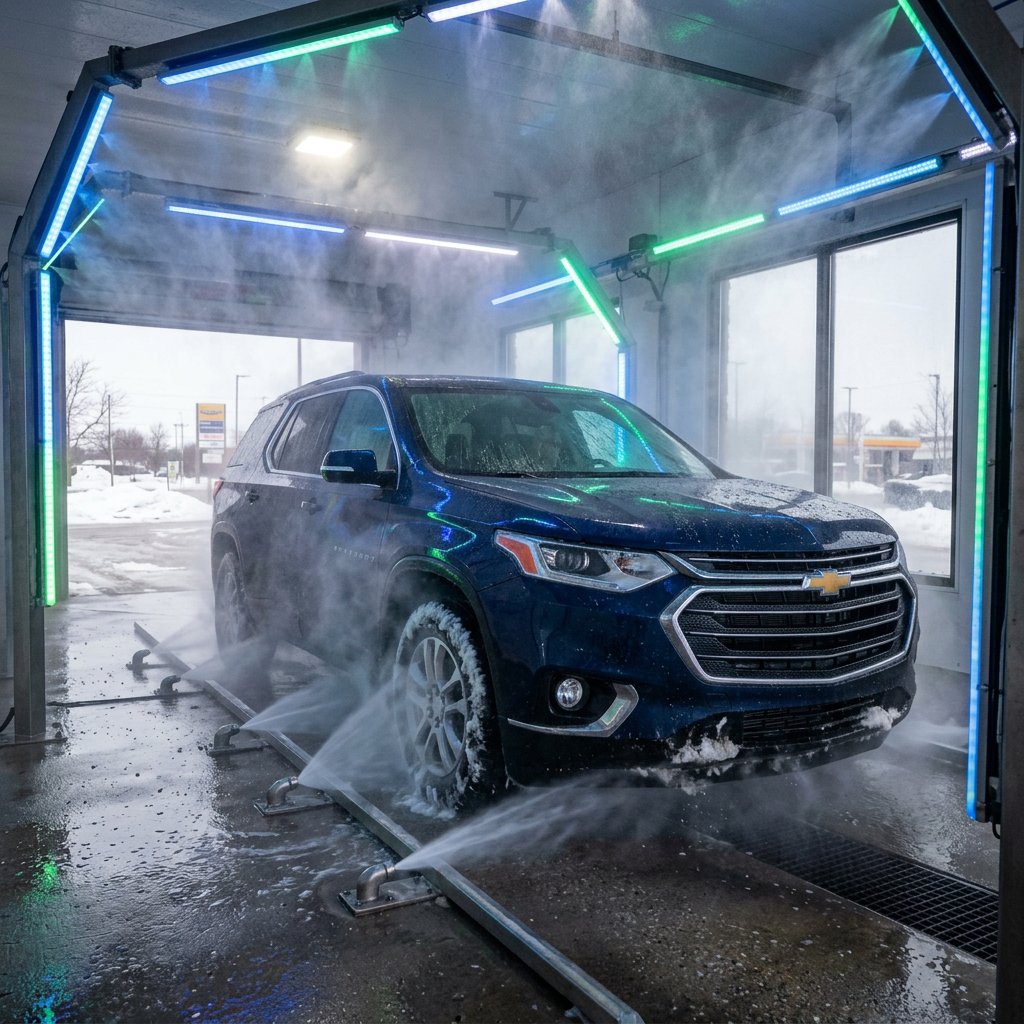
Touchless Automated Washes vs Pressure Wands: Choose touchless automatic car washes equipped with dedicated high-pressure underbody rinse jets. Avoid automated washes with heavy hanging cloth brushes, which drag abrasive salt and sand across your vehicle's clear coat.
Post-Wash Precautions: Immediately dry door jambs, weatherstripping, and lock cylinders with a microfiber towel after washing. Drive the vehicle for 5 to 10 minutes while tapping the brakes to evaporate water sitting on brake rotors and brake pads to prevent overnight rust binding.
Spring De-Salting Routine: How to Flush Road Salt Out of Your Frame Rails
The most destructive phase of rust creation doesn't occur in sub-zero January weather—it happens during early spring. Corrosion is a temperature-dependent chemical reaction; as spring temperatures rise into the 50s and 60s, embedded salt residue trapped inside frame boxed sections accelerates rust formation dramatically.
Post-Winter Frame Rail Flushing Strategy:
• Insert a flexible hose with an omni-directional spray nozzle inside internal access holes along full-length frame rails.
• Flush each frame cavity with clean water until runoff runs completely clear of mud and dissolved salt sediment.
• Pay special attention to rocker panel drain holes and rear wheel arch pockets where wet road sludge settles during winter driving.
Neutralizing Brine Compounds: Utilize specialized salt-neutralizing wash formulas during your spring detail routine. Standard car soap cannot fully break chemical bonds formed by magnesium chloride brine; dedicated salt neutralizers dissolve crystal deposits completely, leaving metal surfaces clean and neutral.
High-Risk Chevy Models and Components: Trucks, SUVs, and Daily Commuters
Silverado & Colorado Pickups
Boxed Frame Rails & Spare Tire Hoists: Hydroformed fully-boxed frame sections offer incredible rigidity but can trap salt sludge inside. Spare tire winch mechanisms and rear leaf spring shackles are prone to heavy oxidation if unsealed.
Equinox, Traverse & Crossovers
Subframes & Suspension Arms: Unibody crossovers feature front and rear steel subframe cradles. Road spray flung by tires settles on lower control arm mounts, subframe bushings, and lower radiator supports.
Tahoe, Suburban & Full SUVs
Rear Multi-Link & AC Lines: Full-size SUVs equipped with rear independent suspension or auxiliary rear air conditioning features have exposed aluminum and steel refrigerant lines running beneath floor pans susceptible to galvanic rust.
Why Professional Pre-Winter Undercarriage Service Is Worth It for Chicagoland Drivers
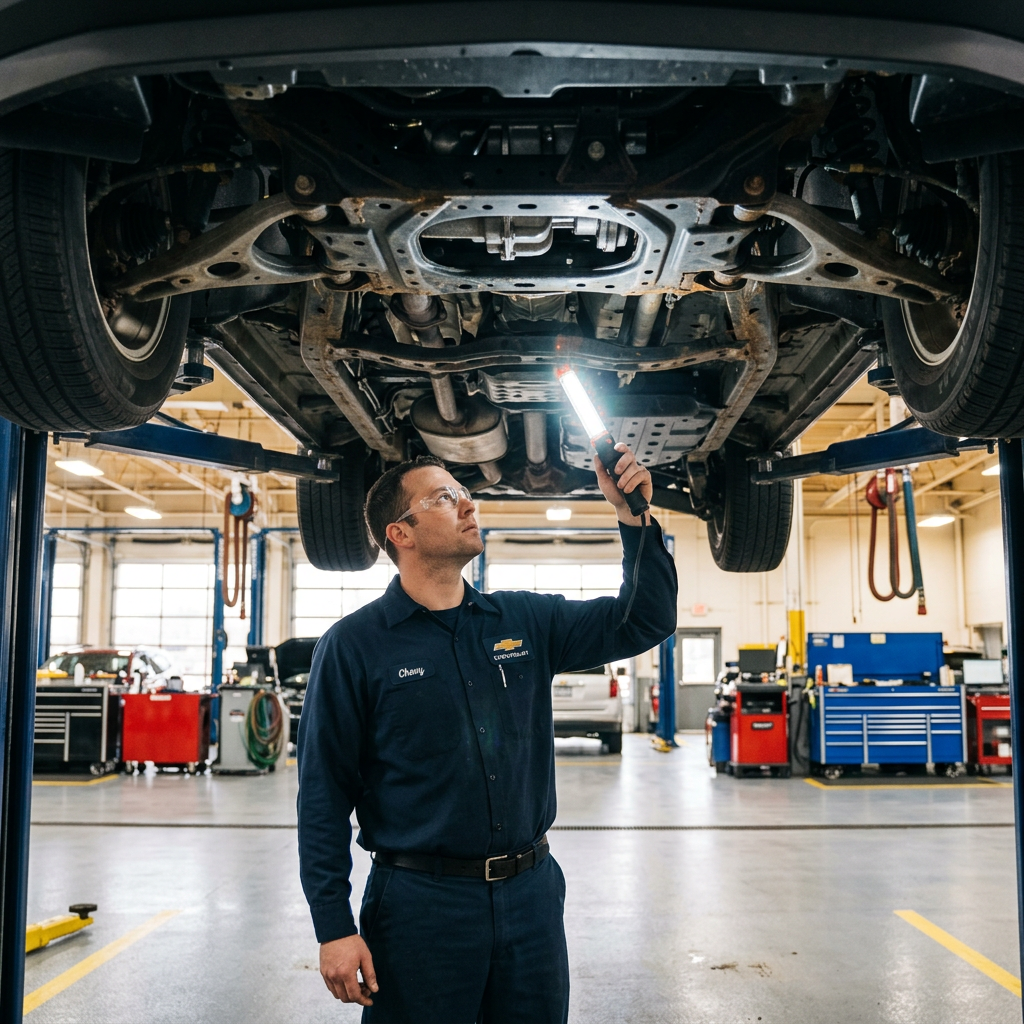
While DIY kits exist, having certified factory-trained GM technicians handle your pre-winter undercarriage service offers distinct mechanical advantages. Professional service centers utilize hydraulic commercial lifts that provide complete, unhindered access to every millimeter of your vehicle's frame and mechanical components.
Expert Multi-Point Mechanical Inspections: Prior to applying protective barriers, a trained technician inspects critical safety elements that are difficult to examine on driveway jacks. This includes evaluating brake line wall thickness, checking shock absorber seals, inspecting rubber CV axle boots for tears, and verifying fuel tank strap security.
Targeted Application Precision: Specialized high-pressure spray wands with 360-degree rotational nozzles allow technicians to coat the internal cavities of boxed frame rails and rocker panels while meticulously avoiding sensitive components like brake discs, exhaust catalytic converters, and oxygen sensors.
Preserving your Chevrolet's chassis integrity ensures higher trade-in values, smoother mechanical performance, and total confidence when navigating icy, salt-encrusted roads across Will and Cook counties.
Schedule Your Chevy Pre-Winter Undercarriage Inspection at Hawk Chevrolet of Joliet
Before the first heavy snowstorm hits and liquid brine coats our highways, Protect your automotive investment today with expert pre-winter underbody inspection and chassis preparation at Hawk Chevrolet of Joliet.
Our factory-certified GM service department is conveniently located to serve drivers throughout Joliet, Plainfield, Naperville, and surrounding Chicagoland communities. Get Directions to Hawk Chevrolet of Joliet at 2001 W Jefferson St, Joliet, IL 60435, or Call (815) 472-8001 to speak with a dedicated service advisor about our winter protection packages.



 Shop Chevy Red Tag.