Car Battery Replacement Costs near Joliet, IL: Expected Pricing and What Is Included
If your vehicle is struggling to crank on crisp Will County mornings, you are likely wondering what a new battery will cost. For drivers in Joliet, Naperville, Plainfield, and surrounding Chicagoland communities, a standard car battery replacement typically ranges from $150 to $350+ total out-of-the-door cost. The final price depends primarily on your vehicle's make, engine size, electronic architecture, and whether your automobile requires a standard conventional lead-acid battery or an advanced Absorbed Glass Mat (AGM) battery.
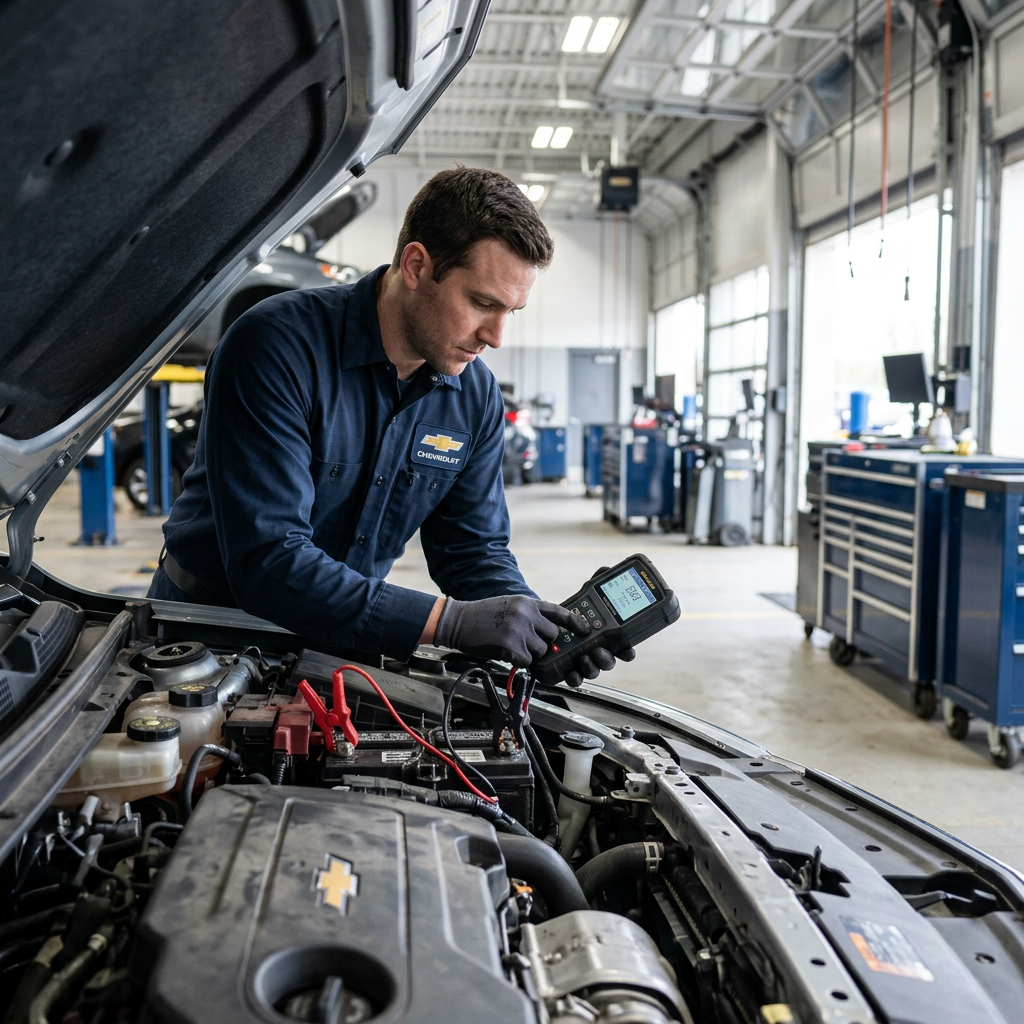
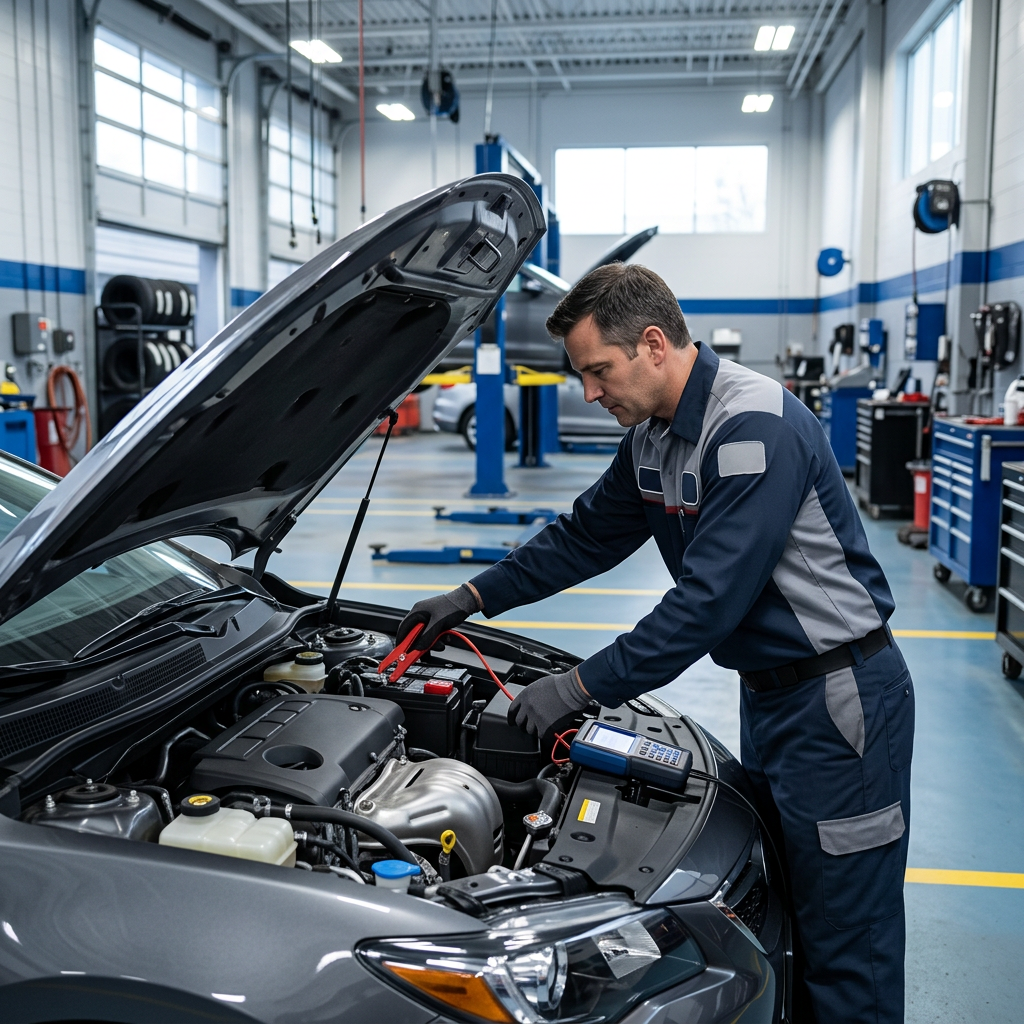
When you schedule service at a professional dealership service department like Hawk Chevrolet of Joliet, your total invoice covers far more than just raw auto parts. A thorough battery service package includes diagnostic testing of your existing battery and charging system, clean removal of corroded hardware, professional installation of an OEM-spec battery, eco-friendly EPA recycling of your old core unit, and necessary electronic Battery Management System (BMS) recalibration.
Standard Flooded vs. AGM Batteries: Why Battery Type Drives Replacement Price
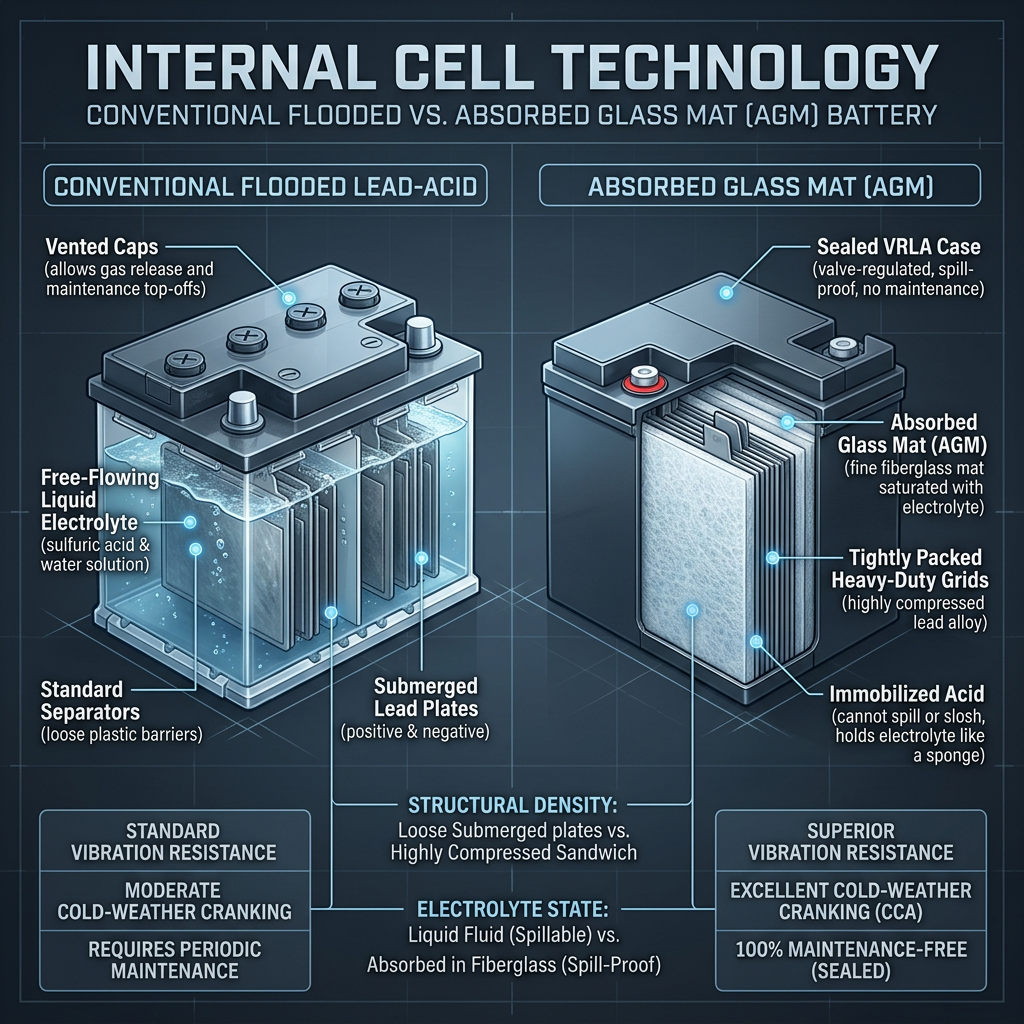
Conventional Flooded Lead-Acid Batteries ($150 – $220): Traditional wet-cell batteries rely on liquid sulfuric acid surrounding lead plates. They are economic options suitable for older vehicles with basic electrical accessory demands and standard ignition setups.
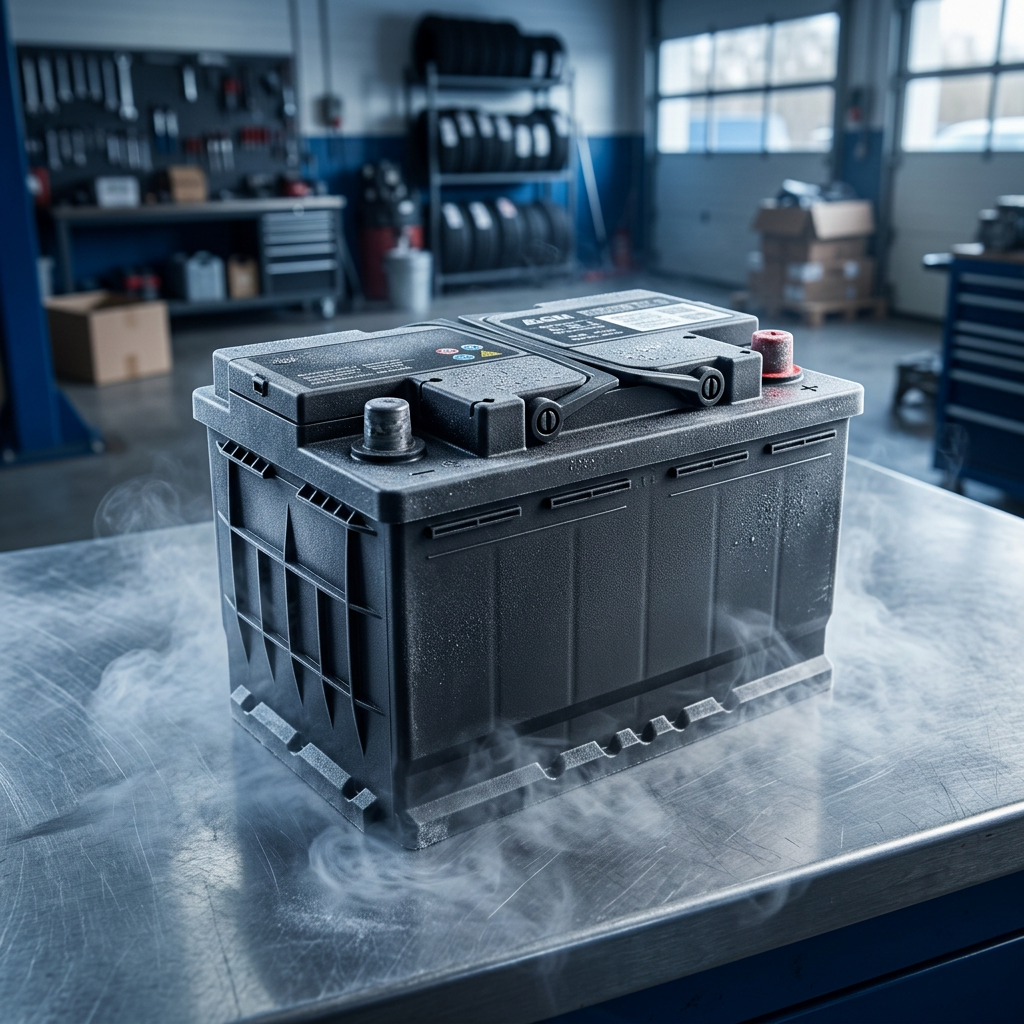
Absorbed Glass Mat (AGM) Batteries ($220 – $380+): AGM chemistry suspends electrolyte solution inside fiberglass mat separators. Modern vehicles equipped with engine Auto Stop-Start technology, high-draw infotainment screens, heated seats, driver assist sensors, and active security systems require AGM units. AGM batteries recharge up to five times faster, deliver superior Cold Cranking Amps in sub-zero Northern Illinois weather, and withstand severe vibration.
Key Factors That Determine Your Total Battery Invoice in Will County
1. Group Size & Dimensions
Battery physical size, terminal post locations (top vs. side mount), and hold-down bracket geometry dictate the physical Group Size (e.g., Group 48/H6, Group 94R/H7, Group 35). High-demand truck and SUV engines require larger casing dimensions with higher lead plate surface area, carrying higher raw material production costs.
2. Capacity & CCA Rating
Cold Cranking Amps (CCA) measures the electrical current output a battery delivers at 0°F for 30 seconds. Higher CCA capacity units built to withstand brutal Midwest freeze-thaw cycles command premium pricing due to greater purity density in internal lead plates and heavy-duty cell connections.
3. Labor & Core Charges
Labor costs vary based on component accessibility. While simple top-mounted batteries under the hood require 15 minutes of labor, trunk-mounted, wheel-well, or under-seat battery locations require extra assembly work. Mandatory state core deposit charges ($15-$25) are refunded upon recycling your spent battery.
What Cold Cranking Amps (CCA) Rating Is Needed for Chicagoland Winters?
Chicagoland winter weather is notorious for arctic blasts dipping below zero degrees Fahrenheit. When ambient temperatures drop from 70°F down to 0°F, a vehicle battery loses approximately 30% to 50% of its total cranking energy. Simultaneously, cold motor oil thickens to syrup consistency, demanding up to twice as much power from the starter motor to crank the crankshaft.
For dependable winter starting across Will, Grundy, and Cook counties, sedans and crossovers typically require 600 to 700 CCA, while full-size pickup trucks and V8 SUVs require 750 to 850+ CCA. Equipping an underpowered battery will leave you stranded at the worst possible moment.
Chicagoland First Freeze Prep: Essential Battery, Tire, and AWD Inspection Guide
The transition from late autumn into Northern Illinois' first hard freeze presents severe challenges to vehicle mechanical systems. Daily commuters navigating the I-80 corridor, I-55 interchange, and Route 59 encounter sudden icy bridges over the Des Plaines River and unexpected lake-effect snow squalls.
Proactive vehicle maintenance before nighttime temperatures plummet below 32°F prevents costly emergency towing services and dangerous highway breakdowns. Whether you drive a brand-new crossover or depend on quality pre-owned vehicles for daily work travel, completing an early winter safety check preserves system integrity throughout the cold months.
What Should a Joliet Driver Have Checked Before the First Freeze?
1. Battery Health & Terminal Conductance: Perform a digital conductance test checking cold cranking reserve capacity and resting voltage (target 12.6V+). Clean off white/blue sulfate oxidation from terminals.
2. Alternator & Charging Voltage: Verify your alternator is supplying between 13.8V and 14.4V under full electrical load to ensure battery replenishment while driving.
3. Engine Coolant & Washer Fluid: Test antifreeze freeze-point protection down to at least -20°F. Swap out summer washer fluid for winter de-icing fluid rated for -20°F.
4. Tire Tread & Cold Inflation Pressure: Check for minimum 5/32-inch tread depth. Air pressure drops by roughly 1 PSI for every 10°F drop in outdoor temperature.
What Is the Correct Coolant to Water Ratio for Freeze Protection Down to -20°F?
50/50 Standard Mix
A 50% Dex-Cool/ethylene glycol concentrated coolant and 50% distilled water mixture provides full freeze protection down to -34°F and boil-over protection up to 265°F. This ratio is ideal for standard Northern Illinois autumn and early winter driving.
60/40 Extreme Freeze Mix
For extreme Arctic polar vortex events dropping temperatures below -20°F, increasing concentration to 60% antifreeze and 40% water lowers the freeze protection point down to -62°F, preventing ice slush accumulation inside radiator cores.
Engine Damage Risk
Diluted coolant mixtures (e.g., 70% water) expand as water freezes inside narrow passageways, cracking cast aluminum engine blocks, busting heater cores, and rupturing radiator side tanks.
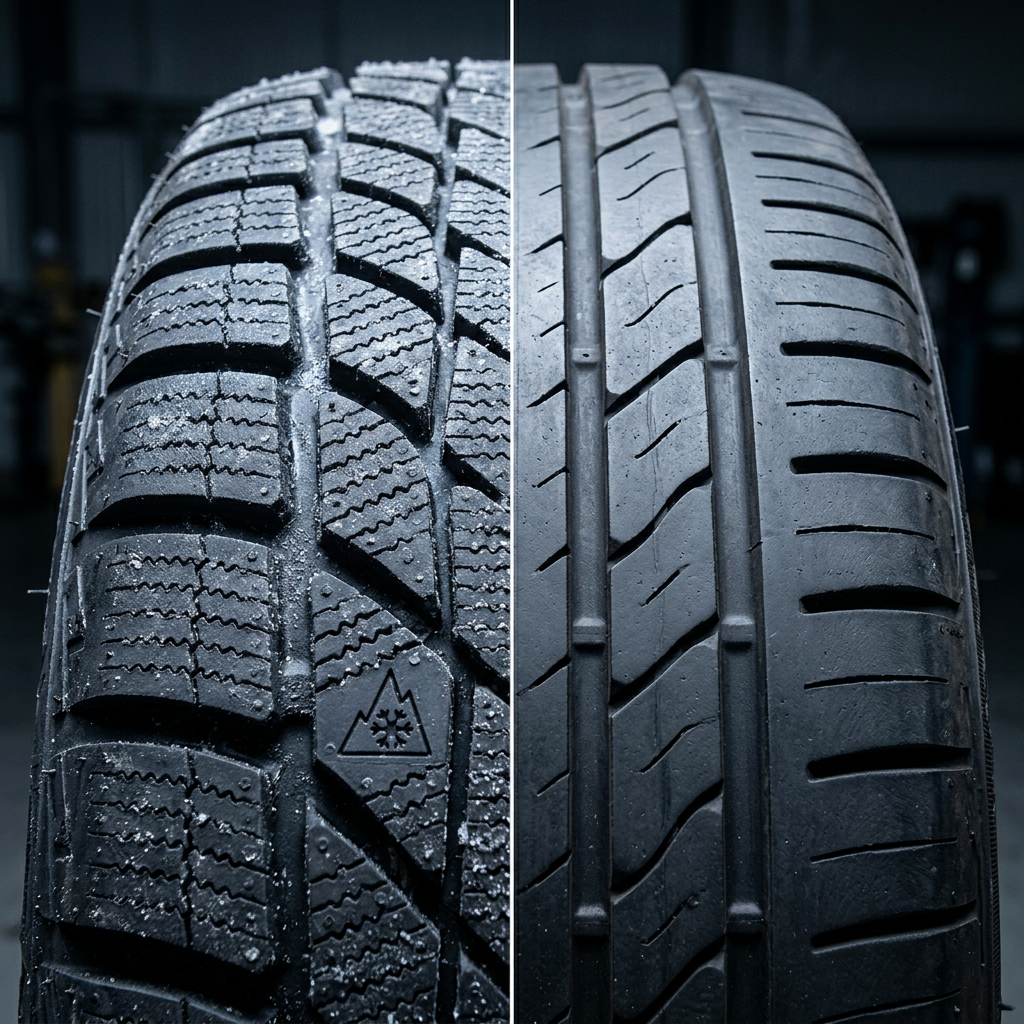
How Do 3-Peak Mountain Snowflake (3PMSF) Rated Tires Compare to Standard All-Season Tires?
Standard all-season tires use tread rubber compounds engineered for long wear in warm temperatures. When local temperatures dip below 45°F, all-season rubber hardens like hard hockey pucks, losing pliability and grip on cold pavement.
Tires stamped with the 3-Peak Mountain Snowflake (3PMSF) symbol feature specialized silica rubber compounds that remain soft at sub-zero temperatures. They feature microscopic zig-zag siping that bites directly into packed snow and slush along Jefferson Street and Essington Road, reducing stopping distances by up to 30 feet.
Does AWD Help Your Car Stop or Steer Better on Icy Chicagoland Streets?
A common winter driving myth is that All-Wheel Drive (AWD) or Four-Wheel Drive (4WD) helps vehicles stop faster on ice. AWD only assists with acceleration and forward propulsion by distributing engine power across four wheels instead of two.
When applying brakes on icy roads, every modern vehicle already features four-wheel braking managed by Anti-lock Braking Systems (ABS). AWD does not provide extra lateral cornering grip or shorter stopping performance—tire rubber composition and proper tread depth are the sole factors governing deceleration on ice.
How Much Does a Pre-Winter Vehicle Inspection Cost in the Chicagoland Area?
Multi-Point Inspection
Comprehensive pre-winter multi-point inspections in Will County range from $49 to $129, often offered free or discounted when bundled with scheduled oil changes, tire rotations, or brake service.
Emergency vs. Prevention
Investing under $100 in preventive fall maintenance avoids emergency flat-bed towing charges ($150–$300+), freeze-damage repairs, and missed work shifts during severe winter storms.
Budget Options
For comprehensive vehicle care, drivers can review pre-approved auto financing and payment options for unexpected major repairs or replacement parts.
DIY vs. Professional Installation: BMS Reset and Battery Warranty Protection
Replacing a modern automotive battery involves far more than unbolting two metal terminals. Modern vehicles utilize intelligent Battery Management Systems (BMS) that adapt alternator charging output based on the age and internal resistance of the battery.
If a new battery is installed without performing a digital OBD-II BMS recalibration reset, the alternator will continue pumping high charging voltage meant for an aging battery into the new unit. This causes overcharging, thermal stress, cell degradation, and premature battery failure—potentially voiding your factory replacement warranty.
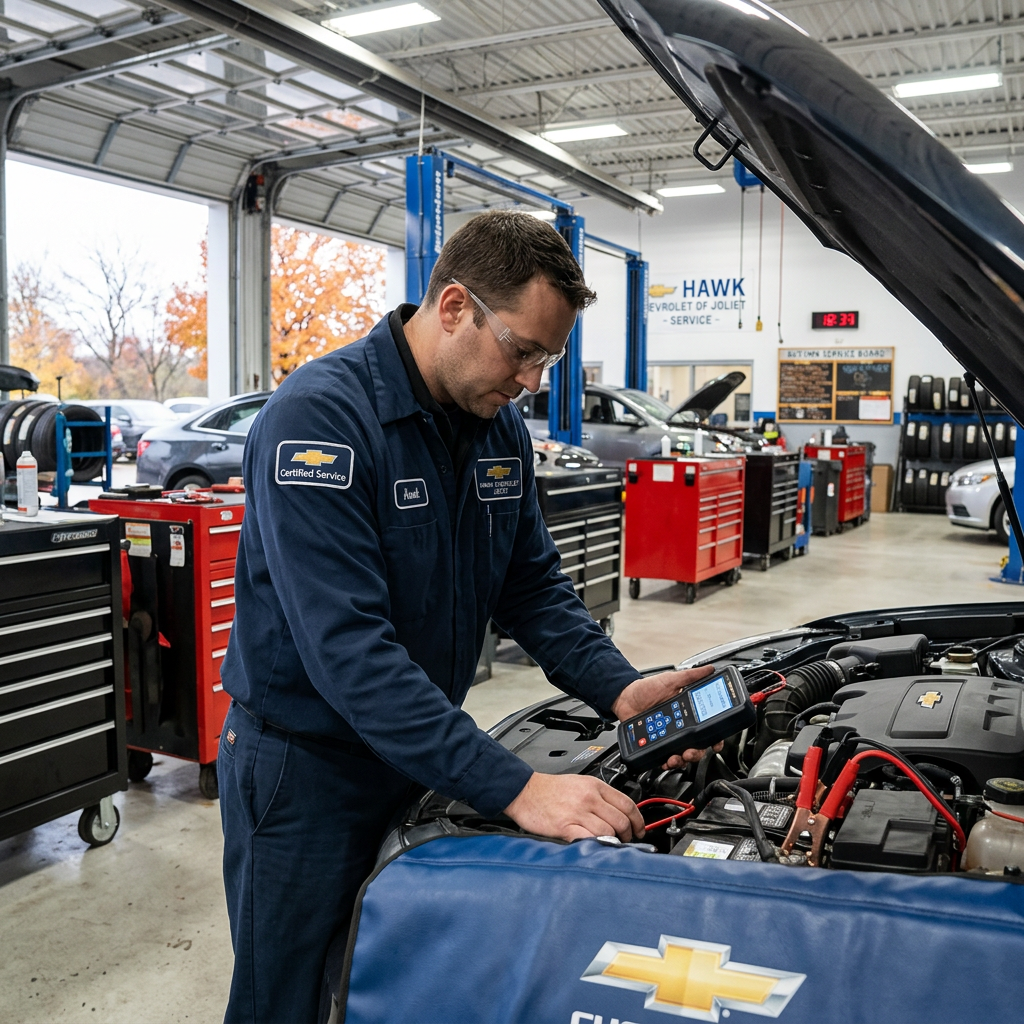
Professional installation at Hawk Chevrolet of Joliet ensures factory-trained technicians register your replacement battery to the vehicle computer, preserve memory settings for radio and driver profiles, and maintain full nationwide ACDelco 36-month free-replacement warranty coverage.
Schedule Your Battery Replacement and Winterization Service at Hawk Chevrolet of Joliet
Don't let Joliet's first freezing morning catch you with a dead battery. Trust the factory-certified service center at Hawk Chevrolet of Joliet for fast, reliable battery testing, genuine OEM ACDelco battery replacements, multi-point winter safety inspections, tire replacements, and complete cooling system flushes.



 Shop Chevy Red Tag.