What Are the Early Warning Signs of a Failing Car Battery? Key Symptoms Every Driver Should Know
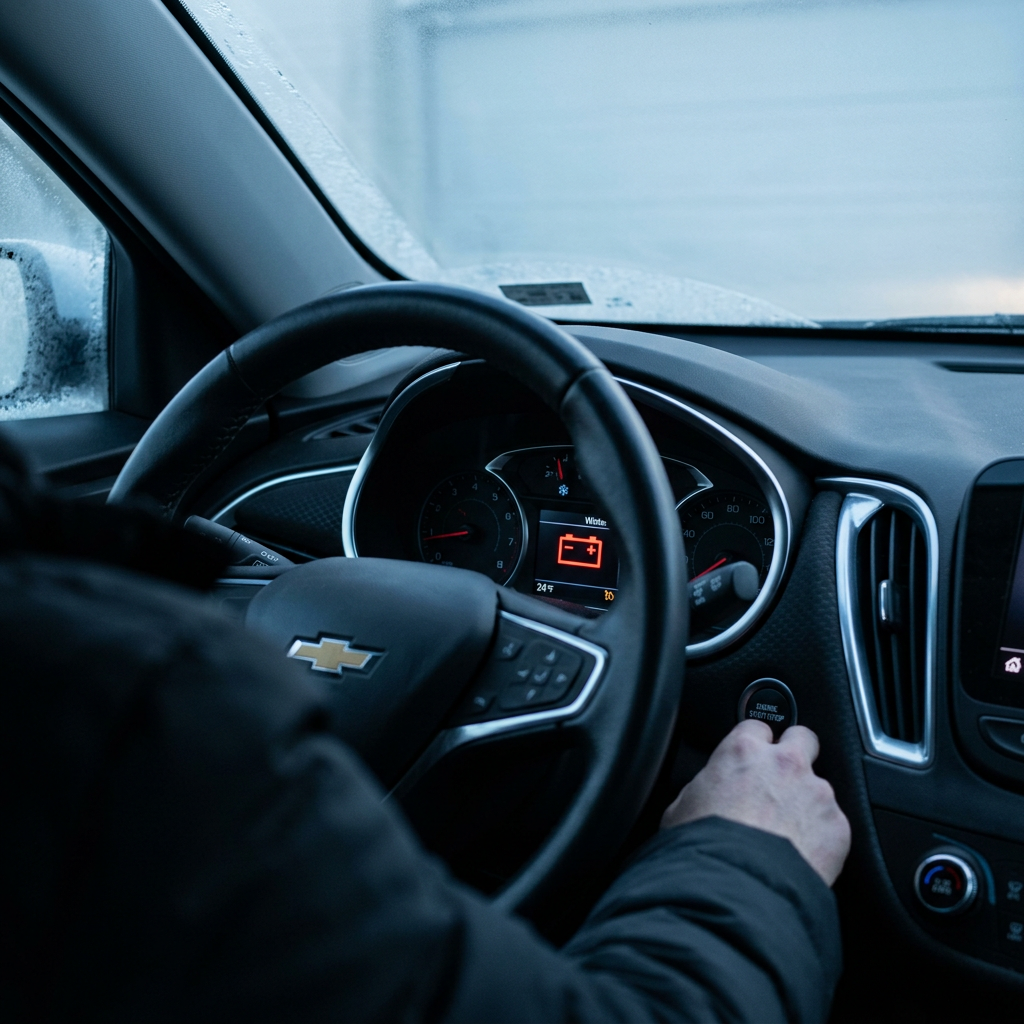
Modern automotive electrical systems are exceptionally sophisticated, powering everything from advanced driver-assistance sensors to high-definition touchscreens. However, all of these complex systems still rely on a single foundational component: your vehicle's 12-volt battery. Recognizing the early warning signs of a failing car battery before it dies completely is one of the most vital skills for any vehicle owner. The primary early symptoms include a slow engine crank when turning the key or pushing the start button, dimming headlights or flickering cabin lights, a distinct clicking sound upon ignition, a visibly swollen or bloated battery case, and an illuminated battery warning light on your instrument cluster. Catching these early indicators prevents sudden, stressful breakdowns during extreme weather snaps in Northern Illinois. Whether you are navigating freezing sub-zero winter mornings or enduring scorching summer heatwaves along Interstate 80 and Route 59 in Joliet, a compromised battery will inevitably fail when under thermal stress. At Hawk Chevrolet of Joliet, our service team emphasizes proactive battery maintenance so you never find yourself stranded at the pump or in your driveway running late for your morning commute.
Recognizing the First Physical and Auditory Warning Signs of Battery Failure
Long before a car battery stops functioning altogether, it emits subtle physical and auditory cues that signal its chemical charge capacity is declining. The most common auditory sign is a sluggish or extended engine crank. When you press the starter button, instead of a sharp and instant engine roar, you might hear a labored 'r-r-r-vroom' that takes several seconds longer than usual. This happens because a weakened battery cannot deliver the required cold cranking amps (CCA) to turn the starter motor swiftly. Another telling physical symptom involves your cabin electronics and power equipment. You might notice power windows rolling up at half their normal speed, heated seats taking longer to warm up, or dashboard screens momentarily flickering black when cranking the starter. If you hear a rapid clicking noise when turning the ignition key, the battery starter solenoid is repeatedly engaging and disengaging due to insufficient electrical current. Drivers interested in upgrading their daily vehicle can explore our Browse New Inventory options to see vehicles with state-of-the-art battery monitoring technology.
Visual Under-the-Hood Inspections: Corrosion, Swollen Cases, and Fluid Leaks
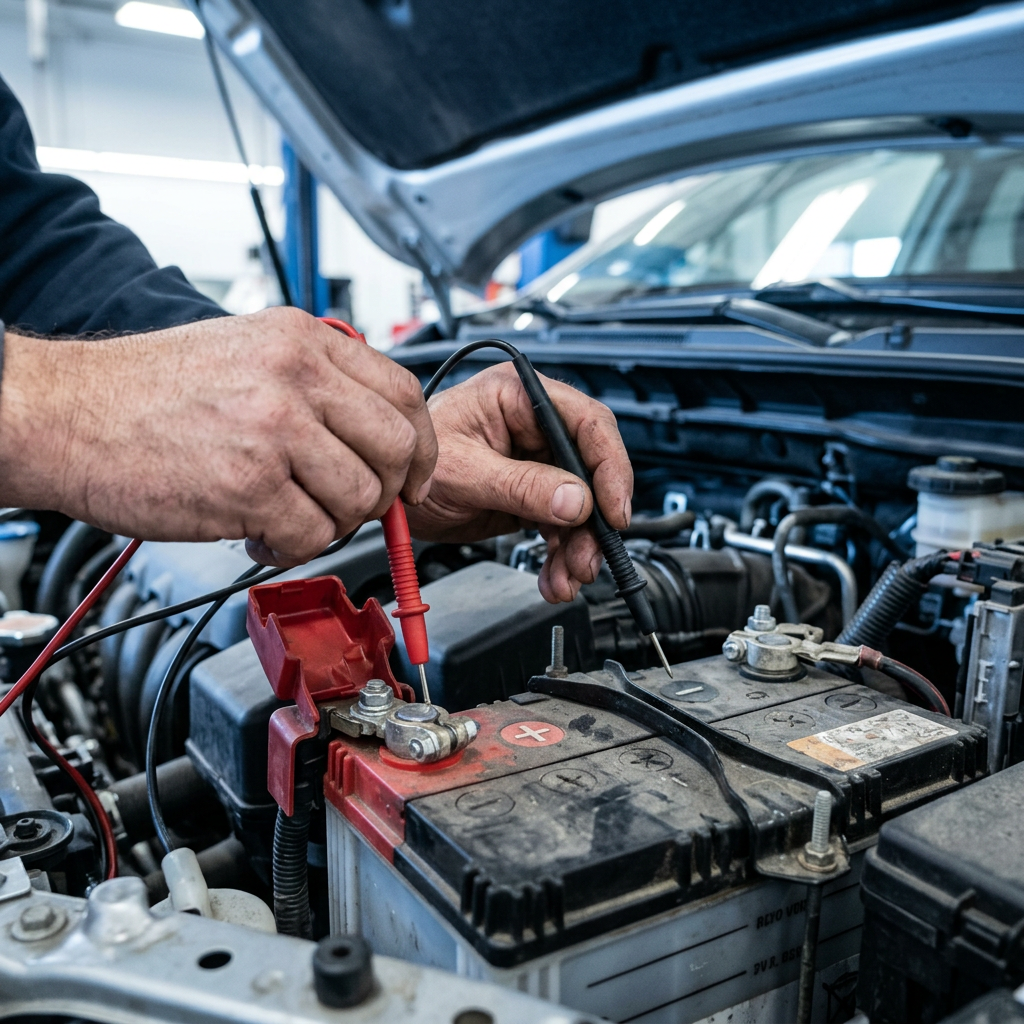
Popping your vehicle's hood for a visual inspection every few months can reveal severe battery degradation long before you get locked out of a starting engine. Start by examining the battery terminals and cable clamps. A powdery, crusty buildup with a blue, white, or greenish tint around the positive and negative posts indicates lead-sulfate reaction and copper terminal corrosion. This corrosion creates high electrical resistance, preventing the alternator from recharging the battery effectively and blocking current flow to the starter motor. In addition to terminal buildup, examine the shape of the plastic battery casing itself. A battery housing that appears swollen, bulged, or bloated on the sides is extremely dangerous.
Swollen battery cases are typically caused by severe thermal expansion from excessive engine bay heat, chronic overcharging by a malfunctioning voltage regulator, or internal cell short circuits. If your battery casing is bloated, it has lost structural integrity and could leak acid or rupture. Finally, pay attention to smells and moisture. If you notice a pungent, rotten egg odor near the engine bay, your battery electrolyte fluid is boiling off and venting hydrogen sulfide gas. Acid leaks manifest as wet, oily films around the top cap seams or terminal bases. Leaking battery acid eats through nearby wiring harnesses, metal tray brackets, and air intake hoses, turning a simple battery swap into an expensive wiring repair.
How Will County Weather and Midwest Temperature Extremes Accelerate Battery Degradation
Winter Frost & CCA Loss: Sub-freezing Midwest winters significantly reduce a battery's chemical reaction speed. At 0°F, a lead-acid battery loses roughly 50% of its starting strength, right when thick engine oil demands maximum cranking power.
Summer Heat Evaporation: While winter gets the blame for dead batteries, summer heat is the silent killer. Driving in 90°F+ heat along I-80 and I-55 accelerates internal plate corrosion and evaporates liquid electrolyte inside non-sealed cells.
3-to-5 Year Lifespan Realities: Due to extreme thermal swings in Joliet, Plainfield, and Naperville, the average car battery lifespan is 3 to 5 years. Routine load testing starting at year 3 is essential to prevent unexpected winter failures.
Battery vs. Alternator vs. Starter: How to Tell Which Electrical System Component Is Failing
When your engine refuses to start, it is easy to assume the battery is responsible. However, your vehicle's starting and charging network operates as a three-part ecosystem: the battery provides chemical energy for starting, the starter motor mechanically cranks the engine, and the alternator generates electrical power while driving to keep the battery charged. Misdiagnosing a bad alternator as a dead battery will leave you stranded again shortly after buying a replacement.
To distinguish between these components, observe how the electrical symptoms present themselves. A weak battery typically exhibits slow cranking that worsens on cold mornings, but jump-starting the car allows it to run continuously. Conversely, if your car starts with a jump but dies shortly after removing the jumper cables, the alternator is failing to produce voltage. A bad starter usually presents as a single heavy click without any cranking, even when headlights remain bright.
|
Component
|
Primary Symptom
|
Key Diagnostic Indicator
|
Jump-Start Result
|
|
Weak Battery
|
Sluggish crank, dim interior lights before starting
|
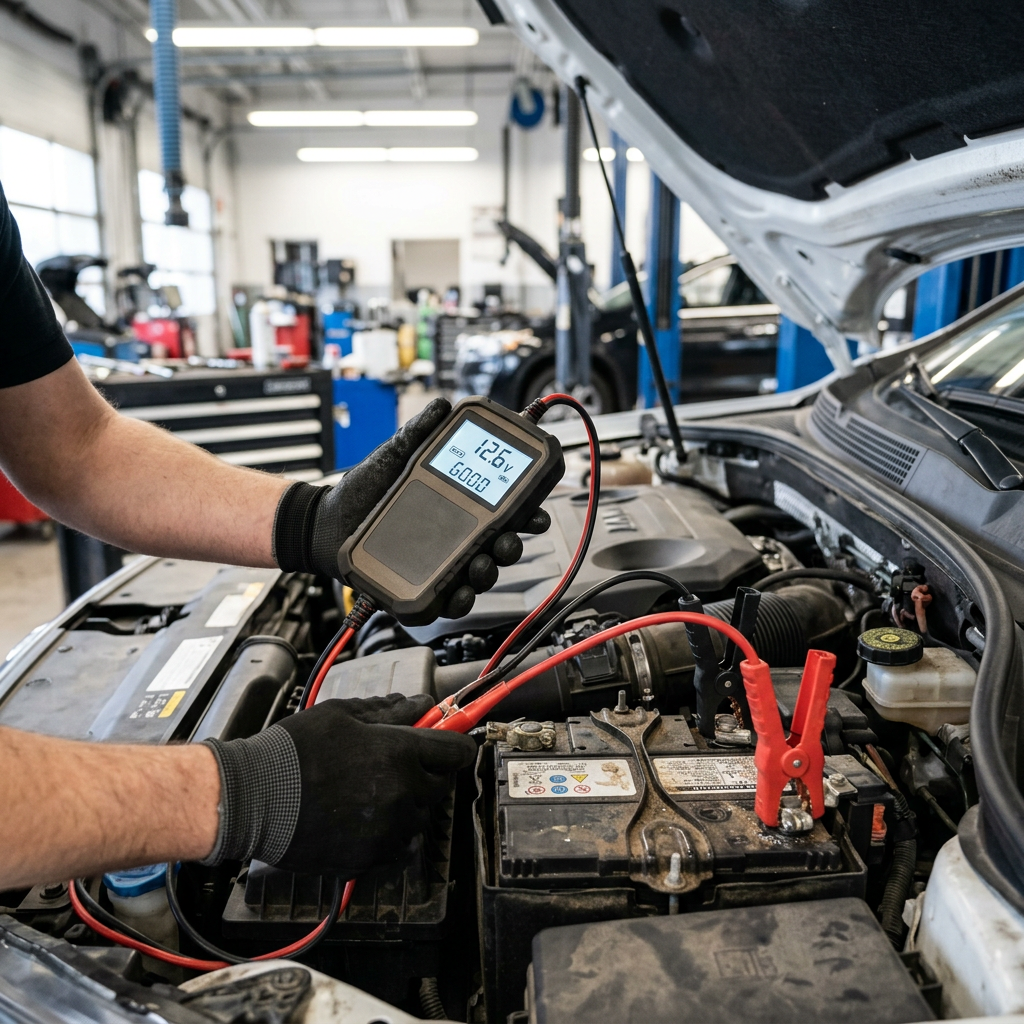
Resting voltage below 12.4V; starts slowly
|
Engine starts easily and stays running
|
|
Failing Alternator
|
Battery light while driving, stalling, whining noise
|
Running voltage below 13.5V; electronics dim while driving
|
Engine starts but stalls soon after cables removed
|
|
Faulty Starter Motor
|
Single loud click or complete silence upon key turn
|
Headlights stay bright, battery voltage rests at 12.6V
|
Engine will not crank even with jump boost
|
How Do I Find the Right Maintenance Schedule and Safely Handle Basic Car Checks?
Finding the precise maintenance schedule for your vehicle is simple: turn to the maintenance section of your owner's manual or check your vehicle manufacturer's digital portal. For Chevrolet owners, routine maintenance intervals are organized by mileage milestones (e.g., 7,500 miles, 15,000 miles, and 30,000 miles). If you are considering purchasing a dependable pre-owned vehicle, you can check our Browse Used Inventory to find models equipped with complete maintenance history records. Testing your battery resting voltage at home requires a basic digital multimeter. Wear safety glasses and protective rubber gloves before opening the hood. Switch the multimeter dial to DC Volts (20V range). Touch the red positive multimeter probe to the positive (+) battery terminal and the black negative probe to the negative (-) terminal. A fully charged, healthy battery should display between 12.6V and 12.8V with the engine turned off. A reading of 12.4V indicates a 75% charge, while anything under 12.2V signifies a deeply discharged or failing battery that requires professional testing.
What Is the Recommended Basic Car Maintenance Schedule Beyond the Battery?
5,000 – 7,500 Miles: Oil and filter replacement, tire rotation, visual brake pad inspection, windshield washer fluid top-off, and multipoint safety inspection.
15,000 – 22,500 Miles: Engine air filter replacement, cabin pollen filter change, wiper blade renewal, and brake system fluid flush inspection.
30,000 – 45,000 Miles: Transmission fluid renewal, engine coolant flush, spark plug replacement, fuel system cleaning, and full battery conductance analysis.
Essential Engine Fluid Checks: What Color Should Healthy Engine Oil Look Like on the Dipstick?
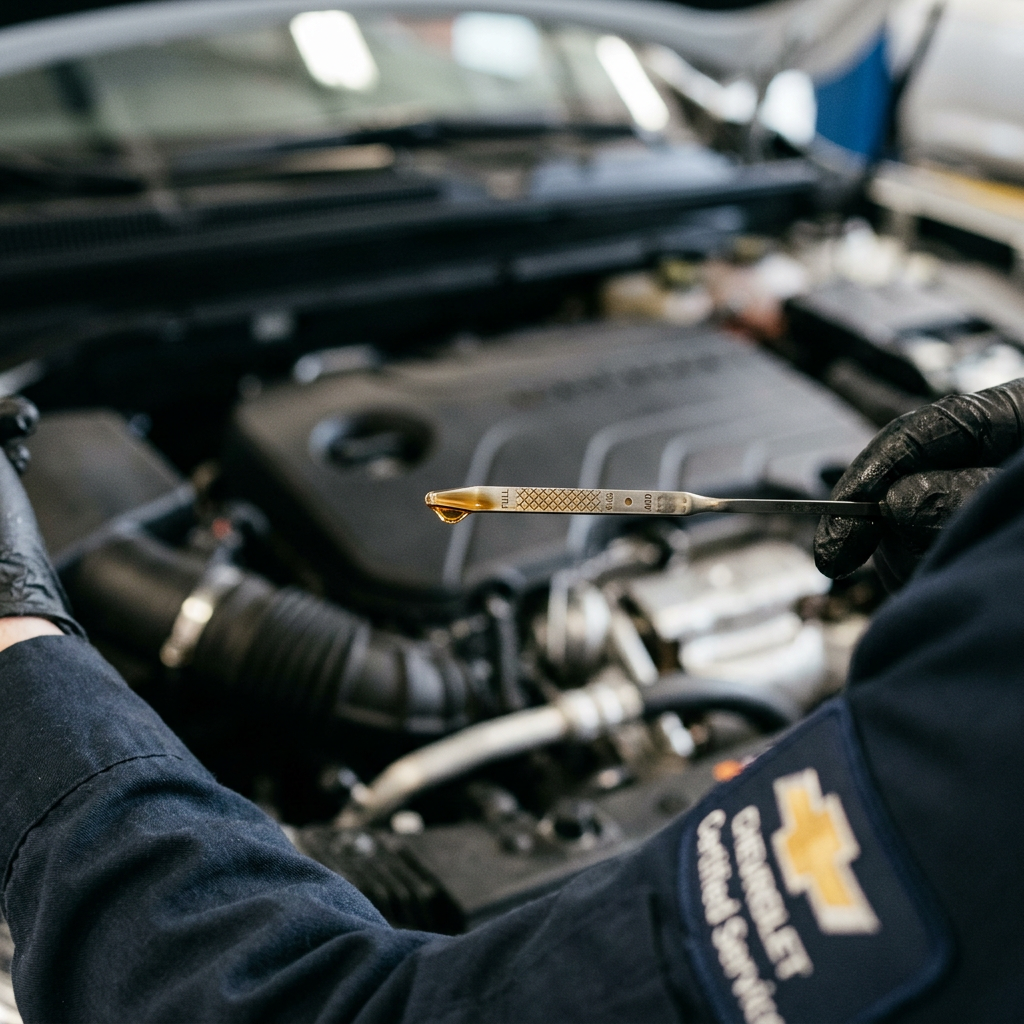
Regularly checking engine oil quality on your dipstick is one of the most effective ways to preserve engine longevity. Park your vehicle on level ground, turn off the engine, and wait five minutes for oil to settle into the oil pan. Pull the dipstick out, wipe it clean with a lint-free cloth, reinsert it fully, and pull it back out to inspect both the fill level and oil appearance. Healthy motor oil should appear glossy amber to light honey brown and run smoothly on the metal stick. As oil absorbs combustion byproducts and heat over thousands of miles, it naturally darkens to deep brown. However, if the oil appears pitch black, thick, and gritty like sludge, an immediate oil and filter change is required to protect internal camshaft and crankshaft bearings.
Air Filters and Tire Safety: What Tread Depth Indicates a Tire Needs Immediate Replacement?
Tire Safety & Tread Depth Thresholds: Tire tread depth is critical for stopping distance and wet-weather grip across Will County. A tread depth of 2/32 inches or less indicates a tire needs immediate replacement under federal safety standards. At 2/32", tires lose the ability to channel water, leading to severe hydroplaning risks. You can measure tread depth using a depth gauge or the Lincoln penny test: insert a penny head-first into the tread groove; if Lincoln's head is completely visible, your tire tread is dangerously worn below 2/32".
Consequences of Neglecting Engine Air Filters: What happens if an engine air filter is never replaced? Over time, the filter element becomes clogged with dirt, pollen, leaves, and debris. This restricts intake airflow into the combustion chambers, forcing the engine control module (ECM) to rich the fuel mixture. Severe consequences include reduced gas mileage by up to 10%, sluggish acceleration, spark plug fouling, rough idling, and engine misfires that trigger check engine light codes.
How Does Routine Maintenance Prevent Expensive Major Car Repair Costs?
Preventative vehicle maintenance is the most effective financial hedge against catastrophic mechanical failure. Consider the math: service costs can vary based on the vehicle and repair needed. Ignoring early warning signs until the battery completely fails can lead to additional repairs and towing costs. Similarly, replacing an engine air filter or performing timely oil changes can help prevent more serious engine damage, which may be costly to repair. Routine maintenance keeps all mechanical systems operating within factory specifications, maximizing fuel economy and preserving resale value when you decide to trade in your vehicle.
Professional Battery Testing and Diagnostic Services in Joliet, Plainfield, and Naperville
Drivers throughout Joliet, Plainfield, Shorewood, and Naperville rely on Hawk Chevrolet of Joliet for thorough electrical system diagnostics and battery care. Our factory-certified technicians utilize digital battery conductance analyzers that test internal cell integrity and precise cold cranking amperage under simulated load conditions. We quickly determine whether your battery requires a top-off charge or complete replacement. If you are planning to upgrade your vehicle, our dealership also lets you Value Your Trade in minutes.
We stock genuine OEM ACDelco Gold and Absorbent Glass Mat (AGM) replacement batteries engineered specifically for Chevrolet cars, trucks, and SUVs. AGM batteries deliver enhanced cycle life and high vibration resistance for severe Midwest weather demands. All installed batteries come with robust multi-year nationwide replacement warranties for complete driving confidence.
Schedule Your Battery Inspection and Preventative Maintenance at Hawk Chevrolet of Joliet
If you notice a slow crank on a freezing morning, take action on your vehicle's battery health. Trust the certified service professionals at Hawk Chevrolet of Joliet to test, service, and maintain your electrical system. Conveniently located at 2001 W Jefferson St in Joliet, IL 60435, our express service center is fully equipped to perform complimentary battery voltage checks, oil changes, tire rotations, and brake inspections. Contact our service team today or use our online portal to schedule your appointment. Keep your vehicle performing reliably across Will County all year round!



 Shop Chevy Red Tag.