Why Tires Wear Unevenly on the Inner Edge: The Bottom-Line Answer
Discovering that your tires are bald, grooved, or frayed on their inside shoulder while the exterior tread looks perfectly healthy is one of the most frustrating experiences for any vehicle owner. Inner edge tire wear—frequently referred to in professional service bays as inside shoulder wear—is an unmistakable mechanical symptom indicating that your wheel geometry is operating outside engineered factory tolerances or that your suspension linkages are compromised. Left unaddressed, this condition rapidly strips away vulcanized tread rubber until the internal structural polyester plies and high-tensile steel radial cords are laid bare, courting a violent high-speed blowout.
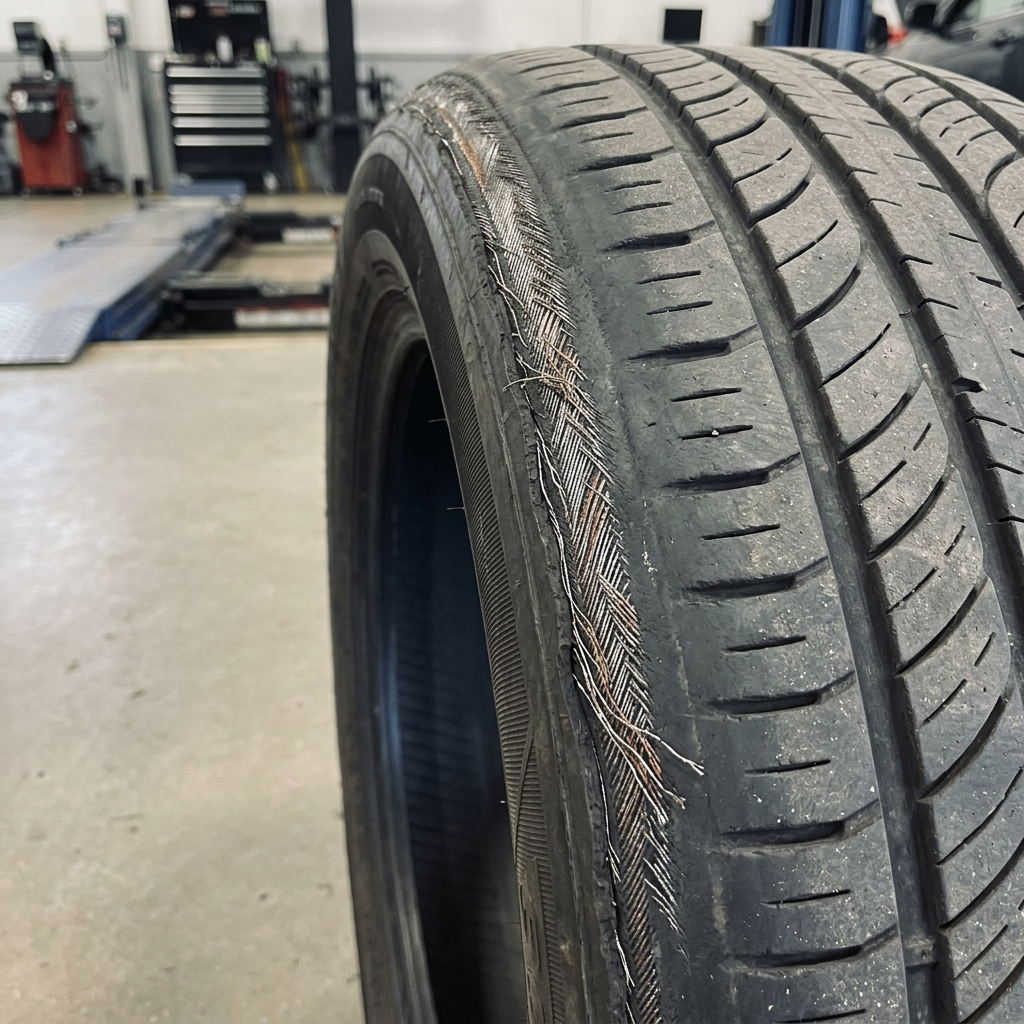
At its core, inner edge tire wear stems from three primary culprits: excessive negative camber, out-of-spec toe-out angles, and degraded suspension hardware such as worn lower ball joints, deteriorated control arm bushings, or sagging coil springs. When a wheel tilts inward at the top or tracks outward like duck feet as the vehicle moves forward, the inner edge of the tread footprint is forced to carry the vast majority of the vehicle's dynamic weight. Because this critical area remains largely hidden inside the wheel well, drivers frequently remain unaware of the catastrophe brewing beneath their fenders until it is flagged during a routine state inspection, an oil service, or following an unexpected puncture.
What Is Camber Alignment and How Does It Affect Tire Wear?
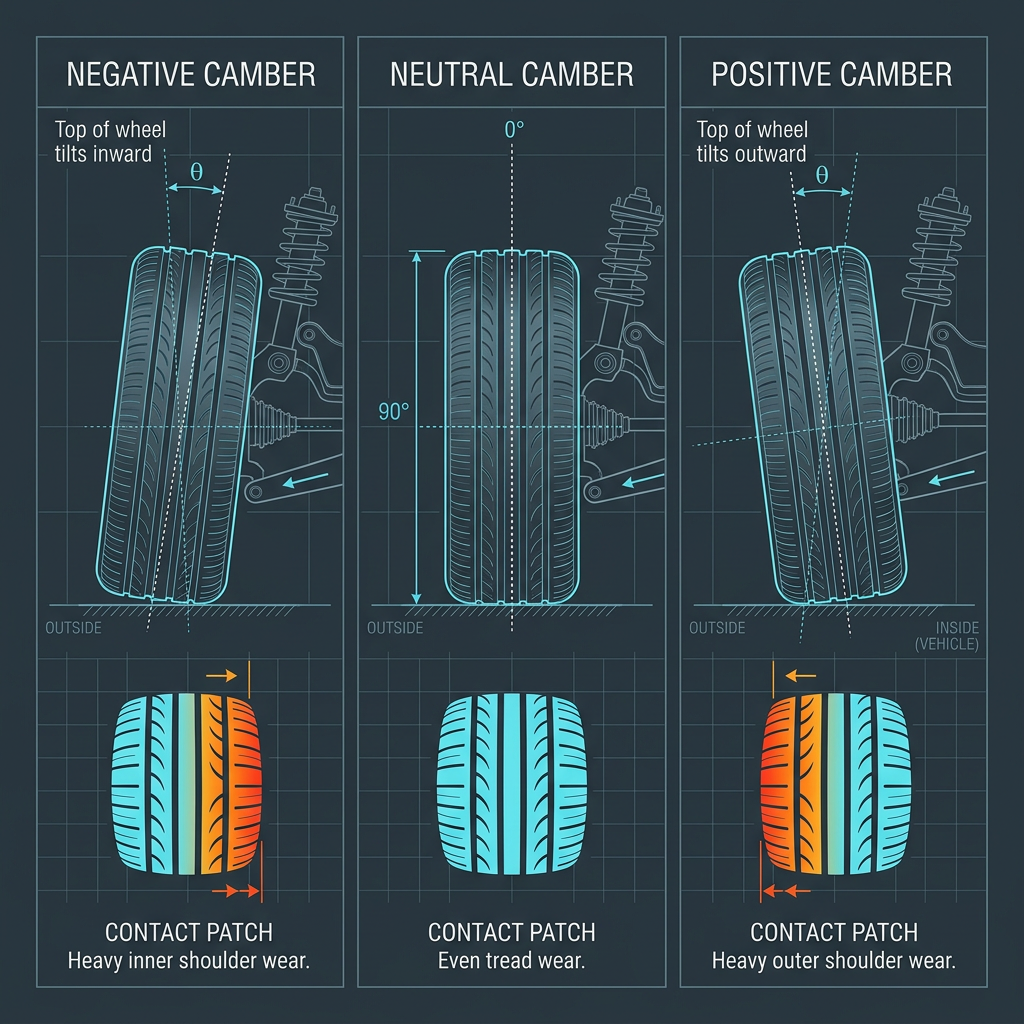
Camber represents the inward or outward vertical tilt of the tire and wheel assembly when viewed directly from the front or rear of the vehicle. Measured precisely in degrees and fractions of degrees, camber dictates how evenly the tire's tread contact patch meets the road surface under straight-line travel and dynamic cornering loads. When a wheel exhibits zero camber, the tire stands completely perpendicular to the pavement, distributing the contact patch uniformly across the entire tread width. Positive camber occurs when the top of the tire tilts outward, away from the engine bay and vehicle centerline. Conversely, negative camber describes a condition where the top of the tire tilts inward toward the suspension strut and chassis frame rail.
While modern high-performance sports cars and racing platforms often run modest amounts of engineered negative camber to enhance lateral grip during high-speed cornering, everyday passenger sedans, crossovers, and pickup trucks require near-neutral alignment targets. When road impacts or suspension fatigue knock your camber beyond factory thresholds into excessive negative territory, your vehicle rides primarily on the inner shoulder ribs. The result is intense frictional heating, rapid channel degradation, and deep diagonal wear patterns that destroy tire longevity in just a few thousand miles.
Can Worn Suspension Parts Prevent Proper Wheel Alignment?
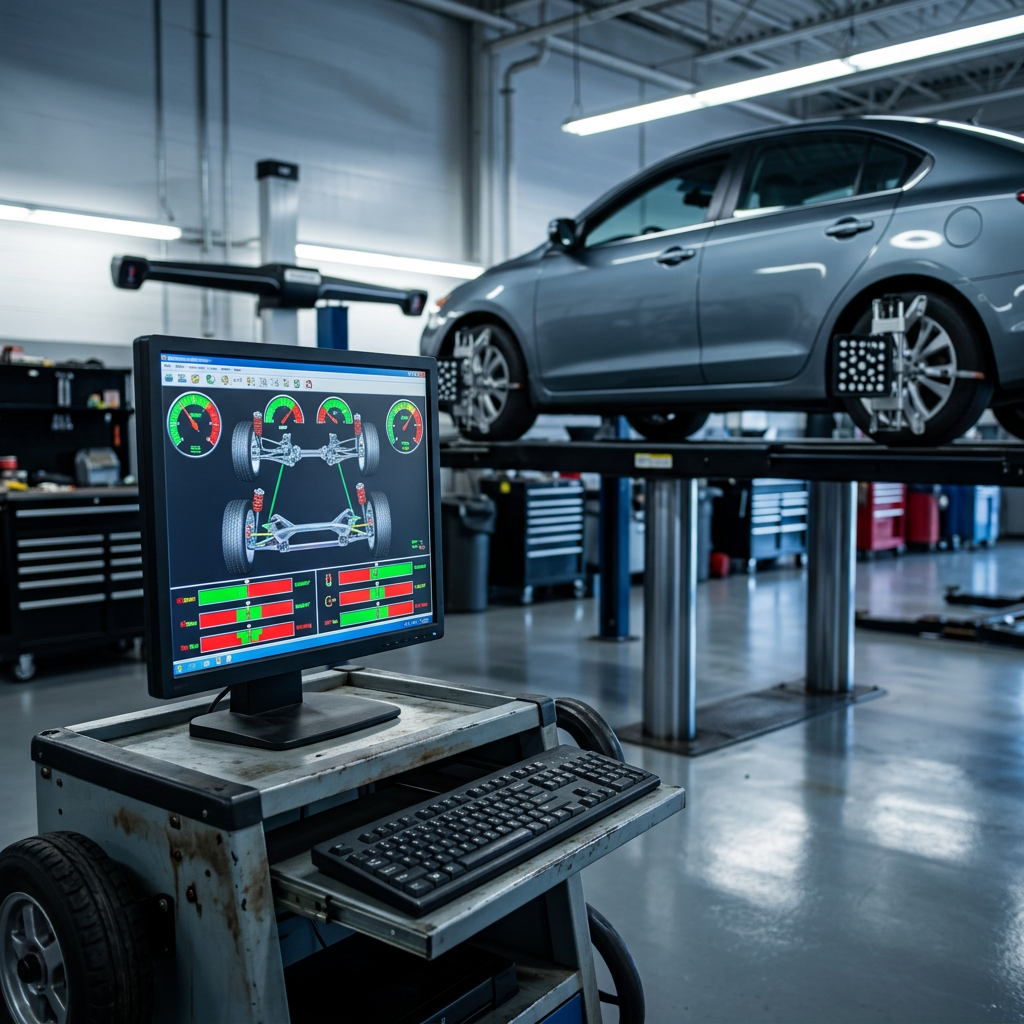
A computerized four-wheel alignment rack relies on precise, micro-metric laser sensors that measure wheel angles relative to the chassis centerline. However, an alignment machine can only adjust linkages that maintain rigid mechanical integrity. If internal bushings, joints, or dampening assemblies have developed physical play, performing an alignment is practically impossible because the suspension shifts dynamically the moment the vehicle leaves the service rack.
Ball Joints & Tie Rods
Lower and upper ball joints act as the primary pivot points connecting steering knuckles to the control arms. When internal nylon bearings degrade or grease seals tear, the steering knuckle develops vertical and lateral play, allowing the tire to lean inward under road pressure. Similarly, worn inner or outer tie rod ends introduce loose steering lash, permitting dynamic toe-out flutter that scrapes away the inside shoulder tread blocks during highway cruising.
Control Arm Bushings
Elastomeric rubber bushings isolate high-frequency road vibrations between control arms and the subframe. Over time, heat cycles, engine oil leaks, and winter road salts cause these vulcanized bushings to dry rot, crack, and tear away from their steel sleeves. This structural tearing allows the lower control arms to migrate outward during braking and cornering, directly inducing severe uncommanded negative camber that accelerates inner shoulder wear.
Struts & Coil Springs
Vehicle ride height is maintained by tempered steel coil springs and pressurized struts. As springs age, fatigue causes them to sag, dropping the vehicle's resting suspension geometry closer to the ground. Independent suspension designs inherently gain negative camber as ride height compresses. When struts blow their internal dampening fluid, uncontrolled wheel bouncing continuously scrubs the tire's inside edge against pavement imperfections.
Critical Signs You Need a Front End Alignment Before Catastrophic Tire Failure
Waiting until a tire goes flat on the highway is a dangerous and costly approach to vehicle maintenance. Long before internal belts puncture through rubber, your vehicle communicates suspension distress through distinct mechanical warning signs: • Crooked Steering Wheel: When driving straight down a level highway, your steering wheel emblem rests at an angle rather than dead center. • Low-Speed Tire Chirping: Tires emit a subtle squealing or scrubbing sound when maneuvering through smooth parking garages or executing gentle turns. • Tread Feathering: Running a gloved hand across the tread ribs reveals smooth edges moving one direction and sharp, raised edges sliding the other. • Unusual High-Speed Wandering: The vehicle feels loose or nervous over asphalt expansion joints, demanding constant minor steering corrections.
These symptoms demonstrate that your tires are actively fighting one another rather than rolling parallel down the road. If you notice any of these handling anomalies, having factory-certified technicians inspect your steering assembly can save you hundreds of dollars in avoidable tire replacements. Catching misalignment early preserves tire integrity and ensures your safety across unpredictable Midwest weather conditions. If your steering wheel feels off or your tread is thinning on the inside edge, don't wait for total tread separation.
Why Does a Car Pull to One Side While Driving?
A persistent vehicle pull or drift is among the most prominent complaints brought to service centers, yet many motorists mistakenly assume any pull indicates an alignment defect. Understanding the engineering forces governing steering stability helps isolate mechanical failures from environmental realities. First, consider road crown. Civil highway engineers intentionally construct multilane roads with a slight downward convex slope toward the shoulders to shed stormwater. On a heavily crowned expressway, your car naturally drifts slightly toward the right ditch. True mechanical pull occurs when your vehicle veers aggressively toward one side even while driving in the flat crown of an interior passing lane.
When road crown is ruled out, steering drift typically boils down to cross-caster or cross-camber imbalances and radial tire pull. Caster is the forward or backward tilt of the steering axis pivot. A vehicle will consistently pull toward the side with the least positive caster or the most positive camber. Additionally, manufacturing anomalies or internal belt separation within the tire casing can generate conicity forces—acting like a tapered drinking cup rolling across a flat table—that violently drag the steering wheel off-center.
Should Wheel Balancing and Front End Alignment Be Performed Together?
Although tire balancing and wheel alignment are frequently mentioned in the same breath, they address entirely different mechanical phenomena. Bundling them correctly protects your tire investment from both rotational vibration and geometric scrubbing.
Wheel Balancing Defined
Wheel balancing equalizes the weight distribution around the rotational axis of the tire and wheel assembly. High-speed spin balancers detect fractional-ounce heavy spots and guide technicians to affix precision zinc adhesive weights to the rim flange. An out-of-balance wheel manifests as a localized cyclic vibration through the floorboard or steering wheel at speeds between 55 and 70 mph.
Wheel Alignment Defined
Wheel alignment calibrates the physical steering angles and geometric suspension mounting planes—specifically caster, camber, and toe—relative to the road surface and rear thrust line. Alignment adjustments involve shifting tie rod sleeves, eccentric control arm bolts, and strut mounting plates. Alignment problems cause directional pulling, wandering, and rapid edge wear, rarely producing noticeable vibration.
The Combined Advantage
Executing balancing and alignment concurrently ensures that dynamic vibrations do not rattle sensitive tie-rod adjusting sleeves loose while guaranteeing that newly balanced tires roll perpendicular to the chassis. Whenever new tires are mounted, tires are rotated across axles, or seasonal snow setups are swapped, pairing dynamic balancing with an electronic alignment check maximizes tread life.
Can New Tires Be Installed Without Performing an Alignment?
Technically, any tire shop can mount fresh rubber onto your alloy wheels and balance them on a machine without touching your vehicle's steering linkages. However, skipping a computerized alignment check when installing a new set of tires is a costly mistake vehicle owners can make. Mounting pristine tires onto an out-of-spec suspension is equivalent to dragging crisp dollar bills across coarse sandpaper at 65 miles per hour.
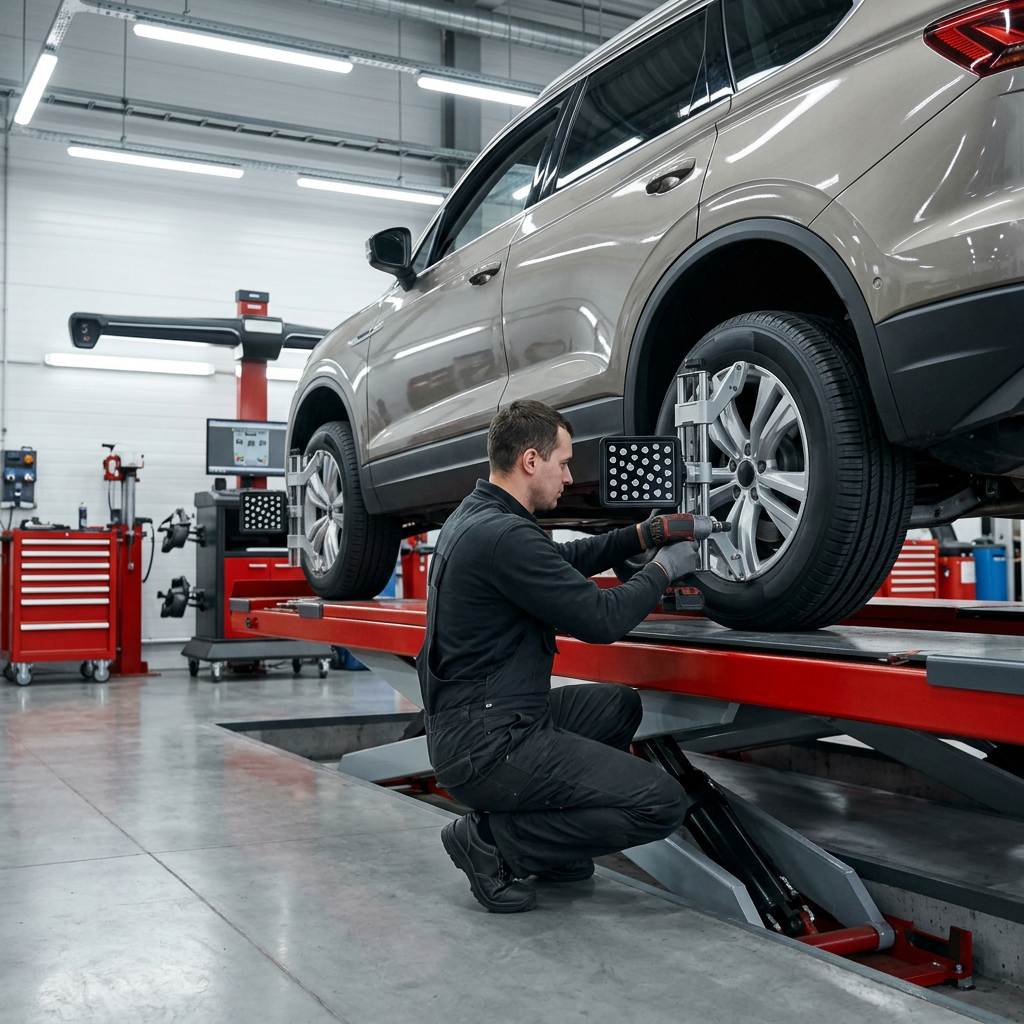
A standard set of four quality all-season or highway-terrain tires represents a serious investment; contact us for current pricing. If your front suspension is plagued by negative camber or excessive toe-out, that brand-new tread can suffer permanent, irreversible inner shoulder grooving in fewer than 3,000 miles. Furthermore, major tire manufacturers explicitly state in their warranty agreements that premature wear caused by mechanical misalignment, bad ball joints, or uncalibrated steering geometry immediately voids all treadwear mileage guarantees. Protect your investment by insisting on factory-calibrated alignments during tire replacement.
Is Getting a Front End Alignment Cheaper Than Replacing Unaligned Tires?
The financial mathematics surrounding suspension maintenance overwhelmingly favor proactive alignment checks. Consider the true lifetime expenses of operating an unaligned vehicle: • Premature Replacement Cadence: An unaligned front axle can destroy front tires in 15,000 miles instead of their intended 60,000-mile design life, forcing you to purchase multiple replacement sets four times faster. • Degraded Fuel Economy: Tires with uncorrected toe angles scrub diagonally against road asphalt, generating immense rolling resistance that saps fuel economy by 2% to 4% over annual driving cycles. • Secondary Drivetrain Wear: Misalignment forces electric power steering racks and electronic stability control modulators to constantly work against uncentered forces, triggering costly steering gear failures.
Routine computerized alignment checks can help protect your tires and vehicle; contact us for current service pricing. You protect tread depth, preserve peak fuel efficiency, and safeguard vital chassis components. Need to consult directly with our service advisors regarding your current tire condition or alignment status? Our friendly team is standing by to inspect your tread depth and provide clear, upfront guidance.
How Much Does a Front End Wheel Alignment Cost on Average?
Alignment pricing is determined by your vehicle's mechanical architecture, suspension adjustability, and the presence of integrated driver-assistance sensors.
Front-End vs Four-Wheel
A basic front-end (two-wheel) alignment and a full four-wheel alignment vary by vehicle and suspension design; contact us for current pricing.
Hardware Corrosion & Age
In northern rust-belt regions subject to heavy winter road brine, alignment adjustment hardware often seizes solid. Technicians frequently need to apply induction heat or penetrating solvent to loosen locked tie-rod jam nuts and frozen eccentric cam bolts. If adjustment hardware breaks from severe corrosion, replacing eccentric bolt kits or sleeve assemblies can incur modest supplementary labor fees.
ADAS Sensor Calibration
Modern vehicles equipped with Advanced Driver Assistance Systems (ADAS)—including Lane Keep Assist, Adaptive Cruise Control, and Forward Collision Alert—require electronic Steering Angle Sensor (SAS) zero-point recalibration following mechanical alignment. Connecting specialized diagnostic scan tools to synchronize these camera and radar systems with true steering center may add to the total service cost.
How Joliet and Will County Road Conditions Accelerate Alignment Issues
Driving in Joliet and throughout the greater Will County region subjects automobile suspensions to unique mechanical stress. Known as a critical logistics and intermodal inland freight capital, our regional transportation corridors support tens of thousands of heavy commercial semi-trucks daily. Constant heavy axle weights churn pavement along the Interstate 80 and Interstate 55 junction, carving deep longitudinal ruts and asphalt expansion gaps that deliver punishing lateral shocks to passenger steering knuckles.
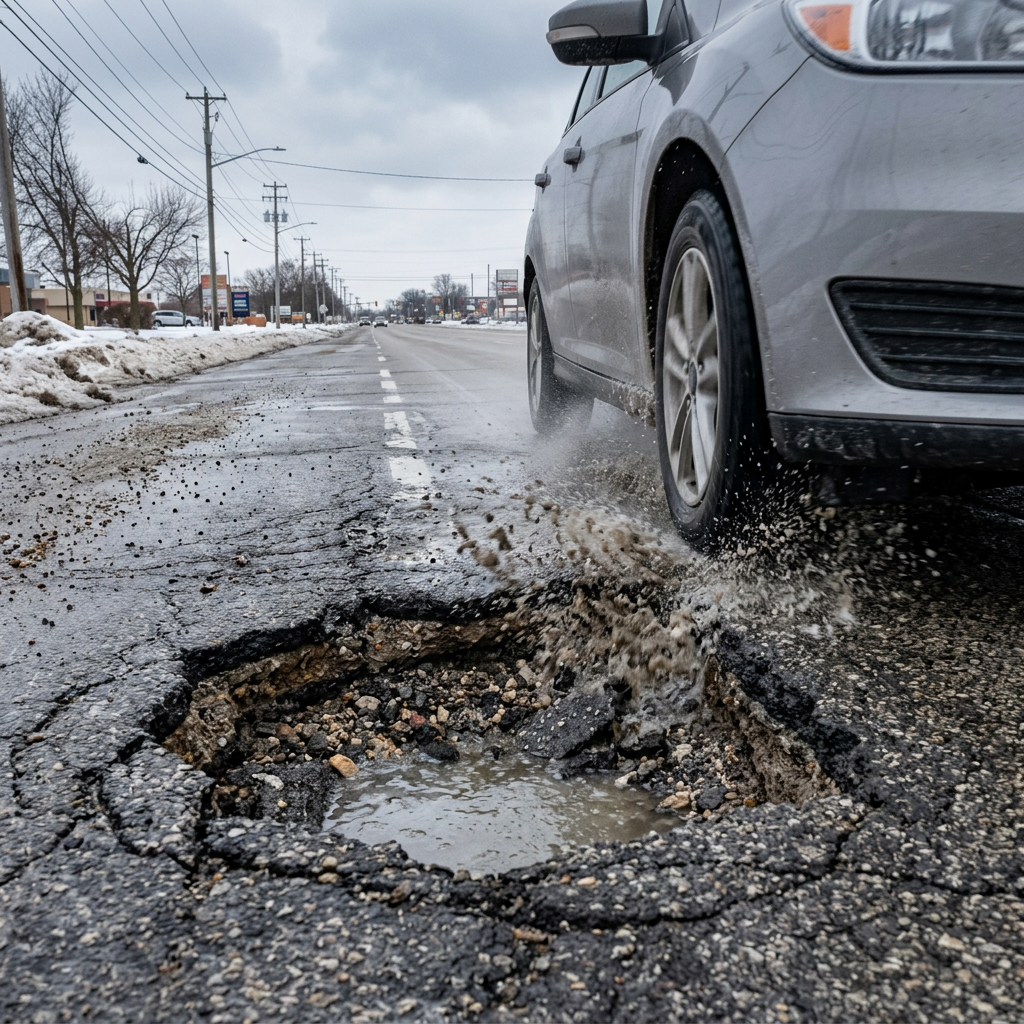
Combined with harsh Midwest winter freeze-thaw cycles that fracture subterranean road beds into cavernous potholes on Jefferson Street, Larkin Avenue, and Route 6, a single direct wheel impact can instantly bend a steel tie rod, distort an aluminum lower control arm, or slip an eccentric camber bolt. Local commuter routes into Plainfield, Romeoville, and Naperville feature numerous industrial railroad spurs with jagged grade crossings that jar delicate alignment settings, making annual suspension checks an essential regional routine.
A Driver's Monthly Inspection Routine for Catching Inner Edge Wear Early
You do not need an automotive engineering degree or a commercial hydraulic lift to identify signs of suspension misalignment. Performing this quick four-step inspection in your driveway once a month will catch premature inner shoulder wear before it causes a blowout.
1. Full-Lock Visual Sweep
Park your vehicle on level pavement, set the emergency brake, and turn the steering wheel completely to full lock in one direction. Step outside and shine a flashlight into the exposed wheel well. This angle exposes the deep inner shoulder tread blocks that normally hide beneath your fenders. Inspect both tires thoroughly for smooth patches, scalloping, or silver wire threads peeking through.
2. The Gloved Feather Test
Slip on a durable work glove to protect your skin from sharp exposed steel wire cords, then slide your palm laterally across the tire tread from the outside edge toward the inside rim. If the tread blocks feel smooth when moving outward but catch aggressively like saw teeth or fish scales when sliding inward, your vehicle is experiencing severe dynamic toe-out scrubbing.
3. Pressure & Sag Checks
Check your cold tire pressures against the doorjamb placard using a digital pressure gauge; chronic underinflation causes both the inner and outer shoulders to crush flat against pavement. Finally, firmly bounce each fender corner; if the vehicle oscillates up and down more than once and a half before settling, your struts are blown and failing to control camber angles.
Schedule Professional Wheel Alignment and Tire Inspection in Joliet
If your home inspection revealed thin tread on your inside tire shoulders, or if your steering wheel pulls erratically across local highways, trusting your vehicle to factory-trained technicians is the safest way to prevent expensive tire failure. At Hawk Chevrolet of Joliet, our state-of-the-art service department utilizes high-definition laser alignment consoles to diagnose your caster, camber, and toe angles down to hundredths of a degree.
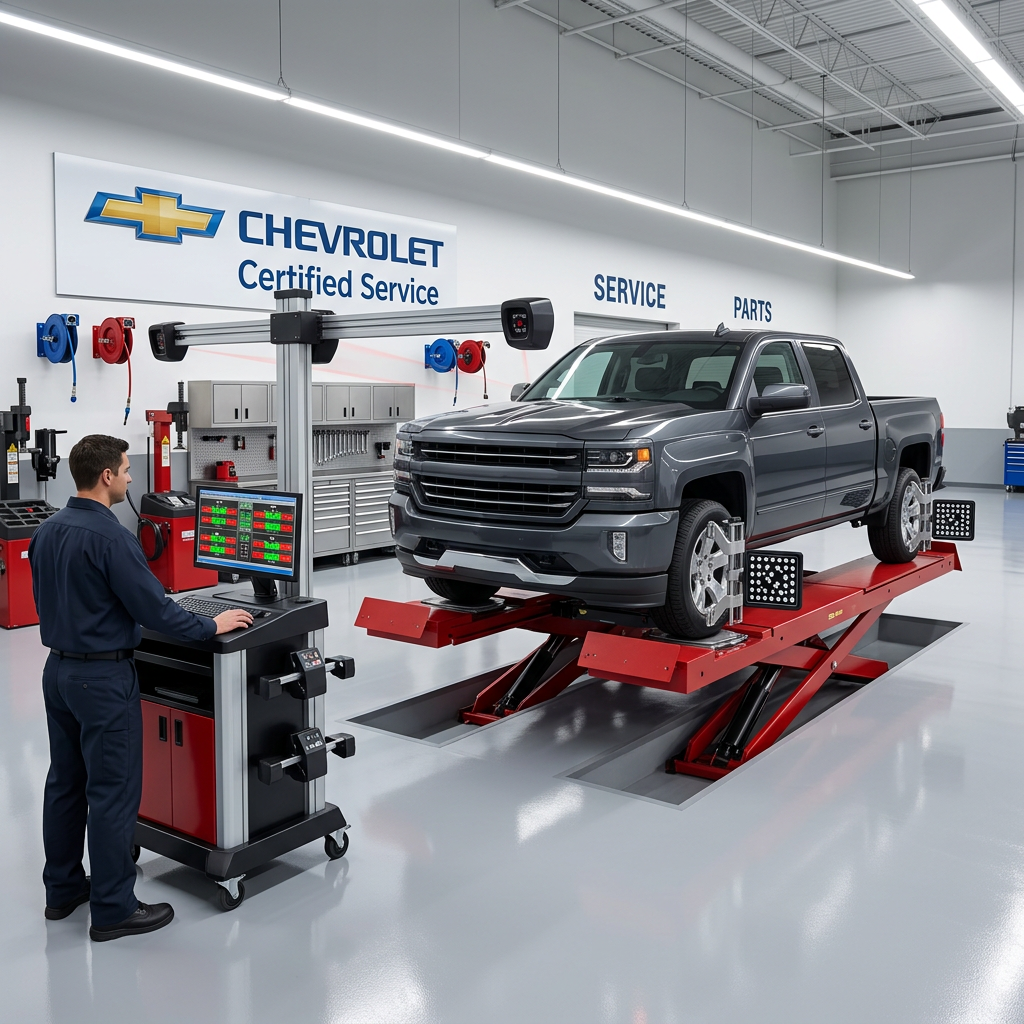
Our GM Certified technicians perform comprehensive multi-point suspension checks on all lower ball joints, control arm bushings, strut mount towers, and steering linkages prior to alignment calibration. Whether you are driving a hard-working Silverado 1500, a spacious Traverse, or any make or model navigating Will County, we ensure your tires roll flat, track straight, and deliver maximum tread lifespan. Visit us conveniently at 2001 W Jefferson St in Joliet, or call our service department at (779)-260-4300. Protect your family's safety and restore responsive handling today.



 Shop Chevy Red Tag.