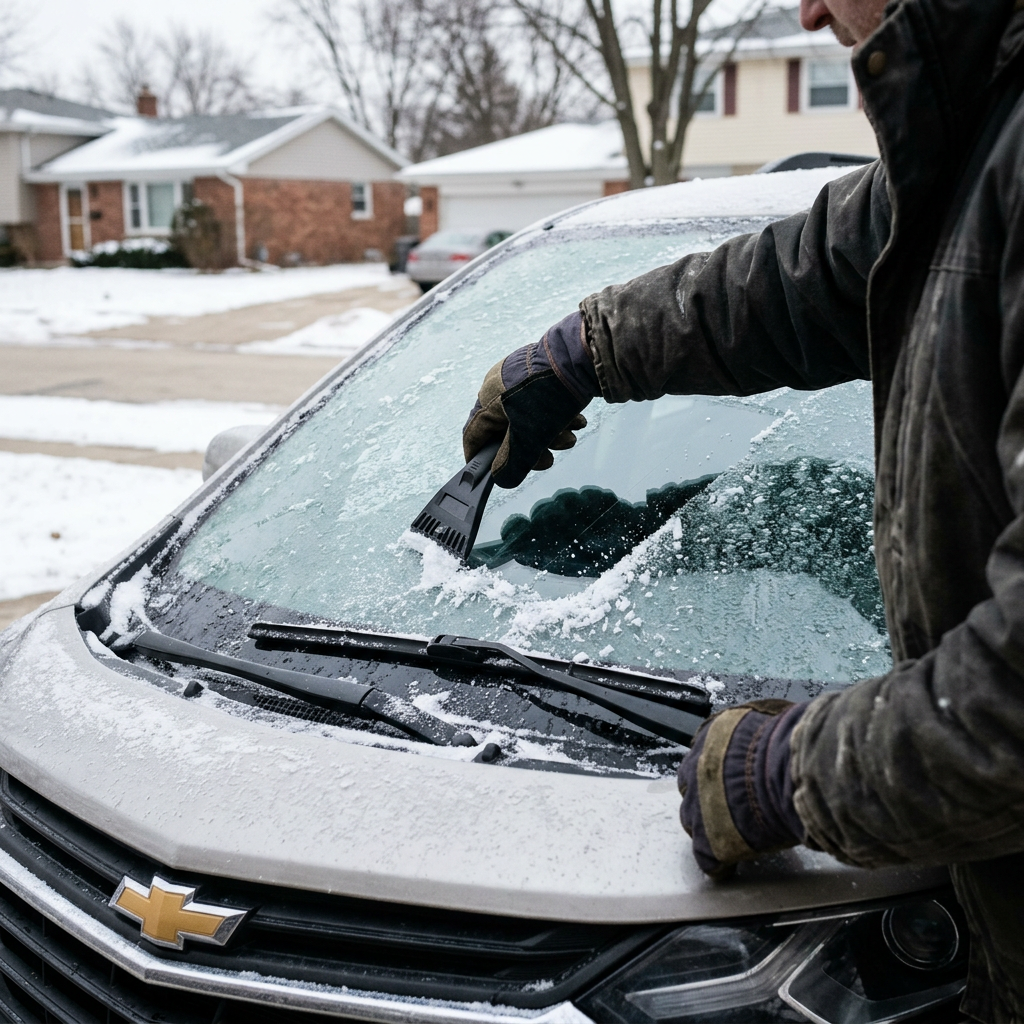
Are Silicone Wiper Blades Better Than Natural Rubber Blades in Sub-Zero Chicagoland Temperatures?
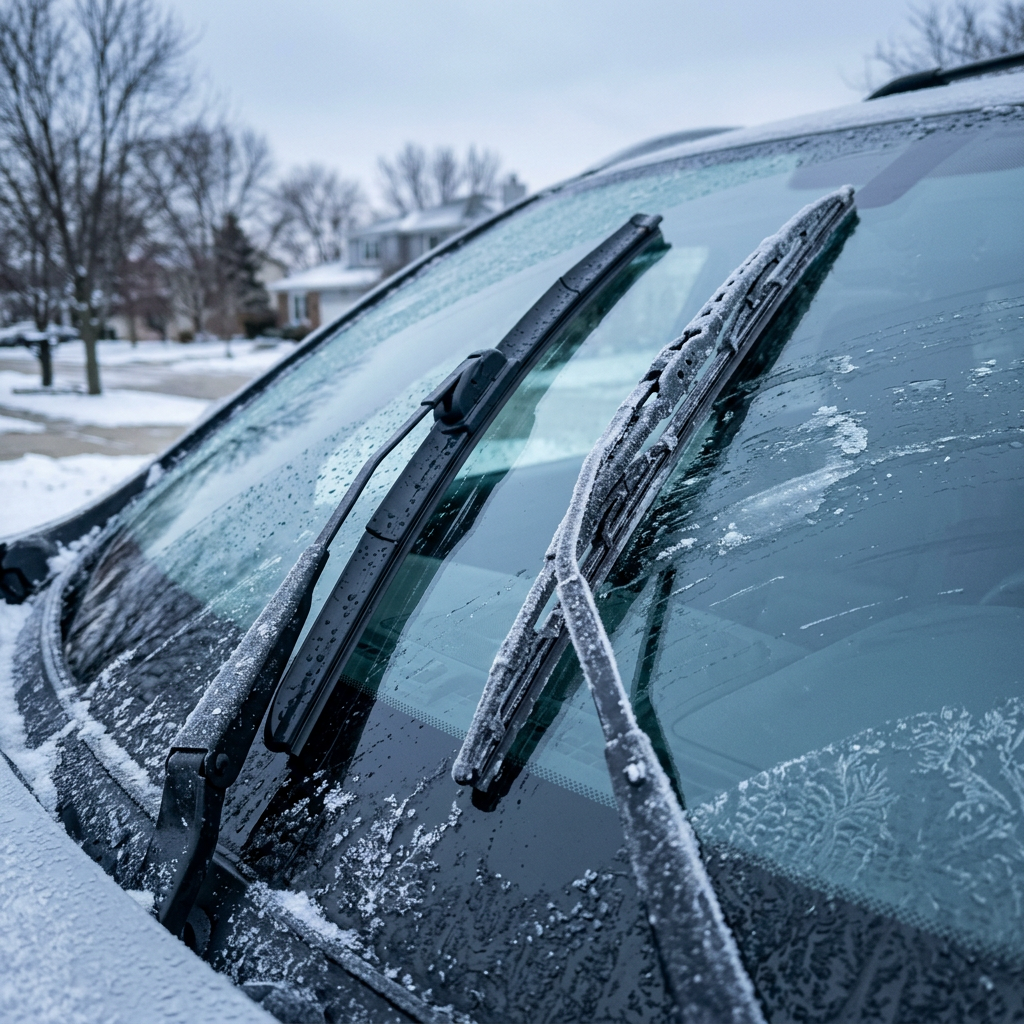
Yes, silicone wiper blades distinctly outperform natural organic rubber blades in sub-zero Chicagoland winter conditions. When an Arctic polar vortex pushes across Lake Michigan and drops the mercury along the Interstate 80 and Interstate 55 corridors into negative double digits, the chemical difference between these two materials becomes a critical driver safety factor.
Silicone polymers maintain their inherent structural elasticity down to minus 80 degrees Fahrenheit, ensuring that the wiping edge conforms perfectly across the compound curves of your Chevrolet windshield. Natural rubber, on the other hand, begins a rapid stiffening process once ambient temperatures cross below 20 degrees Fahrenheit, transforming into an unyielding, brittle strip that chatters, skips, and streaks across cold glass. Furthermore, silicone wiper blades continuously infuse the windshield surface with a micro-thin, hydrophobic silicone film during every sweep. Instead of road brine, sleet, and freezing rain sheeting flat across your glass and freezing on contact, moisture forms spherical beads that roll off effortlessly under vehicle airflow. Standard organic rubber cannot deposit this repellent barrier, leaving untreated glass prone to flash-freezing when passing highway semi-trucks kick up heavy saline spray. For Joliet motorists tackling grueling morning commutes, silicone blades provide superior visibility, eliminate blade freeze-bonding, and maintain smooth wiping acoustics through our harshest winter months.
How Sub-Zero Lake-Effect Cold Alters Silicone and Rubber Polymer Flexibility
To understand why windshield wipers fail abruptly during sudden Midwest cold snaps, automotive engineers examine durometer—the standard international measurement of material hardness and elasticity in polymers. Natural rubber wiper elements are manufactured from vulcanized organic isoprene. While soft and compliant in mild spring and summer temperatures, natural rubber possesses a high glass transition temperature. Once Will County temperatures dip below 20 degrees Fahrenheit, natural rubber undergoes crystallization. The material hardens significantly, preventing the blade's micro-edge from flipping over dynamically as the wiper arm reverses direction at each stroke extremity.
When a rigid rubber blade cannot flip its wiping angle, the edge gouges against windshield frost, leading to visible micro-tears along the squeegee lip. Once torn, road salt slurry penetrates behind the damaged rubber, resulting in wide blind spots across your direct line of sight. By contrast, synthetic silicone features a durable inorganic silicon-oxygen backbone. This unique molecular architecture provides an ultra-low glass transition point. Silicone retains nearly identical durometer flexibility at 10 below zero as it does on an 85-degree July afternoon, ensuring that your Silverado, Traverse, or Equinox clears sleet and ice-melt cleanly with uniform pressure from hinge to tip.
Lab Observation: At -15°F, natural rubber experiences severe durometer hardening and micro-fissuring, whereas silicone squeegee elements retain full 180-degree edge inversion without chatter or skipping.
How Do Hybrid Wiper Blades Compare to Beam Blades During Heavy Freezing Rain?
The wiping polymer is only half the winter equation—the superstructure supporting the blade determines how effectively that element contacts your windshield under freezing rain. Chicagoland winter storms frequently shift between heavy, wet lake-effect sleet and freezing drizzle, posing severe structural challenges for traditional wiper frames.
Bracketless Beam Blades
Beam blades utilize a single curved steel spring vertebrae enclosed entirely within an aerodynamic synthetic rubber spoiler. With zero external metal brackets, hinges, or friction joints, there are no mechanical cavities for slush to pack into or freeze solid. In heavy freezing drizzle along Route 30, a beam blade flexes uninterruptedly across the windshield, preventing center-line hazing and missed patches.
Aerodynamic Hybrid Blades
Hybrid wiper blades combine a traditional articulated metal sub-frame with a sculpted plastic aerodynamic shell. This design produces tremendous downforce, keeping the blade firmly planted at 70 mph on Interstate 80 during open-prairie crosswinds. However, during prolonged freezing rain, moisture can seep beneath the outer shell articulations and freeze, locking the internal sub-joints into a rigid arch.
The Midwest Verdict
For northern Illinois drivers who frequently face mixed precipitation, pure bracketless beam blades paired with silicone squeegee elements offer the highest reliability. While hybrid blades deliver exceptional downforce, the zero-joint architecture of modern OEM beam wipers ensures they never bind up from freezing slush when you are stuck behind salt spreaders on Weber Road.
Preparing Your Chevy Wiper and Heating Systems for the First Chicagoland Snowfall
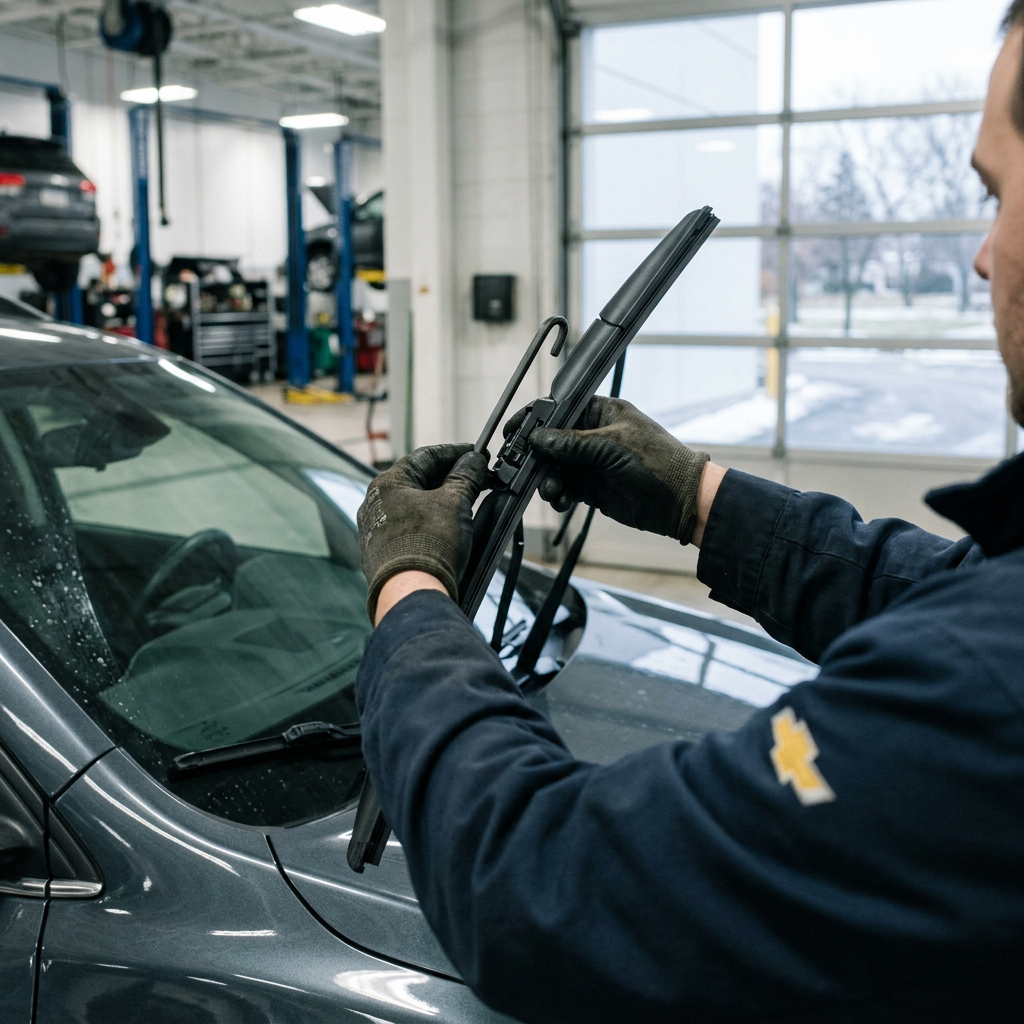
Before the first lake-effect squall hits Will County, taking an hour to perform a structured winter prep checklist will save you from dangerous driving situations when temperatures plummet: • Purge Summer Washer Fluid: Summer windshield solvents freeze solid at 32 degrees Fahrenheit, cracking fluid reservoirs and bursting tubing inside engine bays. Drain or run out remaining summer mix and refill with sub-zero de-icer solvent rated down to -30°F with ethylene glycol or methyl alcohol frost inhibitors. • Inspect Wiper Arm Spring Tension: Over years of use, the heavy coil springs at the base of your wiper arms lose their downward clamping force. Weak springs allow wind lift at highway speeds and cause patchy center-glass contact. A technician can test your arm tension in seconds. • Glass Decontamination: Strip summer bug splatter, tree sap, and road oil using automotive glass stripper or clay media. Clean glass allows silicone hydrophobic polymers to bond uniformly to the microscopic pores of your windshield. • Equip ACDelco Winter Beam Blades: Upgrade to genuine GM and ACDelco silicone or all-weather beam blades engineered specifically for the glass curvature of Chevrolet models.
Need winter-rated components? You can easily order genuine Chevrolet parts through our Joliet parts counter. Genuine ACDelco beam blades feature custom-molded pin adapters designed to fit your Chevy's exact wiper arm profile without bulky universal clips.
What Should Joliet Drivers Check on a Chevrolet’s Heating and Defrost Systems Before the First Snowfall?
Even the best silicone wiper blades cannot keep your windshield clear if your Chevrolet HVAC and defrost systems are compromised. Windshield clearing requires balanced thermodynamic synergy: the wiper sweeps away bulk slush on the outside, while targeted high-temperature defrost airflow eliminates interior humidity and prevents outside refreezing.
|
HVAC & Defrost Component
|
Recommended Winter Standard
|
Chicagoland Commute Risk If Neglected
|
|
Engine Coolant / Antifreeze
|
Protection down to -34°F to -40°F (50/50 Dex-Cool mix)
|
Coolant slushing, cracked heater core, engine freeze-plug failure
|
|
Cabin Air Filter
|
Replace every 15,000 miles or annually prior to winter
|
Restricted blower cfm, trapped moisture, chronic windshield interior fogging
|
|
Heater Core Flow
|
Equal thermal differential on supply and return hoses
|
Lukewarm defrost air, slow ice clearing, cab stays uncomfortably cold
|
|
Rear Defogger & Heated Mirrors
|
Full 12V grid continuity across all horizontal elements
|
Severe blind spots during merge maneuvers on I-55 and I-80
|
During November service appointments, certified technicians use an optical refractometer to verify that your vehicle's Dex-Cool coolant blend has not drifted above its critical freeze threshold due to past summer water top-offs. Furthermore, inspecting cabin air filters is frequently overlooked: a leaf-clogged filter traps humid autumn debris, saturating your defroster with damp air that instantly fogs the inside of your windshield the moment the blower turns on.
What Does It Cost to Diagnose and Repair a Chevy Heater That Only Blows Cold Air?
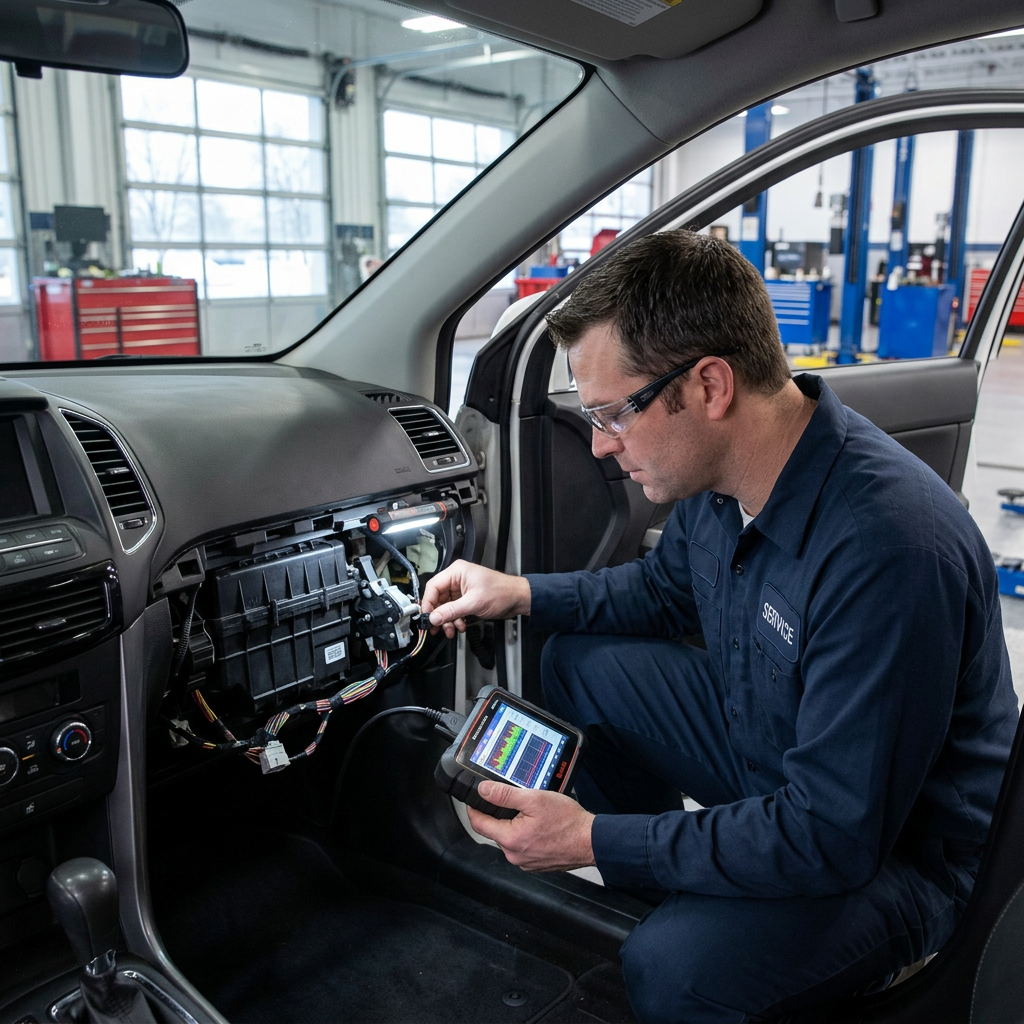
There is nothing more frustrating than starting your Chevrolet on a frigid morning only to discover the vents blowing glacial air regardless of temperature dial settings. Diagnosing cabin heating failures requires systematically evaluating coolant flow, mechanical heat exchange, and electronic air direction. Here are common culprits and expected repair ranges: • Blend Door Actuator Failure: Small internal electric servomotors swing blend doors to mix hot and cold air inside your dash. When plastic drive gears strip, the door freezes on full cold. A technician verifies actuator sweep angles via electronic scan tool. • Thermostat Stuck Open: If the engine thermostat fails in the open position, coolant circulates continuously through the front radiator without reaching optimal operating temperature (195°F–215°F), leaving your heater blowing lukewarm air. • Clogged Heater Core: If coolant maintenance is deferred, mineral deposits restrict the delicate core tubes hidden behind the dashboard. While a pressurized reverse chemical flush can sometimes restore heat, severe blockage requires complete dashboard disassembly and core replacement.
Diagnostic Peace of Mind: Timely diagnostic testing at our certified service department pinpoints the exact electrical or hydraulic cause, avoiding unnecessary part replacements before severe weather locks in.
Does Preconditioning a Chevy EV on a Home Charger Preserve Winter Driving Range?
Yes, remote preconditioning while connected to a 240-volt Level 2 home charging station is the single most effective technique to protect electric vehicle range during Illinois winters. Electric vehicles like the Chevrolet Equinox EV and Blazer EV do not produce free waste engine heat; instead, high-voltage electric heaters and advanced heat pumps warm the cabin air, defrost windshield surfaces, and heat the Ultium battery cells. When you trigger cabin preconditioning from the myChevrolet app while your vehicle is plugged in at your Plainfield or Naperville home, the vehicle draws power directly from household electric grid current rather than your high-voltage traction pack. The cabin is heated to a comfortable 72 degrees, windshield ice melts, and battery internal chemistry is brought to its optimal thermodynamic efficiency window before you even back out of the driveway.
Commuters who depart without preconditioning can lose up to 15% to 25% of their total driving range in sub-zero conditions merely bringing frozen vehicle components and an iced cabin up to operating temperature. By letting your home charger handle the heavy thermal lifting, your battery reserves remain intact for smooth travel along I-55 toward downtown Chicago.
Which Chevrolet Winter Comfort and Wiper Features Should Owners Verify on Their 2027 Vehicle?
Modern Chevrolet vehicles feature sophisticated active winter safety and automated climate hardware. Taking time to verify and configure these infotainment and driver-assistance settings transforms how your vehicle handles sub-zero weather.
Heated Wiper Park Area
Equipped on select models, embedded resistive heating grids along the lower cowl of the windshield keep wiper squeegees warm while at rest. This feature eliminates the frustrating ice build-up that accumulates on blades during heavy winter driving, preventing ice clumps from scratching your glass.
RainSense Wipers & De-Icers
Verify that your automatic moisture-sensing wipers are calibrated properly. In freezing conditions, remember to disable auto-wipe before parking outdoors; if blades freeze to the windshield overnight, an automated wipe command upon vehicle startup can burn out the wiper motor or tear the rubber.
Automated Climate Logic
Through the vehicle center touchscreen, navigate to Vehicle Settings > Climate & Air Quality. Ensure 'Auto Heated Seats' and 'Auto Heated Steering Wheel' are enabled for Remote Start. When remote started below 40°F, your Chevy automatically activates high defrosters, mirror heaters, and cabin warmers.
Cost Versus Lifespan: Are Silicone Wiper Blades Worth the Higher Price Tag?
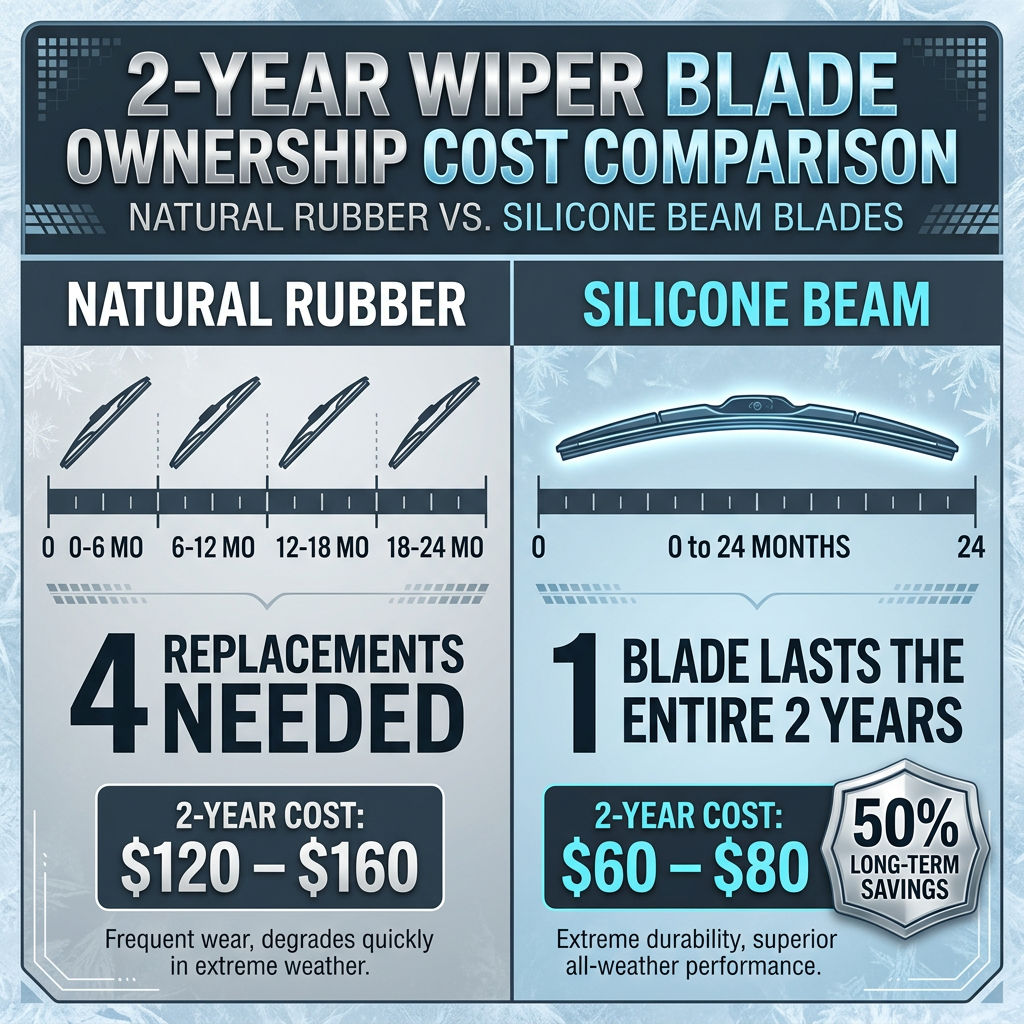
A common hesitation among vehicle owners is upfront price. A pair of standard natural rubber wiper blades costs between $25 and $40, whereas premium silicone beam blades generally retail between $55 and $85. However, viewing wiper blades through a multi-year economic lens reveals that silicone is significantly more cost-effective. Natural rubber is vulnerable to ultraviolet radiation, ozone, engine heat, and road salt degradation. In the Midwest, where scorching summer humidity is followed by punishing winter freezes, rubber blades typically degrade and streak within six months. Drivers who rely on organic rubber end up purchasing two sets of blades per year. Silicone is chemically inert and completely resistant to UV and ozone breakdown. A quality silicone wiper set reliably delivers 24 to 36 months of peak wiping performance. Over a two-year ownership span, you spend equal or less money on silicone while enjoying substantially superior visibility, quieter operation, and zero winter freeze-downs.
Cost Analysis: Over 24 months, four sets of natural rubber blades total roughly $120–$160. One pair of silicone beam blades lasts the entire duration for $60–$80, cutting maintenance costs in half.
Real-World Maintenance Mistakes That Destroy Winter Wiper Blades
Using Wipers as an Ice Scraper
Turning on your wipers to clear a quarter-inch layer of frozen morning frost is guaranteed to destroy squeegee edges. Windshield ice forms razor-sharp crystal ridges that act like micro-blades, slicing away the delicate polymer wiping lip in a single stroke. Always use a dedicated brass-blade or polycarbonate ice scraper.
Dry Salt Grinding
When driving behind salt trucks on Larkin Avenue, highway brine dries into a powdery crystalline crust. Running wipers dry across this abrasive salt layer turns your blades into sandpaper, scratching the glass and eroding the blade edge. Always prime with ample de-icer fluid before triggering a wipe cycle.
Lifting Arms Up in Storms
Many drivers pull wiper arms up perpendicular to the glass during ice storms. However, leaving arms raised in high winds over-stretches the internal tension spring, permanently reducing downforce. A sudden gust can also snap the metal arm back down, cracking your windshield instantly.
Winter Visibility and Defrost Care for Plainfield and Naperville Commuters
Commuters traveling daily between Joliet, Plainfield, and Naperville along Route 59, Route 30, and the I-55 corridor encounter unique localized winter microclimates. Passing over the Des Plaines and DuPage River valleys creates sudden pockets of dense, sub-freezing fog. When river fog collides with highway speeds, moisture flash-freezes across cold windshield glass in seconds. To safeguard your daily commute: • Maintain Defroster Readiness: Set your HVAC blower to defrost/floor blend mode early. Running defrosters before you reach the river valleys keeps the glass surface warm, preventing immediate fog freezing. • Combat Road Brine Glare: High-traffic suburban arteries are treated heavily with liquid calcium chloride brine. Keep a fresh gallon of -30°F de-icer fluid in your trunk so you are never caught empty behind a semi-truck on Route 59. • Clear Washer Nozzle Ice: Regularly check that hood-mounted washer fluid spray jets are not blocked by accumulated crust.
Schedule Your Chevrolet Winter Visibility and Climate Service in Joliet
Consider scheduling service before the first blizzard hits Will County to discover that your wiper blades chatter, your washer lines are frozen, or your heater only blows lukewarm air. At Hawk Chevrolet of Joliet, our GM-certified technicians specialize in total winter vehicle readiness. From comprehensive coolant freeze-point testing and HVAC blend door diagnostics to installing genuine ACDelco winter beam and silicone wiper blades, we ensure your Chevrolet is fully equipped for whatever extreme weather Chicagoland delivers.



 Shop Chevy Red Tag.