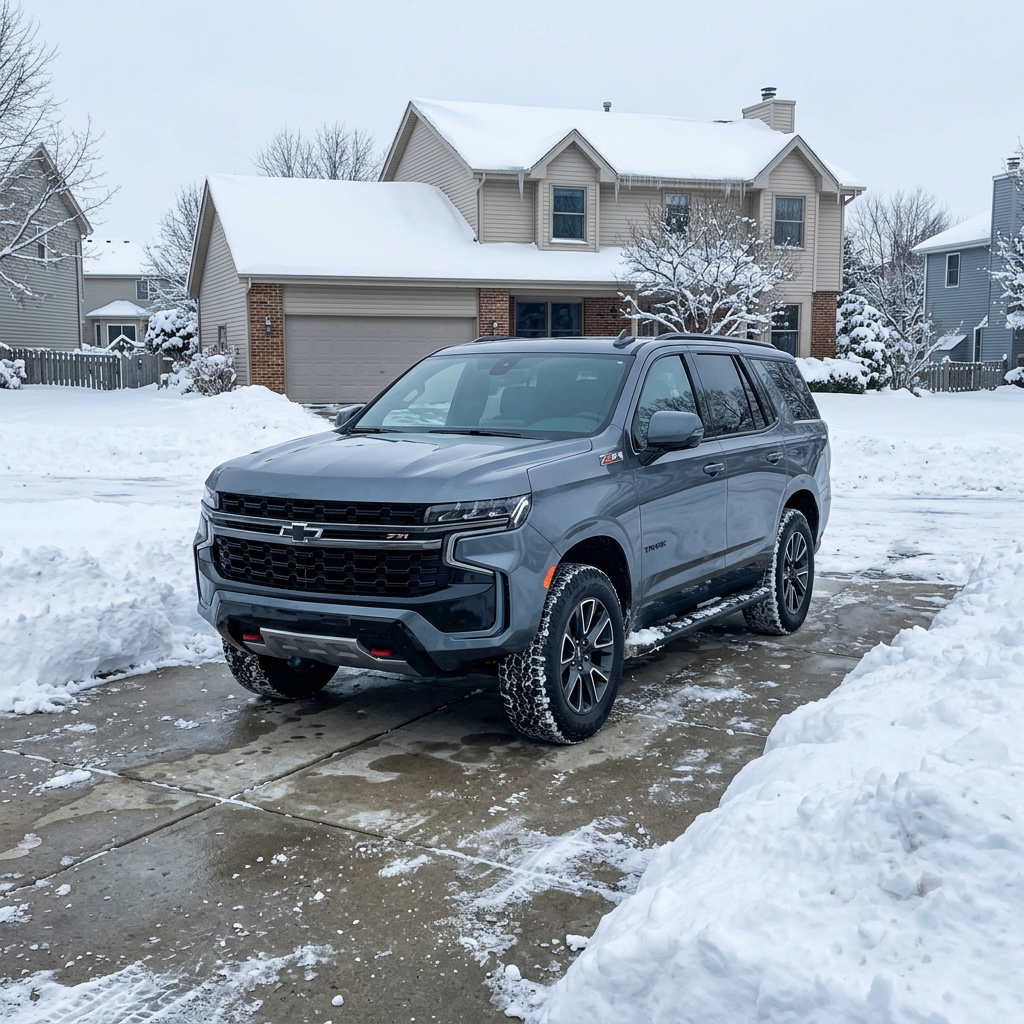
Which Vehicle Has More Ground Clearance for Unplowed Snowdrifts: Traverse or Tahoe?
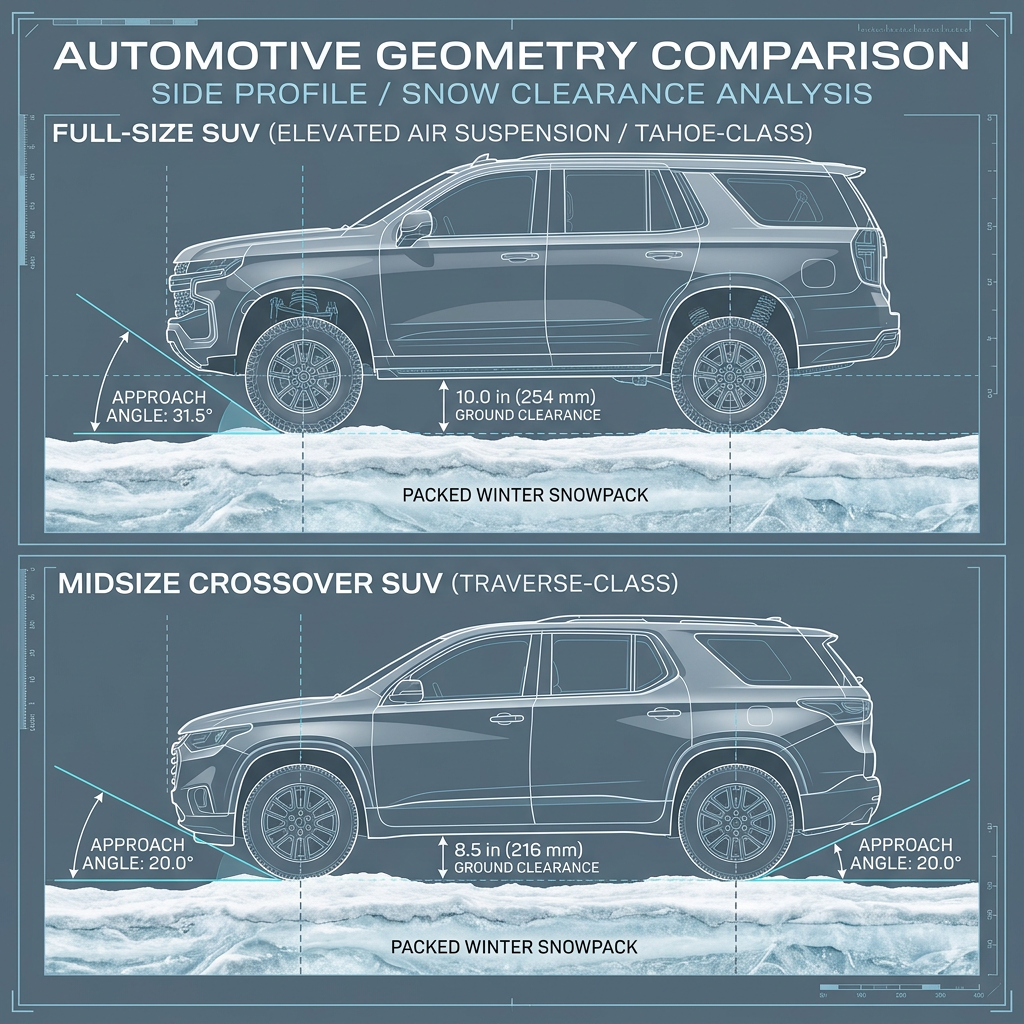
When northern Illinois blizzards sweep across Will County, leaving dense, unplowed snowdrifts across secondary county roads and residential driveways, physical clearance between your vehicle's undercarriage and the compacted snowpack makes the difference between rolling smoothly home and waiting hours for a heavy-duty tow truck. The direct answer is clear: the Chevrolet Tahoe provides higher overall ground clearance than the Chevrolet Traverse. In its standard configuration, the Tahoe rides with 8.0 to 8.4 inches of running clearance, but when outfitted with the available Four-Corner Air Ride Adaptive Suspension, the Tahoe can raise its ride height on demand to an impressive 10.0 inches of ground clearance.
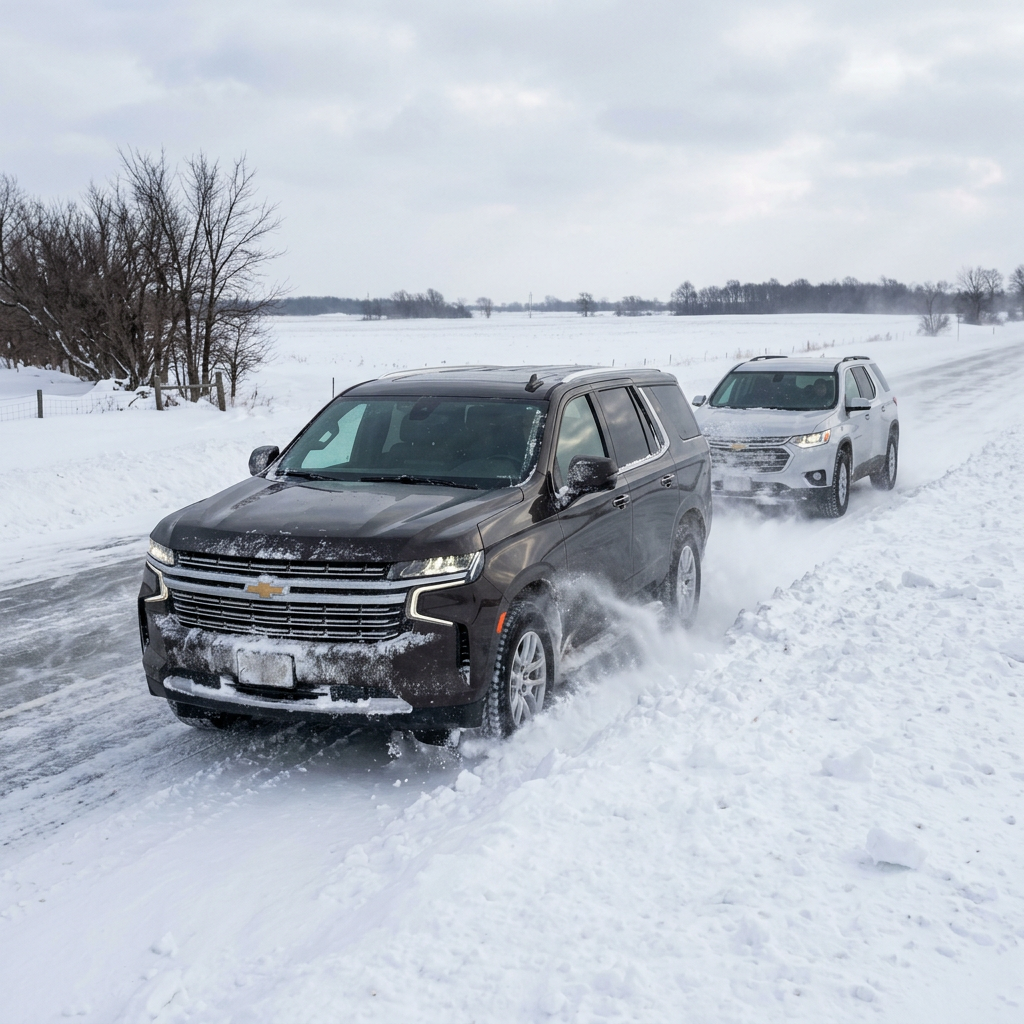
By comparison, the redesigned Chevrolet Traverse operates as a three-row crossover riding on a front-wheel-drive-based architecture, delivering a respectable standard clearance of 7.7 inches on LT and RS models. For winter warriors seeking enhanced capability without graduating to a full-size SUV footprint, the purpose-built Traverse Z71 incorporates a factory 1-inch suspension lift paired with wider tracks and rugged Goodyear Wrangler territory all-terrain tires, bringing maximum clearance to 8.5 inches. While the Traverse Z71 easily handles 6- to 8-inch residential powder and slush berms left behind by highway plows, the body-on-frame Tahoe remains the undisputed king when tackling dense, 10-inch wind-driven drifts across exposed rural routes.
Ground Clearance and Stance Breakdown: Traverse Z71 vs. Tahoe Suspension Options
Ride height numbers only tell part of the winter navigation story. The geometry of how an SUV approaches, crests, and leaves an obstruction determines whether you push through a packed snow berm or hang up your front bumper fascia. The Tahoe Z71 and High Country trims equipped with the class-exclusive Four-Corner Air Ride Adaptive Suspension allow drivers to toggle between entry/exit lowering and elevated off-road ride heights. At highway speeds, the Tahoe automatically lowers 0.75 inches to optimize aerodynamic efficiency and fuel economy. However, when you shift into 4WD Low or select terrain modes, the computer inflates the pneumatic air springs, elevating the chassis two inches above its standard baseline. This temporary lift increases the approach angle up to a generous 31.5 degrees on the Tahoe Z71, allowing the vehicle to climb up and over frozen roadside snow banks rather than acting like a snowplow and wedging wet sludge into the radiator core support.
The Traverse Z71 approaches ground obstacles with a fixed mechanical setup. Engineers gave the Z71 custom twin-tube dampers with hydraulic rebound stops, unique knuckle assemblies, and an engineered front fascia with a skid-plate profile that substantially improves its standard 14.5-degree approach angle to over 20 degrees. While the Traverse does not feature active height manipulation, its fixed 8.5 inches of clearance remains constant regardless of vehicle speed, preventing any unintended suspension settling when maintaining continuous throttle through long sections of slush.
|
Geometric Metric
|
Traverse Standard
|
Traverse Z71
|
Tahoe Standard Coil
|
Tahoe Air Ride (Max)
|
|
Ground Clearance
|
7.7 inches
|
8.5 inches
|
8.0–8.4 inches
|
10.0 inches
|
|
Approach Angle
|
14.8°
|
20.1°
|
22.7° (31.5° Z71)
|
Up to 34.5°
|
|
Departure Angle
|
18.2°
|
21.4°
|
20.0°
|
Up to 24.5°
|
|
Breakover Angle
|
15.1°
|
17.9°
|
16.6°
|
Up to 22.0°
|
Drivetrain Mechanics: Traverse Twin-Clutch AWD vs. Tahoe Autotrac 4WD in Deep Snow
Traverse Intelligent Twin-Clutch AWD Architecture The Chevrolet Traverse Z71 breaks away from conventional reactive all-wheel drive by adopting an advanced dual-clutch rear differential unit. Instead of an open differential that requires the ABS module to clamp down on a spinning tire to redirect power, the twin-clutch setup uses two electro-hydraulic clutch packs—one for each rear half-shaft. When one rear wheel encounters frictionless sheet ice while the opposite wheel finds packed snow, the computer mechanically clamps the clutch pack of the gripping tire, funneling up to 100% of available rear-axle torque to the single wheel that has traction. This active torque vectoring creates an invisible pivot effect, actively rotating the Traverse through slick suburban roundabouts and ensuring forward momentum even when one side of the vehicle is sunken into deep ditch drifts.
Tahoe Mechanical Autotrac Two-Speed Transfer Case Underneath the Tahoe lies a genuine truck-based driveline anchored by Chevrolet's proven Autotrac system. In contrast to clutch-based crossover AWD, the Tahoe uses a heavy-duty chain-driven transfer case featuring an internal low-range planetary gearset with a 2.72:1 reduction ratio. When a northern Illinois snowstorm piles heavy, wet, concrete-like snow drifts across a mile-long stretch of rural Will County road, vehicle momentum can rapidly stall. In 4WD Low, the Tahoe multiplies the engine's 383 lb-ft of torque (or 460 lb-ft on the 6.2L V8 and 495 lb-ft on the 3.0L Duramax Diesel) nearly threefold at crawling speeds. This gear reduction permits slow, calculated wheel revolutions that do not spin out and dig trenches in the snowpack, steadily clawing the massive vehicle through snowbanks that would easily overheat crossover transmission fluids.
Should You Drive in 4WD Auto or 4WD High on Winter Highways with Patchy Snow and Ice?
One of the most frequent technical inquiries received by our product specialists at Hawk Chevrolet of Joliet revolves around the rotary transfer case dial inside the Tahoe and the drive mode selector in the Traverse. Knowing which mode to engage as pavement conditions oscillate between bare blacktop and blowing snow ensures mechanical longevity and highway safety.
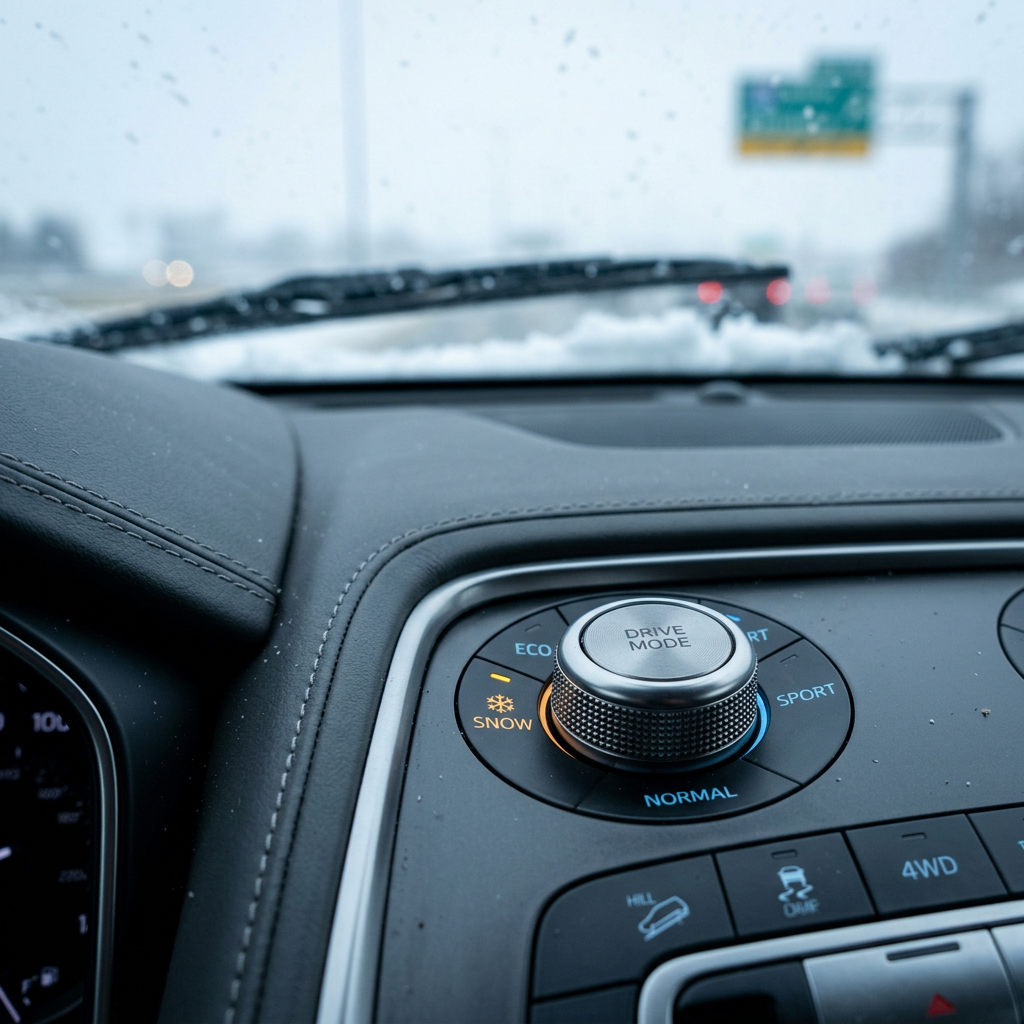
4WD Auto: Patchy Conditions
Operates primarily in rear-wheel drive to preserve fuel efficiency, but automatically engages an internal wet clutch within milliseconds when wheel slip is sensed. Perfect for commuting along Route 59 where cleared bridge decks give way to intermittent black ice and drifted intersections. It completely prevents driveline binding ('crow hop') during sharp parking lot maneuvers.
4WD High: Continuous Snow
Mechanically locks the front and rear driveshafts together at a 50/50 fixed split. This mode should strictly be reserved for fully covered, low-traction surfaces such as unplowed subdivisions or blizzard-swept county highways. Because it forces both axles to rotate at identical speeds, never use 4WD High on dry pavement, as tire scrub and severe driveline strain will occur.
Traverse AWD Modes
The Traverse gives drivers a dedicated FWD/AWD disconnect toggle. Leaving the system in AWD mode prepares the crossover for seamless power distribution across both axles without any possibility of mechanical binding, making it foolproof for drivers who do not want to monitor changing road conditions manually during seasonal changes.
How Does Chevrolet Snow/Ice Drive Mode Work When Driving on Icy Highways Like I-80?
Both the Traverse and Tahoe come factory-calibrated with an electronic Snow/Ice Drive Mode, accessible via the drive mode selector. When activated, this feature restructures the vehicle's powertrain response to eliminate sudden torque spikes that cause tires to lose adhesion on frictionless surfaces. Under normal conditions, tapping the accelerator delivers an immediate rush of throttle input. In Snow/Ice mode, the engine control module (ECM) progressively dampens throttle sensitivity. Even if a driver presses the accelerator pedal down briskly, the butterfly valve opens gradually, smoothing out power delivery. Simultaneously, the transmission programming alters shift points, instructing the 8-speed automatic (in Traverse) or 10-speed automatic (in Tahoe) to start from a standstill in second gear whenever possible, drastically reducing starting wheelspin on glare ice.
StabiliTrak Calibration on Wind-Swept Corridors The stretch of Interstate 80 running between Joliet, Minooka, and Morris is notoriously hazardous during mid-winter cold fronts. Crosswinds blowing across open agricultural flatlands flash-freeze melted slush into invisible black ice ribbons. Here, Snow/Ice mode reprograms the vehicle's StabiliTrak yaw-control thresholds. Rather than waiting for a pronounced spin or severe yaw deviation, the system continuously monitors steering wheel angle versus vehicle trajectory. At the earliest millisecond of lateral slip, individual brake calipers gently pulse while torque output is scaled back, keeping your SUV traveling dead center in its lane without snapping sideways in high-velocity prairie crosswinds.
Navigating Holiday Traffic and Winter Weather Along Route 59 and I-80 in a Chevy SUV
Anyone who commutes through Will County during the late fall and winter months understands the distinct driving challenges found along the Route 59 commercial spine connecting Joliet, Plainfield, and Naperville. Between frantic holiday shoppers, sudden blizzard whiteouts, and congested signal lights, winter roads test both vehicle architecture and driver patience. One of the most prevalent hazards isn't the open highway—it is the massive, heavy ridge of frozen snow and road grime deposited at the aprons of busy commercial entrances by municipal plow crews.
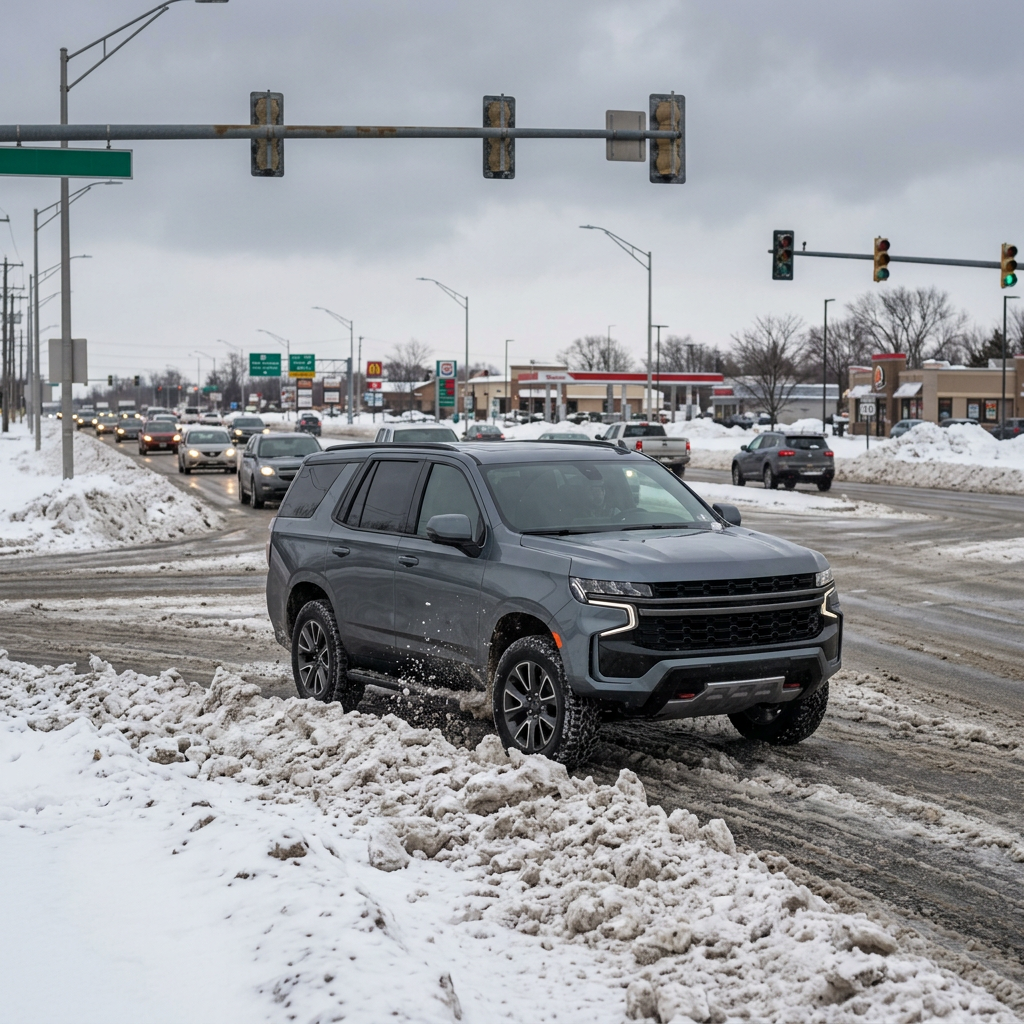
Sedans and lower-riding compact crossovers frequently suffer cracked front air dams, broken splash shields, and lost momentum when trying to cross these frozen barriers into parking facilities. With the Tahoe's 8.4-inch standard clearance (and up to 10 inches with air suspension) or the Traverse Z71's lifted 8.5-inch stance, drivers can confidently turn off Route 59 through frozen highway berms without scraping the chassis or high-centering the vehicle. Furthermore, elevated ride height affords unmatched sightlines over stopped traffic along Interstate 80 during sudden lake-effect squalls.
How Does Chevy Safety Assist Operate During Heavy Lake-Effect Snow and Slush?
Standard across both the Traverse and Tahoe lineups, Chevy Safety Assist includes six core active safety technologies: Forward Collision Alert, Automatic Emergency Braking, Front Pedestrian Braking, Following Distance Indicator, Lane Keep Assist with Lane Departure Warning, and IntelliBeam Auto High Beams. These systems depend heavily on a forward-facing optical camera mounted at the top of the windshield behind the rearview mirror, along with millimeter-wave radar units integrated behind the front grille and lower bumper fascia. During intense lake-effect blizzards, wind-driven snow, road brine, and dirty slush can encase these sensor surfaces. When camera visibility drops below programmed safety thresholds, the system alerts the driver via the digital instrument cluster with messages such as 'Forward Collision System Unavailable' or 'Service Driver Assist System'.
Fail-Safe Philosophy and Winter Calibration Unlike systems that might trigger erratic false phantom braking when radar beams scatter off swirling snowflakes, General Motors engineers programmed Chevy Safety Assist to fail safely into an inactive mode rather than risk uncommanded brake actuation on slick ice. Drivers still retain full conventional braking control, standard ABS anti-lock stopping, and electronic traction management. If salt crust or freezing ice persists even after wiping down the exterior housings, sensor alignment may need electronic recalibration. The certified technicians at our Hawk Chevrolet service center utilize factory GM diagnostic tools to recalibrate radar angles and optical stereoscopic cameras after severe winter impacts or windshield replacements.
How Do You Keep Chevy Front Safety Sensors Clear of Road Slush on Route 59?
Road treatment trucks along major Will County arteries spread tons of calcium chloride and crushed gravel that transform into sticky gray muck. Implementing a few simple preventive maintenance practices will keep your active safety suite operational throughout the sub-zero Illinois winter season.
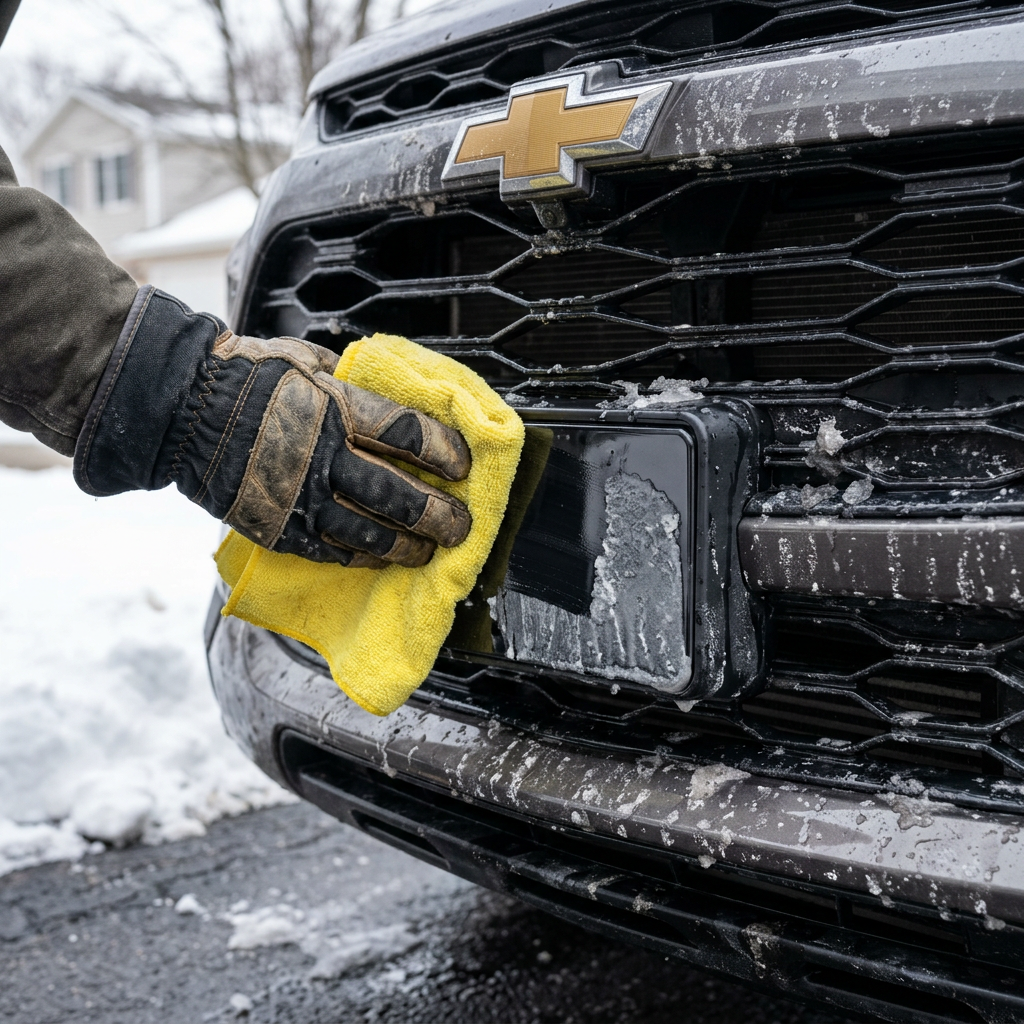
De-Icing Washer Fluid
Never mix standard summer bug washer fluid with sub-zero solutions. Fill your reservoir exclusively with premium -20°F or -30°F de-icer fluid with high methanol content. This prevents the spray nozzles from freezing and instantly melts slush streaks across the upper windshield camera view.
Soft Grille Cleaning
The front radar dome on the Tahoe and Traverse is housed within a smooth acrylic enclosure behind the bow-tie or lower grille opening. Never chip away frozen ice using hard plastic ice scrapers, which scratch the optical coating and deflect radar signals. Use warm water or de-icing spray and a soft microfiber towel.
Surround Vision Washers
Higher trims of the Tahoe and Traverse come equipped with dedicated rear camera washers. When engaging the rear window spray nozzle, a high-pressure jet simultaneously washes road salt off the reverse camera lens, restoring clear 360-degree vision while backing out of snowbanked parking spots.
Underbody Protection and High-Centering: Skid Plates vs. Aero Underbody Panels
The Physics of High-Centering High-centering happens when the snowpack beneath an SUV is denser than the weight bearing down upon it, lifting the wheels off the ground until tires spin helplessly in mid-air. When traversing hard-packed drifts left by county snow blowers, the physical composition of your vehicle's belly pan dictates whether it slides over or catches and sustains structural damage. On the standard Traverse, the undercarriage is protected by lightweight molded composite panels designed primarily for laminar airflow and EPA highway efficiency. While these deflect slush splashes, slamming into frozen glacial snowbanks at 25 mph can fracture fiber-reinforced plastic aero pans and bend aluminum A/C tubing routed under the chassis.
Tahoe Z71 Heavy-Duty Armor The Chevrolet Tahoe Z71 takes severe cold-weather duty in stride. It features a genuine high-strength front aluminum skid plate stamped with the Z71 insignia, protecting the lower cooling stack and front steering gear. Further back, high-strength steel transfer case shields and substantial boxed ladder frame rails take the brunt of severe snowbank impacts. If you find yourself cresting an unexpectedly high drift on a darkened stretch of Black Road in Joliet, the Tahoe's armored flat surfaces act like a sled toboggan, gliding over the snow's crust without puncturing vital mechanical components, giving you the security needed to negotiate rough rural roads.
How Much Does Buying a Dedicated Steel Wheel Package with Winter Tires Cost?
Equipping your Traverse or Tahoe with a seasonal set of winter-specific tires mounted to dedicated steel or cast aluminum wheels is one of the highest-return investments you can make for sub-freezing Midwestern safety. Here is a realistic cost breakdown and technical analysis for Chicagoland drivers.
Traverse 18-Inch Package
Contact us for current pricing Many Traverse models ship with stylish 20- or 22-inch alloy wheels wrapped in low-profile all-season rubber. Sizing down to an 18-inch steel or painted alloy wheel package allows you to install taller 255/65R18 winter tires (such as Bridgestone Blizzak DM-V2 or Michelin X-Ice Snow). The taller tire sidewall absorbs hidden potholes beneath snowdrifts while narrow tread widths slice directly through slush.
Tahoe 18-20-Inch Package
Contact us for current pricing Due to large 4-piston front brake calipers, Tahoe wheel packages require 18-inch minimum wheel clearance (with 20-inch setups being popular). Heavy-duty commercial steel wheels paired with Nokian Hakkapeliitta or Goodyear Ultra Grip tires and Genuine GM tire pressure monitoring sensors (TPMS) ensure full winter readiness without corroding high-end summer chrome alloys.
The 45-Degree Rule
Rubber Chemistry in Action All-season rubber compounds begin hardening like plastic bowling balls once ambient temperatures drop below 45°F. Winter compounds incorporate high silica densities and thousands of microscopic zig-zag sipes that stay flexible down to -30°F, cutting braking distances on glazed ice by up to 35% compared to all-season tires.
How Much Does It Cost to Replace an Automotive Battery in a Chevy SUV for Cold Winter Weather?
There is nothing more frustrating than stepping into a freezing car at 6:00 AM in Joliet and hearing only a slow, agonizing starter click. Modern Chevrolet SUVs carry enormous electrical demands: electronic power steering, multi-zone heated seats, heated steering wheels, active air suspension pumps, and twin touchscreens all tax the charging system before the engine even warms up. At 0°F, an automotive battery loses approximately 50% to 60% of its cranking power, while the engine requires up to twice as much energy to crank over thick, cold motor oil. Batteries generally last between 3 to 5 years in Illinois. If your SUV exhibits slow engine turnover or flickering infotainment displays during remote starts, replacement is urgent before the deep freeze arrives.
Replacement Pricing and AGM Technology A factory-grade ACDelco Gold standard flooded battery and AGM battery pricing can vary. Contact our service team for current parts and installation pricing. AGM batteries feature fiberglass mat separators that absorb acid, rendering them completely spill-proof and exceptionally vibration-resistant. More importantly, AGM units deliver superior Cold Cranking Amps (up to 850–900 CCA on Tahoe V8 applications) and recharge up to five times faster after cold starts than traditional wet-cell batteries. Our certified GM service center provides complimentary computerized battery conductance testing during routine maintenance visits.
Suburban Driveways vs. Drifting Rural Roads: Choosing Between Traverse and Tahoe in Plainfield and Naperville
Deciding whether the Traverse or Tahoe is the optimal winter SUV for your family depends heavily on your daily driving environment and garage constraints across Plainfield, Naperville, and Joliet. The Case for the Traverse: For families navigating suburban master-planned communities, tight cul-de-sacs, and multi-level parking ramps at downtown train stations, the Traverse is remarkably well-rounded. It offers 98 cubic feet of total cargo volume—rivaling many full-size SUVs—while maintaining a low step-in height that children and elderly relatives can enter without side assist steps. Its independent suspension and lower curb weight return significantly better fuel economy (EPA-estimated up to 26 MPG highway) while its 8.5-inch clearance in Z71 trim effortlessly swallows residential snowplow piles.
The Case for the Tahoe: If you live on acreage, travel unplowed township roads south and west of Joliet, or regularly tow heavy snowmobile or horse trailers during the winter, the Tahoe's 8,400-pound maximum towing capacity and available 10.0-inch air-sprung ride height provide unmatched peace of mind. Note that the Tahoe's 75.9-inch total vehicle height requires checking your standard 7-foot suburban garage door opening, particularly if you run a roof-mounted cargo ski box. You can easily Value Your Trade online to determine how upgrading your current vehicle matches your seasonal budget.
Test Drive Winter-Ready Traverse and Tahoe SUVs at Hawk Chevrolet of Joliet
Experiencing the command of the road, high seating position, and cold-weather amenities of these two exceptional SUVs is best done in person. Whether you want to test the multi-mode drive selector of the Traverse Z71 or raise and lower the Four-Corner Air Ride Adaptive Suspension on the Tahoe High Country, our experienced team is here to assist. Conveniently located at 2001 W Jefferson St in Joliet, we invite you to Get Directions to Hawk Chevrolet of Joliet or simply Call (779)-260-4300 to schedule your comprehensive side-by-side winter comparison test drive today. Our factory-certified specialists will help you select the exact drivetrain, tire package, and underbody specifications tailored to keep your family safe across every Illinois winter mile.



 Shop Chevy Red Tag.