Why Isn't My Heat Working? Direct Diagnostic Answer for Drivers in Joliet
When sub-zero Chicagoland winds whip across Will County and your car's climate control system blows lukewarm or ice-cold air, driving becomes an uncomfortable and hazardous ordeal. If your vehicle heater is failing to produce heat, the problem almost always stems from one of four primary mechanical or thermal system failures: low engine coolant levels, a stuck-open cooling system thermostat, a clogged internal heater core, or a malfunctioning HVAC blend door actuator. Understanding which of these components has compromised your climate control system is essential to securing a lasting fix before frigid weather takes its toll on your vehicle's engine and your daily drive.
Unlike home heating systems that utilize dedicated electric heating elements or gas burners, automotive heat is derived entirely as a byproduct of thermal energy generated by engine combustion. Engine coolant (antifreeze) absorbs extreme thermal energy from the combustion chambers and recirculates through a secondary closed loop. To provide cabin heat, this liquid coolant must reach an optimal operating threshold—typically between 180°F and 200°F. If low fluid volume interrupts thermal transfer or a mechanical component prevents the fluid from reaching this operating band, heat cannot transfer into your passenger cabin. Drivers traveling along Route 59 or I-80 during Illinois winter months rely heavily on this loop functioning seamlessly.
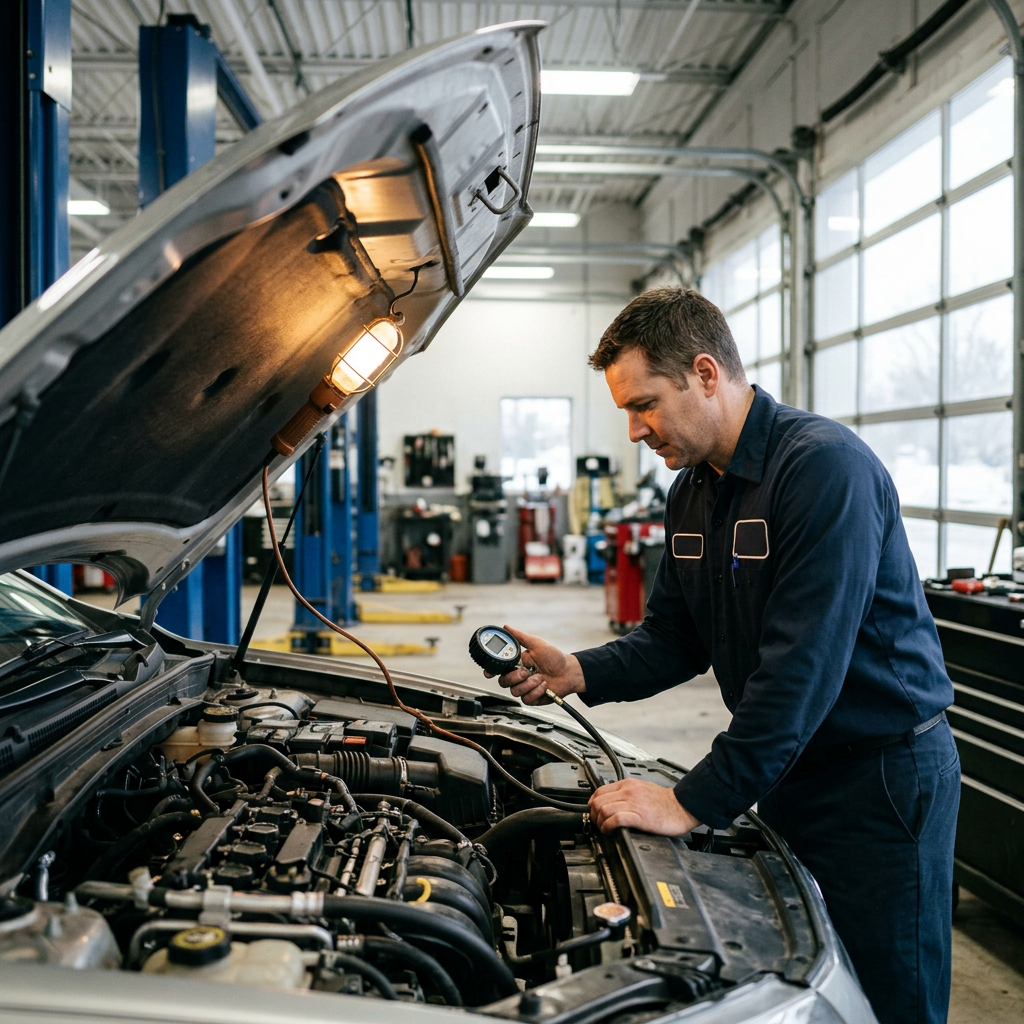
Pinpointing why your car heater stops blowing warm air requires systematic testing of fluid dynamics, electrical switches, and mechanical valves. Identifying symptoms early—such as whether cold air occurs only while idling at a red light on Jefferson Street or continuously while cruising at high speed—helps isolate the precise root cause. At Hawk Chevrolet of Joliet, our factory-certified technicians utilize specialized digital diagnostics and pressure testing equipment to resolve heating failures accurately, preventing minor cooling system glitches from expanding into costly engine damage.
How Does a Vehicle Heating System Work to Warm Your Cabin?
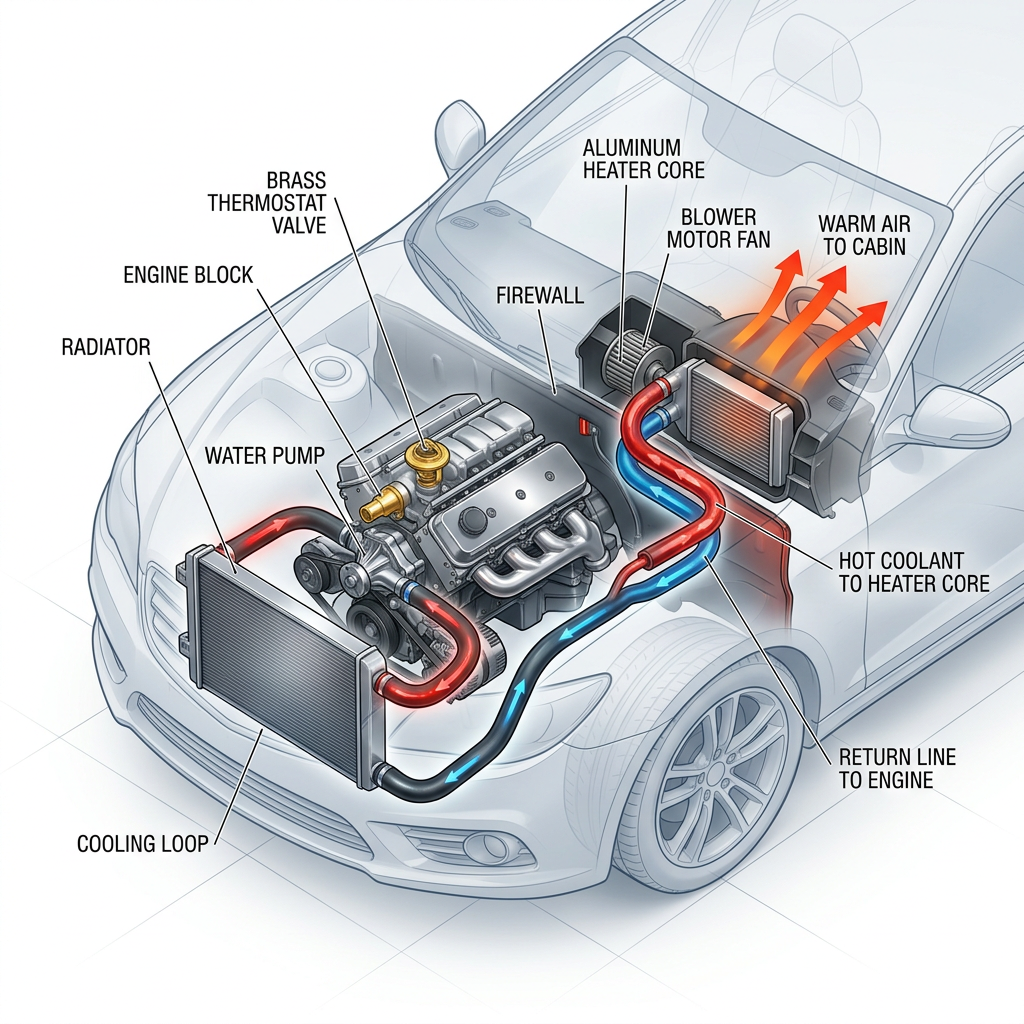
To understand why cabin heat fails, it helps to explore the thermal engineering behind modern vehicle warming systems. Automotive cabin heat is essentially a heat-rejection process. As your engine burns fuel, internal temperatures reach thousands of degrees Fahrenheit. Engine coolant flows continuously around cylinder walls and engine head passages, absorbing excess kinetic heat to protect precision metals from warping or cracking.
Once the engine reaches standard operating temperature, the engine thermostat opens, allowing heated liquid coolant to pump through rubber heater hoses routed through the engine firewall into a small radiator known as the heater core. Located deep beneath your vehicle dashboard, the heater core consists of thin aluminum tubes surrounded by ultra-dense cooling fins designed for maximal heat transfer.
When you turn on your dashboard climate control settings, an electric fan called the blower motor forces fresh exterior or recirculated cabin air directly across the outer surface of the hot heater core. Thermal energy transfers instantaneously from the hot fluid circulating inside the core to the passing air, transforming freezing outside air into warm airflow directed into your cabin vents.
Finally, motorized blend door actuators inside the HVAC housing shift positioned flaps to regulate how much air passes through the heater core versus bypassing it. This continuous mechanical cycle ensures precise cabin temperature regulation regardless of severe winter chills outdoors.
What Are the Most Common Reasons a Car Heater Stops Blowing Heat?
When heat ceases to flow from your air vents, systematic troubleshooting typically reveals one of five primary mechanical culprits. Every element of the cooling and HVAC system must operate in total harmony to provide cabin warmth.
1. Low Coolant & Thermostat Failure
Low coolant is the single most frequent cause of lost heat. If fluid leaks from hoses, water pump seals, or the radiator, air pockets enter the upper loop where the heater core sits. Without adequate fluid volume, thermal transfer stops completely. Furthermore, a thermostat stuck in an open position allows coolant to flow continuously to the radiator, keeping fluid temperatures too low to produce heat during cold Joliet winter commutes.
2. Clogged Heater Core & Air Locks
Because heater core passages are extremely narrow (often less than a millimeter wide), rust, sludge, and degraded coolant particles can settle inside, blocking circulation. When a core becomes clogged, hot fluid enters but cannot return, leaving the core cold. Similarly, trapped air bubbles ('air locks') prevent fluid from circulating across the heater core matrix, producing ice-cold air from dash vents.
3. Blend Door Actuators & Blower Electronics
Even if liquid coolant is boiling hot, a stripped gear or burned-out electric motor inside the blend door actuator will lock the HVAC damper door in the 'cold' position, directing outside air around the heater core. Additionally, failed blower motor resistors, blown fuses, or wiring faults can prevent the fan from forcing air into the passenger compartment, leaving vents completely silent.
What Role Does the Thermostat Play in Vehicle Cabin Heating?
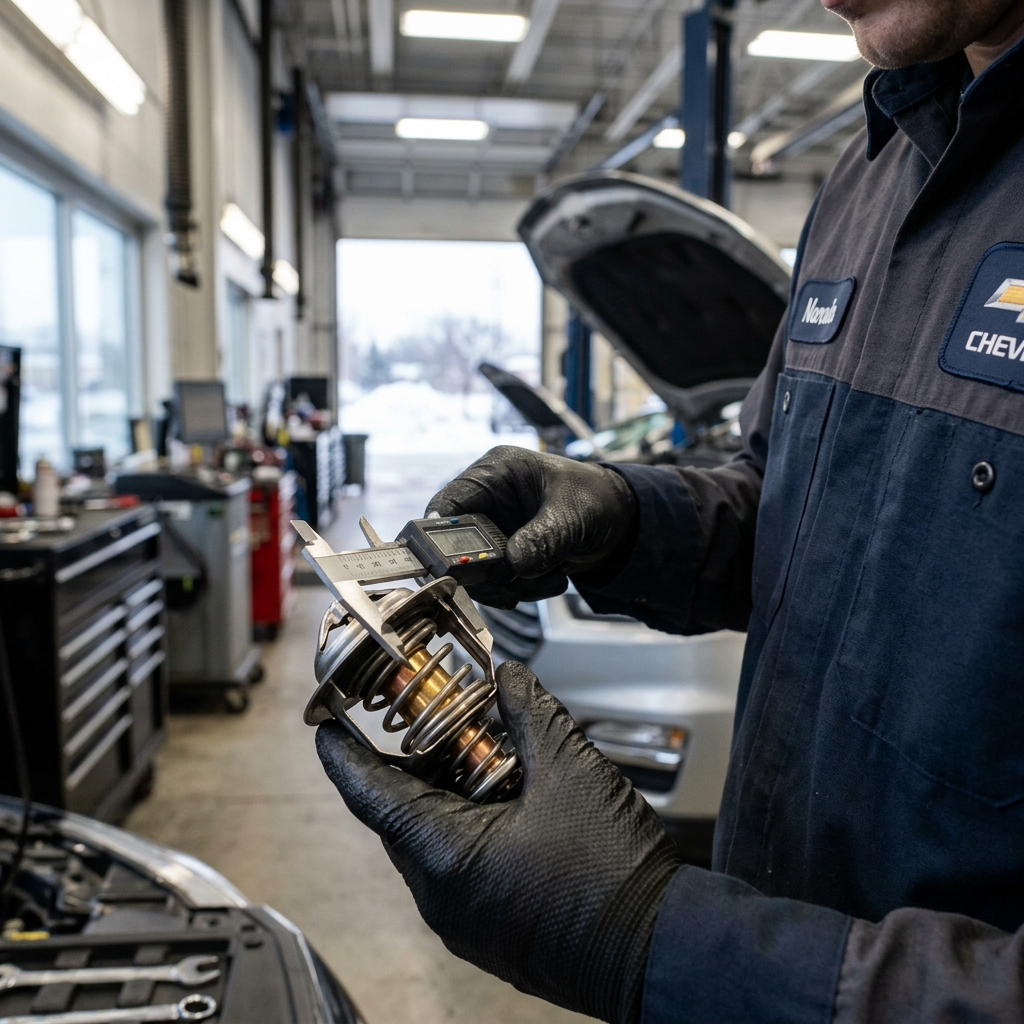
The engine thermostat acts as the primary gatekeeper of your vehicle's thermal management system. Located between the engine block and the radiator, this small, temperature-sensitive valve relies on a wax element calibrated to expand and contract at specific temperatures—typically opening fully between 180°F and 195°F.
When you start your vehicle on a freezing morning in Joliet, the thermostat remains tightly closed. This restricts coolant circulation exclusively to the internal engine block and heater core loop, allowing the engine to warm up as rapidly as possible. Once the engine hits target operating temperature, the thermostat opens gradually to vent excess heat through the front radiator.
If a thermostat fails in the stuck open position, coolant flows through the radiator continuously. In cold Chicagoland weather, the ambient airflow across the radiator cools the fluid faster than combustion heat can warm it, causing your dashboard gauge to stay near 'Cold' while cabin vents blow lukewarm air. Conversely, if it fails stuck closed, coolant cannot reach the radiator, causing rapid engine overheating and potential head gasket failure. You can Schedule Your Service Today with our team if your temperature gauge fluctuates irregularly.
What Is the Difference Between a Failing Thermostat and a Clogged Heater Core?
Because both a failing thermostat and a clogged heater core cause cold cabin air, drivers frequently confuse the two. However, their operational symptoms and impact on your engine are distinctly different. Evaluating these key indicators can help you understand what is happening under the hood:
|
Diagnostic Indicator
|
Failing Thermostat (Stuck Open)
|
Clogged Heater Core
|
|
Engine Temp Gauge
|
Stays very low or fluctuates continuously
|
Reaches normal operating temperature (mid-scale)
|
|
Heater Outlet Hose Temp
|
Both inlet and outlet hoses feel cool
|
Inlet hose is hot, outlet hose is noticeably cold
|
|
Cabin Vent Airflow
|
Lukewarm at highway speeds, cold when slow
|
Ice-cold continuously regardless of speed
|
|
Cabin Odor & Window Fog
|
No smell, normal defrosting (just cold)
|
Sweet glycol odor, oily fog film on interior windshield
|
|
Passenger Floor Moisture
|
Dry carpets
|
Wet, sticky carpet if heater core is leaking
|
A bad thermostat affects overall engine thermal state, while a clogged or leaking heater core represents an isolated flow restriction inside your vehicle HVAC box. Certified technicians test thermal differential between inlet and outlet heater hoses using infrared thermometers to confirm whether fluid is flowing through the core.
Could a Weak Water Pump Cause Cold Air at Idle During Will County Winters?
A frustrating scenario reported by many Chicagoland drivers is a heater that functions comfortably while cruising along I-80 or I-55 but suddenly blows freezing cold air as soon as the vehicle stops at a red light in downtown Joliet. If acceleration restores heat but idling brings cold air, a weak or deteriorating water pump is very often the primary culprit.
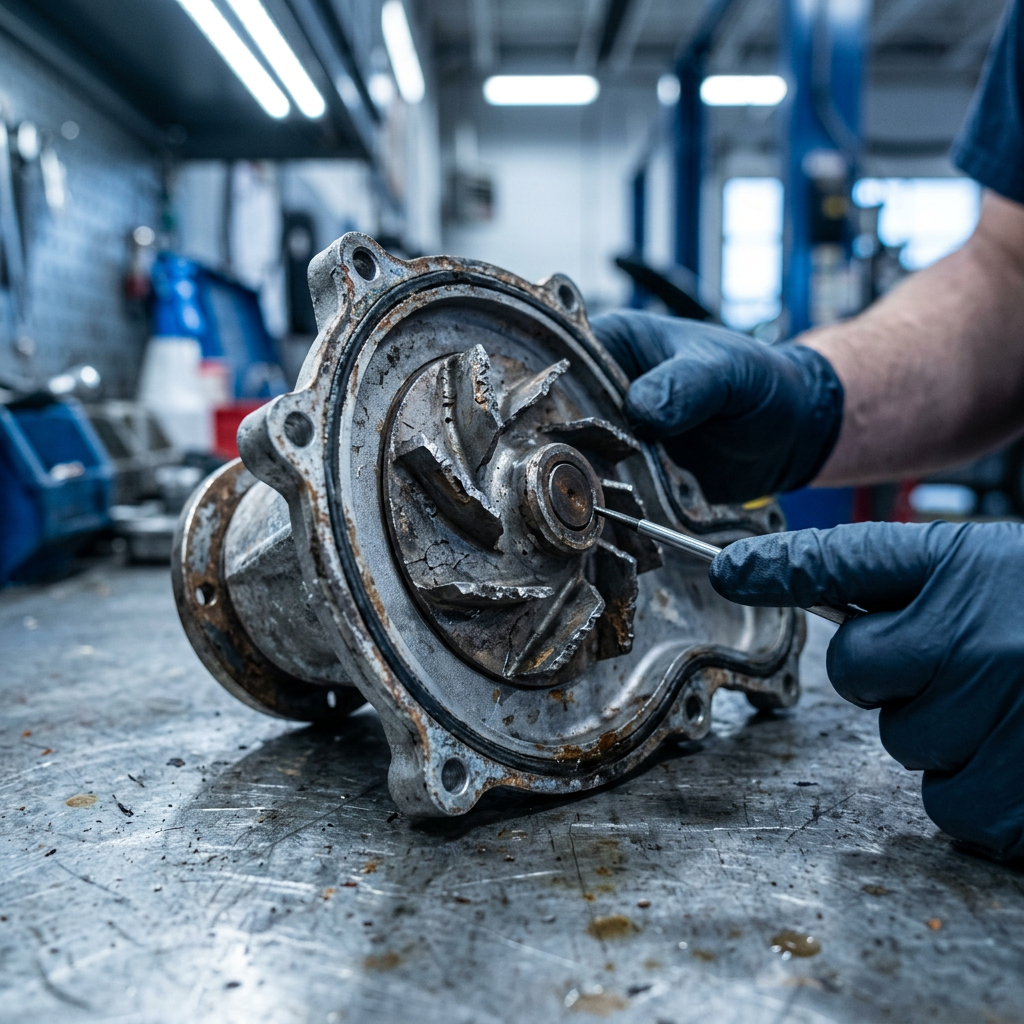
The water pump utilizes internal plastic or metallic impeller vanes to push heavy engine coolant through engine water jackets and dashboard heater hoses. Over time, plastic impellers can crack, erode, or slip on their drive shaft due to thermal fatigue. At low engine RPMs (600–800 RPM during idle), a damaged impeller cannot generate enough head pressure to lift heavy liquid coolant up into the elevated heater core hoses. When engine speeds increase to 2,000+ RPM while highway driving, higher mechanical force temporarily forces fluid through the heater core, generating brief cabin warmth until the vehicle returns to low speeds.
Ignoring a weak water pump is hazardous. If internal pump vanes slip completely, full coolant circulation stops, triggering sudden catastrophic engine overheating. If your vehicle exhibits temperature loss at idle, professional inspection of your serpentine belt drive, water pump pulley, and fluid flow rate is critical.
Why Is My Car Heater Blowing Cold Air Even When the Engine Is Warm?
When your dashboard temperature needle rests comfortably in the normal middle zone (190°F–210°F), yet cold air pours out of cabin vents, the issue lies outside fluid temperature. These non-coolant heating glitches are generally electrical, electronic, or pneumatic:
Air Locks in Cooling Loop
Following a recent radiator drain or coolant replacement, trapped air pockets can become lodged in the elevated upper heater core lines. Air compresses easily, stopping liquid coolant flow into the heater core despite normal engine temperatures. Professional vacuum-bleeding removes trapped air completely.
Failed Blend Door Actuator
Modern dual-zone climate control systems rely on electronic blend door servo motors. Small plastic internal gears inside these actuators can strip or snap, locking internal dampers in the cold air position regardless of your dashboard temperature dial settings.
HVAC Control Unit & Fuses
Blown climate control fuses, degraded ambient air temperature sensors, or corrupted HVAC computer modules can fail to send voltage signals to blend doors or heater control valves, keeping warm air from reaching passenger vents.
What Is the Typical Cost for a Diagnostic Test on a Car Heater?
Investing in a professional heater diagnostic protects vehicle owners from guessing and wasting hundreds of dollars replacing functioning parts. Across the Joliet region, a professional automotive heater diagnostic test typically ranges between $100 and $150, depending on system complexity.
A comprehensive heating diagnostic at Hawk Chevrolet of Joliet includes multiple testing protocols:
• Cooling System Pressure Test: Pressurizing system lines to reveal external pinhole leaks or internal head gasket breaches. • Digital HVAC Scan: Connecting OEM diagnostic scanners to read blend door actuator positions and HVAC module fault codes. • Infrared Thermal Mapping: Measuring inlet and outlet temperatures on radiator hoses, thermostats, and heater cores. • Coolant Quality Analysis: Checking fluid freeze point, pH levels, and contaminant levels.
In many service appointments, diagnostic fees can be applied directly toward total repair costs when service is authorized. Fixing a simple thermostat or topping off fluid early prevents expensive repairs like engine head gasket replacement later.
Can You Drive Safely Without Cabin Heat During Plainfield and Naperville Winters?
While driving without cabin heat during mild autumn days might seem like a minor annoyance, operating a vehicle without functional heat during freezing Northern Illinois winter conditions presents major safety hazards.
The most urgent hazard is total loss of windshield defrosting capabilities. Vehicle defrost systems rely directly on hot dry air from the heater core combined with the air conditioning compressor to remove humidity and ice from interior glass. Without hot air, breath moisture instantly freezes on cold glass surfaces, blinding the driver while navigating busy routes around Plainfield, Naperville, and Joliet.
Furthermore, a car heater blowing cold air is often a warning symptom of severe internal engine coolant loss. Driving with dangerously low coolant risks catastrophic engine overheating, warped cylinder heads, and complete engine destruction within minutes.
Preventative Maintenance Tips to Keep Your Automotive HVAC System Heating Properly
Flush Coolant Regularly
Engine coolant contains anti-corrosion additives that break down over time, becoming acidic and allowing scale to clog narrow heater core passages. Flush cooling systems according to factory intervals (typically every 45,000–60,000 miles). You can Order Genuine Chevrolet Parts or chemical flushes directly through our parts center.
Replace Cabin Air Filter
A clogged cabin air filter chokes off airflow to your blower motor, dramatically reducing heat output from dash vents. Replace your cabin filter every 12,000 to 15,000 miles or annually before severe winter weather arrives.
Use OEM Approved Fluid
Mixing incompatible coolant formulations (such as silicate-based formulas with organic acid Dex-Cool fluids) causes heavy gel sludge formation that immediately ruins heater cores and water pumps. Always top off using factory-approved OEM fluid.
Getting Your Heating System Inspected Near Joliet and Surrounding Communities
Drivers throughout Will County, Lockport, Shorewood, and Crest Hill trust Hawk Chevrolet of Joliet for thorough cooling system diagnostics and repairs. Our state-of-the-art service facility is equipped with specialized pressure testing systems, vacuum coolant refill rigs, and GM factory scanner tools to repair heating systems efficiently.
Whether you drive a Chevrolet Silverado, Equinox, Traverse, or any other make, our certified mechanics deliver transparent evaluations, clear estimates, and long-lasting winter solutions. If you need new vehicles for reliable winter travel, feel free to explore our inventory.
We offer convenient online scheduling, customer shuttle options, and factory-trained mechanics dedicated to getting you safely back on the road in warm comfort.
Schedule Your Car Heater Diagnostic at Hawk Chevrolet of Joliet Today
Do not spend another freezing morning waiting for warmth that never comes. Prevent minor cooling issues from damaging your engine and restore your vehicle cabin comfort today. Visit Hawk Chevrolet of Joliet at 2001 W Jefferson St, Joliet, IL 60435 or get instant directions by following our online link to Get Directions to Hawk Chevrolet of Joliet.
Speak directly with our service advisors by making a quick call: Call (815) 472-8001. Take action before severe freezing temperatures hit Chicagoland!