How to Accurately Check and Adjust Your Chevy SUV Tire Pressure Before Thanksgiving Road Trips
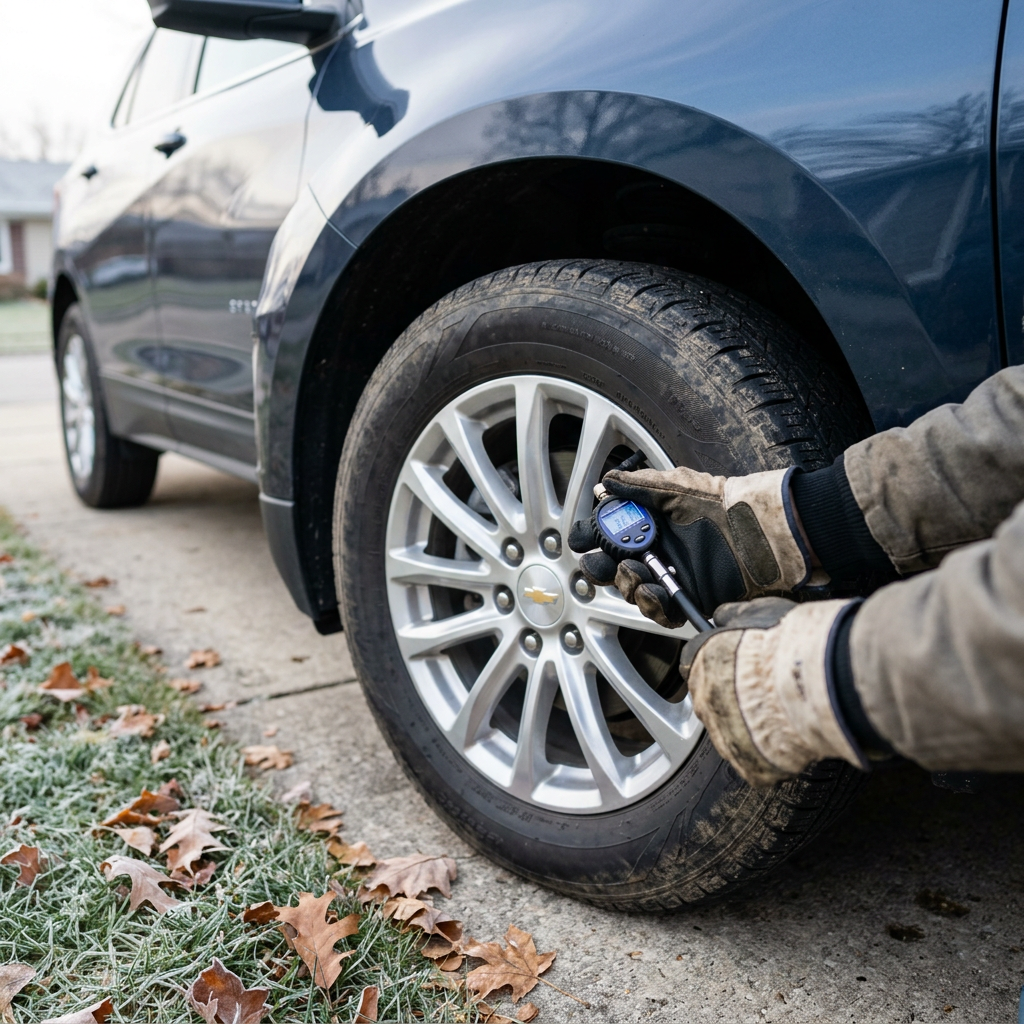
Before embarking on your Thanksgiving road trip across Chicagoland or setting off on long highway stretches like I-55 and I-80, verifying your Chevrolet SUV tire pressure is the single most effective maintenance step you can take. To obtain an accurate reading, always measure tire pressure when your tires are cold—meaning the vehicle has been parked for at least three hours or driven less than one mile. Friction from driving generates thermal energy, raising internal tire pressure by 3 to 5 PSI and giving you a false, elevated reading.
Always reference the recommended Cold Tire Inflation Pressure listed on the yellow and white tire information placard located on your SUV's driver-side B-pillar door jamb. Do not use the maximum PSI number stamped on the tire sidewall—that figure represents the tire's absolute structural limit at maximum weight capacity, not the vehicle manufacturer's engineered target for optimal vehicle dynamics, safety, and fuel efficiency.
As autumn shifts into winter across Northern Illinois, atmospheric temperatures plummet rapidly. As a general rule of thumb, tire pressure drops by approximately 1 PSI for every 10°F decrease in ambient temperature. If you adjusted your tires during a mild 60°F October afternoon and Thanksgiving morning dawns at a brisk 30°F, your tires may be underinflated by 3 to 4 PSI before you even back out of your driveway. Pre-emptively checking cold PSI ensures smooth rolling efficiency and optimal contact patch safety.
Why Cold November Weather Causes Chevy Tire Pressure to Drop in Chicagoland
The physics of tire pressure loss in late fall comes down to simple thermal contraction. Air inside your Chevrolet SUV tires is composed of dense gas molecules. When external temperatures cool down rapidly around Joliet and DuPage County during November, air molecules slow down and contract, occupying less volume inside the air chamber and reducing outward wall pressure.
This thermal drop occurs independently of air leaks or puncture damage. A perfectly sealed wheel assembly will naturally drop 3 to 5 PSI between late September and late November simply because of seasonal climate swings in Northern Illinois.
Driving long distance on holiday traffic with underinflated tires creates severe performance hazards. Low pressure expands the tire contact patch unnaturally toward the outer shoulders, generating extreme internal heat buildup due to increased sidewall flexing. On congested highways during holiday surges, this excessive heat drastically accelerates tread wear.
Furthermore, underinflated tires increase rolling resistance—forcing your Chevy engine or electric powertrain to work harder and wasting precious fuel. Sluggish steering response and extended emergency braking distances on slick pavement make low pressure a major safety risk.
Step-by-Step: Using Your Chevy Driver Information Center and Tire Fill Alert System
Modern Chevrolet SUVs come equipped with sophisticated onboard telematics designed to make tire pressure management effortless and precise. Here is how to harness these built-in systems before taking off.
1. Driver Information Center (DIC)
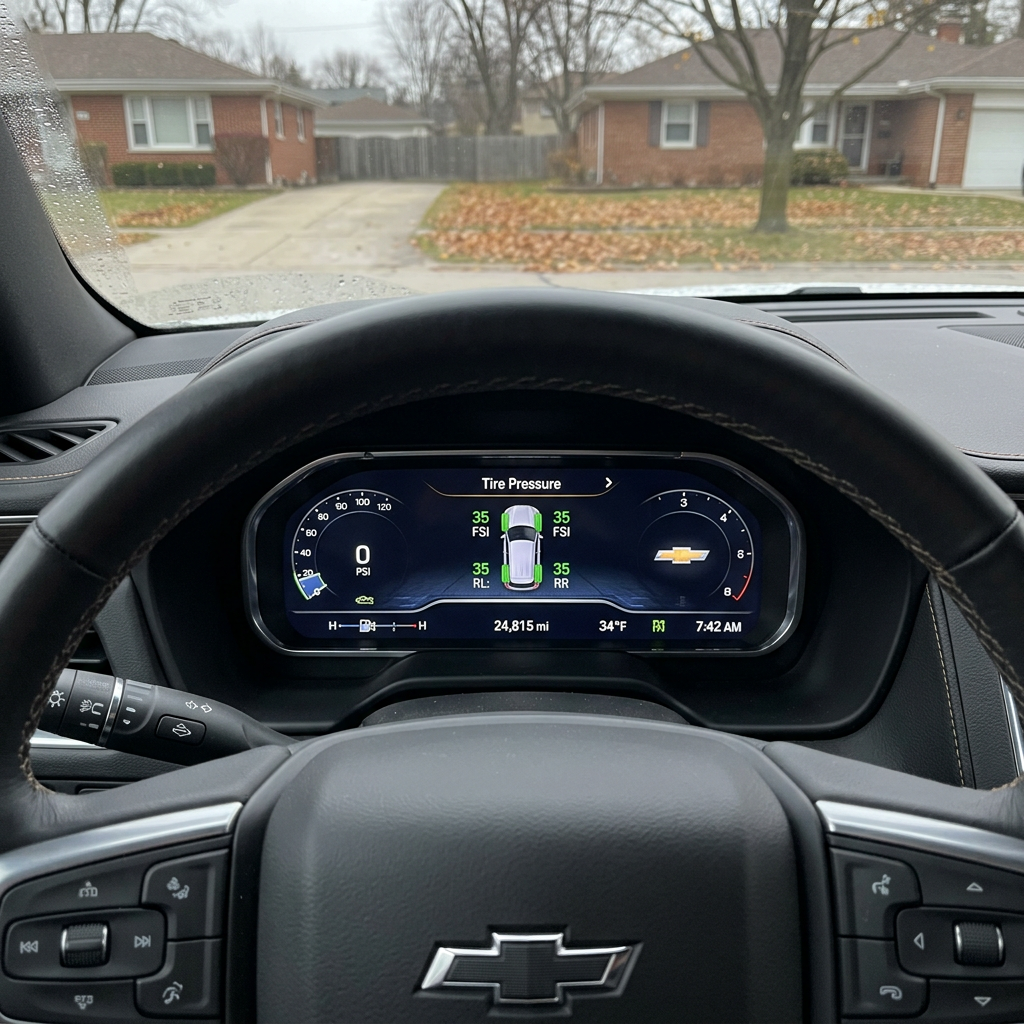
Use the right-side steering wheel arrow controls to navigate to the Info menu on your instrument cluster. Scroll down to the Tire Pressure screen to view live PSI readouts for all four individual tires in real time.
2. myChevrolet Mobile App
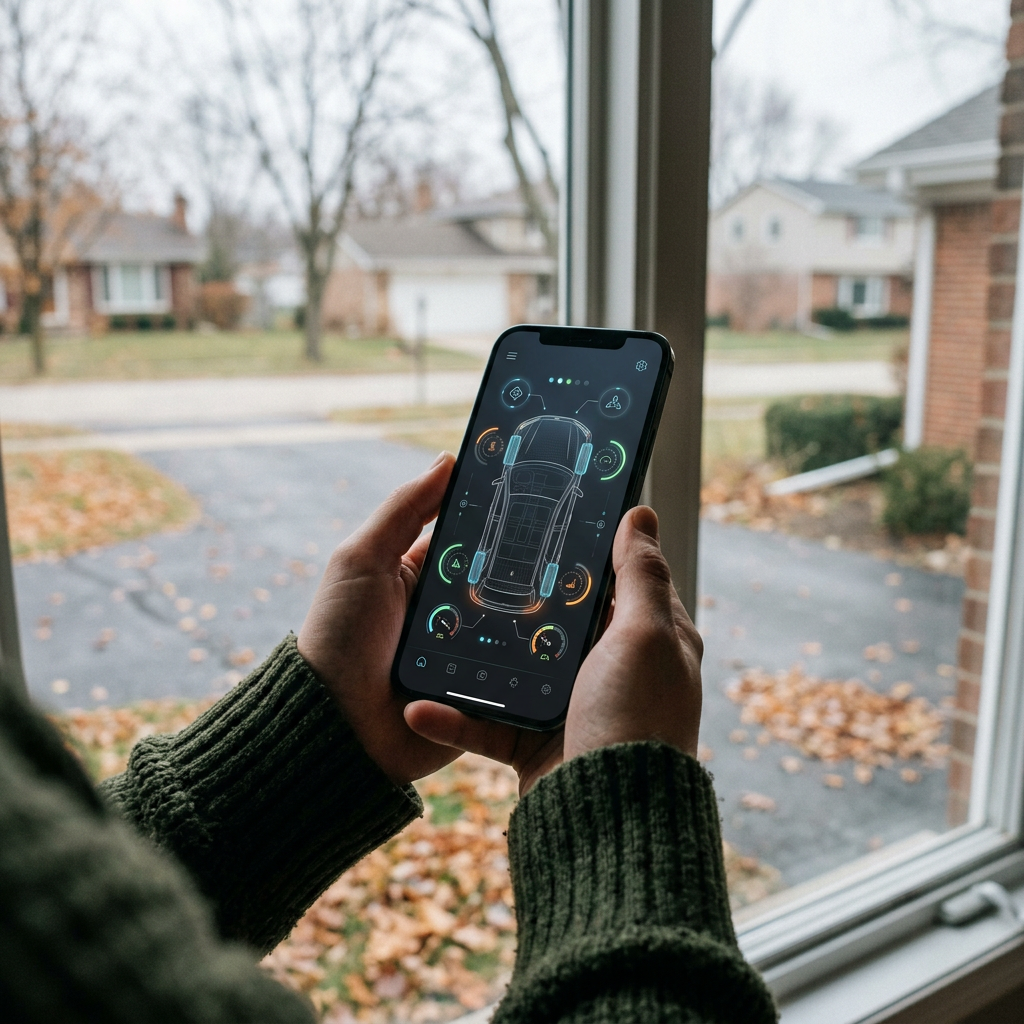
Check pressure status from the comfort of your warm home before heading out. Open the myChevrolet app on your smartphone to monitor vehicle diagnostics, current PSI per tire, and low pressure warnings instantly.
3. Chevy Tire Fill Alert
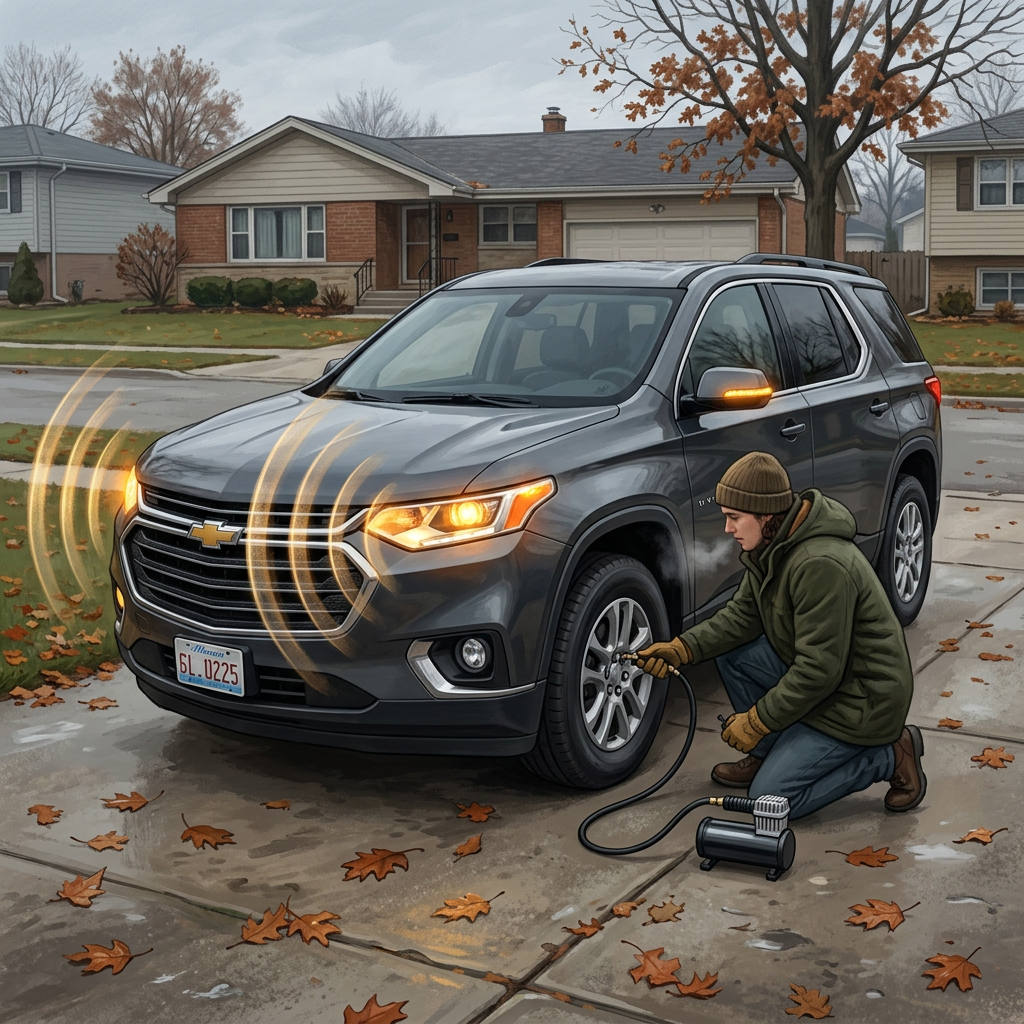
When adding air at a service station, leave the ignition ON (engine off). As air inflates the tire, exterior hazard lights flash. When correct PSI is reached, the horn chirps automatically so you never overinflate.
Chicagoland Thanksgiving Travel Checklist: Pre-Trip Inspection for Chevy SUVs
Tire pressure is critical, but total pre-trip peace of mind requires inspecting all primary safety components before embarking on holiday highway travel around Will, DuPage, and Cook counties. Follow this quick multi-point checklist prior to departure:
|
Inspection Item
|
Recommended Safety Standard
|
Action Needed If Below Target
|
|
Brake Friction Wear
|
Pad thickness > 4mm (3/16 inch)
|
Replace pads & inspect rotors for winter safety
|
|
12V Battery Health
|
Cold Cranking Amps (CCA) > 80% rating
|
Perform battery load test; replace if aged 3+ yrs
|
|
Wiper Blades & Fluid
|
Streak-free blades & -20°F washer fluid
|
Replace rubber blades & top off sub-zero fluid
|
|
Tire Tread Depth
|
> 4/32 inch for cold traction (Penny Test)
|
Rotate or replace tires before winter highway runs
|
Testing your tire tread depth at home is simple with the classic Lincoln penny test. Insert a penny head-first into the lowest tread groove. If top of Lincoln's head remains visible across multiple tread grooves, your tread depth has worn below 2/32 inch and is legally unsafe. For reliable wet snow and cold rain traction on Chicagoland interstates, automotive safety standards strongly recommend at least 4/32 inch of tread depth (tested with a Washington quarter—if Washington's head is exposed, replace tires before severe winter weather hits).
What Is the Recommended Engine Oil Viscosity for a 2027 Chevy Traverse Operating in Freezing Climates?
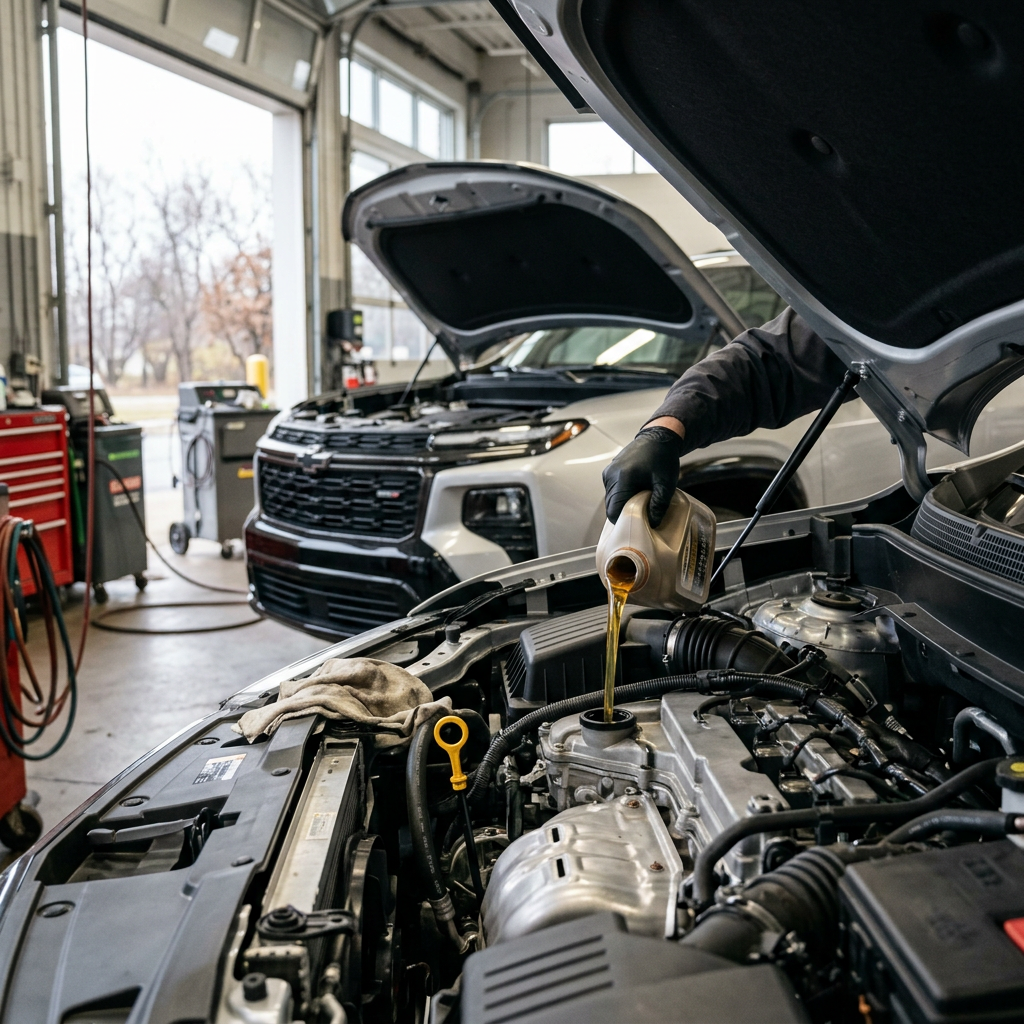
When operating a 2027 Chevy Traverse during sub-freezing Chicagoland winters, using the exact manufacturer-specified engine oil viscosity is vital to protecting sensitive valvetrain components. General Motors specifies dexos1 Gen 3 full synthetic oil—typically 0W-20 or 5W-30 depending on your exact engine powertrain configuration.
The rating before the 'W' (which stands for Winter) indicates low-temperature flow performance. A 0W or 5W synthetic oil flows effortlessly during frozen morning starts in Naperville or Plainfield, pump-circulating lubricant to upper cylinder heads within milliseconds of turn-key startup to eliminate dry-start friction.
Using conventional or incorrect weight motor oils in freezing climates causes oil sludge thickening, reducing fuel economy and subjecting critical turbocharger bearings to premature wear. Always verify your filler cap specification or consult certified technicians.
How Does the 2027 Chevy Traverse All-Wheel Drive System Perform in Snow and Ice?
The 2027 Chevy Traverse features an advanced available Twin-Clutch All-Wheel Drive system engineered specifically to tackle unpredictable Midwest road conditions. Unlike traditional mechanical AWD systems, this twin-clutch setup can actively shift torque laterally between the left and right rear wheels, delivering power directly to whichever tire maintains physical traction on icy surfaces.
With the integrated Drive Mode Selector switched to Snow/Ice Mode, the Traverse recalibrates its electronic throttle response, adjust transmission shift maps to upshift earlier, and tunes StabiliTrak traction management. This actively reduces spinning on slush-covered I-55 ramps, icy Des Plaines River bridge decks, and unplowed suburban side streets across Will and DuPage counties.
Which SUV Offers More Third-Row Legroom and Cargo Space, the 2027 Chevy Traverse or Ford Explorer?
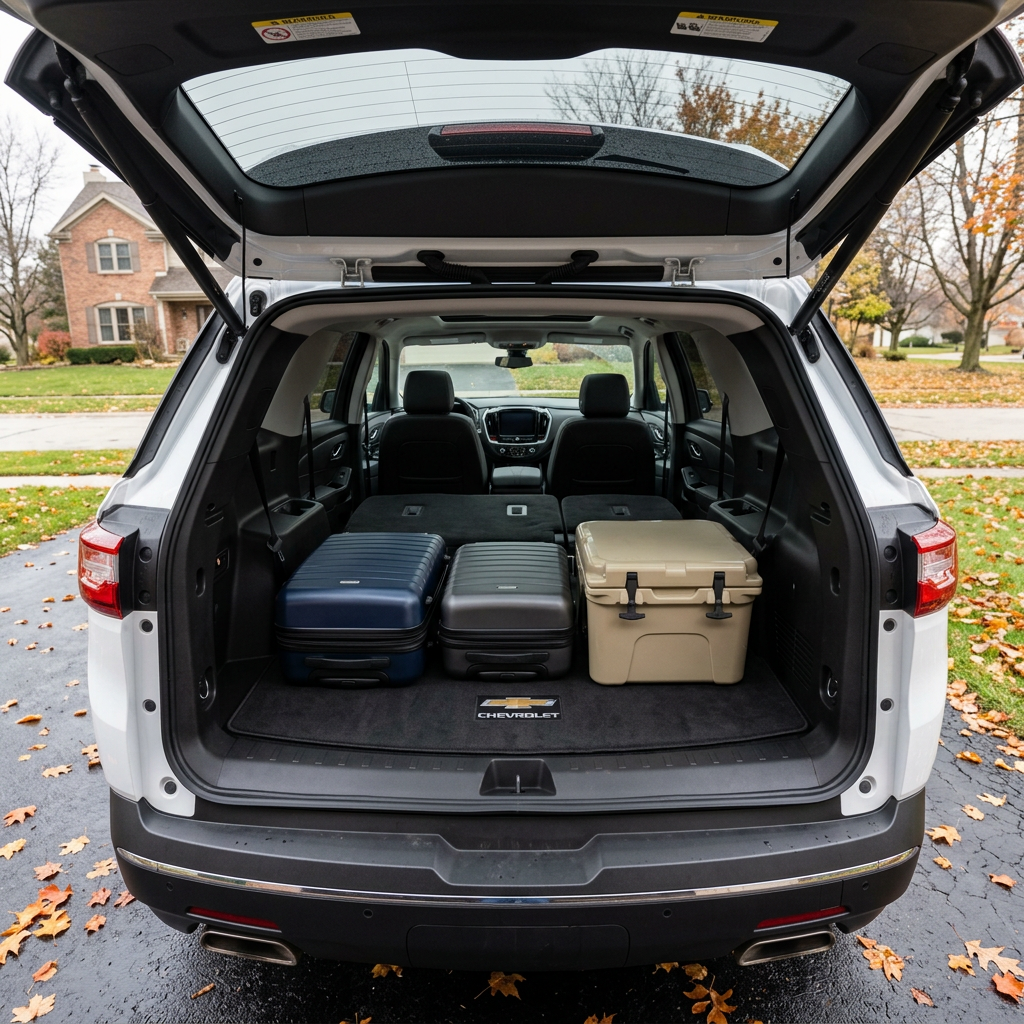
When packing up adult relatives, luggage, coolers, and Thanksgiving holiday gear, midsize SUV interior dimensions make all the difference. Comparing the 2027 Chevy Traverse directly against the Ford Explorer highlights significant spatial advantages for Chevrolet owners.
Third-Row Legroom
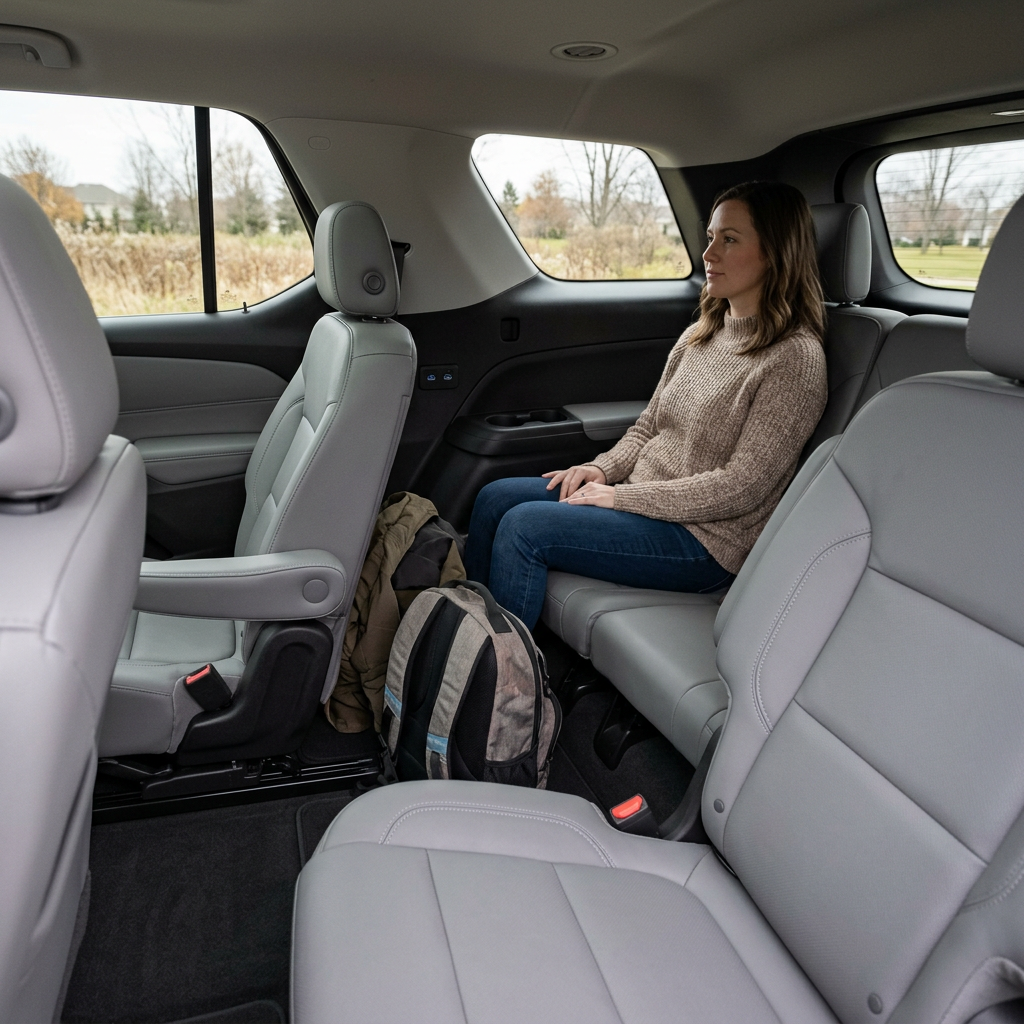
The 2027 Traverse delivers comfortable third-row legroom suitable for adult family members on long road trips, whereas the Ford Explorer's tighter third-row restricts comfort primarily to smaller children.
Maximum Cargo Volume
With all rear seats folded flat, the Chevy Traverse yields a class-leading maximum cargo volume of up to 98 cubic feet. The Ford Explorer falls substantially short with around 88 cubic feet max space.
Passenger Comfort
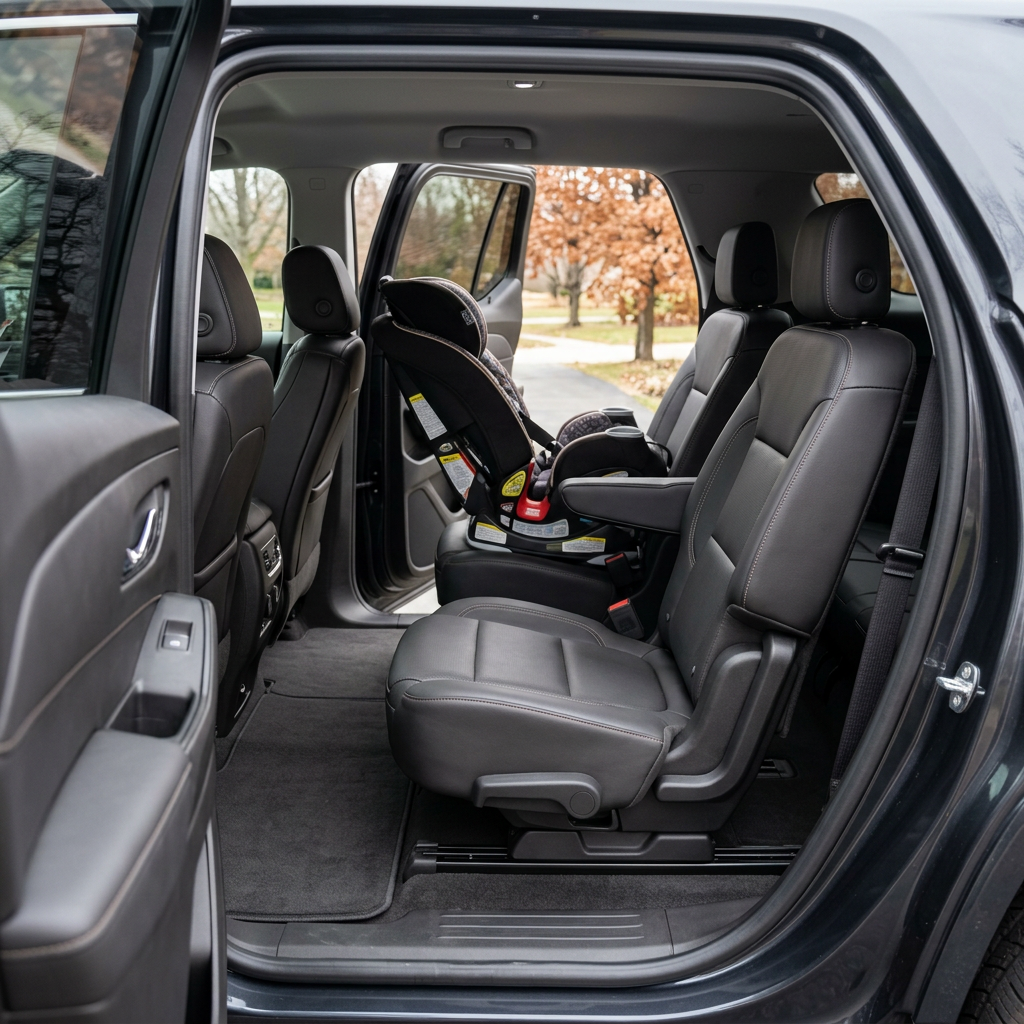
Chevy's Smart Slide second-row seating permits rapid, one-handed access to the third row even with an empty child safety seat latched in place, outperforming Ford's standard manual tilt mechanisms.
|
Dimension & Spec Comparison
|
2027 Chevy Traverse
|
2027 Ford Explorer
|
|
Max Cargo Volume (Behind 1st Row)
|
Up to 98.0 cu. ft.
|
Up to 87.8 cu. ft.
|
|
Cargo Volume Behind 3rd Row
|
22.9 cu. ft.
|
18.2 cu. ft.
|
|
Third-Row Legroom
|
33.5 inches
|
32.2 inches
|
|
Standard Touchscreen Size
|
17.7-inch diagonal screen
|
13.2-inch diagonal screen
|
How Much Driving Range Does Freezing Chicagoland Weather Reduce in a 2027 Chevy Blazer EV?
Electric vehicle drivers taking their 2027 Chevy Blazer EV on Thanksgiving road trips should account for temperature-induced range reduction during Midwest late-autumn weather. Sub-freezing temperatures slow internal lithium-ion chemical reactions and require battery energy to warm both the cabin environment and the high-voltage battery pack itself, typically resulting in a 20% to 30% reduction in total driving range during sub-32°F weather conditions.
To optimize driving range and speed up charging stops during cold holiday journeys across Northern Illinois, implement these three expert electric range management strategies:
1. Precondition While Plugged In: Use the myChevrolet app to schedule cabin heating and battery thermal preconditioning 20 to 30 minutes before departure while connected to your home Level 2 charger. Drawing power from grid infrastructure preserves 100% of your onboard battery state-of-charge for the highway. 2. Utilize Radiant Seat & Steering Wheel Heaters: Heating cabin air via resistance HVAC consumes substantial kW energy. Relying primarily on heated front/rear seats and the heated steering wheel keeps occupants warm while using fractionally less battery energy. 3. Route Plan Fast-Charging via In-Vehicle Navigation: Program DC fast-charging waypoints along I-80 or I-55 through Google Maps built into your infotainment system. This enables automatic battery pre-conditioning en route to DC fast chargers, drastically shortening winter charging stop times.
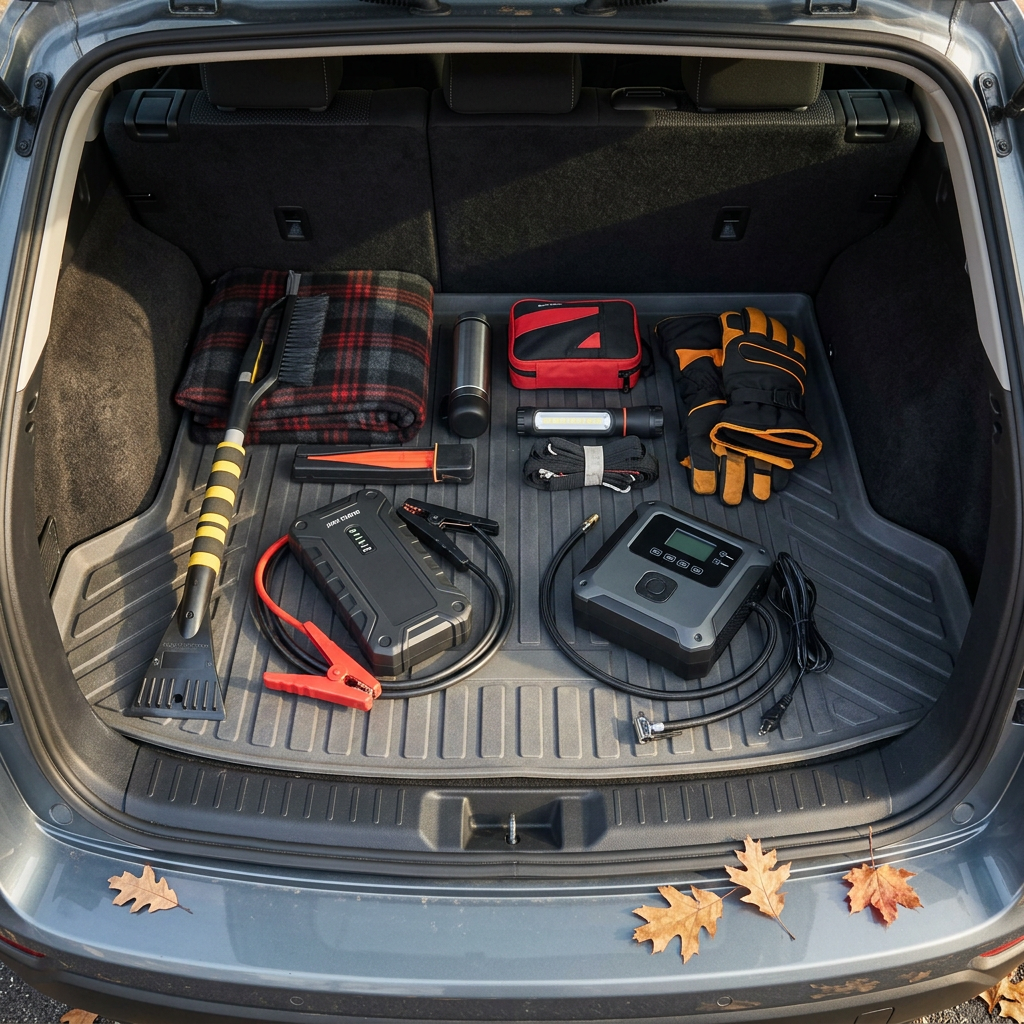
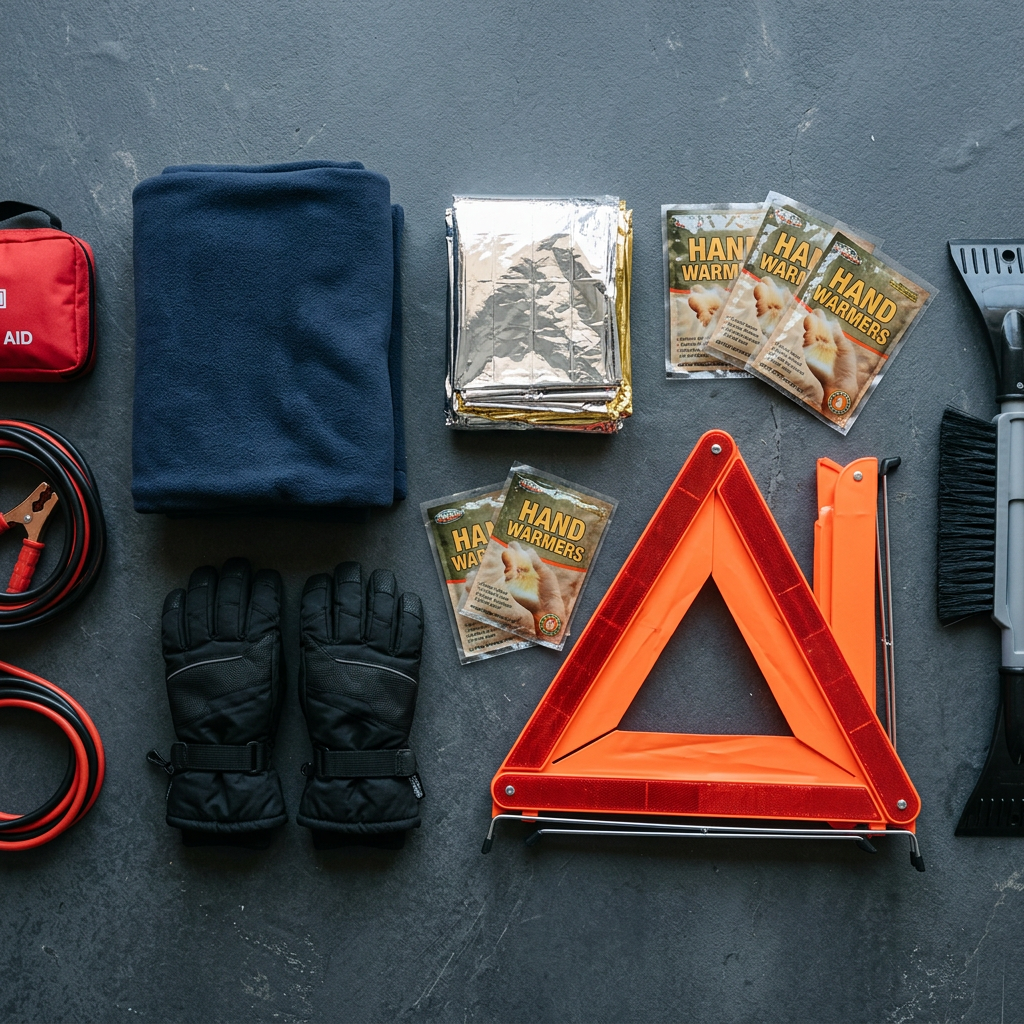
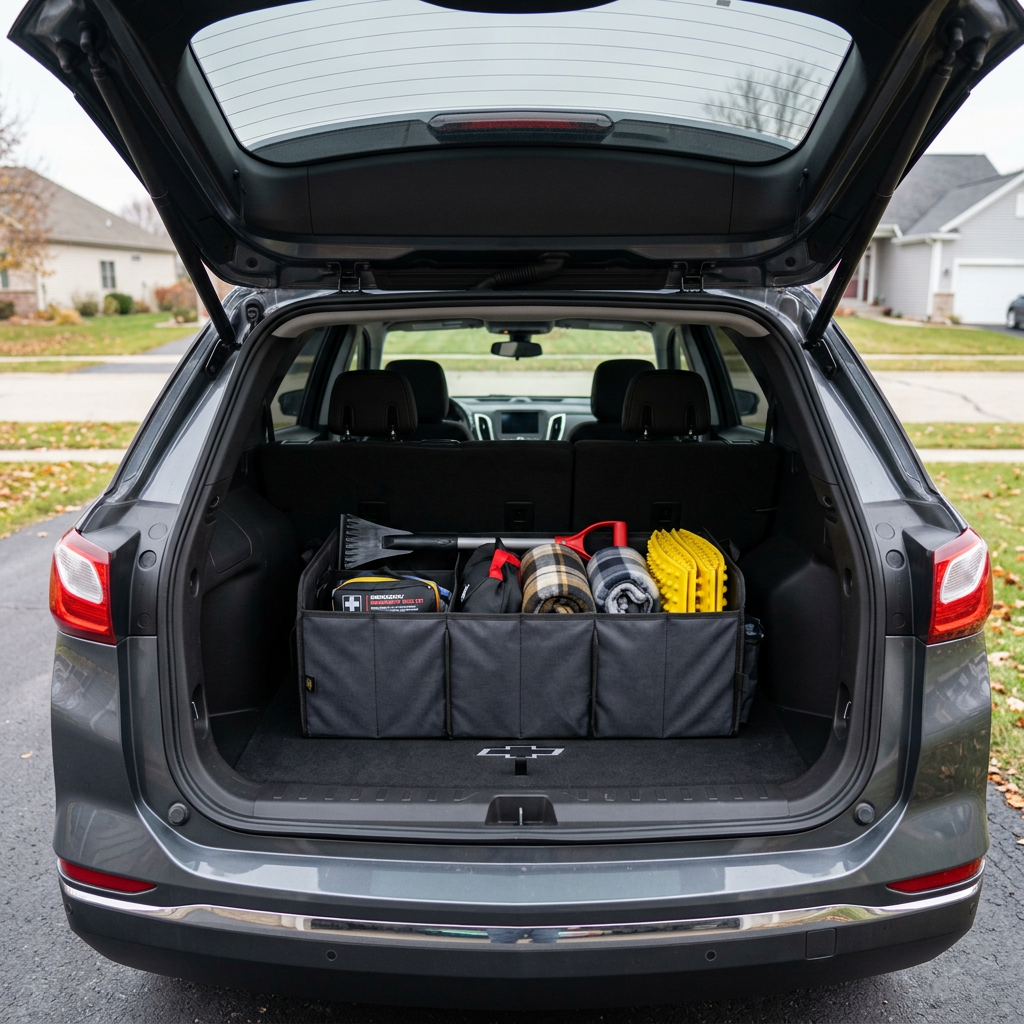
What Essential Items Should Be Included in a Chevy SUV Winter Emergency Roadside Kit?
Heavy Thanksgiving travel volume combined with abrupt Chicagoland lake-effect snow flurries or sudden black ice conditions can result in extended highway delays. Stowing a tailored winter emergency roadside kit inside your Chevy SUV ensures safety under any circumstance.
Power & Inflation
• Portable lithium jump starter pack • Digital 12V portable tire inflator • High-lumen rechargeable LED flashlight • Heavy-duty booster cables
Warmth & Survival
• Mylar thermal blankets & fleece throw • Chemical hand/foot warmers • Non-perishable energy snacks & water • First aid kit & emergency whistle
Traction & Safety
• Brass-blade ice scraper & snow brush • Compact folding snow shovel • Foldable tire traction mats • Genuine Chevy custom cargo organizer
When to Replace vs. Rotate Your SUV Tires Before Heavy Winter Driving
When to Replace Tires
If your tire tread depth measures 4/32 inch or less, replacement is strongly advised prior to winter highway travel. Lower tread depth drastically compromises the tire's ability to evacuate slush, standing water, and packed snow, dramatically increasing hydroplaning risk. Additionally, inspect sidewalls for cracking, rubber dry rot, embedded nails, or visible bulges (which signal compromised internal cords and risk sudden blowouts).
When to Rotate Tires
If tread depth remains healthy (above 5/32 inch) but you have driven more than 7,500 miles since your last service visit, a tire rotation is imperative. On front-wheel drive and all-wheel drive Chevy SUVs, front tires experience higher steering friction and braking loads. Rotating tires front-to-rear evens out wear patterns, extends total tread life, and maintains balanced handling across all four wheels.
Local Route Preparation for Joliet, Plainfield, and Naperville Drivers
Navigating Thanksgiving holiday congestion across Will and DuPage counties requires smart timing and route planning. Heavy bottlenecks consistently develop along major regional thoroughfares including Interstate 55 northbound toward Chicago, I-80 eastbound toward Indiana, and busy suburban connectors like Route 59 and Weber Road.
Before hitting these crowded corridors, swing by Hawk Chevrolet of Joliet at 2001 W Jefferson St, Joliet, IL 60435. Our factory-trained technicians can perform a complimentary quick tire pressure verification and multi-point pre-trip vehicle check while you wait, ensuring your Chevrolet SUV is completely road-ready.
Schedule Your Pre-Holiday Service at Hawk Chevrolet of Joliet Today
Don't let unexpected tire issues or cold weather battery failures disrupt your family's Thanksgiving celebration. Whether you need a synthetic oil change, comprehensive tire balance and rotation, battery replacement, or brand-new winter-rated tires, the certified service team at Hawk Chevrolet of Joliet is here to serve you. Call (815) 472-8001 or reserve your appointment online today!