Is a Pre-Winter Vehicle Inspection Worth the Money in Chicagoland?
As autumn leaves blanket Will and DuPage counties, Chicagoland drivers face one of the most demanding driving environments in the Midwest. Northern Illinois winters are notorious for sudden, deep freezes, heavy lake-effect snow, and severe ice storms. For many vehicle owners in Joliet, Plainfield, and Naperville, the question naturally arises: Is a professional pre-winter vehicle inspection worth spending $50 to $150? The short answer from automotive experts and seasoned local drivers alike is an unequivocal yes.
A standard pre-winter maintenance assessment is not merely a formality; it is a critical preventative measure designed to uncover hidden vulnerabilities before sub-zero temperatures arrive. When temperatures drop below freezing, existing vehicle weaknesses—such as a weakly charged battery, diluted coolant, hairline radiator cracks, or degraded windshield wiper blades—are rapidly magnified. A minor issue that causes zero inconvenience in October can easily transform into a complete breakdown during a sub-zero morning freeze on I-55 or I-80.
Beyond immediate peace of mind, investing in a comprehensive multi-point winter service evaluation delivers substantial economic benefits. Catching a declining electrical system, worn brake pads, or low tire tread depth early protects you from emergency towing fees averaging $150 to $300 per trip, secondary vehicle damage, and missed workdays. At Hawk Chevrolet of Joliet, our certified service department helps local motorists navigate winter weather safely and economically.
Comparing the Cost of Pre-Winter Maintenance Against Emergency Winter Repairs
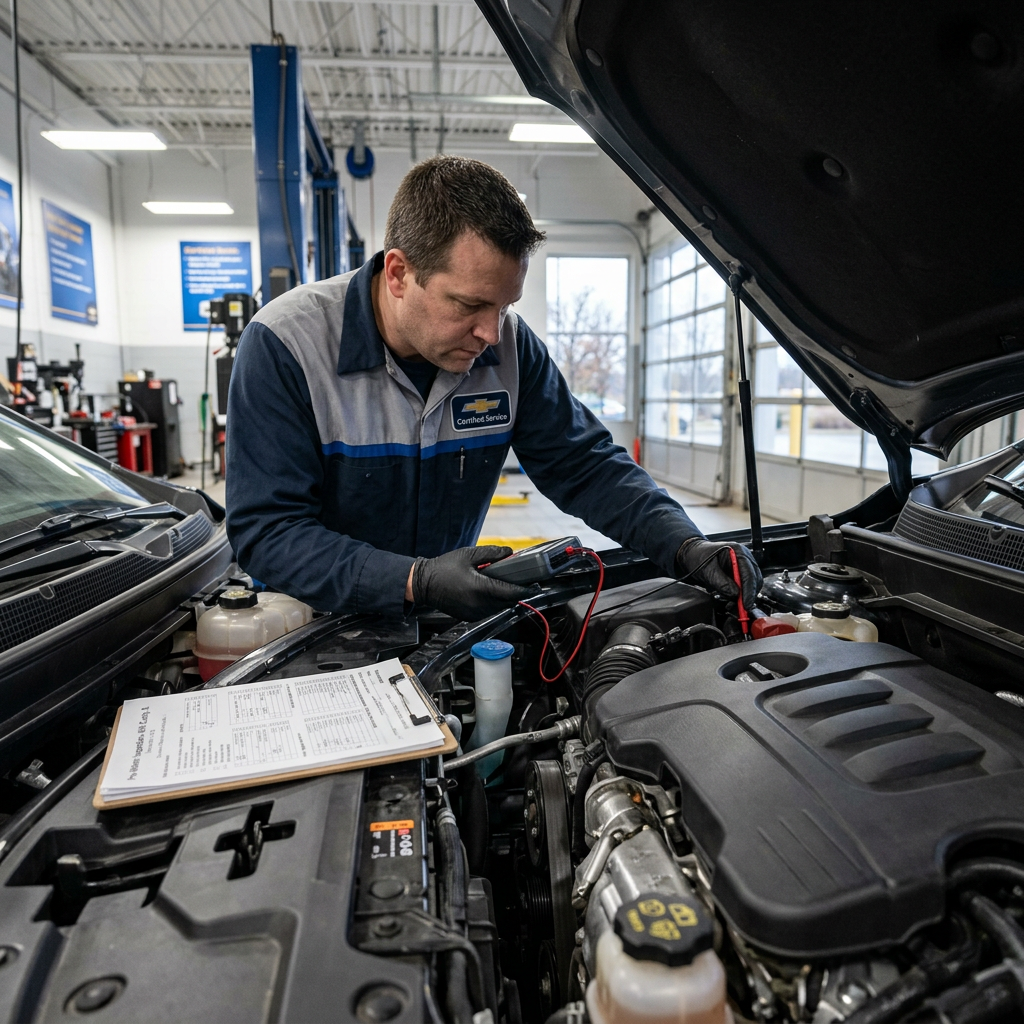
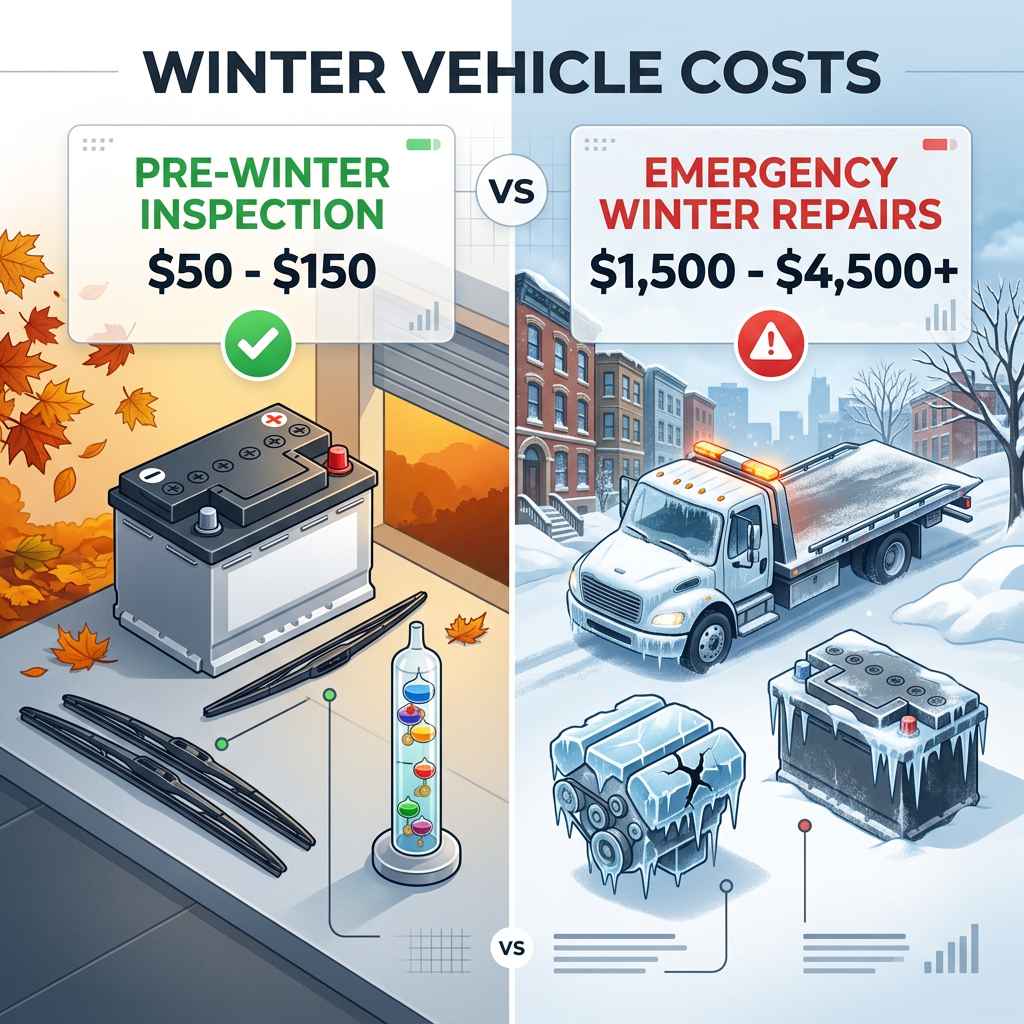
When evaluating household budgets across Plainfield and Joliet, preventative auto care consistently yields a massive return on investment. Routine pre-winter inspection packages typically range from $50 to $150. During this service, factory-trained technicians inspect coolant chemical concentration, test battery cold cranking amps, evaluate brake line integrity, verify tire tread depth, check heating systems, and top off vital fluids.
Contrast that modest fee with the reality of emergency cold-weather repairs. Neglecting diluted antifreeze can lead to a cracked engine block or burst radiator when fluid freezes and expands, resulting in repair bills ranging from $1,500 to over $4,500. A failing battery forced to crank in zero-degree weather can burn out your starter motor, adding another $400 to $750 in repairs alongside emergency towing costs.
Proactive service allows motorists to address minor wear items on a scheduled timeline rather than under emergency conditions during peak freeze season.
How Do You Test Coolant Freeze Protection Levels Using a Hydrometer or Refractometer?
Hydrometer Testing
A hydrometer draws coolant into a calibrated chamber to measure specific gravity. Floating discs inside indicate the exact temperature at which your glycol and water mixture will freeze. If fluid is diluted by excess water, protection drops below safe thresholds, putting your radiator and heater core at risk during sudden freeze events.
Refractometer Precision
Professional technicians frequently utilize optical refractometers for superior accuracy. By placing a drop of coolant on the prism, the device measures how light bends through the liquid. This provides precise freeze point readings down to -30°F or lower, ensuring accurate assessment of modern DEX-COOL formulations.
Preventing Engine Damage
Maintaining an optimal 50/50 ethylene glycol or propylene glycol mixture is vital. Beyond preventing mechanical freeze-ups, correct coolant chemistry prevents internal engine corrosion, lubricates water pump seals, and ensures robust cabin heat for cold morning commutes across northern Illinois.
Chicagoland Winter Vehicle Prep: Troubleshooting Wiper Nozzles and Engine Protection
Daily commuting on major thoroughfares like I-55, I-80, and Route 59 demands crystal-clear visibility. Salt spray, slush, and road grime kicked up by semi-trucks rapidly coat windshields during Chicagoland winter storms. If your wiper nozzles or spray lines freeze, visibility drops to zero within seconds, creating an extreme safety hazard.
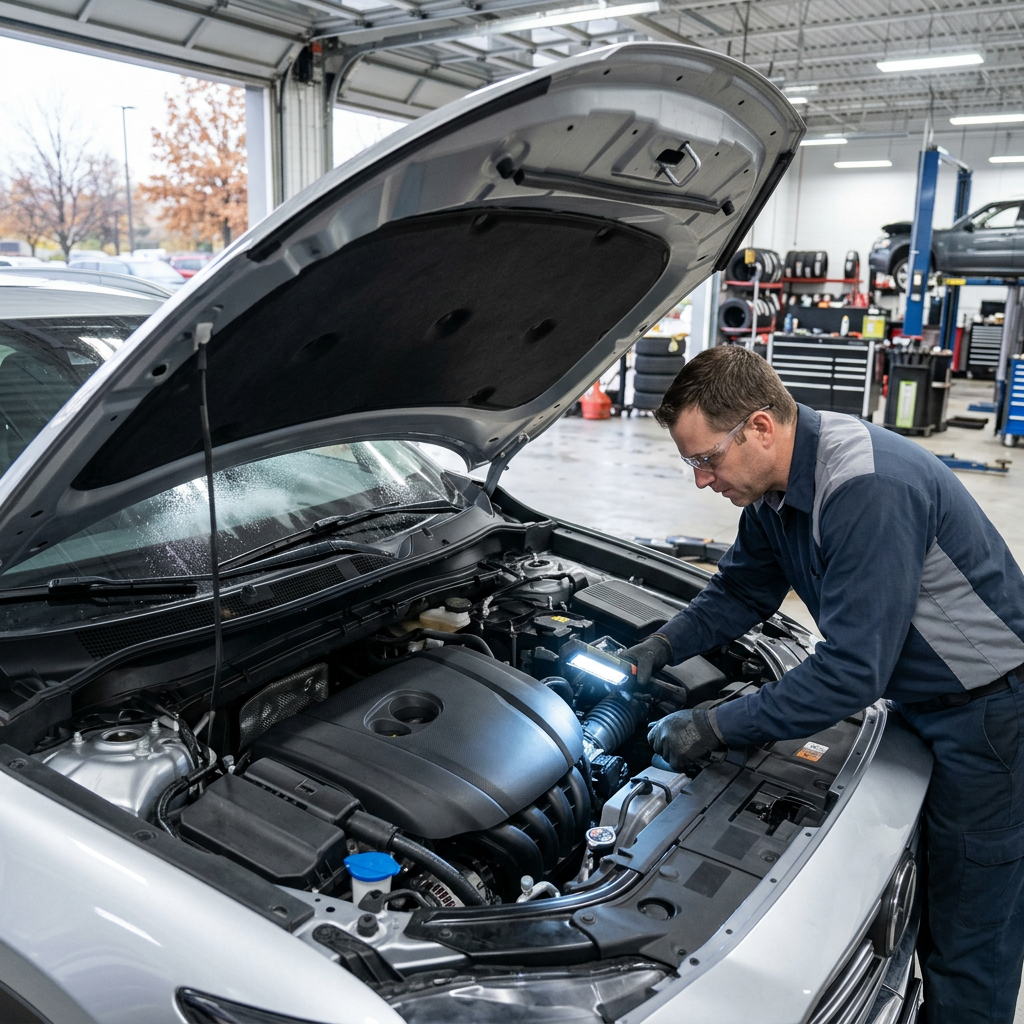
Pre-winter inspection covers vital windshield washing prep, including flushing leftover summer washer fluid, testing spray pump pressure, inspecting washer lines for cracks, and clearing debris from nozzle jets. Simultaneously, technicians inspect engine serpentine belts, drive hoses, and oil viscosity to guarantee reliable lubrication when cold starting in sub-zero weather.
Does Winter Washer Fluid Contain Additives to Help Melt Windshield Ice?
Yes, winter-grade washer fluid is formulated specifically to combat ice and severe cold. Unlike summer fluids—which are primarily composed of water and detergent designed to clean bug splatters—winter washer fluid contains high concentrations of methyl alcohol (methanol) along with specialized de-icing alcohols such as isopropanol and ethylene glycol.
These chemical additives significantly lower the freezing point of the liquid down to -20°F or -30°F. When sprayed onto a frosted windshield, winter fluid breaks the bond between ice crystals and glass, melting thin frost layers on contact and preventing instant re-freezing caused by wind chill at highway speeds.
|
Formula Characteristic
|
Summer Washer Fluid
|
Winter De-Icing Washer Fluid
|
|
Primary Freezing Point
|
32°F (0°C)
|
-20°F to -30°F (-29°C to -34°C)
|
|
Alcohol Concentration
|
Minimal (< 5%)
|
High Methanol / Isopropanol (35%–50%)
|
|
De-Icing Capabilities
|
None (Freezes on cold glass)
|
Actively melts light frost & ice
|
|
Refreeze Prevention
|
Poor
|
High (Resists wind chill refreeze)
|
What Washer-Fluid Rating and Nozzle-Prep Steps Help Prevent Frozen Wiper Nozzles?
Choosing the Right Fluid Rating
For drivers in Will and DuPage counties, selecting fluid rated for at least -20°F is mandatory, while -30°F commercial formulas provide superior protection during arctic blast cold snaps. Always check the label before purchasing, as low-cost fluids often freeze at 0°F.
Prior to winter, completely purge remaining summer washer fluid from the reservoir by running the washer pump until empty before refilling with cold-weather fluid. Running mixed fluid dilutes the freeze rating significantly.
Nozzle Inspection and Maintenance
Inspect spray nozzle orifices carefully. Mineral deposits, wax from car washes, and dirt can block fluid outlets. Clean nozzles gently using a fine pin or needle to ensure proper spray patterns across the entire windshield surface.
On vehicles equipped with heated windshield washer nozzles, test the electrical heating elements before winter arrives to ensure instant defrosting functionality when temperatures drop.
How Much Does It Cost and How Long Does It Take to Replace a Washer Pump or Spray Nozzles?
Spray Nozzle Replacement
Replacing cracked or clogged windshield spray nozzles is quick and affordable. Replacement parts generally cost $15 to $40 per nozzle, with labor taking approximately 15 to 30 minutes. Total repair cost typically ranges between $25 and $75.
Washer Fluid Pump Replacement
Replacing a burned-out electric washer fluid pump requires accessing the reservoir beneath the front inner fender liner. OEM pumps cost $40 to $100. Installation takes between 45 and 90 minutes, bringing total repair costs to $100–$250.
Genuine OEM Parts Advantage
Using genuine Chevrolet parts ensures precise fluid delivery pressure and factory fitment. Professional installation includes system leak testing and proper electrical sealing to protect against corrosion from road salt exposure.
How Does an Engine Block Heater Work to Protect Vehicle Engines in Freezing Weather?
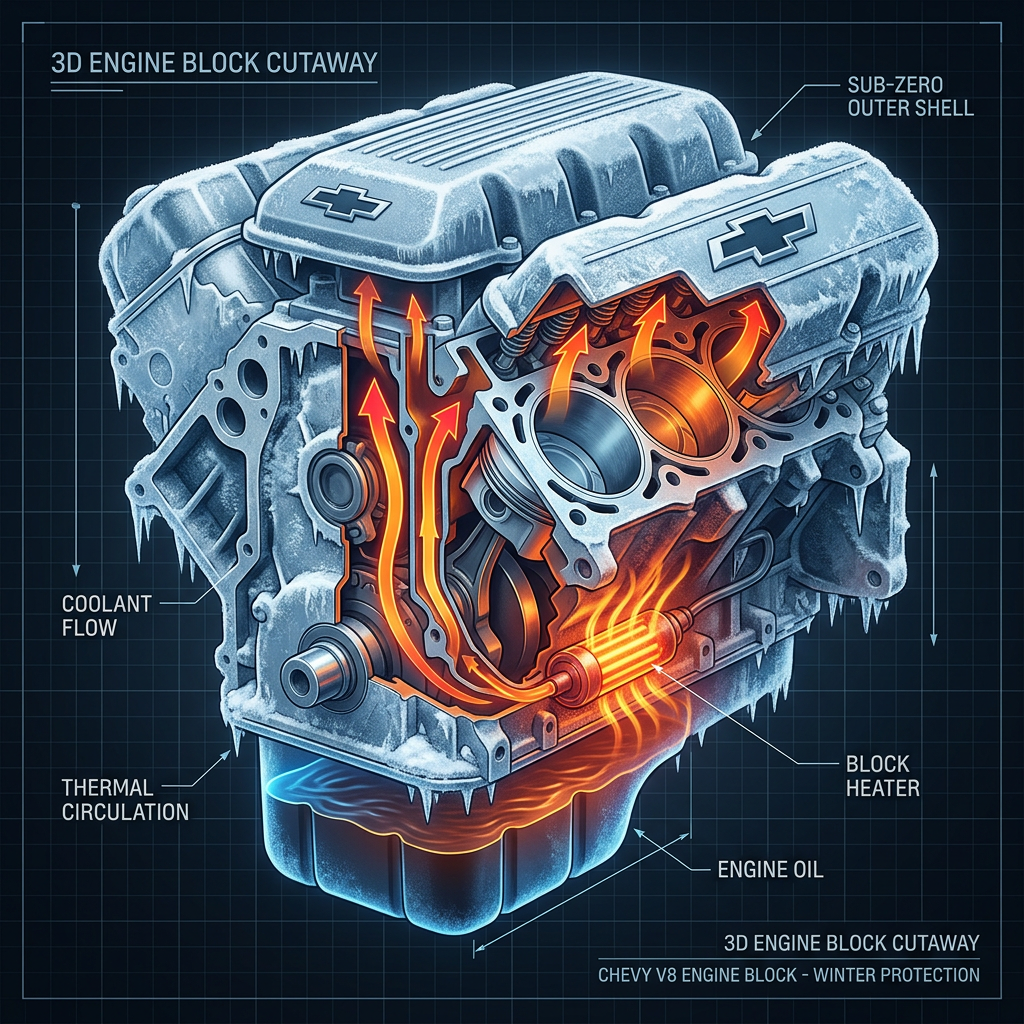
For vehicle owners in Joliet and Naperville facing sub-zero overnight temperatures, an engine block heater is invaluable. An engine block heater is an electric heating element mounted directly into the engine block, surrounded by engine coolant. Plugging the heater into a standard 120V household outlet standard hours before starting warms both coolant and engine oil.
Cold engine starts cause up to 80% of routine engine wear because engine oil thickens at 0°F, taking several critical seconds to reach upper cylinder heads. By maintaining engine temperatures between 80°F and 120°F, a block heater allows oil to flow instantly, significantly reduces electrical load on your battery and starter motor, delivers warm cabin heat almost immediately, and reduces harmful winter emissions.
Evaluating Battery Reserve Capacity, Cold Cranking Amps, and Starter Strain
Cold Cranking Amps (CCA) Loss
Automotive batteries rely on chemical reactions that slow down dramatically in freezing temperatures. At 32°F, a car battery loses roughly 20% of its available cranking power. At 0°F, output drops by over 50%. Simultaneously, freezing engine oil creates twice as much rotational resistance for starter motors.
Digital Conductance Testing
During a pre-winter inspection, technicians perform advanced digital conductance testing. This goes beyond simple voltage checks to evaluate internal plate resistance and reserve capacity, identifying marginal batteries before severe cold leaves you stranded at home or work.
Tire Tread Depth, Rubber Compound Flexibility, and Cold Air Pressure Drops
Cold Air Pressure Drops
For every 10°F drop in ambient temperature, tire pressure decreases by approximately 1 PSI. Driving on underinflated tires causes uneven tread wear, reduces fuel economy, and compromises handling on icy Plainfield roads.
Tread Depth Requirements
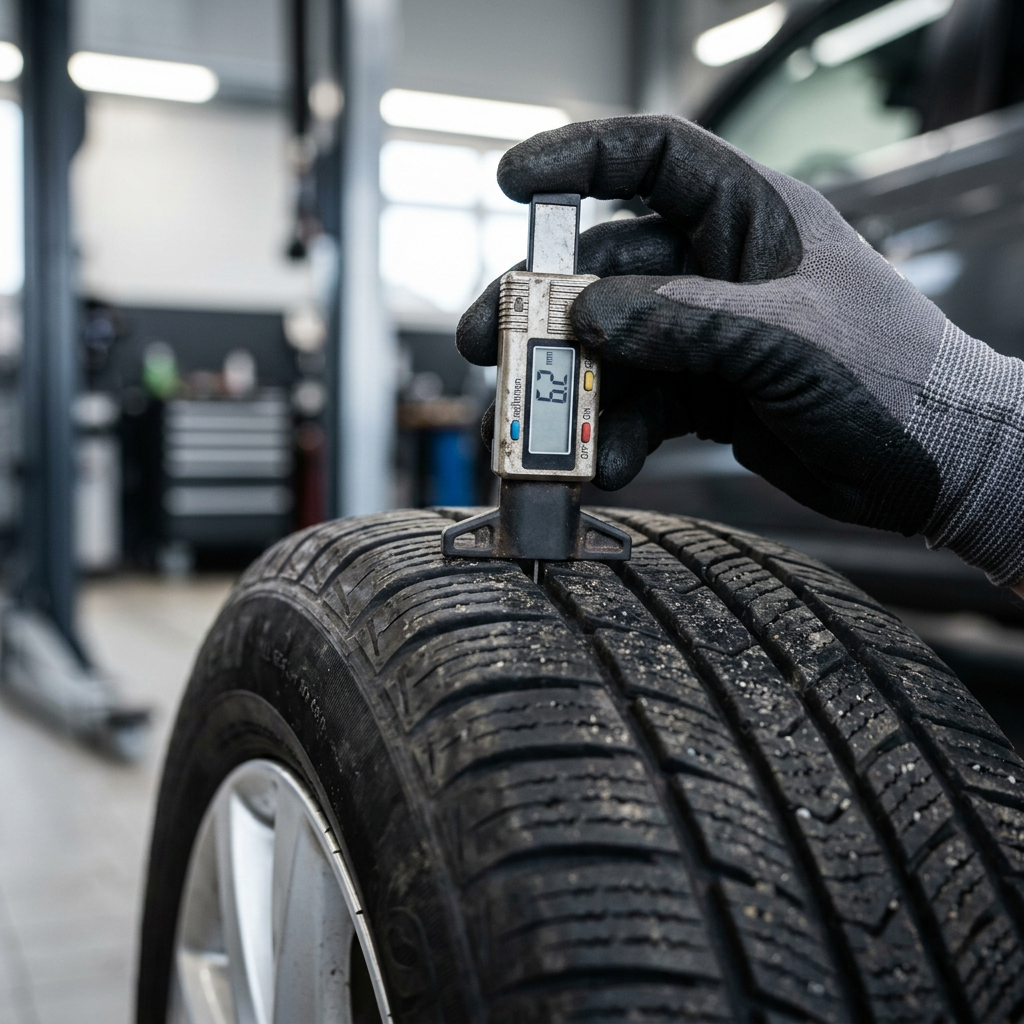
While 2/32” is the legal minimum tread depth, winter traction demands at least 4/32” (and preferably 6/32”) to channel slush and snow away from the tire contact patch and prevent hydroplaning.
Compound Flexibility
Summer and standard all-season rubber compounds harden below 45°F, losing grip. Dedicated winter tires or modern 3-Peak Mountain Snowflake rated all-weather tires maintain flexibility for short stopping distances.
Deciding Between Pre-Winter Maintenance and Upgrading Your Vehicle
For owners of older or high-mileage vehicles, pre-winter inspection results sometimes reveal cumulative repair needs—such as battery replacement, new winter tires, brake overhauls, and fluid services—that approach or exceed the vehicle's market value. In such cases, drivers must carefully evaluate whether sinking thousands into maintenance makes economic sense.
If winter reliability is in question, utilizing our simple online tool to Value Your Trade provides immediate clarity regarding your current vehicle's value toward a reliable upgrade.
Upgrading to a new or Certified Pre-Owned Chevrolet equipped with advanced All-Wheel Drive (AWD), StabiliTrak electronic stability control, and modern safety tech provides unmatched winter confidence across northern Illinois.
Schedule Your Professional Pre-Winter Inspection at Hawk Chevrolet of Joliet
Don't wait for the first severe freeze or dangerous snowstorm to uncover your vehicle's winter weaknesses. A brief, professional pre-winter inspection at Hawk Chevrolet of Joliet ensures your vehicle is fully equipped to handle freezing temperatures, slick roadways, and heavy snowstorms across Joliet, Plainfield, and Naperville.



 Shop Chevy Red Tag.