Why Chevy AWD Needs Winter Tires for Full Chicagoland Snow Traction
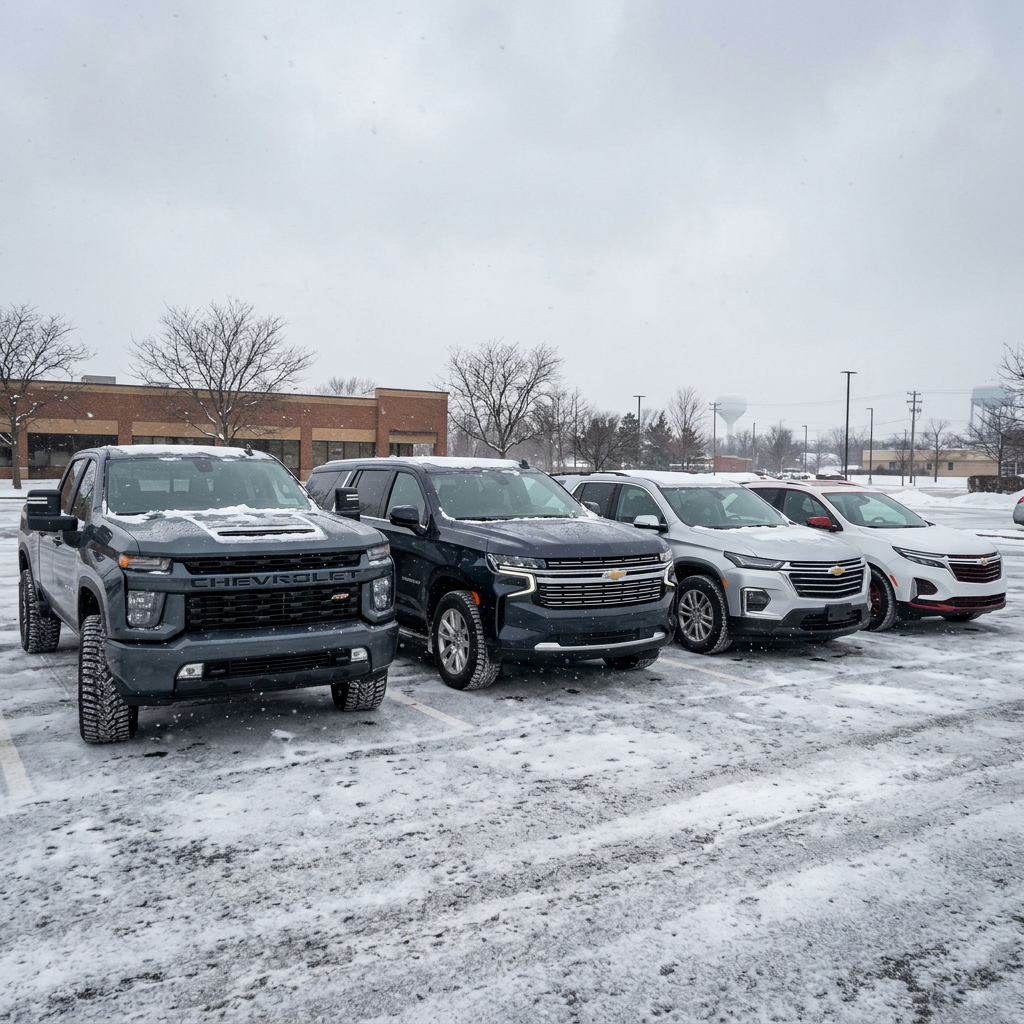
When Chicagoland winters set in with sub-freezing temperatures, severe lake-effect snow, and dangerous black ice across Will County, many vehicle owners rely heavily on Chevrolet's advanced All-Wheel Drive (AWD) systems. However, a common question asked by drivers in Joliet, Plainfield, and Naperville is: Are dedicated winter tires still recommended if my Chevy vehicle already has AWD? The definitive answer from automotive safety experts and certified Chevy technicians is an overwhelming yes.
While Chevrolet's intelligent All-Wheel Drive system excels at routing engine power to the wheels with the most traction to help you accelerate without slipping, AWD does not alter the physical limitations of your tires. Standard all-season tire tread compounds begin to stiffen into hard plastic once ambient temperatures drop below 45°F. Dedicated winter tires utilize specialized hydrophilic rubber compounds and flexible tread block siping specifically formulated to stay pliable in freezing cold weather. Equipping your Chevy AWD SUV or crossover with dedicated winter tires delivers maximum steering precision, cornering stability, and dramatically shorter stopping distances on slick frozen pavement.
How Chevrolet's All-Wheel Drive System Operates During Winter Snow and Ice Conditions
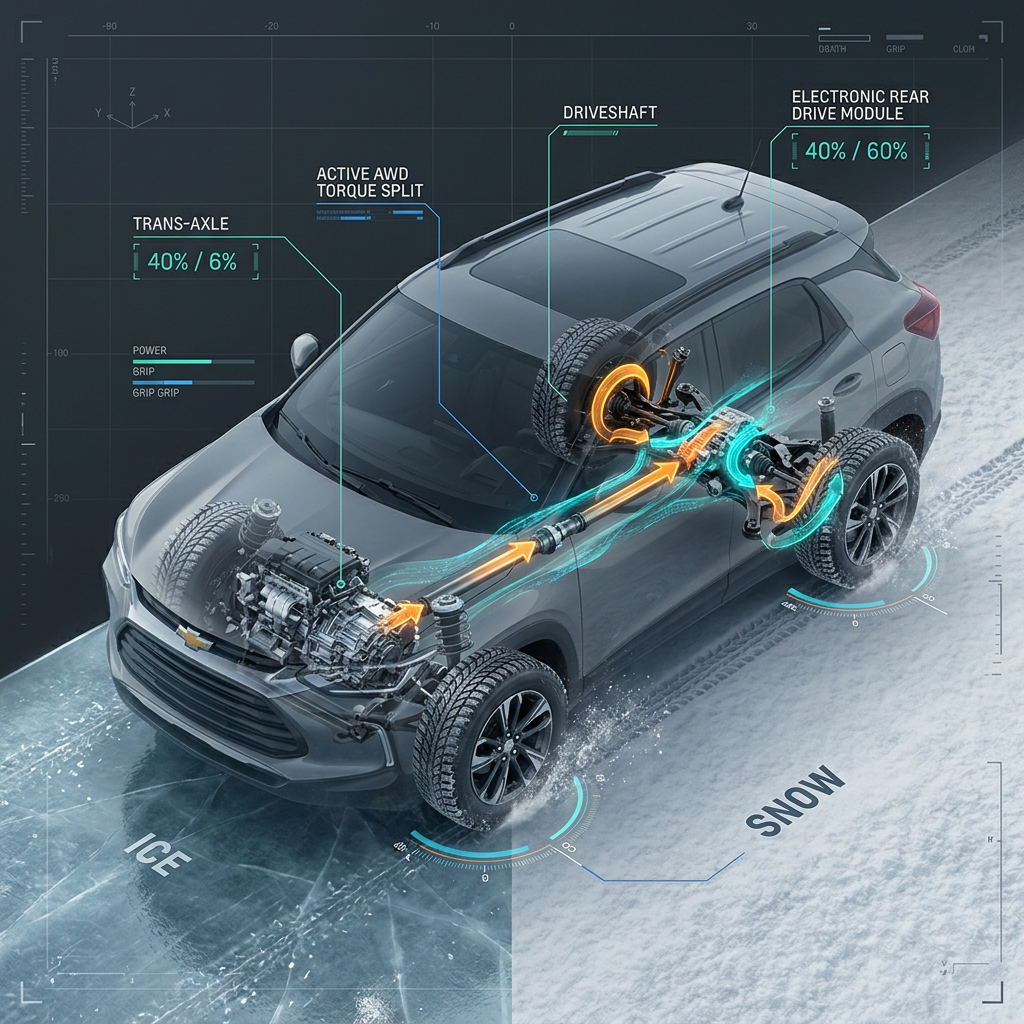
Chevrolet engineers high-precision active All-Wheel Drive technology across models like the Equinox, Traverse, Trailblazer, and Blazer. During standard dry-pavement driving, many modern Chevy AWD systems run primarily in front-wheel drive mode to optimize fuel efficiency. However, when driving through winter storms on I-55 or slushy arterial roads in Joliet, the system continuously monitors wheel rotation speeds, throttle position, and steering inputs hundreds of times per second.
When wheel slip is detected at any corner, an electronically controlled clutch pack in the rear drive module seamlessly engages within milliseconds, transferring engine torque to the rear axle. This dynamic power redistribution prevents spinning wheels and helps propel your vehicle forward through heavy snow accumulation.
However, even the most sophisticated drivetrain hardware relies on the physical contact patch between the tire tread and the road surface. If the tire rubber is too hard to conform to microscopic ice ridges, mechanical torque transfer cannot generate friction.
What Is the Difference Between Chevy StabiliTrak and Active AWD in Severe Snow?
Active AWD Hardware
Active All-Wheel Drive is a mechanical propulsion management system. Its sole duty is distributing engine torque between the front and rear wheels based on traction demands. When accelerating out of a snow-covered parking lot or navigating an unplowed residential street in Plainfield, active AWD ensures that engine power goes to whichever tires have grip, preventing front-wheel spin or vehicle stagnation.
StabiliTrak Stability Control
Chevy StabiliTrak is an advanced electronic stability and traction control system. Instead of focusing solely on forward movement, StabiliTrak monitors directional intention vs. actual vehicle direction. If StabiliTrak detects lateral skidding or loss of steering response on ice, it automatically reduces engine throttle and selectively applies individual wheel brakes to pull the vehicle back onto its intended line.
The Critical Takeaway: Neither AWD nor StabiliTrak can create grip where none exists. If all-season tires lose adhesion on smooth sheet ice along Route 59, StabiliTrak's automated braking interventions become ineffective. High-grip winter tires provide the fundamental traction that allows both StabiliTrak and active AWD to perform at their full design potential.
AWD Acceleration vs. Winter Tire Braking: The Physics of Stopping on I-80 and I-55
The Four-Wheel Brake Myth
Every modern vehicle on the road already features four-wheel braking. Having All-Wheel Drive gives you zero braking advantage over a two-wheel drive vehicle when stopping on snow or ice on I-80.
Cold Rubber Hardening
Below 45°F, all-season compounds experience a shift into glass transition phase, hardening and losing surface conformity. Winter tires use specialized silica polymers to stay soft and flexible.
Shorter Stopping Distances
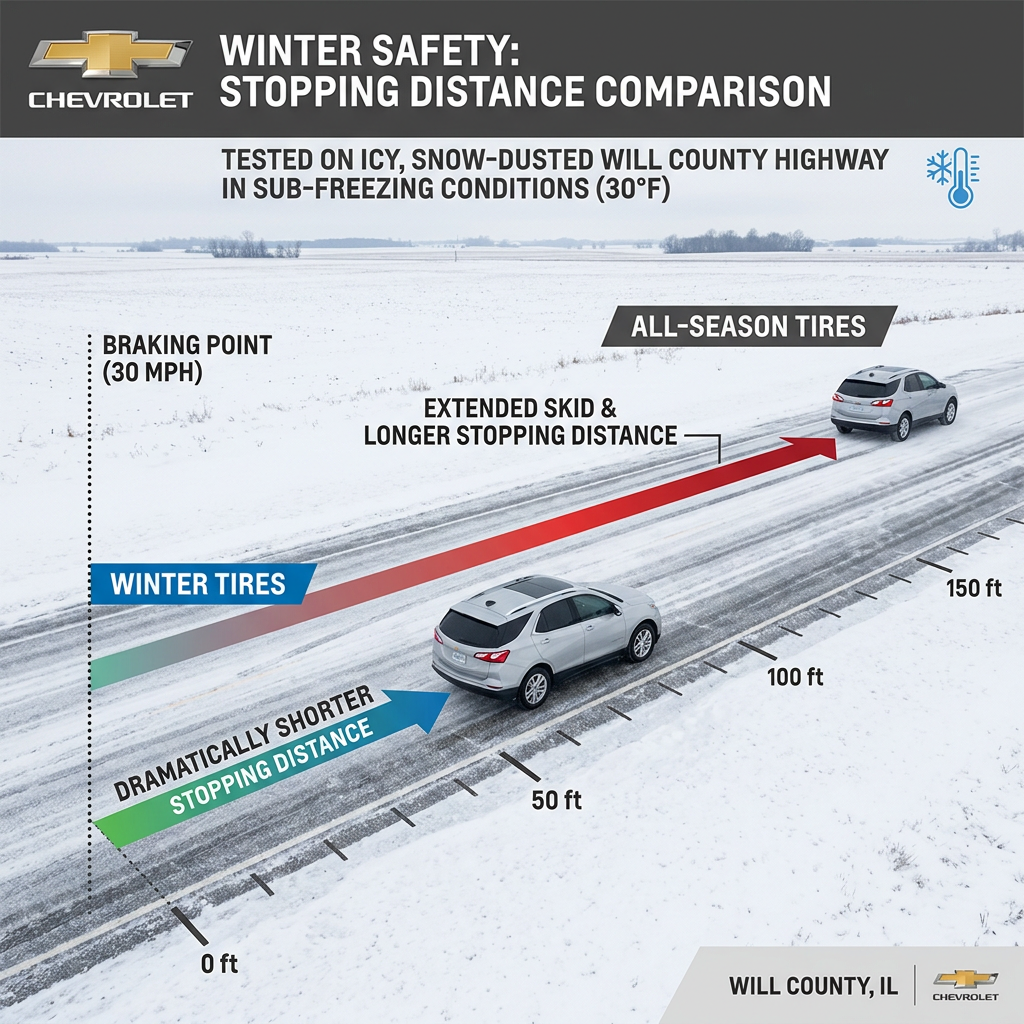
At 30 mph on packed snow, dedicated winter tires can stop your Chevy up to 30 feet shorter than standard all-season tires—often the difference between a safe stop and a costly collision.
How Does Chevy StabiliTrak AWD Compare to Competitor All-Wheel-Drive Systems?
When evaluating winter capability across automotive brands, drivers in Northern Illinois often compare Chevrolet's AWD and StabiliTrak technology against systems from Ford, Toyota, and Subaru. Chevrolet designs its intelligent AWD options with an emphasis on seamless auto-engagement and optional driver-selectable modes (such as Snow/Ice mode on Traverse and Tahoe models), optimizing torque delivery and pedal mapping specifically for winter low-traction scenarios.
While Subaru's Symmetrical AWD is continuously engaged and Toyota's Dynamic Torque Vectoring utilizes twin-clutch rear differentials, Chevrolet's StabiliTrak integrates closely with braking and powertrain modules to provide quick response times during unexpected wheel slip. However, across all brand comparison tests conducted in sub-zero snow, winter tires remain the single biggest equalizer for traction.
|
Drivetrain System
|
Primary Operating Mode
|
Winter Mode Optimization
|
Dependence on Winter Tire Compound
|
|
Chevy Active AWD + StabiliTrak
|
Intelligent Auto-Engaging FWD/AWD
|
Snow/Ice Mode adjusts throttle & shift maps
|
High (Essential below 45°F)
|
|
Ford Intelligent AWD
|
On-Demand AWD
|
Slippery / Snow Modes
|
High (Essential below 45°F)
|
|
Toyota Dynamic Torque Vectoring
|
On-Demand AWD with Disconnect
|
Multi-Terrain Select (Snow)
|
High (Essential below 45°F)
|
|
Subaru Symmetrical AWD
|
Continuous Full-Time AWD
|
X-Mode snow/mud profiles
|
High (Essential below 45°F)
|
All-Season vs. All-Weather vs. Dedicated Winter Tires for Will County Drivers
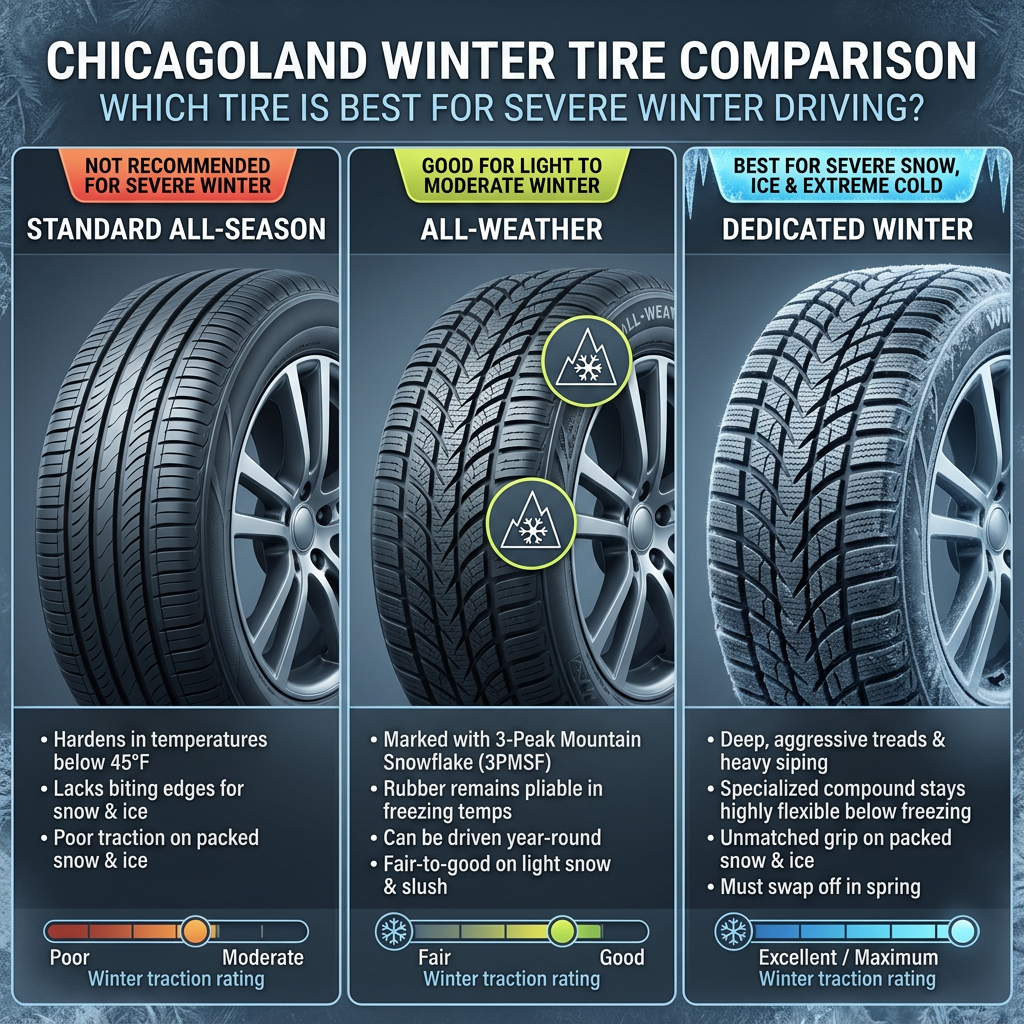
Standard All-Season (M+S)
Best For: Spring, summer, fall driving. Designed for long tread life and warm wet/dry roads. Hardens below 45°F and lacks aggressive siping for ice bite.
All-Weather (3PMSF Rated)
Best For: Year-round versatility. Features 3-Peak Mountain Snowflake rating. Soft enough for mild winter snow while usable during Chicagoland summer months.
Dedicated Winter Tires
Best For: Maximum severe snow & ice grip. Models like Bridgestone Blizzak WS90 or Michelin X-Ice Snow offer thousands of micro-bitting edges and unyielding ice friction.
Chicagoland Winter Readiness: Preparing Your Chevy's All-Wheel Drive and Heating System for Will County Snow
Preparing your Chevrolet for severe Will County winter weather involves more than swapping tires. A complete seasonal winterization checklist ensures that all vehicle systems operate reliably during freeze-thaw cycles and sub-zero cold snaps.
• AWD Transfer Case & Rear Differential Inspection: Fluid viscosity thickens in freezing cold. Fresh synthetic fluid prevents internal wear during high-load torque transfers. • 12V Battery Cold-Cranking Amp (CCA) Test: Sub-freezing temperatures sap up to 50% of battery cranking output. Ensure your battery can fire up your engine on icy mornings. • HVAC & Heating Core Operation: Flushing clogged cabin heater cores ensures hot defrosting air reaches your windshield quickly to clear ice accumulation. • Windshield Washer Fluid & Beam Blades: Replace summer washer fluid with low-freeze (-30°F) winter formula and install heavy-duty rubber beam wiper blades.
How Much Does a Winter Vehicle Inspection Cost for a Chevy in Will County?
At certified dealership service centers like Hawk Chevrolet of Joliet, a multi-point winter vehicle inspection is typically included with routine maintenance packages or offered as an affordable standalone seasonal service ranging from $49 to $99 depending on special promotions.
Investing in a comprehensive multi-point inspection prior to the first major Chicagoland snowstorm helps identify worn brake pads, weak batteries, weeping coolant hoses, and uneven tire wear before they leave you stranded on the side of I-55.
|
Inspection Component
|
What Technicians Check
|
|
Brake System Analysis
|
Pad thickness, rotor wear, brake line fluid freeze-point
|
|
Battery & Charging System
|
Digital load test, CCA capacity, terminal corrosion
|
|
Tire Condition & Depth
|
Tread depth in 32nds, wear uniformity, cold PSI calibration
|
|
Fluids & Defrost Systems
|
Dex-Cool freeze rating (-30°F), washer pump & heater core flow
|
How Much Does a Chevrolet Coolant Flush and Replacement Cost?
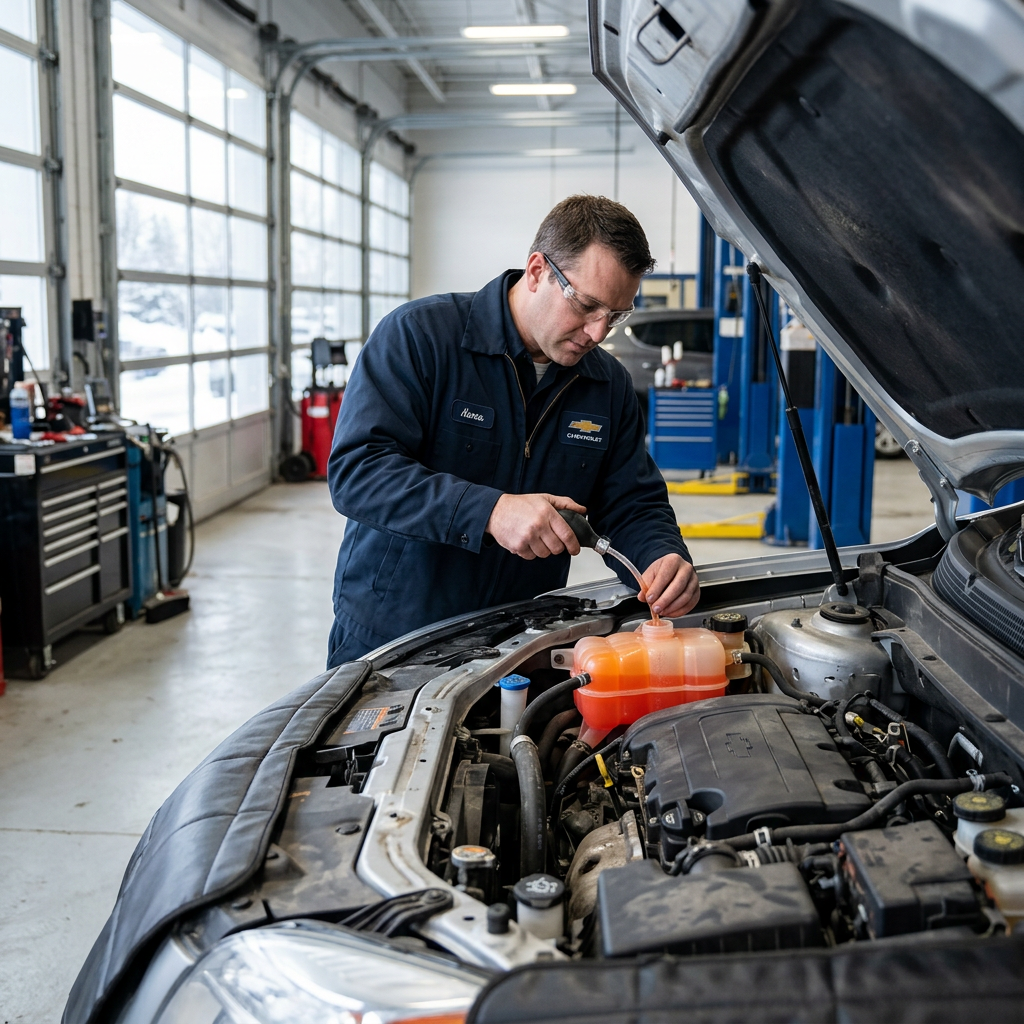
A professional Chevrolet coolant flush and replacement service generally costs between $149 and $229 depending on engine displacement and coolant system capacity. Chevrolet vehicles require factory-approved GM Dex-Cool Extended Life Coolant diluted to an exact 50/50 ratio with deionized water.
Over time, coolant inhibitors break down, allowing rust scale to form inside the heater core and engine block passages. Fresh Dex-Cool fluid provides essential freeze protection down to -30°F and anti-boil protection up to +265°F while preserving water pump seals throughout harsh Midwest winters.
Which AWD and Visibility-System Checks Are Especially Useful for Preparing a Chevrolet for Will County Snow?
Differential & PTU Fluids
Checking the Power Transfer Unit (PTU) and rear differential fluid ensures smooth engagement when switching into active AWD modes during sudden winter blizzards.
HD Surround Cameras & Radar
Snow and road salt mask camera lenses and forward radar sensors. Ensure automatic emergency braking and parking assistance sensors are clean and functional.
Heated Mirrors & Defrosters
Inspect heated side mirror elements and rear grid defroster lines to maintain 360-degree visibility while commuting through freezing fog or falling snow.
Winterizing Specific Chevy Models: Traverse, Equinox, Suburban, and Silverado in Naperville & Plainfield
Chevy Equinox & Traverse Crossovers
For mid-size and 3-row family crossovers like the Equinox and Traverse navigating Naperville and Plainfield school zones, dedicated winter tires paired with selectable Snow Mode reduce wheel spinning at intersections and provide controlled braking when stopping short on icy road surfaces.
Chevy Silverado & Suburban Full-Size 4WD
Full-size body-on-frame vehicles like the Silverado 1500 and Suburban benefit greatly from 4-AUTO transfer case settings combined with dedicated severe-snow rated tires. Adding bed ballast over the rear axle of Silverado trucks improves rear wheel weight distribution for enhanced traction when unladen.
Schedule Winter Tire Fitting and AWD Service at Hawk Chevrolet of Joliet
Don't wait for the first major Chicagoland snowfall to prepare your Chevrolet for severe winter driving. The certified service team at Hawk Chevrolet of Joliet offers professional tire fitting, seasonal tire storage solutions, Dex-Cool system flushes, and complete AWD multi-point inspections.



 Shop Chevy Red Tag.