


Does a Hitch Cargo Carrier Block Backup Cameras and Parking Sensors? The Direct Answer

The short and direct answer is yes: in nearly every modern vehicle setup, a receiver-mounted hitch cargo carrier will obscure or completely obstruct your rear backup camera's wide-angle field of view and continuously trigger your vehicle's ultrasonic rear parking sensors when reversing. Because factory rear-view cameras are mounted near the rear bumper beam or tailgate latch handle, steel cargo trays—and the luggage, coolers, or camping gear stacked on them—sit directly in the sightline of the lens. Simultaneously, ultrasonic proximity sensors mounted inside the rear bumper cover bounce high-frequency sound waves off the metal frame of the carrier, interpreting the rack as an immediate obstacle just inches from your rear bumper.
This interference leads to two primary operational challenges while driving and parking: visual blackout on your infotainment display screen and relentless audible warning beeps—or worse, sudden emergency automatic reverse braking. Fortunately, carrying extra gear for autumn road trips, tailgate parties, or outdoor excursions in Will County does not mean sacrificing modern vehicle safety. Drivers can resolve these challenges using sensor deactivation toggles, camera relocation wiring harnesses, low-profile basket designs, or swing-away receiver extensions.
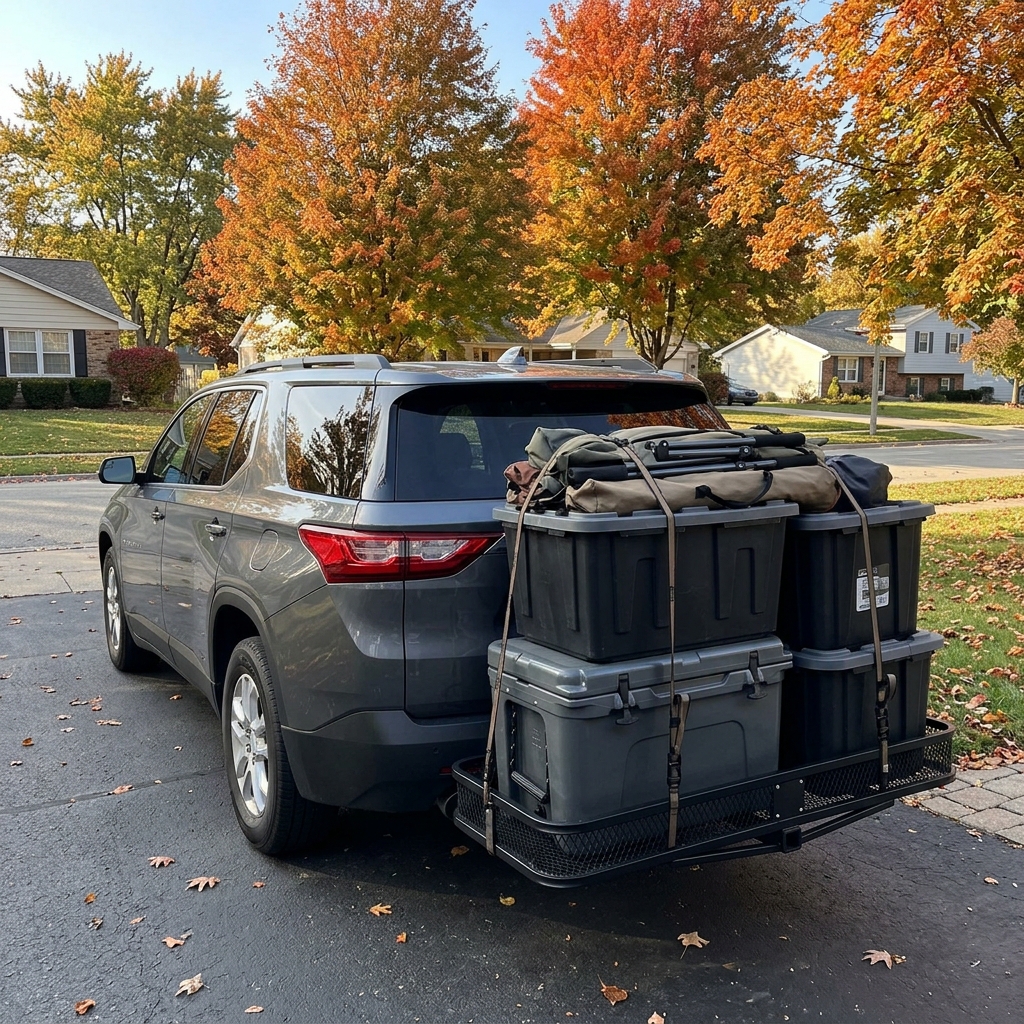
Gray SUV parked in a driveway loaded with camping gear on a rear hitch cargo carrier during autumn. (Representative image for illustration purposes only. Actual vehicle may vary based on trim and configuration.)

How Rear View Cameras and Ultrasonic Sensors React to Hitch Cargo Carriers
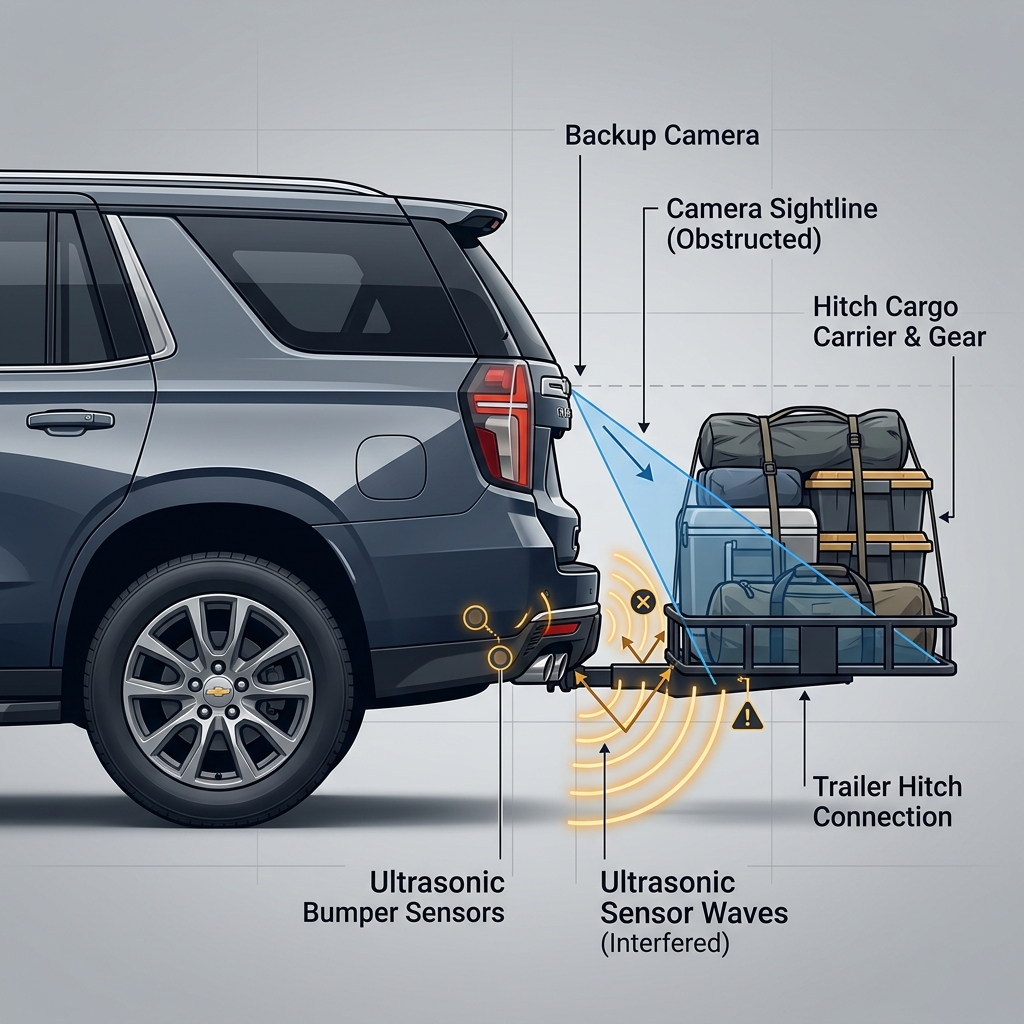
The Physics of Backup Camera Sightlines

Modern rear-view cameras utilize wide-angle fisheye lenses angled downward between 30 and 45 degrees toward the pavement to provide a clear view of trailer hitches and low-lying obstacles. When a hitch cargo carrier is inserted into a 2-inch receiver tube, the tray plane sits 12 to 24 inches behind the bumper—placing solid metal basket walls directly across the center of the camera's visual cone. Even when empty, elevated carrier frames bisect the lower half of the screen; once loaded with storage totes or gas cans, camera visibility drops to zero.

Ultrasonic Echo Bounce and Automatic Braking

Rear Park Assist relies on discrete ultrasonic transceivers spaced along the rear fascia. These sensors emit short pulses of high-frequency sound waves (around 40 kHz) and calculate distance based on echo reflection times. Because a hitch carrier sits permanently within the 1-to-3-foot zone of detection, the system registers a constant physical impact hazard. On vehicles equipped with Reverse Automatic Braking (RAB), shifting into Reverse causes the vehicle system to slam on the brakes instantly, treating the cargo frame as a wall.
Diagram showing how a hitch cargo carrier obstructs an SUV's backup camera sightline and interferes with bumper sensors. (Representative image for illustration purposes only. Actual vehicle may vary based on trim and configuration.)

Practical Solutions to Preserve Rear Visibility with a Hitch Carrier Installed

1. Camera Relocation Kits

For maximum safety on long highway trips, install a plug-and-play camera relocation harness or wireless auxiliary backup camera mounted directly to the outer edge of your cargo basket. This projects an unobstructed feed to your central display screen.

2. Swing-Away Hitch Adapters

Heavy-duty swing-away hitch extensions allow you to pivot the entire loaded cargo tray 90 degrees away from the rear bumper when parked. This grants full access to your rear tailgate or hatch without unstrapping your cooler or tailgating gear.

3. Low-Profile & Drop-Shank Racks

Selecting a low-profile aluminum wire-mesh carrier with a drop shank positions the base below the main sightline of the backup camera lens, allowing upper camera visibility while preserving essential ground clearance.

How to Manage Rear Parking Sensor Alerts and Automatic Rear Braking
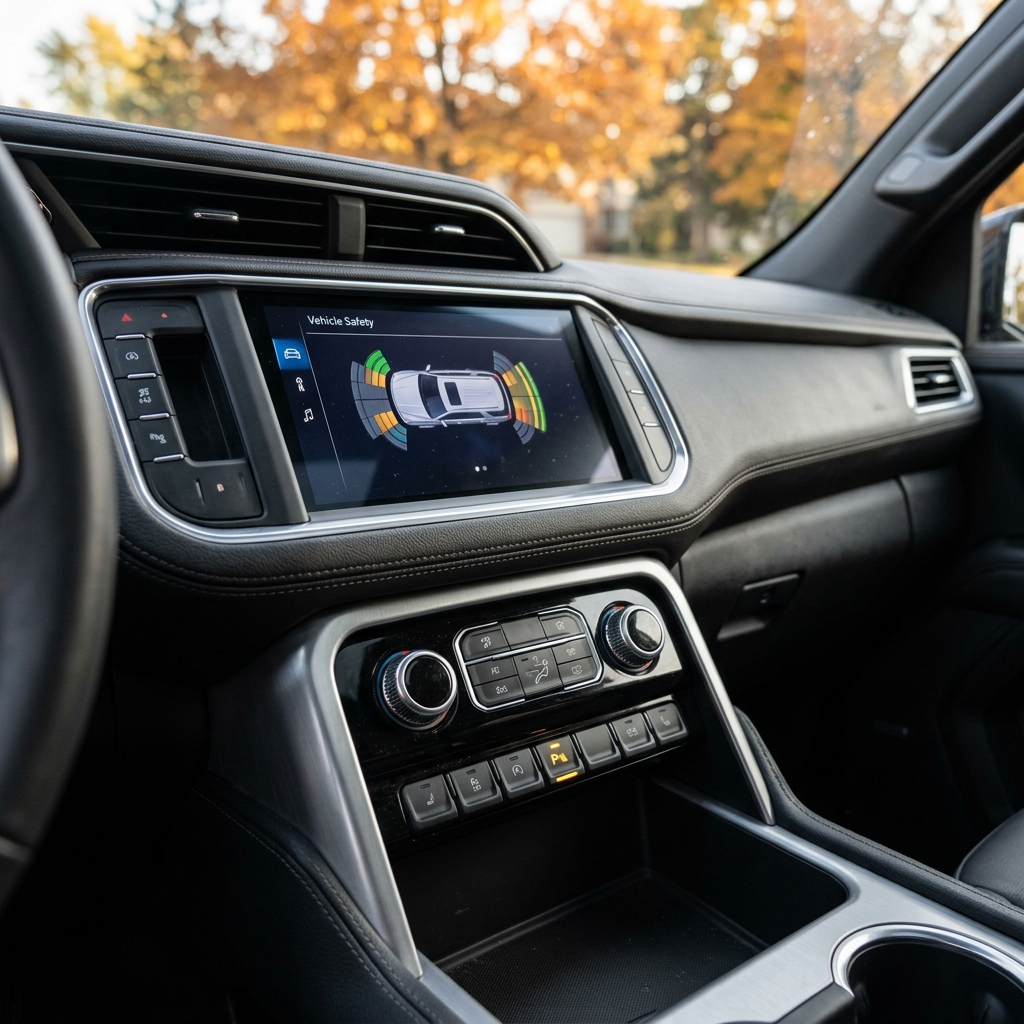
When backing up with a loaded cargo tray, continuous alert chimes can quickly become frustrating. On modern Chevrolet trucks and SUVs, managing these notifications is straightforward using physical dashboard switches or center screen menus: • Disable Rear Park Assist: Press the dedicated Park Assist button (represented by a 'P' icon next to a cone) on your center console to turn off proximity warnings for the duration of your trip. • Infotainment Vehicle Settings: Navigate to Settings > Vehicle > Comfort and Convenience > Park Assist, and set Rear Park Assist to 'Off'. • Deactivate Reverse Automatic Braking: In the safety settings menu, disable automatic reverse emergency intervention to prevent sudden stopping when reversing in parking lots. • Tow/Haul Mode Activation: On select models equipped with factory trailering packages, engaging Tow/Haul mode automatically suppresses rear ultrasonic warnings and recalculates blind-spot detection zones.
Modern vehicle dashboard with a touchscreen infotainment system displaying a parking sensor safety graphic. (Representative image for illustration purposes only. Actual vehicle may vary based on trim and configuration.)

What Trailer Hitch Class and Wiring Harness Setup Are Needed for Cargo and Towing?

Not all receiver hitches are created equal. Understanding class ratings and tongue weight limits is essential before mounting a cargo basket or towing a trailer across Illinois highways. Cargo carriers apply cantilevered torque directly to the receiver tube, making tongue weight rating the primary safety metric.

Hitch Class

Receiver Size

Max Gross Trailer Weight

Max Tongue Weight

Recommended Use

Class I

1.25 inch

up to 2,000 lbs

200 lbs

Light bike racks, small trays

Class II

1.25 inch

up to 3,500 lbs

350 lbs

Medium cargo baskets, small pop-ups

Class III

2.0 inch

up to 8,000 lbs

800 lbs

Heavy cargo baskets, boats, campers

Class IV

2.0 inch

up to 12,000 lbs

1,200 lbs

Large travel trailers, heavy equipment

Class V

2.5 / 3.0 inch

up to 20,000+ lbs

2,000+ lbs

Commercial hauling, heavy toy haulers

If your cargo carrier blocks your vehicle's license plate or taillights, state law requires illuminated license plate brackets and auxiliary LED brake/signal light kits. A basic 4-pin flat wiring harness provides tail lights, brake lights, and turn signals, while a 7-pin round harness adds auxiliary 12V power and reverse light circuitry.

Fall Tailgating and Outdoor Recreation: Towing and Cargo Prep for Will County State Parks

Autumn in Will County brings prime outdoor opportunities—from tailgating at local high school athletic games to weekend camping excursions at Starved Rock State Park, Midewin National Tallgrass Prairie, and Des Plaines State Fish and Wildlife Area. Loading up coolers, portable generators, fire pits, and canopy tents on a hitch cargo carrier frees up valuable interior passenger space, ensuring a comfortable ride for family and friends.
Before taking Route 6, Route 53, or I-80 toward local forest preserves, ensure your cargo is secured with heavy-duty ratchet straps rated for at least double the weight of your load. Avoid using elastic bungee cords for heavy equipment. Furthermore, double-check that exhaust heat from your tailpipe does not discharge directly onto plastic coolers or synthetic gear stacked on your carrier basket.
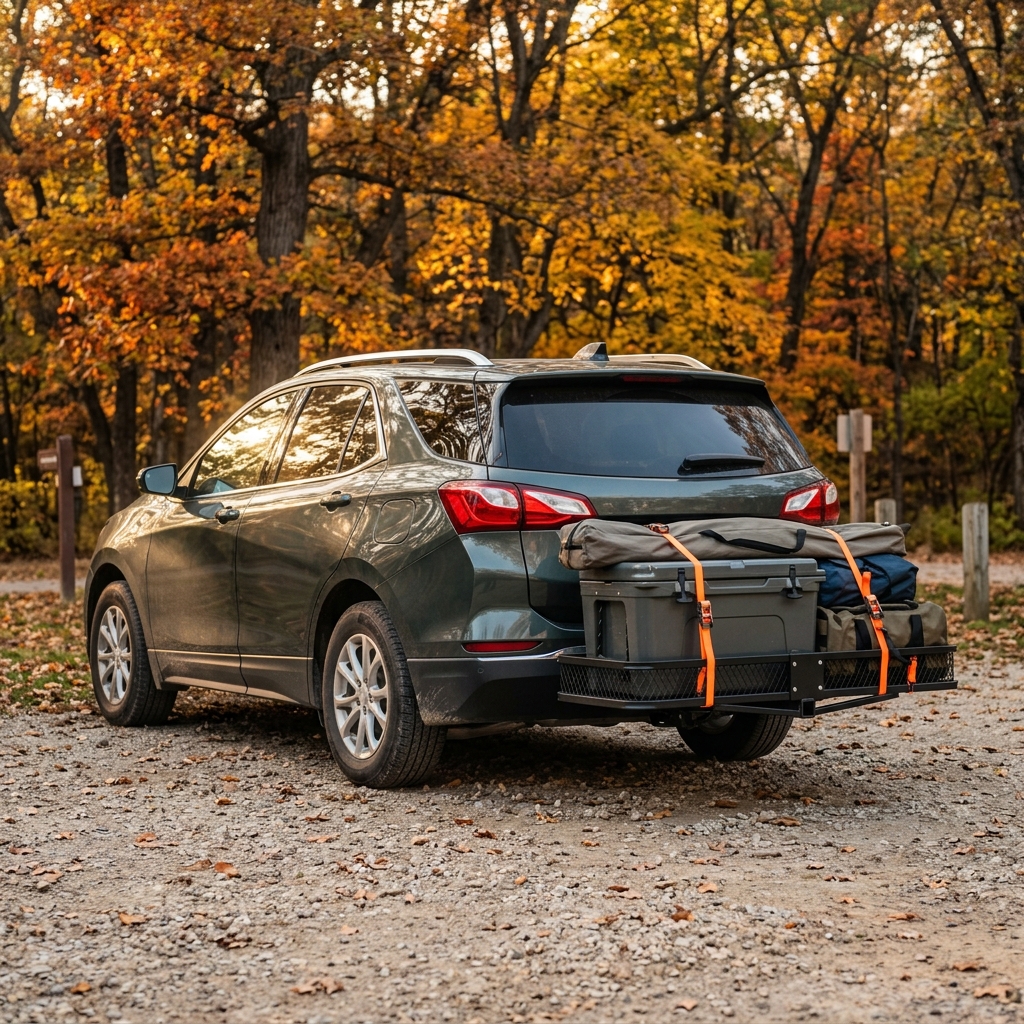
Dark green SUV parked on a gravel road in autumn woods with a loaded hitch cargo carrier secured with orange straps. (Representative image for illustration purposes only. Actual vehicle may vary based on trim and configuration.)

What Towing Capacity Is Required for Hauling Tailgating Trailers, Boats, or Campers to Will County Parks?

Light Tailgating & Utility Trailers

Weight: 1,500 – 3,000 lbs
Ideal for small utility trailers carrying smoker grills, folding tables, and tailgating gear. Crossovers like the Chevrolet Equinox easily handle these loads.

Pop-Up Campers & Pontoon Boats

Weight: 3,500 – 6,000 lbs
Requires a mid-size SUV or truck such as the Chevrolet Traverse or Colorado. Remember that cargo inside the vehicle counts toward your Total Payload Capacity.

Full-Size Travel Trailers & Toy Haulers

Weight: 7,000 – 13,000+ lbs
Full-size trucks like the Chevrolet Silverado 1500 or Tahoe are engineered with heavy-duty frames and high Gross Combined Weight Ratings (GCWR) for heavy loads.

How Do You Connect a 7-Pin Trailer Harness with an Aftermarket Electric Brake Controller?
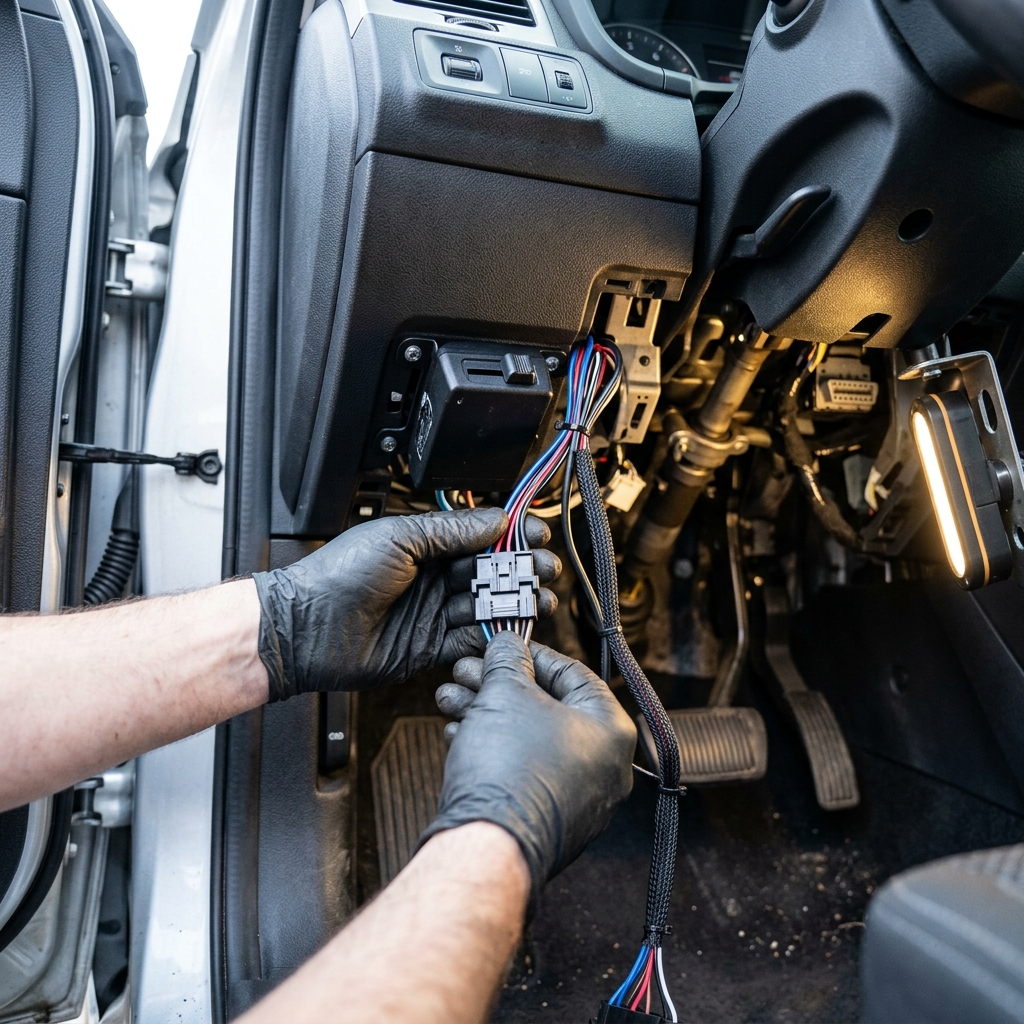
Towing trailers over 3,000 lbs in Illinois requires electric trailer brakes. To manage electric trailer braking, your vehicle must interface a 7-pin blade RV connector with a proportional brake controller under the dashboard: 1. Plug-and-Play Harness Wiring: Locate the OEM factory tow plug beneath the driver dash panel and connect a vehicle-specific brake controller wiring adapter. 2. Proportional Inertia Sensor Calibration: Mount the controller unit level according to manufacturer specs so internal accelerometers accurately measure deceleration force. 3. Gain and Sync Setting: Test drive at 25 mph on a quiet road, adjusting the brake controller gain wheel until trailer brakes apply smoothly without locking up tires. Need professional harness installation? Order Genuine Chevrolet Parts directly from Hawk Chevrolet of Joliet.
Mechanic wearing black gloves plugging a wire harness connector into an aftermarket brake controller under a car dashboard. (Representative image for illustration purposes only. Actual vehicle may vary based on trim and configuration.)

How Often Should Trailer Wheel Bearings Be Inspected and Repacked with Grease?

Maintenance Timelines & Inspection Intervals

Trailer wheel bearings spin significantly faster than vehicle tires due to their smaller wheel diameters. Inspect and repack trailer wheel bearings every 12,000 miles or once per year—whichever comes first. For boat trailers subjected to water submersion at boat ramps along the Kankakee or Des Plaines Rivers, bearings should be inspected and repacked at the start and end of every boating season.

Warning Signs of Bearing Failure

Watch for key signs of bearing wear during highway stops: excessive heat radiating from hub caps, visible grease splatter inside wheel rims, squealing or grinding noises at low speeds, or wheel wobbling. Always replace inner grease seals whenever repacking bearings, and use high-temperature marine-grade lithium complex grease.

Pre-Trip Hitch, Cargo Carrier, and Camera Safety Inspection Checklist

Before hitting the road for fall tailgating or state park camping trips, perform this mandatory 5-point safety inspection: 1. Hitch Pin & Clip: Verify the receiver hitch pin is fully seated and secured with an R-clip or locking pin. 2. Anti-Wobble Clamp Tightness: Torque the anti-rattle receiver bolt to prevent cargo tray sway on highway ramps. 3. Camera & Light Verification: Turn on vehicle headlights, hazards, and reverse gear (with brake engaged) to confirm trailing LED lights and auxiliary cameras are functioning. 4. Tie-Down Strap Tension: Inspect ratchet straps for fraying and re-tighten cargo loads after 10 miles of driving. 5. Tire Inflation & Payload Check: Verify rear vehicle tire pressures match the cold inflation specification listed on the driver door jamb sticker.

Upgrade Your Vehicle’s Towing and Cargo Setup at Hawk Chevrolet of Joliet

Whether you need a Class III hitch installation, factory backup camera relocation harness, or a full trailering brake controller setup for your truck or SUV, the certified technicians at Hawk Chevrolet of Joliet are here to help.
Visit our dealership at 2001 W Jefferson St, Joliet, IL 60435 or Call us at (815) 472-8001 to speak with our accessory specialists. You can also Get Directions to Hawk Chevrolet of Joliet to explore our complete lineup of new and pre-owned Chevrolet vehicles equipped for all your towing needs.
A modern Chevrolet dealership building with blue and white accents and cars parked in front.
 

Subscribe to Our Blog