ACDelco Gold vs. ACDelco Silver Batteries: Bottom-Line Answer for Chevrolet Winter Reliability
When sub-zero Arctic blasts sweep across Will County and freeze Northern Illinois highways, your Chevrolet demands an uncompromising electrical power source. Choosing between an ACDelco Gold (Professional) battery and an ACDelco Silver (Advantage) battery comes down to how much reserve stamina and cold-weather cranking margin your vehicle needs during brutal Midwestern cold snaps.
The bottom-line distinction is simple: ACDelco Gold batteries deliver significantly higher Cold Cranking Amps (CCA), superior Reserve Capacity (RC), and advanced engineering designed to withstand severe thermal shock. Offered in both heavy-duty flooded and premium Absorbent Glass Mat (AGM) configurations, ACDelco Gold is the recommended choice for Chevrolet drivers in Joliet, Plainfield, and Naperville who park outdoors overnight or drive modern vehicles loaded with high-draw electronics.
Conversely, ACDelco Silver batteries provide high-value, OEM-spec flooded battery power ideal for budget-conscious drivers, older Chevrolet models with modest electrical requirements, or vehicles parked inside climate-controlled garages during winter months. While Silver meets original General Motors design criteria, Gold provides the extra safety cushion needed when air temperatures plummet past zero along Interstate 80. If you ever need to maintain or replace your battery components, you can easily Order Genuine Chevrolet Parts directly through our certified dealership service hub.
At What Temperature Do Car Batteries Begin Losing Charge Rapidly?
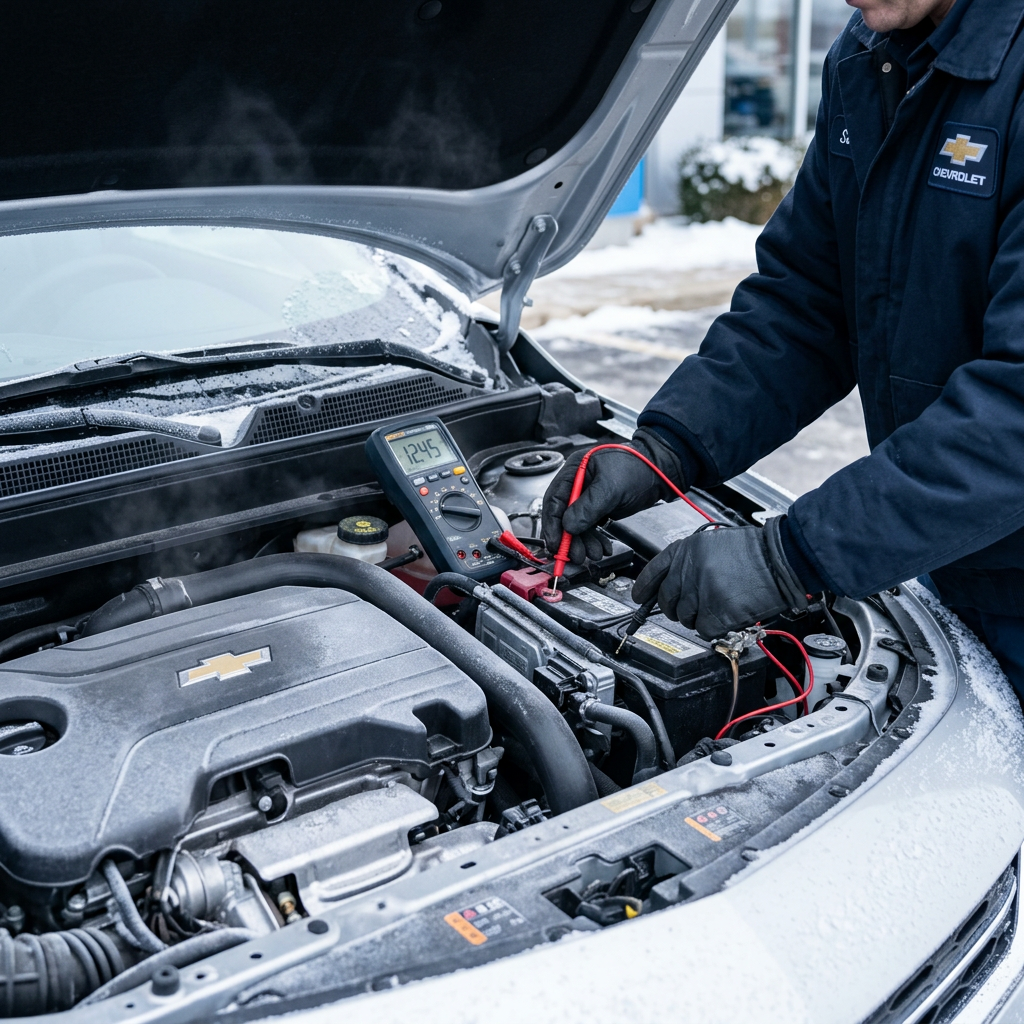
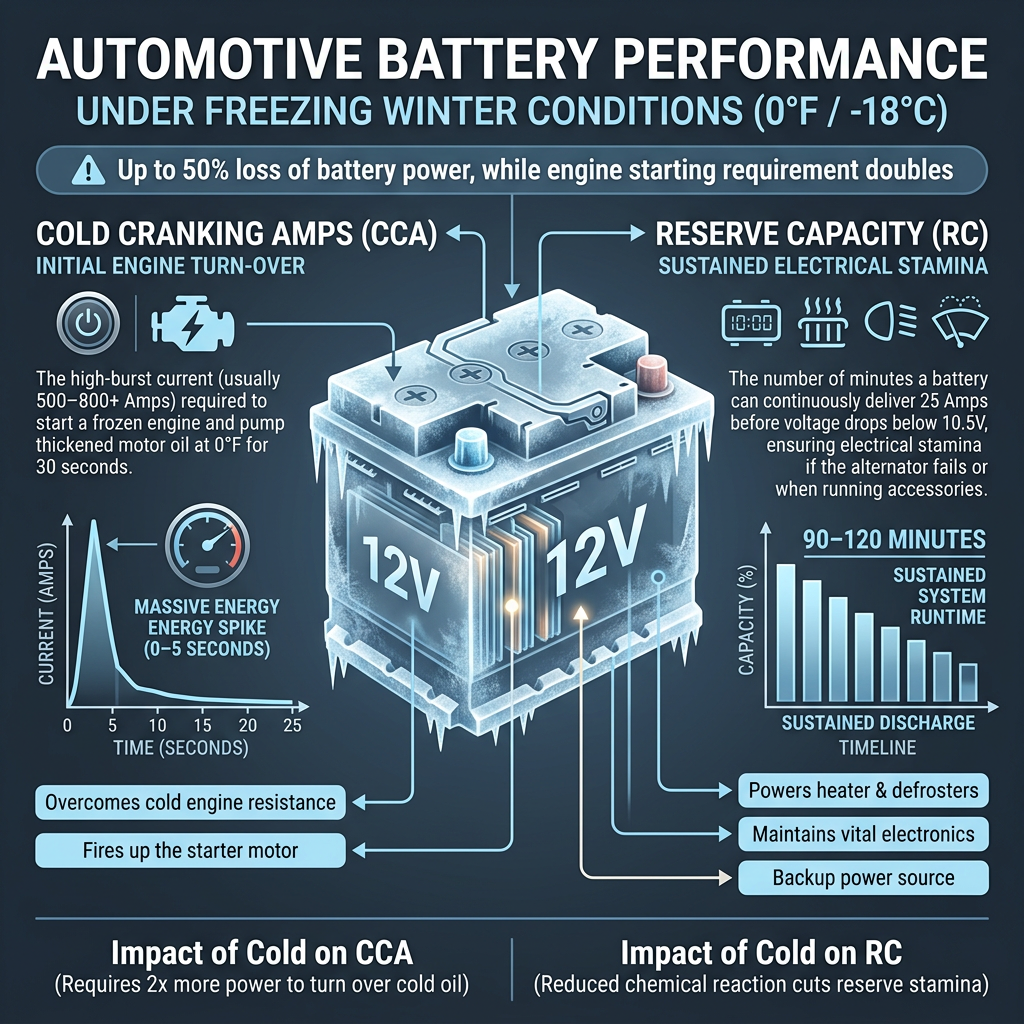
Automotive lead-acid batteries rely on internal chemical reactions to release electrical energy. As ambient temperatures drop, these chemical reactions slow down exponentially. At the freezing mark of 32°F (0°C), a fully charged car battery loses approximately 20% of its available cranking power.
When sub-zero winter blasts push temperatures down to 0°F (-18°C) or lower, battery capacity plunges by more than 50%. At the exact moment your battery retains only half its strength, your Chevrolet engine requires nearly double the power to turn over because motor oil thickens into a dense, viscous gel inside the crankcase.
Freezing weather creates a double strain: internal electrolyte chemistry degrades while motor oil thickens, requiring maximum CCA output from your ACDelco battery.
Key Engineering Differences: ACDelco Gold (Professional) vs. ACDelco Silver (Advantage)
General Motors engineers ACDelco batteries to exacting standards, but the Gold and Silver tiers target distinct performance requirements and environmental conditions. Here is how their internal components compare:
|
Feature / Specification
|
ACDelco Gold (Professional)
|
ACDelco Silver (Advantage)
|
|
Internal Grid Construction
|
Heavy-duty stamped alloy grids for maximum conductivity
|
Standard expanded metal grids for reliable power delivery
|
|
Plate Density & Mass
|
High-density paste formula with increased lead plate thickness
|
Standard-density paste formulation tailored for OEM balance
|
|
Separator Technology
|
Micro-porous envelope separators to prevent shorts
|
Standard polyethylene envelope separators
|
|
Corrosion Resistance
|
Enhanced calcium-lead alloy grid structure
|
Standard lead-calcium grid formulation
|
|
Technology Options
|
Available in Flooded and Premium AGM (Absorbent Glass Mat)
|
Flooded Lead-Acid only
|
|
GM Factory Warranty
|
34 to 42-Month Free Replacement (varies by part #)
|
18 to 24-Month Free Replacement (varies by part #)
|
Heavy-Duty Grids
ACDelco Gold batteries utilize robust full-frame alloy grids that resist internal short-circuits and structural expansion under extreme temperature shifts, giving them high durability against thermal cycling.
Plate Density
Thicker active paste material on ACDelco Gold plates allows higher electrochemical throughput. This extra mass ensures consistent cranking current even when deep-frozen at sub-zero temperatures.
Warranty Protection
Gold series batteries carry longer nationwide GM replacement coverage (up to 42 months), providing complete peace of mind during multiple Northern Illinois winter seasons.
What Cold Cranking Amps (CCA) Rating Is Recommended for a Chevrolet Battery in Northern Illinois Winters?
Cold Cranking Amps (CCA) measures the number of amperes a 12-volt battery can deliver at 0°F (-18°C) for 30 seconds while maintaining a voltage of at least 7.2 volts. In severe winter climates like Joliet, Plainfield, and Naperville, matching or exceeding factory CCA specifications is vital to avoid winter morning non-starts.
While factory minimum specs might start around 525 to 600 CCA for smaller four-cylinder cars, Northern Illinois winters warrant upgrading to 650 to 850+ CCA depending on engine size and electrical load demands.
Recommended CCA Ratings by Chevrolet Vehicle Class:
• Chevrolet Equinox & Malibu: 600 – 700 CCA (ACDelco Gold Flooded or AGM)
• Chevrolet Traverse & Blazer: 680 – 750 CCA (ACDelco Gold AGM Recommended)
• Chevrolet Tahoe & Suburban: 730 – 800+ CCA (ACDelco Gold AGM Recommended)
• Chevrolet Silverado 1500 / 2500HD: 750 – 850+ CCA per battery (Dual ACDelco Gold AGM for Duramax® Diesel)
If you are considering upgrading your vehicle for severe seasonal driving, you can also Browse New Inventory at Hawk Chevrolet of Joliet to explore models featuring modern factory battery isolation systems.
Which Rating Is More Critical for Severe Winter Weather in Illinois, CCA or RC?
Both Cold Cranking Amps (CCA) and Reserve Capacity (RC) serve distinct roles in keeping your Chevrolet operational during severe Midwestern winters, but they solve different winter driving challenges.
CCA gets your engine started: CCA represents instant burst energy. On zero-degree mornings along Jefferson Street in Joliet, high CCA is the primary rating that forces your starter motor to spin the engine past thick oil resistance. Without sufficient CCA, your car won't start at all.
Reserve Capacity keeps safety systems running: RC measures how many minutes a battery can supply 25 amperes of current before voltage drops below functional limits. During heavy winter stop-and-go commutes on I-55 or I-80, your vehicle idling in slow traffic with heated seats, rear defroster, cabin heater, windshield wipers, and headlights engaged can exceed alternator output. High Reserve Capacity prevents electrical brownouts and keeps critical safety systems energized. For severe Illinois winters, CCA is critical to initiate starting, but Reserve Capacity ensures vehicle electrical stability during prolonged winter commutes.
Can You Upgrade a Chevrolet from a Standard Flooded Battery to an AGM Battery?
Yes, you can upgrade almost any Chevrolet vehicle from a standard flooded lead-acid battery to an ACDelco Gold Absorbent Glass Mat (AGM) battery, provided the case group size fits your battery tray.
Unlike conventional flooded batteries where liquid electrolyte sloshes around lead plates, AGM technology suspends liquid acid inside fine fiberglass mat separators. This spill-proof design renders the battery completely maintenance-free and exceptionally vibration-resistant.
Why Upgrade to ACDelco Gold AGM for Illinois Winters?
• 3x Longer Cycle Life: Handles repetitive deep discharge and recharge cycles without plate degradation.
• Faster Charge Acceptance: Recharges faster during short winter trips across town.
• Essential for Auto Start-Stop: Modern Chevrolets with Auto Start-Stop rely on AGM technology to power cabin accessories while restart demands occur continuously at traffic stops.
Note: When upgrading to AGM, certified Chevy technicians perform a Battery Management System (BMS) reset to adjust charger parameters for AGM chemistry.
Matching the Right ACDelco Battery to Your Chevrolet Model and Driving Style
Selecting the optimal ACDelco tier involves evaluating your vehicle class, daily commuting habits, and outdoor parking exposure during cold waves.
Compact & Midsize Crossovers
Models: Trax, Trailblazer, Equinox, Malibu
• Garaged / Low Mileage: ACDelco Silver provides dependable OEM performance.
• Outdoor Parking / Heavy Daily Drive: ACDelco Gold Flooded or AGM ensures high winter starting resilience.
Family SUVs & Passenger Vans
Models: Traverse, Blazer, Tahoe, Suburban
• High Electrical Load: Tri-zone climate controls, rear entertainment, and heated seats demand maximum Reserve Capacity.
• Best Choice: ACDelco Gold AGM for extended life and heavy load tolerance.
Trucks & Work Vehicles
Models: Colorado, Silverado 1500, 2500HD/3500HD
• Commercial & Heavy Towing: Severe duty work demands maximum vibration resistance and top CCA.
• Best Choice: ACDelco Gold AGM heavy-duty battery installations.
Preparing Your Chevrolet Battery for Northern Illinois Cold Snaps: CCA Ratings & Winter Readiness
Preparing your electrical system for severe cold snaps prevents sudden morning failures. Follow this professional pre-winter maintenance checklist:
1. Inspect Terminals for Corrosion: Clean white or bluish powder buildup using anti-corrosion spray and stiff wire brushes.
2. Check Hold-Down Brackets: Ensure the battery is tightly secured; winter road vibrations can fracture internal lead plates.
3. Verify Open-Circuit Voltage: A fully charged battery should read 12.6V to 12.8V at rest.
4. Test Alternator Charging Output: Verify the alternator maintains 13.8V to 14.5V under full electrical load.
State of Charge Voltage Reference Chart:
• 12.68V+: 100% Charge (Fully Operational)
• 12.45V: 75% Charge (Slight Risk in Sub-Zero Weather)
• 12.24V: 50% Charge (Immediate Service Required)
• 12.00V: 25% Charge (High Risk of Engine No-Start)
If your battery displays any sign of weakness during autumn, Call us at (815) 472-8001 to consult with our certified service advisors before temperatures plunge.
When Should a Chevrolet Battery Be Tested Before a Northern Illinois Winter?
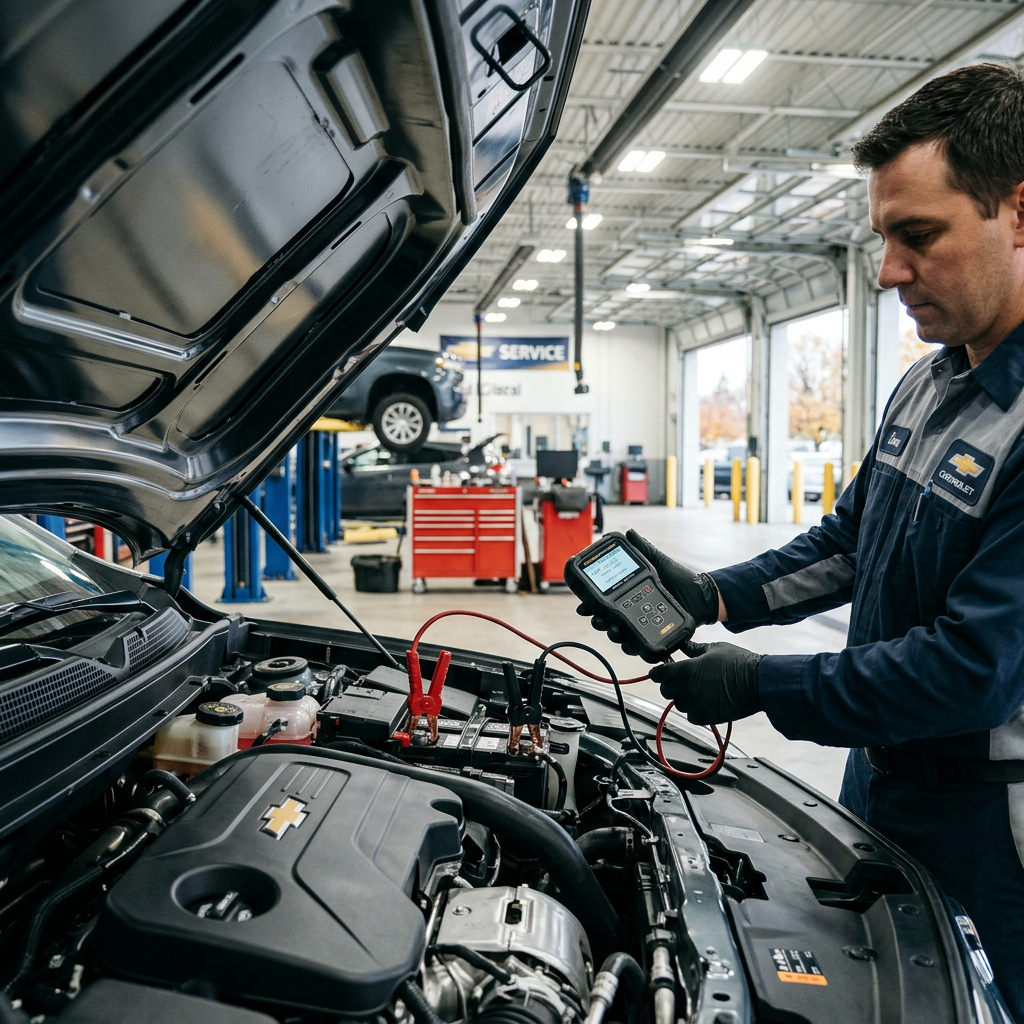
The ideal testing window for Chevrolet owners in Northern Illinois is during early autumn, specifically from September through November. Testing your battery before ambient temperatures drop below freezing allows you to detect gradual capacity degradation caused by summer heat before cold weather induces total battery failure.
Key Signs That Require Immediate Battery Testing:
• Slow or hesitant engine crank upon turning the key or pushing ignition.
• Headlights dimming noticeably while idling at traffic lights.
• Infotainment system resetting or instrument cluster flickering.
• Battery age exceeding 3 years under Midwestern climate cycles.
• Check Engine Light or Battery Indicator icon illuminated on the dashboard.
How Much Do Chevrolet Dealerships Charge for Battery Installation and Labor?
Transparent pricing ensures you know exactly what to expect when replacing your battery at a GM-authorized dealership. Costs vary based on battery tier and vehicle model complexity:
• ACDelco Silver Flooded Battery:$120 – $170 (Part cost)
• ACDelco Gold Heavy-Duty Flooded:$170 – $230 (Part cost)
• ACDelco Gold Premium AGM:$220 – $330 (Part cost)
• Professional Installation Labor: $45 – $95 (Depending on tray location)
Why Factory Installation Delivers Greater Value:
Modern Chevrolet vehicles integrate complex electronics. Installing a new battery requires resetting the Battery Monitoring System (BMS), maintaining memory settings, inspecting cables, and properly recycling hazardous cores.
Navigating Des Plaines River Valley Winters in Joliet, Plainfield, and Naperville
Riverfront Cold Gusts
Parking near open river corridors exposes engine compartments to penetrating wind chills that accelerate voltage drop overnight.
Highway Gridlock
Heavy snowstorms cause slow commutes on I-80 and I-55, testing your battery's Reserve Capacity while running cabin heaters and lights at low engine RPM.
Thermal Humidity Shock
Rapid temperature shifts in the Des Plaines Valley cause moisture condensation around battery posts, increasing corrosion risk unless treated with dielectric protection.
Schedule Your Chevrolet Winter Battery Inspection and Replacement at Hawk Chevrolet of Joliet
Don't let cold weather compromise your winter mobility. Trust the factory-certified technicians at Hawk Chevrolet of Joliet to test, service, or upgrade your battery with genuine ACDelco Gold or Silver replacements.
Visit our state-of-the-art service department at 2001 W Jefferson St, Joliet, IL 60435, or contact our service desk today to prepare your vehicle for winter.