Is a Check Engine Light Diagnosis Covered Under Chevrolet Factory Warranties? The Direct Answer
The short answer is yes, but with an important condition: Chevrolet factory warranties cover the diagnostic fee only if the ultimate cause of the check engine light is a component covered under your vehicle's specific warranty term. If a certified GM technician determines that the malfunction originates from a defective OEM part protected by the 3-Year/36,000-Mile Bumper-to-Bumper Warranty, the 5-Year/60,000-Mile Powertrain Warranty, or the 8-Year/80,000-Mile Federal Emissions Warranty, the entire diagnostic evaluation, labor costs, and replacement components are billed directly to General Motors at zero cost to you.
However, if the diagnostic inspection reveals that the warning light was triggered by a non-warrantable issue—such as a loose gas cap, user error, aftermarket modifications, physical damage from road debris along I-80, or severe weather conditions—the vehicle owner is responsible for paying the standard diagnostic fee. Understanding how these warranty boundaries operate ensures drivers in Joliet, Plainfield, and Naperville can approach dashboard alerts with complete clarity and financial peace of mind. At Hawk Chevrolet of Joliet, our service team transparently outlines these policies before evaluating your vehicle.
What Does Your Chevy Check Engine Light Mean? Diagnostic Steps for Joliet Commuters
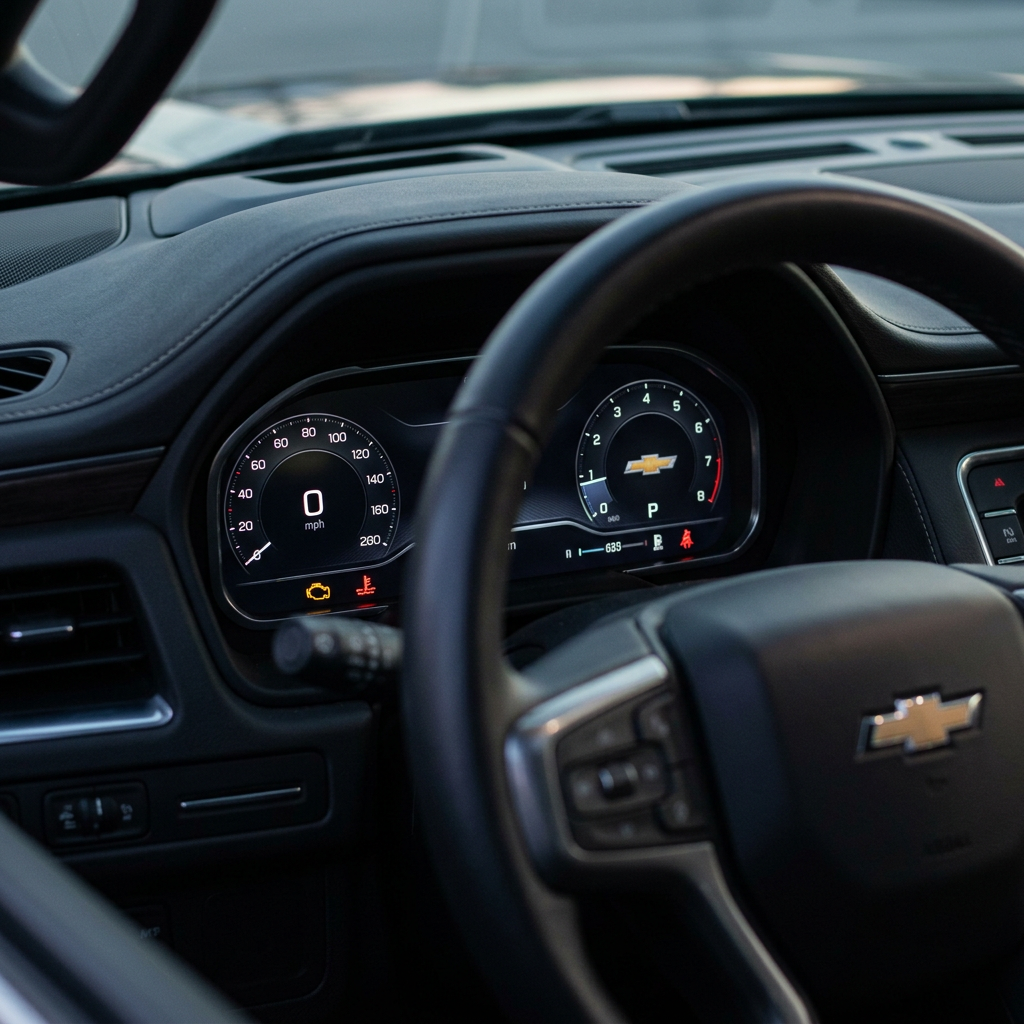
The Malfunction Indicator Lamp (MIL), commonly known as the Check Engine Light, is your Chevrolet engine control unit’s (ECU) primary communication line. When an internal sensor detects an operating condition outside prescribed factory tolerances—ranging from air-fuel ratio imbalances to sensor voltage irregularities—it logs a Diagnostic Trouble Code (DTC) and illuminates the dashboard icon. For commuters traversing I-80, I-55, or Route 59 daily, seeing this light illuminate mid-drive can cause understandable concern.
When the MIL turns on during your Joliet commute, perform an immediate initial self-assessment. First, check your Driver Information Center (DIC) screen on models like the Chevy Equinox, Tahoe, or Silverado. Modern Chevrolet vehicles frequently display complementary text messages such as 'Engine Power Is Reduced' or 'Service Park Brake' alongside icon illumination. Second, observe key instrument cluster gauges, focusing specifically on engine coolant temperature and oil pressure.
If temperature gauges show extreme heat or oil pressure drops sharply, pull over safely immediately. However, if gauge needles remain in safe, normal ranges and your Chevy continues driving smoothly, note down exact vehicle behavior: Did the light appear under heavy acceleration, while idling at a red light on Jefferson Street, or right after fueling?
Understanding these context clues provides invaluable information when you bring your vehicle to Hawk Chevrolet of Joliet. Prompt attention prevents minor electronic glitches from compounding into costly mechanical repairs down the road. You can always Schedule Your Service Today online to have your system evaluated.
How Do Red Warning Symbols Differ From Yellow Warning Symbols on a Chevy Dashboard?
Chevrolet vehicles utilize a standardized color-coded visual alert hierarchy across all gauge clusters and digital driver displays. Recognizing the fundamental difference between yellow/amber lights and red illuminated indicators is vital to protecting your engine from permanent damage.
Yellow / Amber Indicators: A solid yellow engine icon represents an advisory warning. It signifies that the engine computer has detected an auxiliary fault—such as an EVAP system vapor leak, minor oxygen sensor inefficiency, or secondary air injection fault. The vehicle remains driveable, but prompt inspection is strongly recommended to prevent decreased fuel efficiency, higher emissions, or collateral catalyst wear.
Red Indicators or Flashing Yellow Engine Light: A solid red warning symbol (such as low engine oil pressure or high engine temperature) or a flashing yellow check engine light signals a severe active emergency. A flashing engine icon indicates an active engine misfire severe enough to melt internal unburnt fuel inside your expensive catalytic converter within minutes. If you encounter a red symbol or flashing light, safely pull off the road immediately, turn off the engine, and seek professional towing assistance.
Is It Safe to Drive With a Solid Check Engine Light During Daily Commuting?
If your Chevrolet displays a steady, solid yellow check engine light with no accompanying abnormal mechanical noises, knocking, loss of steering power, or severe vibrations, it is generally safe to complete your current trip across Will County and drive directly to a authorized dealer service facility. A solid light indicates that while a fault code has been stored in memory, the engine computer has initiated fail-safe operating parameters to protect vital engine components.
However, 'safe to drive' does not mean 'safe to ignore indefinitely.' Operating your vehicle with an active solid check engine light over extended periods can cause secondary damage. For instance, a minor air intake sensor failure can force the engine to run excessively 'rich' (injecting surplus fuel), which gradually clogs the catalytic converter, ruins spark plugs, and slashes fuel economy. Commuters driving between Naperville, Plainfield, and Joliet should book a diagnostic appointment within 24 to 48 hours of illumination.
Understanding Chevrolet Bumper-to-Bumper vs. Powertrain Warranty Diagnostic Rules
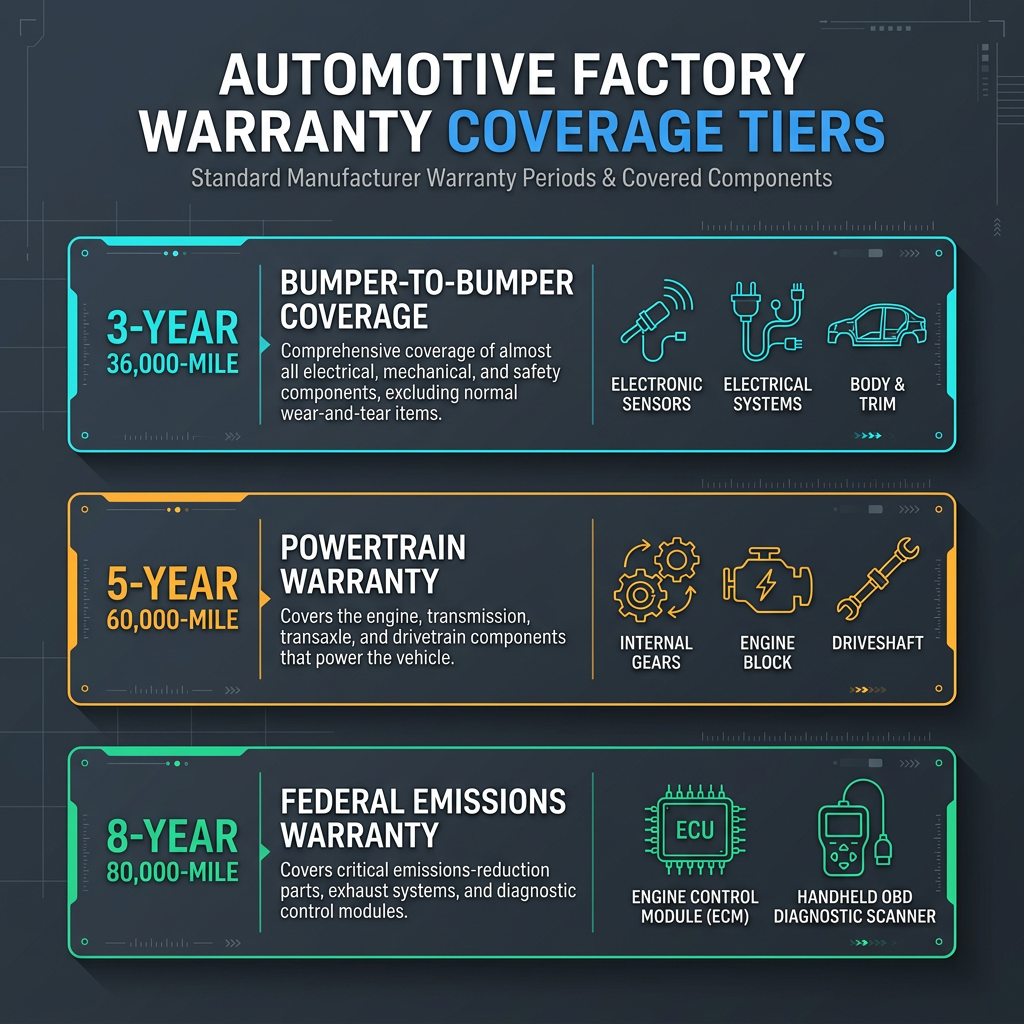
Bumper-to-Bumper Coverage
GM’s 3-Year/36,000-Mile Bumper-to-Bumper Limited Warranty covers virtually all original factory-installed components against material or manufacturing defects. Diagnostic fees for check engine lights caused by electrical body modules, sensors, dynamic switches, or harness connectors within this window are fully covered.
Powertrain Warranty
The 5-Year/60,000-Mile Powertrain Warranty specifically protects engine internal components, transmission assemblies, transfer cases, drive shafts, and axle assemblies. If a diagnostic scan points to an internal oil pump failure or variable valve timing solenoid, the diagnostic fee is completely waived under powertrain coverage.
Federal Emissions Warranty
Major emissions control components—specifically the catalytic converter, engine control module (ECM), and transmission control module (TCM)—are federally protected for 8 Years or 80,000 Miles. Diagnostic procedures identifying failures in these core components qualify for zero out-of-pocket diagnosis expense.
|
Warranty Tier
|
Duration / Mileage
|
Covered Components
|
Diagnostic Fee Waived?
|
|
Bumper-to-Bumper
|
3 Years / 36,000 Miles
|
Entire vehicle excluding wear items
|
Yes, if component is defective
|
|
Powertrain Limited
|
5 Years / 60,000 Miles
|
Engine, Transmission, Drivetrain
|
Yes, for internal powertrain items
|
|
Federal Emissions
|
8 Years / 80,000 Miles
|
ECM, TCM, Catalytic Converter
|
Yes, for designated major components
|
How Many Drive Cycles Does It Take for a Gas Cap Check Engine Light to Clear?
One of the most frequent causes of a yellow check engine light on Chevrolet vehicles is a loose or compromised fuel filler cap. The vehicle’s Evaporative Emission Control (EVAP) system relies on a tightly sealed vacuum to pull fuel vapors from the gas tank into the engine for combustion. If the gas cap is not tightened to its distinctive single click (or if the cap gasket has cracked), the system detects a micro-leak and flags code P0442 or P0455.
If you discover your gas cap was loose and tighten it, the check engine light will not turn off immediately. The engine control module requires a series of completed cold-to-hot drive cycles to verify that the EVAP vacuum leak has ceased. A complete drive cycle typically requires starting the vehicle after it has cooled overnight, driving at steady highway speeds on routes like I-80 for 15-20 minutes, followed by city driving and bringing the vehicle to a full stop.
On average, GM vehicles require between 3 and 10 successful drive cycles over 2 to 4 days of normal driving for the ECU to auto-reset the warning light without manual scanner intervention. If the light remains illuminated after a week of normal commuting, the issue may involve a damaged EVAP purge solenoid, filler neck, or charcoal canister.
How Does Winter Weather in Northern Illinois Affect Engine Sensors and Check Engine Lights?
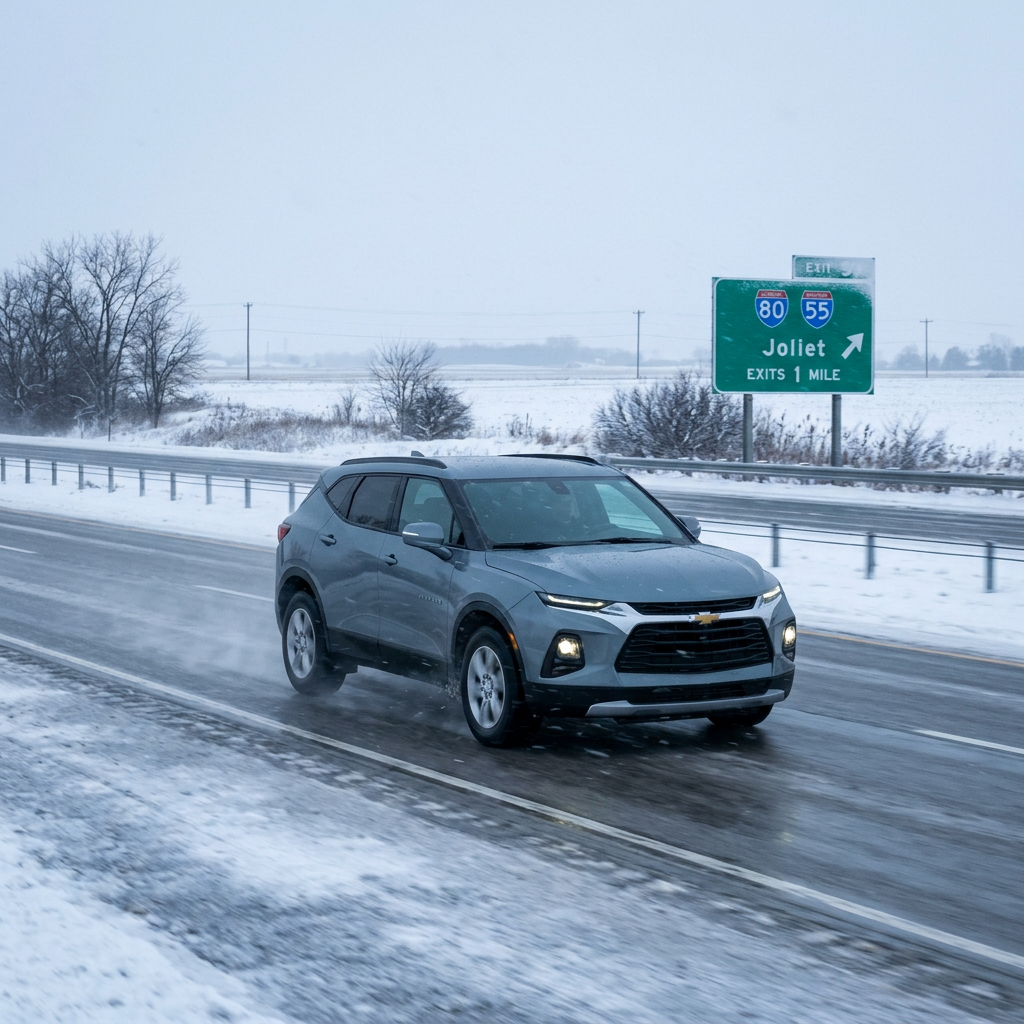
Winter weather conditions across Northern Illinois pose unique challenges for sensitive automotive electronics and powertrain sensors. As temperatures plunge near the Des Plaines River valley, ambient thermal swings force rapid expansion and contraction of engine harness connectors, exhaust components, and rubber vacuum hoses in vehicles parked outdoors in Will County.
Sub-zero cold snaps significantly reduce 12-volt battery cold-cranking amps (CCA). When starting your engine on freezing mornings, temporary system voltage drops can confuse delicate electronic control modules, triggering false low-voltage diagnostic codes for Mass Air Flow (MAF) sensors, throttle position sensors, or oxygen sensor heater circuits.
Additionally, heavy liquid road salt application on I-55 and local Joliet routes accelerates underbody corrosion. Moisture and salt spray can infiltrate oxygen sensor wiring, ABS speed sensor harnesses, and wheel speed sensors, triggering dashboard warning lights. Having your electrical and sensor systems evaluated before extreme cold sets in prevents winter breakdown hassles.
What Is the Diagnostic Process for Troubleshooting a Chevy Check Engine Light?
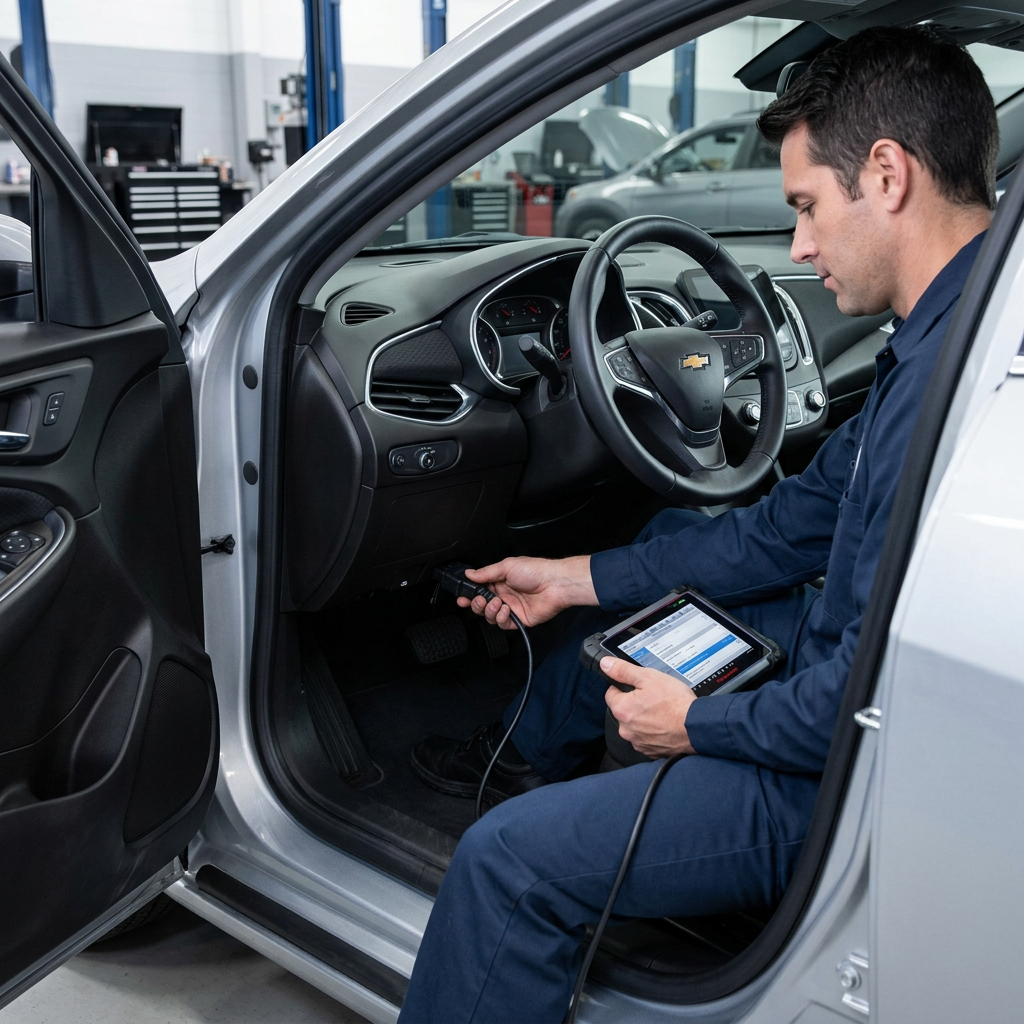
At Hawk Chevrolet of Joliet, troubleshooting a check engine light involves far more than simply plugging in a retail code reader and clearing a fault code. Basic code scanners only read generic numeric codes; they cannot perform dynamic component testing or analyze live telemetry data streams.
Our GM-certified technicians follow a rigorous multi-step factory inspection protocol to pinpoint the root cause of every warning light:
1. GM GDS2 System Interrogation: We connect factory Multiple Diagnostic Interface (MDI2) hardware running Global Diagnostic System 2 (GDS2) software to pull current, pending, and historic DTCs across all vehicle control modules.
2. Freeze-Frame Telemetry Analysis: We analyze stored freeze-frame data, which records exact engine parameters (vehicle speed, engine RPM, coolant temp, fuel trim percentage) at the precise millisecond the fault occurred.
3. Physical Inspection & Pin Testing: Technicians inspect physical components, performing digital multimeter voltage pin tests, smoke testing for EVAP leaks, or fuel pressure manifold tests.
4. OEM Repair & System Verification: Once the defective component is identified, repair or replacement is completed using genuine GM parts, followed by a post-repair verification test drive.
When Diagnostic Fees Are Charged and How to Avoid Out-of-Pocket Expenses
External & Rodent Damage
Mice or squirrels chewing through engine wiring harnesses under the hood, road debris puncturing sensors, or water intrusion from driving through flooded streets are considered external hazards and are not covered under GM manufacturer warranties.
Aftermarket Modifications
Installing non-GM aftermarket tuners, performance cold air intakes, custom exhausts, or improperly wired remote starters can disrupt ECM readings. Fault codes caused by third-party modifications require paid diagnostic time.
Deferred Maintenance
Check engine lights triggered by neglected maintenance items—such as fouled spark plugs past service interval, clogged engine air filters, incorrect fuel usage, or low engine oil—do not qualify for warranty coverage.
Proactive steps to avoid unexpected diagnostic fees: Always ensure your gas cap is fully clicked tight after refuel, replace engine filters according to your Chevrolet Owner’s Manual maintenance schedule, keep your vehicle sheltered from pests during winter, and consult our technicians before installing third-party electronics.
Common Chevy Engine Codes: Sensors, Catalytic Converters, and Emissions Control
Across popular Chevrolet models like the Silverado 1500, Equinox, Traverse, and Tahoe, certain OBD-II diagnostic trouble codes occur more frequently than others. Understanding what these codes mean helps vehicle owners anticipate repair needs:
P0420 - Catalyst System Efficiency Below Threshold: Indicates the catalytic converter is not processing exhaust gasses effectively. Covered under 8-Year/80,000-Mile Federal Emissions Warranty on qualifying models.
P0171 / P0174 - System Too Lean: Indicates excess air or insufficient fuel in the engine cylinders, often caused by vacuum leaks, a bad MAF sensor, or dirty fuel injectors.
P0300 - Random / Multiple Cylinder Misfire Detected: Indicates one or more cylinders are failing to ignite cleanly. Can stem from worn spark plugs, failing ignition coils, or fuel delivery issues. Requires immediate diagnostic evaluation.
P0135 / P0141 - Oxygen Sensor Heater Circuit Malfunction: Indicates internal heating elements in the upstream or downstream O2 sensors have degraded, impairing air-fuel mix calculations.
Local Chevy Warranty Service for Drivers in Joliet, Plainfield, and Naperville
When your dashboard light comes on, having a trusted, local Chevrolet service center makes all the difference. Hawk Chevrolet of Joliet serves as the premier warranty diagnostic hub for drivers throughout Joliet, Plainfield, Shorewood, Lockport, and Naperville.
Our modern facility is equipped with state-of-the-art GM diagnostic bays, factory-trained Master Technicians, and an extensive inventory of Genuine Chevrolet OEM parts. We handle all manufacturer warranty claims directly with General Motors, eliminating paperwork hassles for you.
Schedule Your Chevrolet Check Engine Light Diagnostic at Hawk Chevrolet of Joliet Today
Don't let dashboard uncertainty affect your daily commute. Whether your check engine light just turned on or has been glowing for a few days, let the factory-certified experts at Hawk Chevrolet of Joliet evaluate your vehicle with complete warranty transparency and professional care.