Average Car Battery Lifespan in Midwest Climates: The 3 to 4 Year Reality
If you drive a Chevrolet in Joliet, Plainfield, Naperville, or anywhere across the greater Chicagoland area, you know that Midwest weather doesn't do anything by halves. From blistering 95°F summer afternoons spent stuck in traffic on I-80 to sub-zero January mornings on Route 59, our vehicles face some of the most punishing climate swings in North America. While drivers often focus on oil changes and tire tread, there is one critical component quietly bearing the brunt of these temperature extremes: your vehicle's 12-volt battery.
Nationwide, automated auto maintenance guides often claim that a standard lead-acid or Absorbent Glass Mat (AGM) battery lasts anywhere from 5 to 6 years. However, in Northern Illinois and across the Midwest, the realistic average lifespan of a car battery is only 3 to 4 years. Drivers who expect a full 6 years from their factory battery are routinely caught off guard when their engine fails to crank during the first severe arctic freeze of the season.
The underlying cause of this shortened lifespan comes down to a double-whammy of severe weather. Extreme summer heat acts as a silent killer that slowly degrades internal battery chemistry, while severe winter cold acts as the trigger that exposes that damage. By understanding how Northern Illinois climate forces impact battery life, you can take proactive measures, avoid unexpected strandings on icy highways, and ensure your Chevy starts reliably every single time. Learn how to Schedule Your Service Today with our expert service team before winter hits.
Why Midwest Summer Heat and Sub-Zero Winters Accelerate Car Battery Failure
Summer Heat: The Silent Corrosive Killer
Most motorists assume that winter is the culprit behind battery failure because that is when batteries usually die. However, battery experts know that summer heat is what actually destroys the unit. Under-hood temperatures in July and August can quickly exceed 140°F to 160°F. In lead-acid and AGM batteries, this extreme thermal energy causes the internal electrolyte liquid to evaporate and accelerates grid plate corrosion.
As electrolyte levels drop and lead plates oxidize, the battery permanent loses active surface area. This chemical degradation goes completely unnoticed during warm weather because engine oil remains thin, requiring very little electrical output to turn over the crankshaft.
Sub-Zero Winters: The Brutal Strain
When Chicagoland temperatures drop to 0°F or below, chemical reaction rates inside your battery plummet. At freezing (32°F), a standard battery loses approximately 35% of its strength. At 0°F, capacity drops by roughly 50%. Simultaneously, cold temperatures thicken engine oil, requiring up to twice as much electrical energy to start the engine. A heat-weakened battery simply cannot deliver.
Signs Your Chevy Battery Is Failing Before Extreme Chicagoland Winter Weather Hits
Catching a declining battery in October or November is far better than standing in a snowbank waiting for a tow truck in January. Watch out for these six telltale indicators that your Chevrolet battery needs immediate attention:
1. Slow Engine Crank
When pressing the Start button or turning the key, the engine turns over sluggishly, taking several seconds longer than usual to catch. This 'rur-rur-rur' dragging noise is the classic sign of insufficient Cold Cranking Amps (CCA).
2. Dimming Headlights & Idle Flicker
If your Chevrolet's LED or halogen headlights dim noticeably while idling at a red light in Joliet and brighten as you accelerate, your battery is struggling to hold voltage stability under electrical load.
3. Swelling or Bloated Battery Case
Extreme Midwest heat or frozen internal electrolyte solution can cause the plastic casing of the battery to swell or bulge on the sides. A swollen casing indicates physical structural compromise and requires immediate replacement.
4. Ignition Rapid Clicking
When turn the key or push the start button and hear a fast clicking noise without the engine turning over, the starter solenoid is engaging but the battery lacks enough reserve power to turn the starter motor.
5. Dashboard Battery Indicator Light
The battery icon light on your Chevrolet driver information center signals a charging system fault. It could point to a failing battery, malfunctioning alternator, or loose serpentine belt tensioner.
6. Electrical Glitches & Infotainment Resets
Modern Chevy models feature advanced touchscreens, power liftgates, and active safety systems. If the infotainment screen reboots randomly or power accessories act sluggishly, low system voltage is often the culprit.
What Should Be Checked on a Chevrolet’s Battery, Heater, and Defrosters Before a Chicagoland Winter?
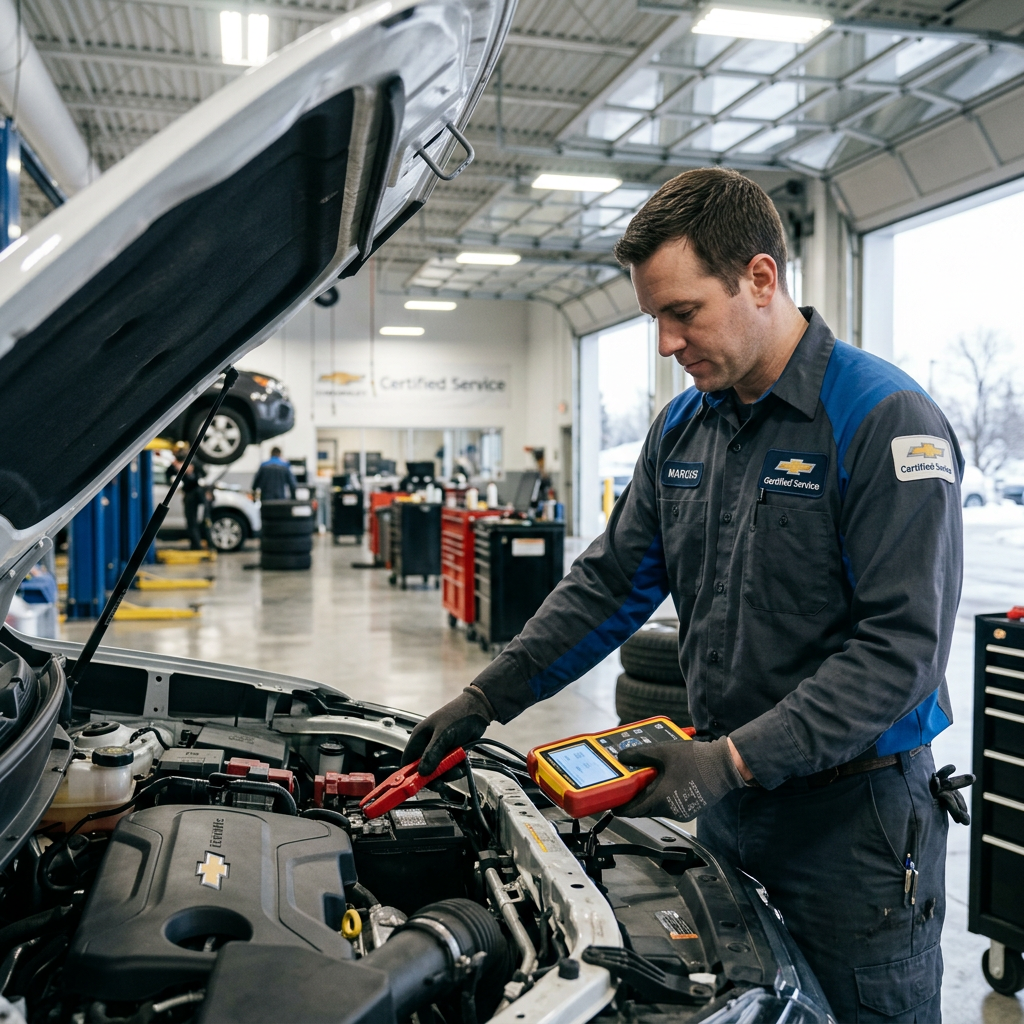
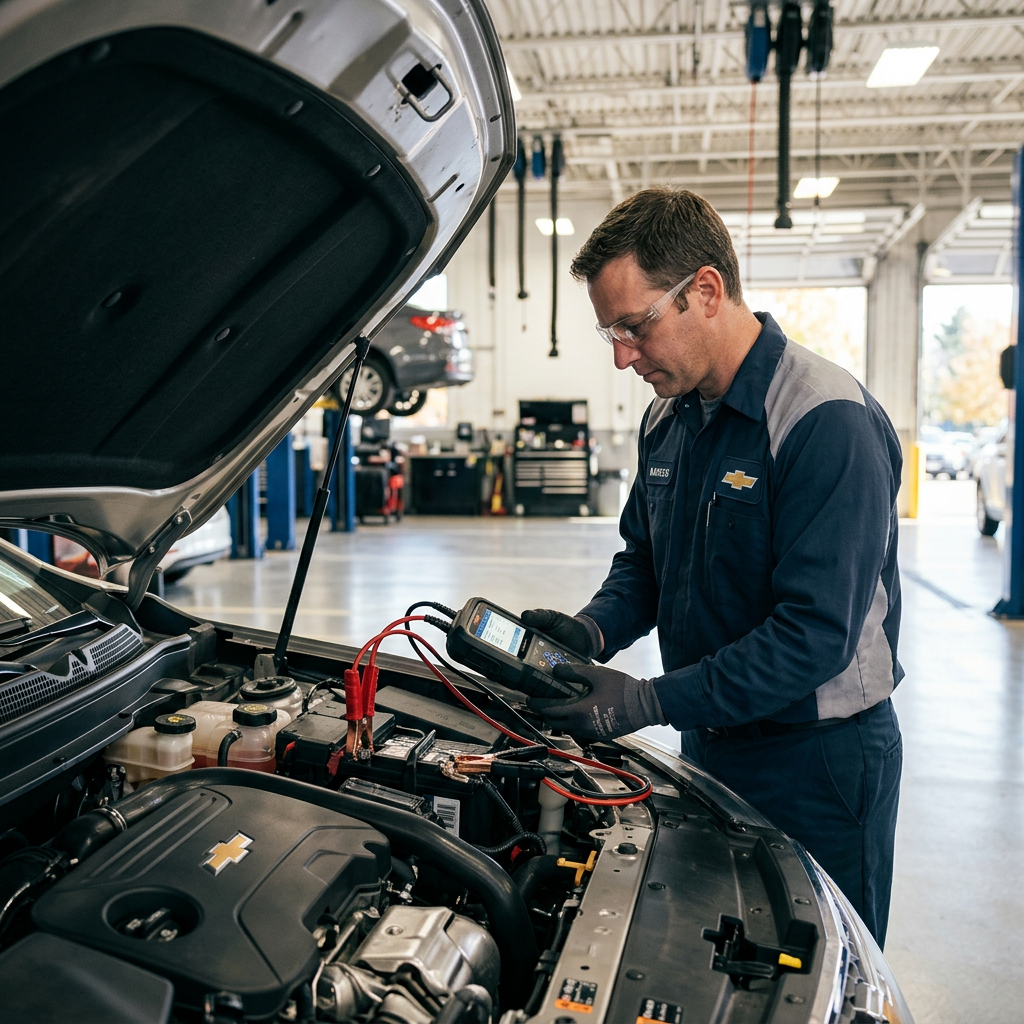
A successful pre-winter inspection goes far beyond just visually inspecting under the hood. At Hawk Chevrolet of Joliet, our GM-certified technicians execute a thorough diagnostic protocol specifically tailored for Midwest climate resilience:
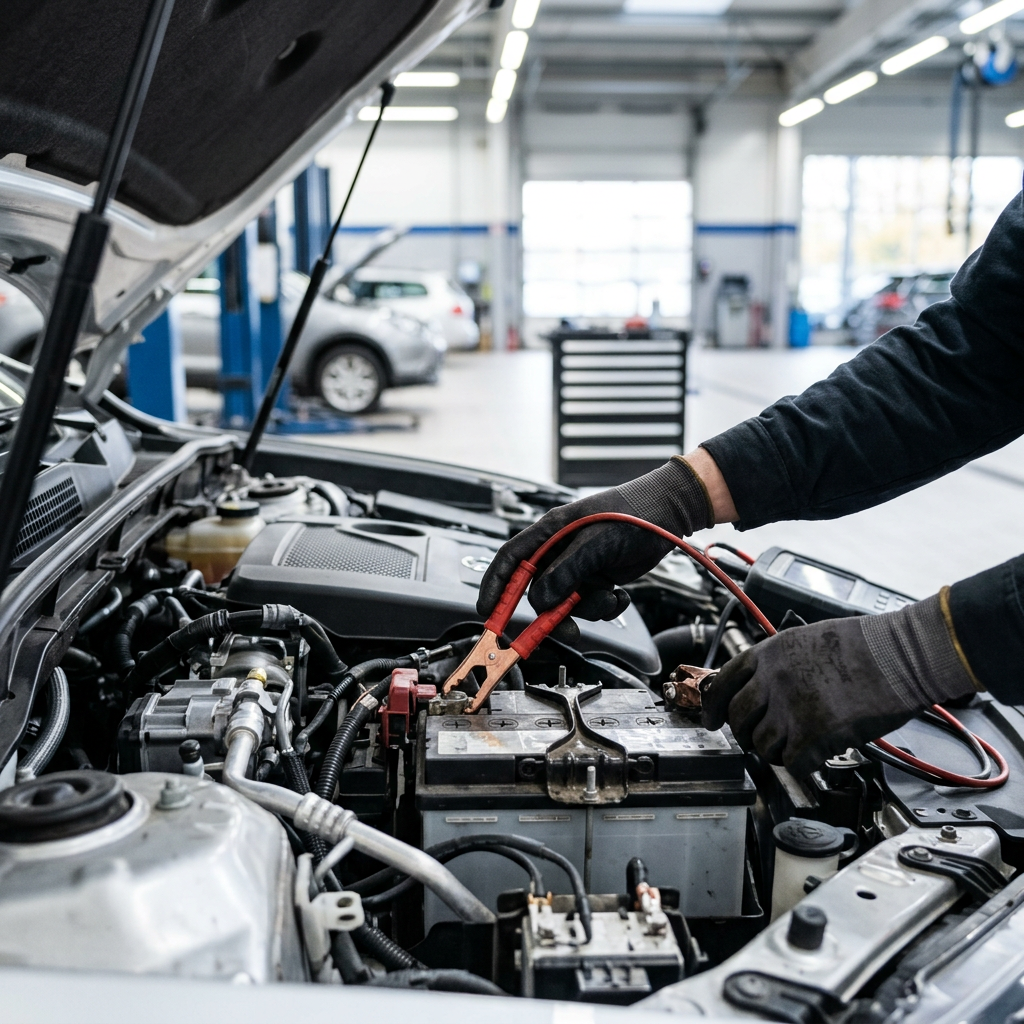
• Conductance & Load Testing: We measure actual Cold Cranking Amps (CCA) against factory specifications to determine true battery health.
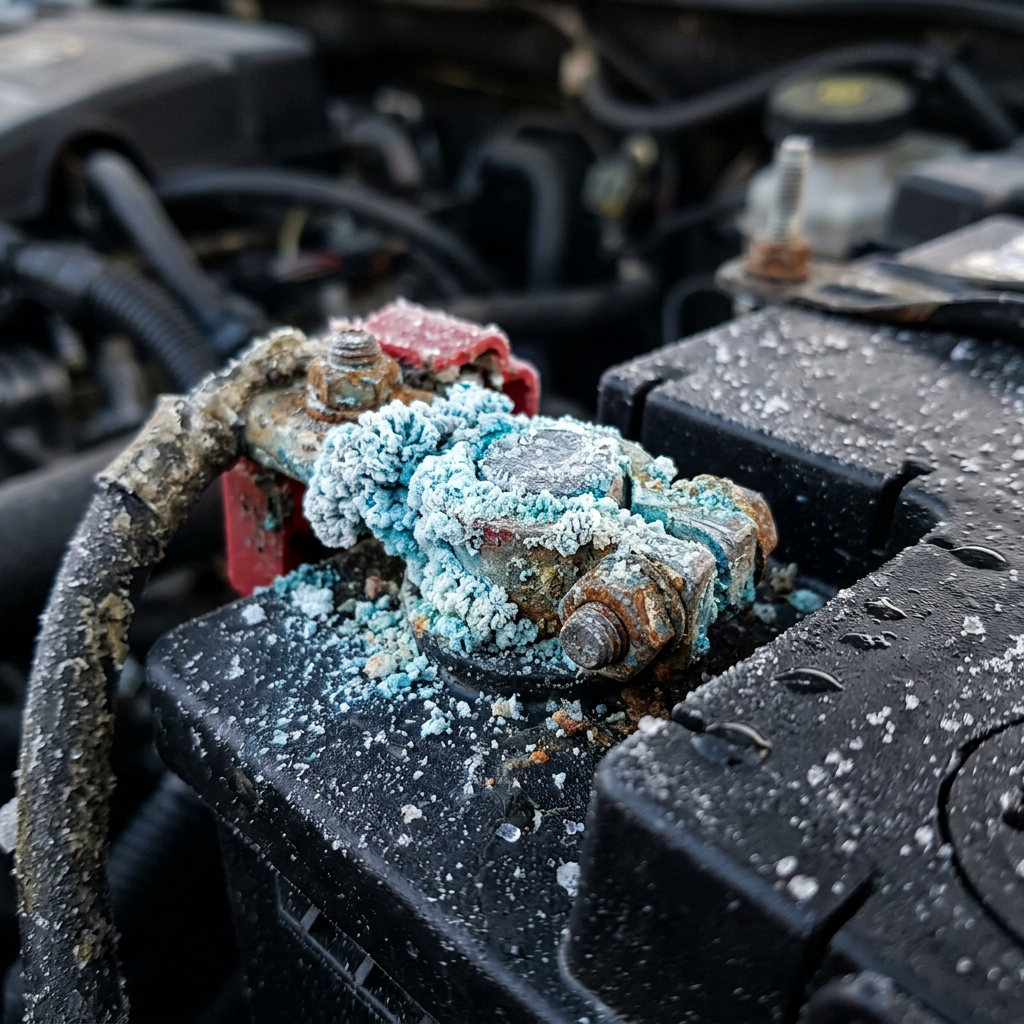
• Terminal Corrosion Cleaning: We remove white acidic crust from battery terminals and apply protective dielectric grease to guarantee optimal conductivity.
• Alternator & Starter Testing: We verify that the charging system delivers between 13.8V and 14.5V under load to ensure full power restoration while driving.
• HVAC Heater Core Output: We test coolant flow through the heater core to ensure warm airflow starts quickly inside the cabin.
• Cabin Air Filter Replacement: A clogged filter reduces defrosting blower output by up to 50% and trap excess moisture inside.
• Front & Rear Defroster Grid Verification: We check rear window heating element lines and mirror heaters for electrical continuity.
What Essential Services Should Be Included in a Pre-Winter Chevy Tune-Up?
Preparing your Chevrolet Tahoe, Equinox, Silverado, or Traverse for winter in Will County requires a comprehensive approach. A proper pre-winter maintenance package ensures every vital mechanical system is safeguarded before sub-zero temperature dips arrive.
|
Service Item
|
Recommended Technical Standard
|
Midwest Winter Protection Benefit
|
|
Engine Oil & Filter
|
GM Dexos1 Full Synthetic (0W-20 or 5W-30)
|
Ensures rapid oil flow to engine components during cold starts below 0°F.
|
|
Engine Coolant / Antifreeze
|
DEX-COOL 50/50 Mixture (Protection to -34°F)
|
Prevents engine block freezing, cracking, and water pump corrosion.
|
|
Brake System Inspection
|
Pads, rotors, and fluid moisture check (<3%)
|
Prevents brake line freezing and ensures maximum stopping force on ice.
|
|
Serpentine Belts & Hoses
|
Check for cracking, tension loss, and wear
|
Prevents belt snapping in extreme cold, preserving power steering & alternator.
|
|
Wiper Blades & Fluid
|
Beam-style winter blades + De-Icing fluid (-30°F)
|
Maintains clear visibility during heavy Midwest snowstorms and road spray.
|
If you plan to maintain your vehicle at home, you can easily Order Genuine Chevrolet Parts directly through Hawk Chevrolet of Joliet to ensure you receive factory-approved DEX-COOL fluids, ACDelco wiper blades, and OEM filters.
Engine Block Heater vs. Chevrolet Remote Start: Which Is More Effective for Extreme Midwest Cold Starts?
Engine Block Heaters: Mechanical Efficiency
An engine block heater warms the engine coolant directly inside the motor block via an electrical wall outlet plug. This keeps the engine block and motor oil warm even during -20°F arctic cold snaps.
• Pros: Dramatically reduces initial engine wear during cold starts, reduces battery starter amp draw, and delivers immediate warm air upon starting.
• Cons: Requires access to a 110V electrical outlet wherever the vehicle is parked overnight.
Chevrolet Remote Start: Convenience & Pre-Conditioning
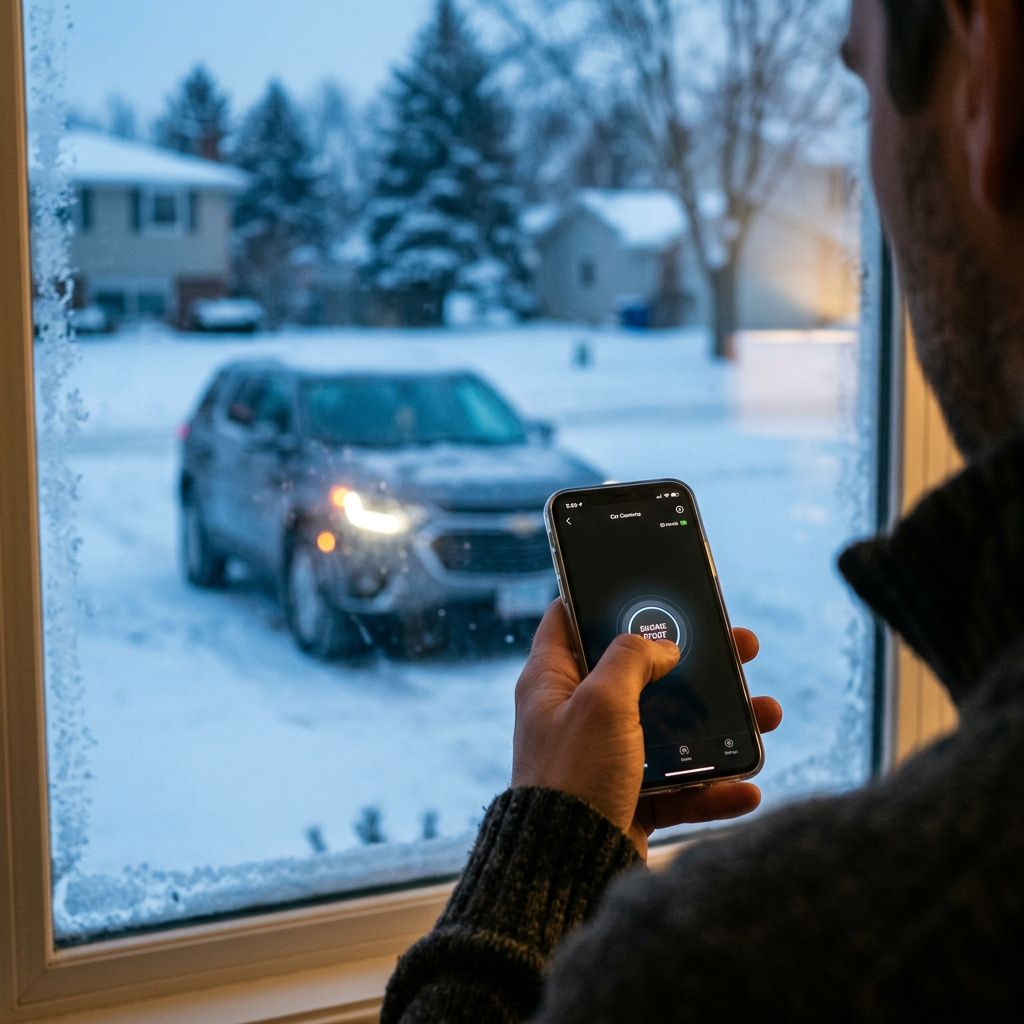
Chevrolet Remote Start allows drivers to start the engine remotely via the key fob or myChevrolet Mobile App from anywhere in Naperville or Joliet.
• Pros: Automatically activates windshield defrosters, side mirror heaters, cabin climate control, and heated seats/steering wheel before you step inside.
• Verdict: For modern gasoline and diesel Chevrolet passenger vehicles, Remote Start is the ultimate everyday convenience, while engine block heaters provide specialized protection for heavy diesel trucks parked outdoors.
How Chevrolet Remote Start Works in Cold Weather to Pre-Condition the Cabin and Defrost Windows
Automatic Intelligent Climate Activation
When activated in cold ambient temperatures, Chevrolet's auto climate control system automatically directs airflow to the windshield defrost nozzles and footwells at max heat, clearing ice and condensation automatically.
Heated Surface Integration
Equipped Chevrolet models tie heated seats and the heated steering wheel into the Remote Start loop. The system reads ambient temperatures below 45°F and turns on surface elements so your touchpoints are warm upon entry.
Battery Safety & Idle Timers
Remote start cycles run for 15 minutes before automatically shutting off to conserve fuel and prevent battery drain. You can extend the cycle once for an additional 15 minutes right from your smartphone.
All-Season Tires vs. Dedicated Winter Tires: Which Is Better for Chicagoland Winter Commuting in a Chevy?
When navigating icy highway interchanges between I-55, I-80, and Route 59, rubber compound chemistry is just as critical as all-wheel drive.
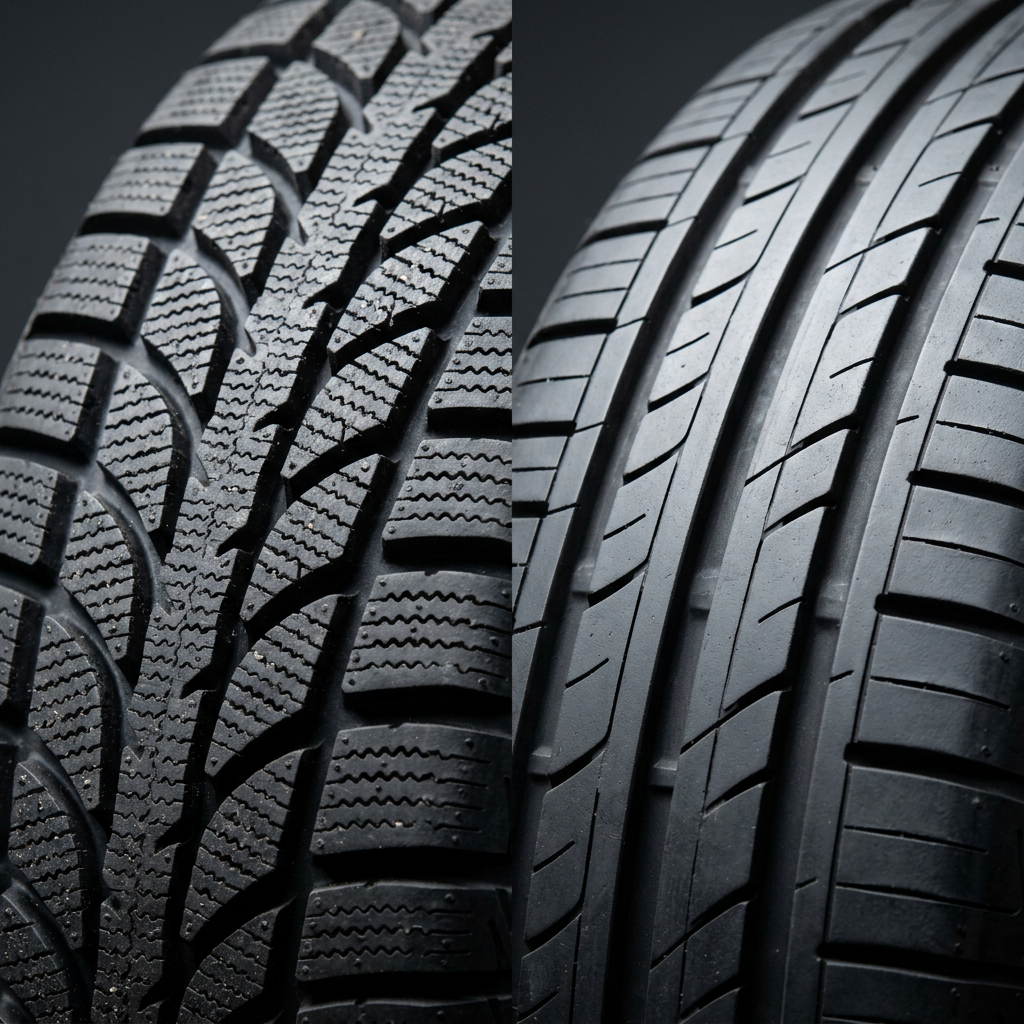
• The 45°F Rubber Hardening Threshold: Standard all-season tire tread compounds begin hardening at temperatures below 45°F, reducing traction even on completely dry pavement.
• Dedicated Winter Tires (e.g., Bridgestone Blizzak): Specially engineered flexible hydrophilic rubber compounds retain flexibility down to -30°F. Combined with thousands of high-density 3D sipes, winter tires shorten braking distances on ice by up to 30 feet compared to all-season tires.
• Which Do You Need? If your commute requires driving early in the morning before snowplows clear I-80 or I-55, dedicated winter tires offer unparalleled stopping capability. If you travel primary on cleared suburban streets in a Chevy AWD vehicle, high-rated M+S all-season tires may suffice.
How Chevy StabiliTrak Assists Drivers During Winter Driving on Snow and Ice
Chevrolet StabiliTrak is an advanced electronic stability and traction control system designed to help you maintain directional control during low-traction conditions. During winter driving across slippery Midwest roadways, StabiliTrak operates in real-time by constantly monitoring steering wheel angle, individual wheel speed, and lateral vehicle motion.
If StabiliTrak detects that your Chevrolet is understeering (pushing straight through a snowy turn) or oversteering (fishtailing on slick black ice), the system automatically applies precise braking force to individual wheels and reduces engine torque. This instant intervention helps guide the vehicle back along your intended path before a dangerous skid can develop. Combined with intelligent AWD systems on models like the Chevy Traverse, Blazer, and Equinox, StabiliTrak delivers supreme winter driving confidence.
Step-by-Step Guide: Preparing Your Chevy for Chicagoland Winter Commuting
1. Maintain Half-Tank Minimum Fuel Level
Never let your fuel tank drop below half capacity during freezing weather. Keeping the gas tank mostly full prevents moisture condensation from settling in fuel lines and freezing, which can block fuel delivery to the engine.
2. Smart Battery Maintenance for Short Trips
If your daily commute in Joliet consists of short 5-minute trips, your alternator may not have sufficient time to fully recharge the battery after a cold start. Consider using a smart battery trickle charger on weekends to maintain full voltage.
3. Pack an Emergency Kit & Salt Wash Schedule
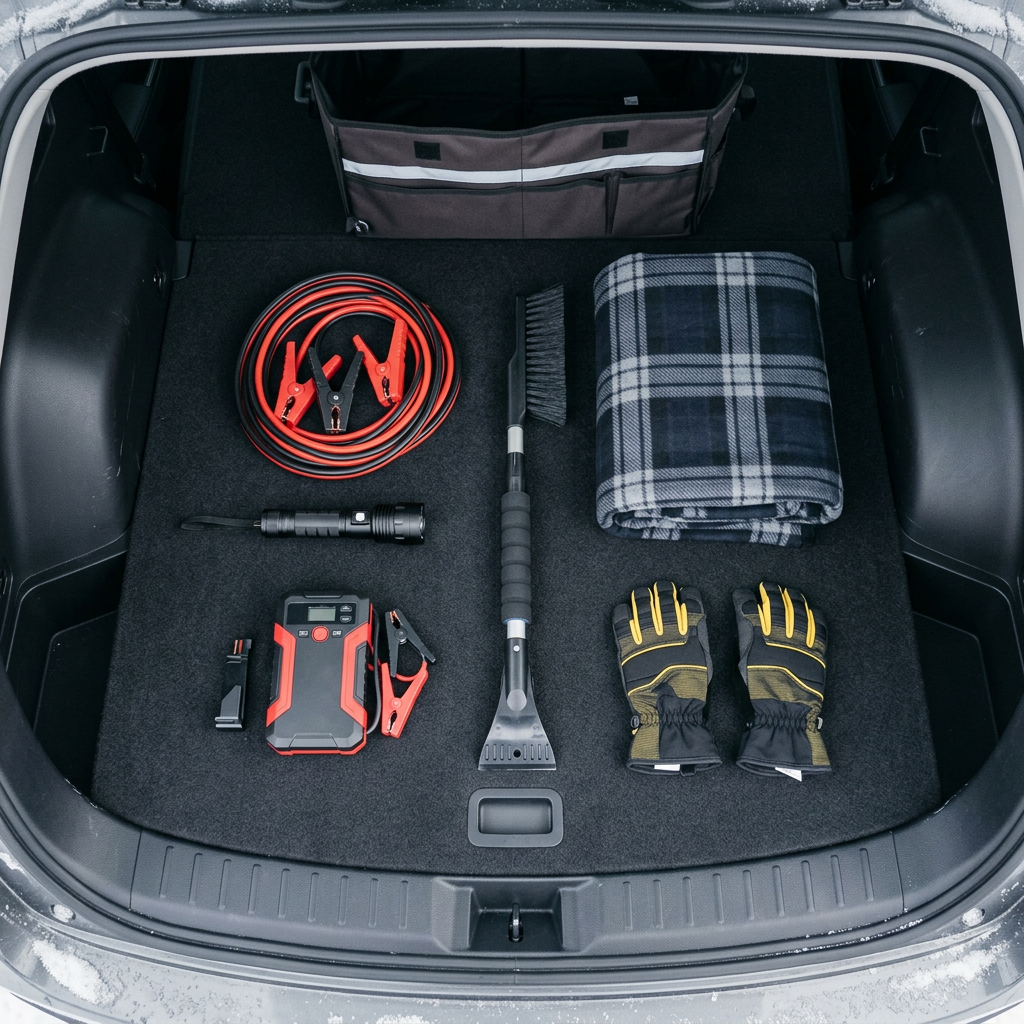
Pack heavy jumper cables, thermal blankets, portable jump-starter pack, flashlight, sand/kitty litter, and ice scrapers. Wash your Chevy's underbody frequently to prevent road salt corrosion on brake lines and battery wiring.
Choosing the Right Replacement Battery for Your Chevrolet in Joliet, Plainfield, and Naperville
When replacing a battery in modern Chevrolet vehicles loaded with advanced electronics, choosing the correct battery chemistry is critical. Standard flooded lead-acid batteries are economical, but modern Chevy trucks and SUVs with Auto Stop/Start technology require Absorbent Glass Mat (AGM) batteries.
AGM batteries handle deep electrical cycling, recharge up to 5 times faster, and provide significantly higher Cold Cranking Amps in sub-zero weather. At Hawk Chevrolet of Joliet, we stock genuine ACDelco GM Original Equipment AGM and Gold Series batteries backed by up to a 36-month free replacement nationwide warranty.
Looking to upgrade your vehicle or need specialized maintenance advice? You can also explore options to Value Your Trade or consult directly with our certified GM service advisors.
Schedule Your Pre-Winter Battery & Vehicle Inspection at Hawk Chevrolet of Joliet
Don't leave your winter mobility to chance. Visit Hawk Chevrolet of Joliet for a complimentary digital battery check and pre-winter vehicle inspection. Located right here at 2001 W Jefferson St in Joliet, IL 60435, our factory-trained GM technicians are dedicated to keeping you and your family safe on Will County roads all winter long.