Can You Mix Summer and Winter Washer Fluid in Your Chevrolet Reservoir?
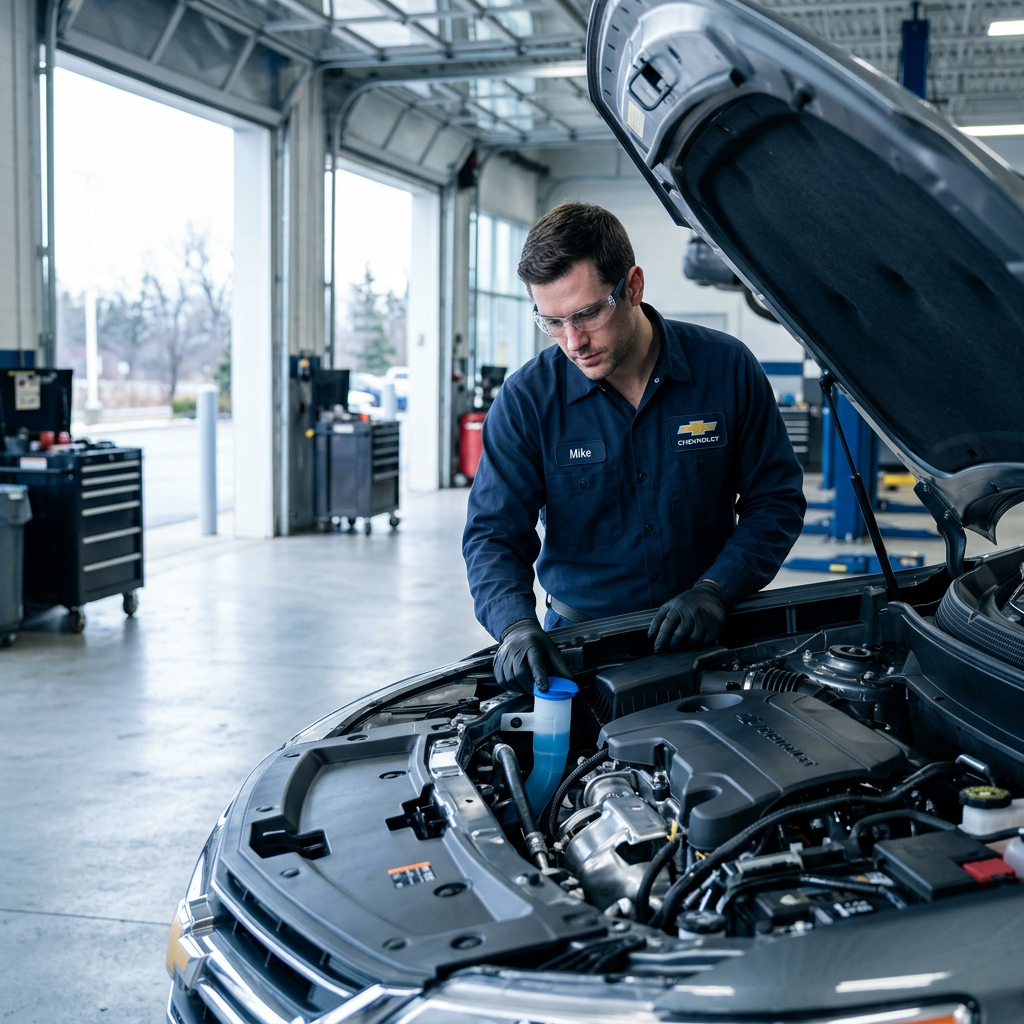
The short answer is yes, you can physically mix summer and winter washer fluids without causing a hazardous chemical reaction or toxic fumes. However, doing so during a northern Illinois late-autumn shift can lead to severe operational headaches. Combining residual summer fluid with fresh winter fluid significantly raises the overall freezing threshold of the mixture inside your reservoir. While summer blends are formulated primarily with water and specialized bug-stripping detergents, winter formulas rely heavily on high-proof alcohols like methanol or isopropyl alcohol to prevent liquid from turning to solid ice.
When drivers in Joliet, Plainfield, or Naperville top off a half-empty reservoir containing warm-weather washer fluid with a -20°F winter rating formula, they create a compromised hybrid liquid. This diluted blend might hold up during mild autumn days, but the moment temperatures dip below freezing on your morning commute down Interstate 55 or I-80, the fluid will freeze inside your washer lines, fluid pump, and spray nozzles. Frozen fluid expands, which can crack plastic pump housings, burst distribution hoses, and leave you completely blinded by highway road salt slush. Transitioning properly before the first hard freeze in Will County is essential for maintaining clear visibility and preserving your washer system components.
What Happens When Summer and Winter Washer Fluids Combine in Cold Weather?
The Chemical Reality of Washer Fluid Blends Summer windshield washer formulas are designed to clean organic debris like splattered insects, tree sap, and road grime. To accomplish this economically, manufacturers formulate summer washer fluid primarily with distilled water, citrus scent additives, and soap detergents. Because summer fluid contains virtually no anti-freeze alcohol content, its freezing point rests right around 32°F (0°C). Conversely, sub-zero winter washer fluid contains chemical de-icers—predominantly methanol or isopropyl alcohol—blended at concentration levels up to 30% to 40% by volume. This high alcohol ratio prevents the fluid from freezing even when ambient temperatures plummet to -20°F or -30°F.
The Mathematics of Freeze Point Dilution When you pour winter washer fluid into a reservoir that still holds a quart of summer fluid, basic fluid dynamics dictate the outcome. The water in the summer fluid dilutes the concentration of methanol in the winter fluid. A bottle rated for -20°F freeze protection will lose its sub-zero resistance when diluted with warm-weather fluid, shifting its freezing point up to 15°F or 20°F. When temperatures drop into the teens across Will County, this diluted mixture turns into a thick, slushy gel. It clogs tiny atomizer nozzle orifices, places heavy electrical strain on the washer pump motor, and streaks across your warm windshield before freezing instantly upon contact with cold outer glass surfaces.
What Temperature Rating Should Winter Washer Fluid Have in Northern Illinois?
Understanding Fluid Ratings
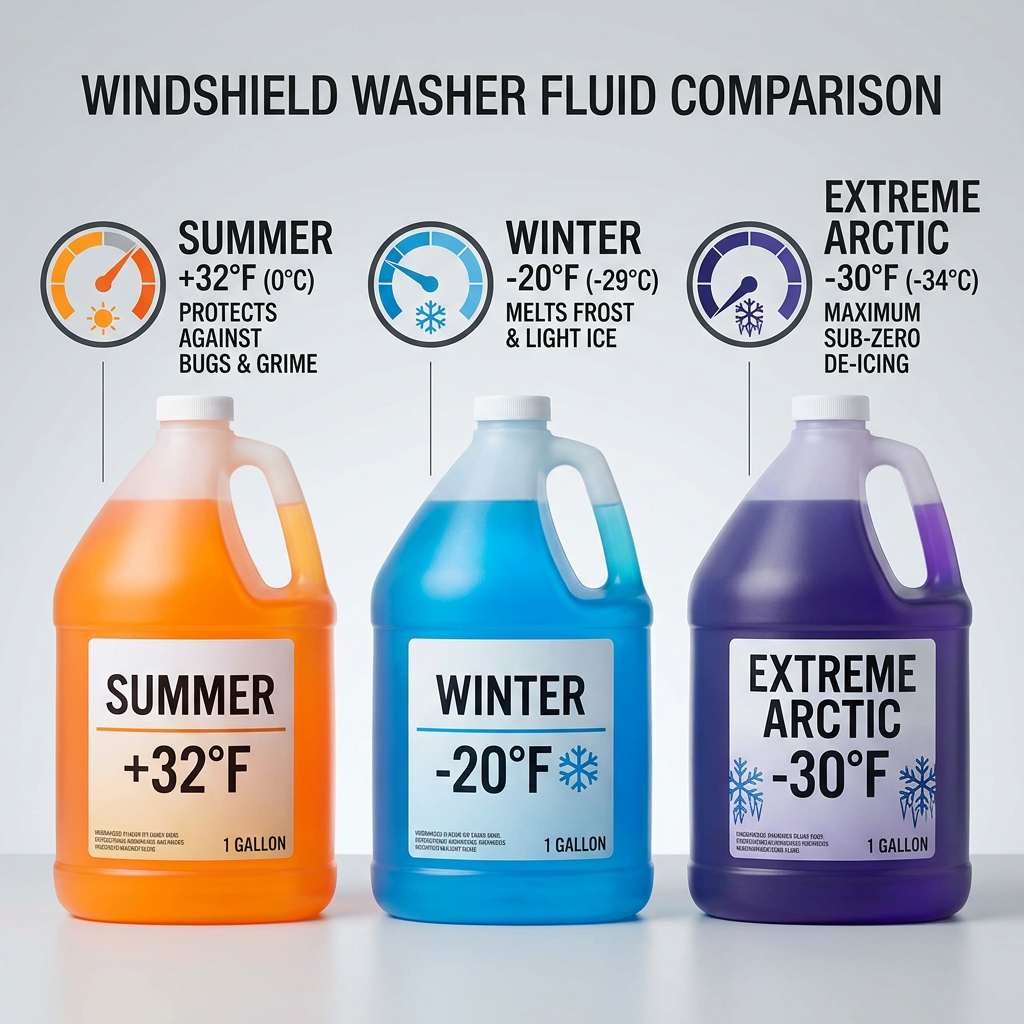
Commercial fluids range from +32°F summer formulas to -20°F standard winter fluids, up to -30°F extreme arctic de-icing blends. For Joliet and surrounding Will County drivers, a minimum rating of -20°F is recommended for basic winter driving, while -30°F fluid provides essential peace of mind during polar vortex cold snaps.
Wind Chill & Highway Speeds
At 65 MPH along I-55 or Route 59, airflow over your windshield rapidly evaporates alcohol components in low-grade fluids, causing rapid evaporative cooling. This causes 'flash freezing'—a thin layer of ice forming right across the glass when sprayed—unless your fluid has a strong -20°F or -30°F alcohol base.
Recommended Formulas
ACDelco Optikleen and high-performance commercial de-icing fluids are formulated specifically to protect internal Chevrolet washer pumps while maintaining streak-free clarity. Stocking up on genuine winter washer fluid before autumn turns to winter prevents dangerous blind spots on icy roads.
How to Safely Drain or Flush Summer Washer Fluid Before the First Joliet Freeze
Method 1: Operating the Spray Stalk (Low Fluid Volumes) If your washer fluid reservoir is already low (less than a quarter full), the easiest method is to run the windshield washer pump in short 5- to 10-second bursts until the reservoir is empty. Avoid holding the spray stalk continuously for minutes at a time, as continuous pump operation can overheat the small electric motor. Method 2: Using a Manual Fluid Siphon Pump When dealing with a full reservoir of summer fluid, purchase an inexpensive manual siphon pump. Insert the flexible inlet hose down into the washer reservoir neck until it touches the bottom, place the drain hose into a container, and pump until the reservoir is drained.
Method 3: Flushing lines & Refilling with Winter De-Icer Once empty, fill the reservoir with one gallon of undiluted -20°F or -30°F winter washer fluid. Press the washer stalk for 5 to 10 seconds to prime the lines, flushing out remaining summer fluid trapped inside the rubber tubing leading to your front and rear wiper nozzles. You can pick up factory-approved ACDelco winter fluids and maintenance supplies directly from our parts counter in Joliet.
How Do You Fix Frozen Washer Fluid Nozzles on a Chevrolet Vehicle?
Safe & Effective Thawing Methods
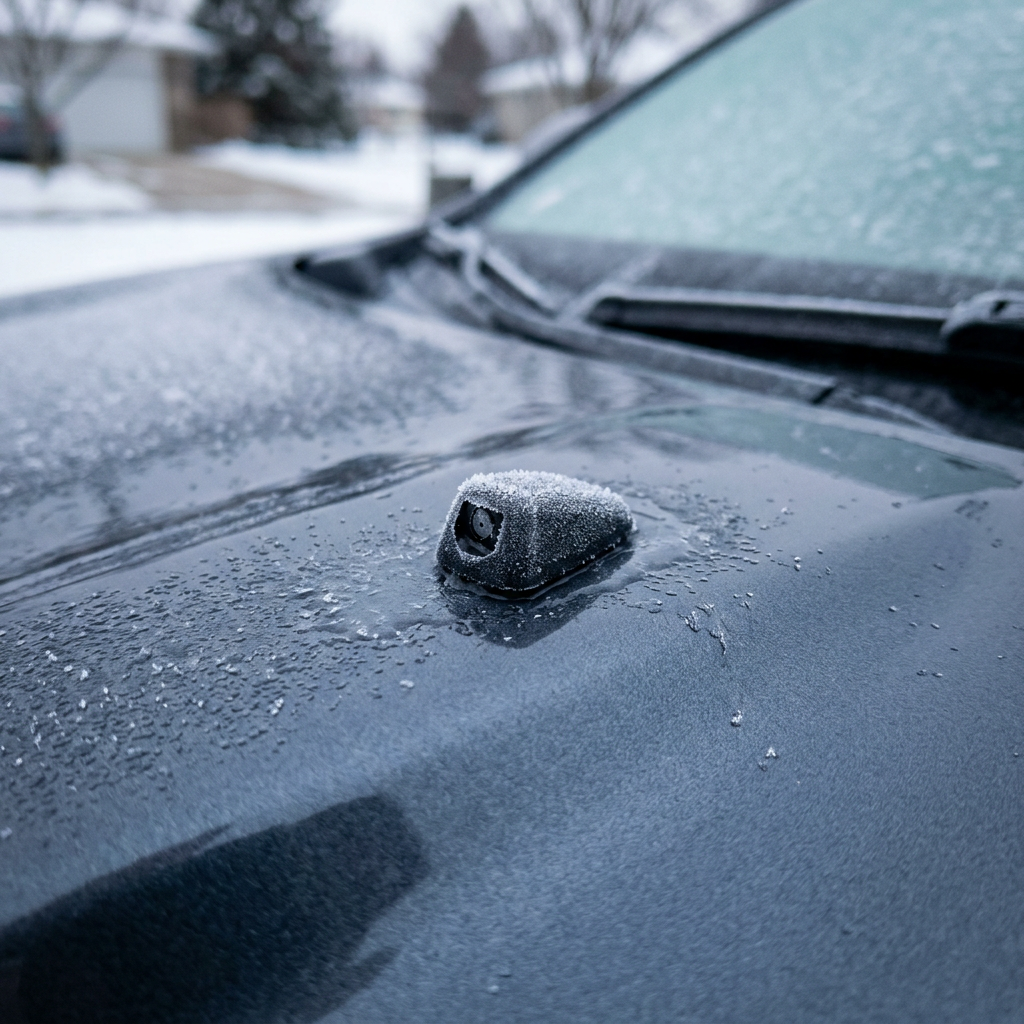
If cold weather catches you off guard and your washer spray nozzles freeze shut on your Chevrolet Equinox, Silverado, or Traverse, follow these safe procedures: • Park in a Heated Garage: Bringing your vehicle indoors into a warm environment for 1-2 hours is the safest way to thaw frozen lines and reservoirs. • Engine Bay Radiated Heat: Let your engine idle parked outdoors while operating climate controls on warm to allow trapped heat under the hood to thaw lines. • Apply Isopropyl Alcohol: Dabbing 91% rubbing alcohol directly onto frozen spray nozzles melt localized ice caps rapidly without damaging paint.
Dangerous Mistakes to Avoid
Avoid these common, damaging shortcuts: • NEVER Pour Hot or Boiling Water: Pouring boiling water over a cold windshield or iced hood nozzles causes thermal shock, which will shatter windshield glass instantly and crack plastic body trim. • Do Not Repeatedly Hold the Washer Stalk: Continuously activating a frozen system causes the electric pump motor to stall and burn out its fuse or motor windings. • Do Not Use Needle Pins to Clear Ice: Jamming metal pins into washer nozzles damages calibrated misting orifices, causing uneven spray patterns.
Preparing Your Chevrolet for First Freeze: Remote Start and Washer Fluid Troubleshooting
The arrival of the autumn's first hard frost in Will County serves as an early warning for vehicle systems. Cold temperatures impose harsh demands on two critical driver comfort and safety features simultaneously: clear windshield visibility and cabin climate pre-conditioning through factory remote start systems. When ambient temperatures drop below 32°F, chemical reactions inside 12V automotive batteries slow down significantly, reducing available cold cranking amps (CCA). At the exact same moment, frozen washer fluid lines restrict visibility while remote engine start features become critical for defrosting frozen glass.
Understanding how cold weather affects both your Chevrolet remote start system and washer fluid reservoir helps you prevent morning delays. A comprehensive early-winter prep strategy ensures that your engine starts reliably, your cabin warms up before your morning commute, and your washer spray system functions flawlessly when driving through salt spray along Route 30 or Jefferson Street in Joliet.
Why Is the Remote Start on a Chevrolet Not Working in Cold Weather?
12V Battery Under Load
Chevrolet remote start logic requires robust 12V battery voltage. Cold weather reduces battery capacity by up to 50%. If main battery voltage drops below thresholds during system pre-checks, the vehicle Body Control Module (BCM) inhibits remote start to conserve power for manual key starts.
CEL & Safety Inhibits
If your Check Engine Light (CEL) is illuminated—even for minor evaporative emissions faults—remote start is automatically disabled as a protective safety precaution. Similarly, open hood latch sensors, open doors, or a depressed hazard light switch will prevent remote start activation.
Fob Batteries & Run Limits
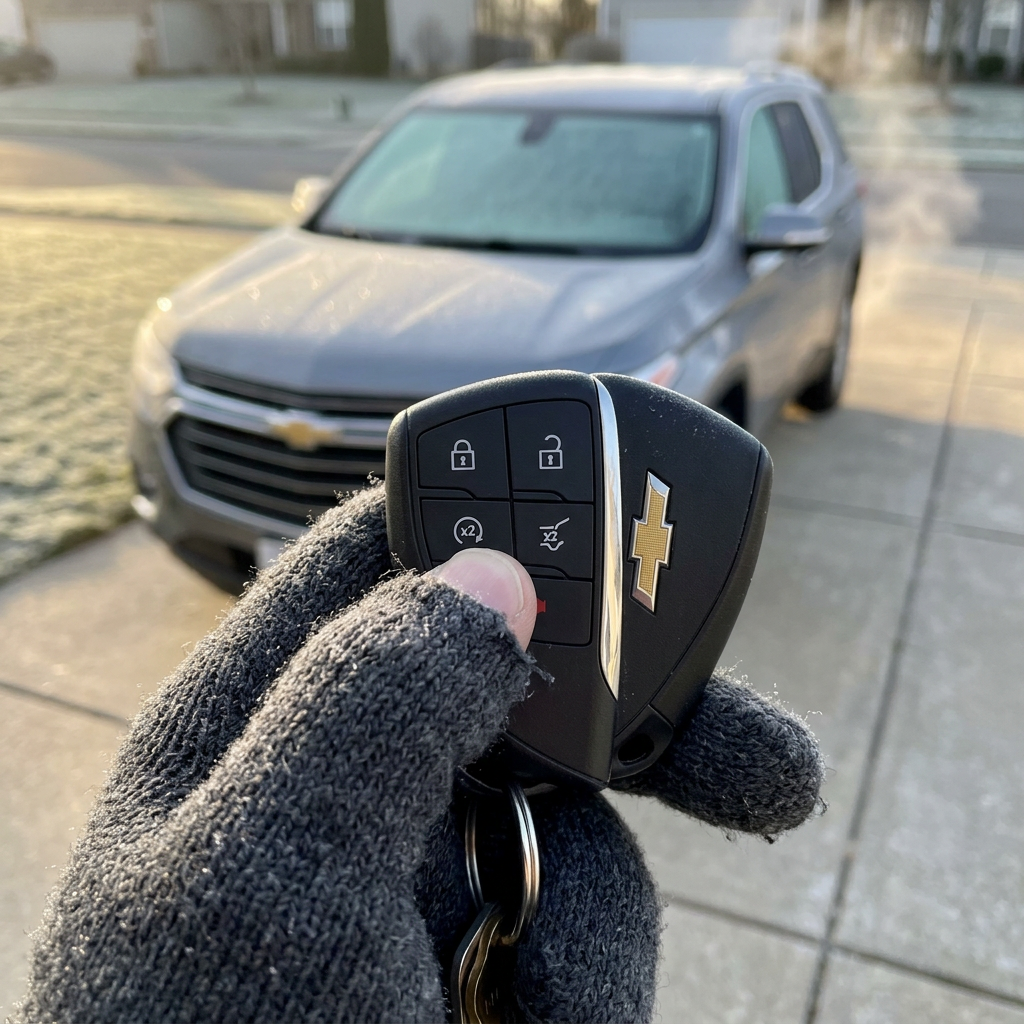
Cold temperatures degrade CR2032 key fob coin batteries. Weak fob signals fail to send full transmission sequences. Additionally, Chevrolet limits remote start to two consecutive 15-minute cycles before requiring a manual ignition key turn to reset the system counter.
How Do You Reset the Chevrolet Remote Start System?
Performing a Manual Ignition Counter Reset When remote start stops responding due to reaching its two-cycle limit, performing a reset is simple: 1. Enter the vehicle and close all doors and hood securely. 2. Insert the key (or press Push-Button Start while pressing the brake pedal) to start the engine. 3. Allow the engine to run for 10-15 seconds. 4. Turn off the vehicle completely, exit, and lock all doors. This simple cycle resets the BCM timer, allowing you to use key fob or app remote start once again.
Replacing Fob Batteries & Infotainment Settings Check If your remote start remains non-responsive: • Replace Fob Battery: Pry open key fob housing and install a fresh CR2032 lithium battery, ensuring contacts are clean. • Verify Infotainment Settings: On your Chevrolet touchscreen display, navigate to Settings > Vehicle > Comfort and Convenience > Remote Start. Ensure that 'Remote Start' is toggled to ON. • Diagnostic Code Scan: If a Check Engine Light is stored, certified Chevrolet technicians can scan and clear trouble codes at Hawk Chevrolet of Joliet.
How Does Key Fob Remote Start Compare to App-Based Remote Start on a Chevrolet?
Physical Key Fob Remote Start
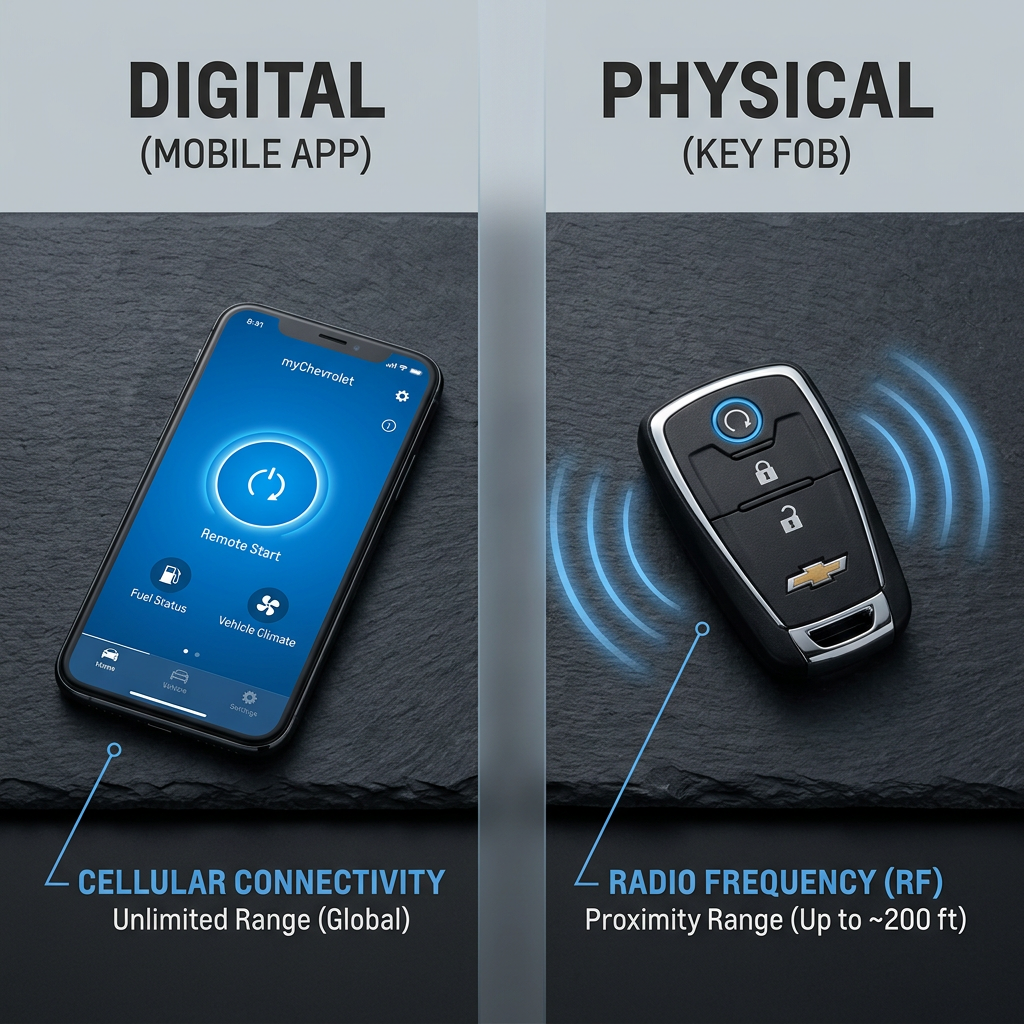
• Transmission Method: Direct Radio Frequency (RF) signals. • Operating Range: Typically effective within 200 to 300 feet of clear line-of-sight. • Speed & Dependability: Instantaneous command execution without network delays. • Cost Structure: Standard hardware included with vehicle; no ongoing subscription fee required. • Best Use Case: Quick starts from your home kitchen, driveway, or garage door.
myChevrolet Mobile App Remote Start
• Transmission Method: 4G LTE / OnStar Cellular Data Network. • Operating Range: Unlimited cellular range (start your vehicle from miles away). • Advanced Controls: Real-time tire pressure readings, fuel level monitoring, cabin temperature scheduling. • Subscription Requirement: Included with active OnStar Remote Access plan. • Best Use Case: Warming up your Chevrolet while inside your Joliet office or Metra train platform on cold commutes.
Does Key Fob Remote Start Work if Cellular Service Is Down?
Direct Radio Signals
Yes! Your physical factory key fob communicates directly with your Chevrolet vehicle's onboard Remote Keyless Entry (RKE) receiver via localized radio frequencies (315 MHz or 433 MHz). It bypasses cell towers entirely.
Network Outage Proof
Even during major cellular network blackouts, tower overloads during winter storms, or server downtime, pressing Lock and holding the Remote Start button on your key fob will reliably start your engine.
Rural Zone Reliability
When hunting, camping, or driving through rural dead zones across Will and Grundy Counties where smartphones lose signal, your key fob remote start remains 100% operational as long as you are within RF range.
Essential Chevrolet Winter Maintenance Checklist for Plainfield and Joliet Drivers
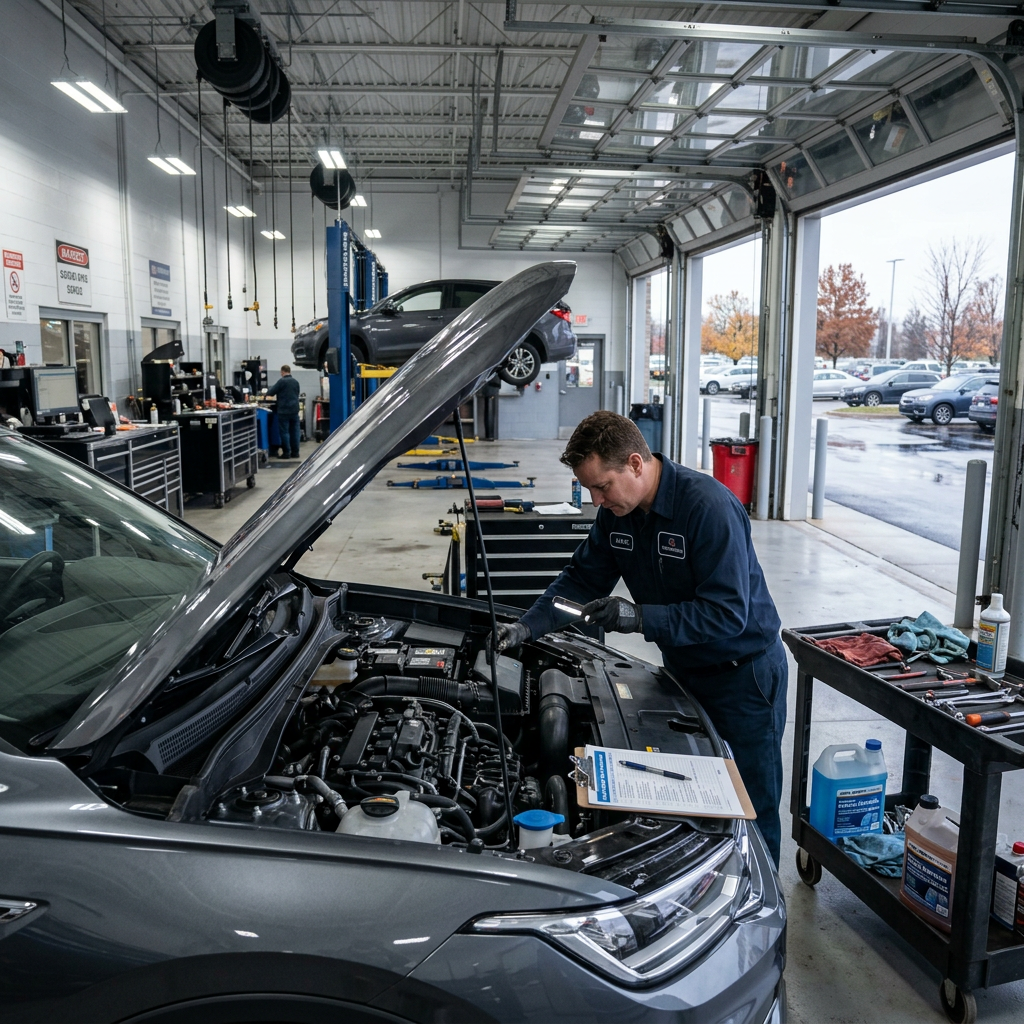
1. 12V Battery Load & Conductance Test Cold temperatures reduce battery chemical activity. Have a certified technician conduct a load test to verify Cold Cranking Amps (CCA) and ensure your vehicle starts reliably during polar snaps. 2. Tire Tread Depth & TPMS Cold Pressure Adjustments Tires lose approximately 1 PSI of pressure for every 10°F drop in ambient temperature. Check tire pressures regularly when tires are cold and ensure tread depth exceeds 4/32” for adequate ice traction. 3. Engine Coolant Anti-Freeze Hydrometer Test Verify your engine coolant is blended to a proper 50/50 water-to-glycol concentration, offering freeze protection down to -34°F to protect engine blocks from internal freezing.
4. Winter Beam Wiper Blade Installation Replace worn summer wiper blades with heavy-duty winter beam blades. Beam blades feature flexible rubber boots that resist ice accumulation on blade frames, maintaining clean sweeps across winter glass. 5. Brake System & Hydraulic Fluid Inspection Slushy river valley conditions along the Des Plaines River demand optimal stopping power. Inspect brake pads, rotors, and brake fluid moisture levels for reliable performance on slick pavement. Looking for pre-owned winter-ready vehicles? You can Browse Used Inventory equipped with heated seats and all-wheel drive.
Schedule Winter Inspection and Chevrolet Service at Hawk Chevrolet of Joliet
Don't let frozen washer fluid or non-responsive remote start systems disrupt your daily routine this winter. The factory-trained GM service experts at Hawk Chevrolet of Joliet are here to prepare your vehicle for northern Illinois winters. From complete washer reservoir flushes and high-grade de-icing fluid fills to battery load diagnostics and remote start resets, our team uses genuine ACDelco parts tailored specifically for your Chevrolet model.