How Much Does a Set of Four Winter Tires Cost for a Chevy SUV?
When northern Illinois temperatures plunge below freezing and black ice coats the surface of Interstate 80 or Route 59, having the right rubber meeting the road is the single most effective safety upgrade you can make for your vehicle. If you drive a Chevrolet SUV, purchasing a complete set of dedicated winter tires is a smart investment in winter control, stopping capability, and peace of mind for your family.
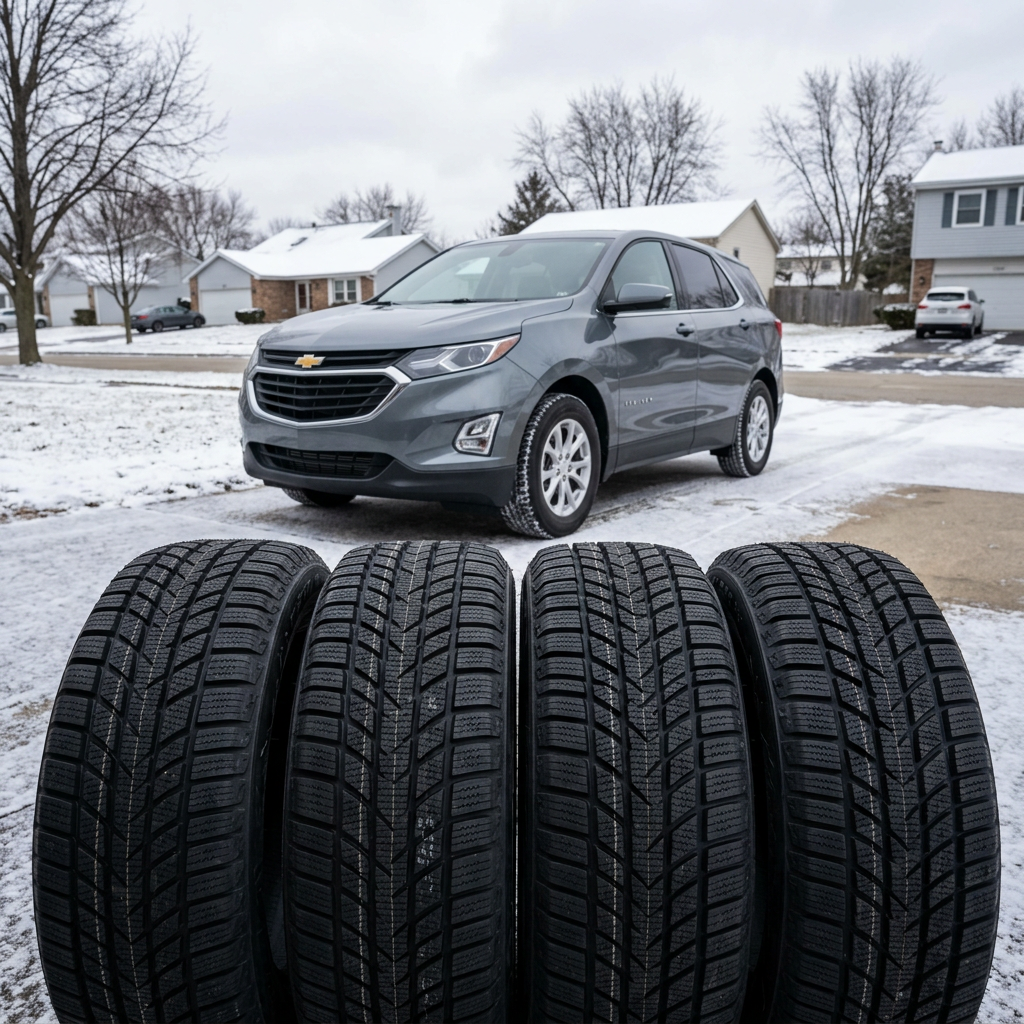
Direct Answer & Key Takeaway: A set of four winter tires for a Chevy SUV typically ranges from $600 to $1,400 for the tires alone. The exact price varies based on your specific SUV model, trim level, and wheel diameter. Compact crossovers with 17-inch wheels sit at the lower end of that scale, while full-size three-row SUVs fitted with 20-inch or 22-inch alloy wheels require larger, specialized tires that command higher prices. Beyond the raw tire cost, professional mounting, high-speed wheel balancing, valve stems, and Tire Pressure Monitoring System (TPMS) recalibration generally add $100 to $200 in total service labor. This brings your complete out-of-the-door installation cost to between $700 and $1,600.
Navigating winter weather in Will County demands more than just relying on factory all-season treads or factory all-wheel-drive systems. Below, the tire experts at Hawk Chevrolet of Joliet break down complete pricing tiers across every model in the Chevy crossover and SUV lineup, explore peripheral costs like dedicated winter wheel packages, examine transmission and drivetrain options like the 2027 Equinox LT, and share expert longevity tips to stretch your tire investment across multiple Midwest winters.
Chevy SUV Winter Tire Cost Breakdown by Model (Trax to Tahoe)
The Chevrolet SUV lineup spans multiple vehicle segments, meaning tire dimensions differ dramatically from small urban crossovers to heavy-duty body-on-frame haulers. Because larger rubber compounds, deeper tread blocks, and reinforced sidewalls require extra raw materials, tire pricing scales up directly with your vehicle's factory rim dimensions.
Subcompact & Compact Crossovers (Trax, Trailblazer, Equinox): Small SUV models usually run on 17-inch to 18-inch wheels. A full set of top-tier snow tires in these sizes generally costs between $600 and $850. Trusted winter tire choices include the Bridgestone Blizzak WS90 and Continental VikingContact 7, both engineered with flexible hydrophilic rubber that clings to glare ice.
Midsize Crossovers (Blazer, Traverse): Sportier midsize crossovers utilizing 18-inch to 20-inch alloy rims fall in the $750 to $1,150 range. Premium options like the Michelin X-Ice Snow provide exceptional slush evacuation and low rolling resistance for highway commuting along I-55.
Full-Size & Three-Row SUVs (Tahoe, Suburban): Chevrolet's full-size SUVs often feature 20-inch to 22-inch wheels requiring XL load-rated tires capable of supporting heavier curb weights and towing loads. A set of four winter tires for these massive haulers ranges from $1,000 to $1,500.
|
Chevy SUV Model
|
Typical Wheel Size
|
Est. Tire Set Cost
|
Recommended Brands
|
|
Trax / Trailblazer
|
17" - 18"
|
$600 - $800
|
Bridgestone Blizzak, Continental
|
|
Equinox / Equinox EV
|
17" - 19"
|
$650 - $950
|
Michelin X-Ice, Firestone Winterforce
|
|
Blazer / Blazer EV
|
18" - 20"
|
$800 - $1,100
|
Bridgestone Blizzak, Nokian
|
|
Traverse
|
18" - 20"
|
$850 - $1,200
|
Continental VikingContact, Michelin
|
|
Tahoe / Suburban
|
20" - 22"
|
$1,000 - $1,500
|
Bridgestone Blizzak W965, Goodyear
|
Winter Tire Expenses Beyond the Rubber: Rims, Mounting, and TPMS Sensors
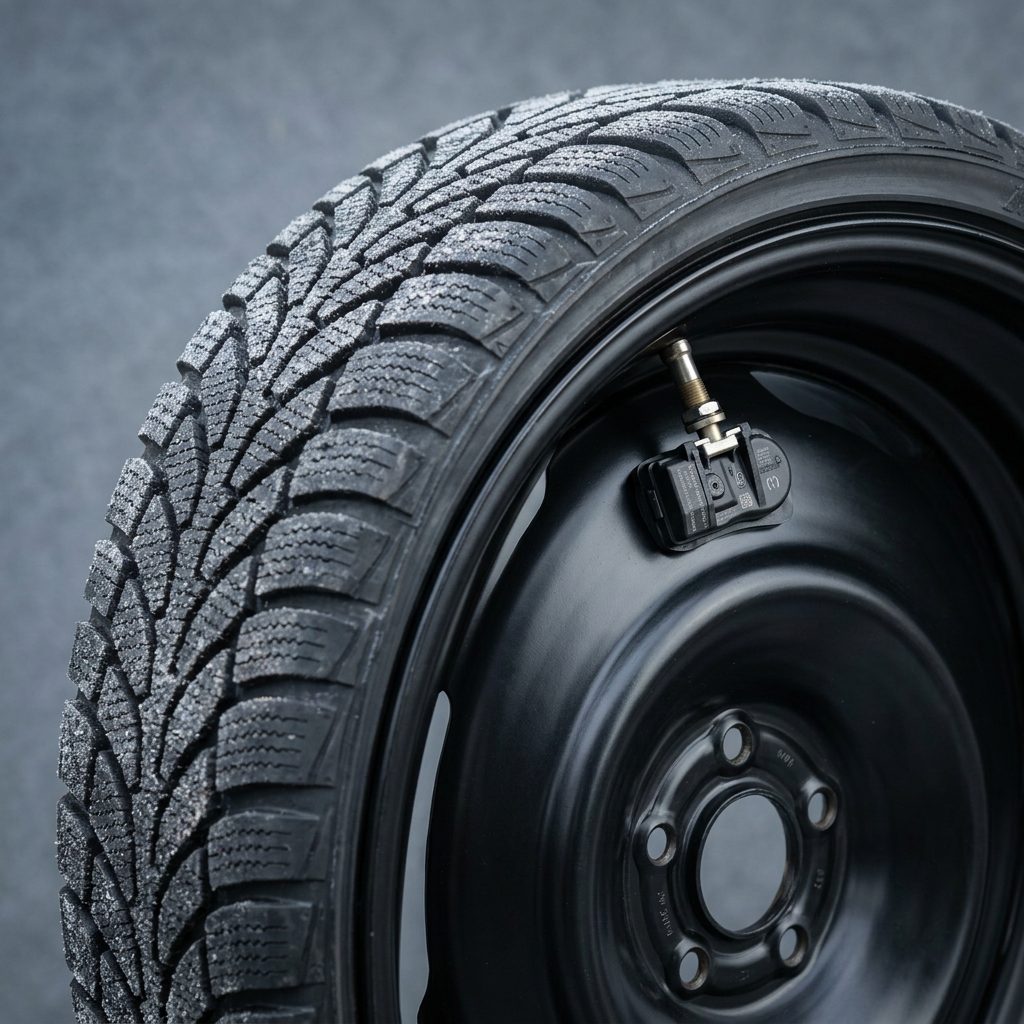
When calculating the real-world cost of building a winter setup for your Chevrolet, it is crucial to budget for the supporting components. Dismounting all-season tires from your factory alloy wheels twice a year can wear out bead seating and subject custom rims to harsh road salt. Many Will County drivers choose dedicated winter wheel packages instead.
Dedicated Steel or Alloy Rims
Purchasing a secondary set of 17-inch or 18-inch heavy-duty steel rims or durable winter alloys costs between $400 and $800 per set. Downsizing rim diameter while keeping overall tire rolling radius identical gives your SUV taller tire sidewalls, offering superior cushion against deep potholes hidden under snow cover on Jefferson Street.
TPMS Sensors & Calibration
Modern Chevy SUVs feature active Tire Pressure Monitoring Systems. Installing four original equipment TPMS sensors on your dedicated winter wheel set adds roughly $150 to $250. This ensures your driver information dashboard accurately tracks cold inflation numbers when bitter arctic air sweeps across Will County.
Mounting, Balancing & Storage
Seasonal changeovers run $100 to $200 for dismounting and dynamic balancing. However, if your winter tires are pre-mounted on dedicated rims, seasonal swap fees are significantly lower. Local off-season storage services or simple garage tire totes protect off-duty rubber from ozone degradation and sunlight exposure.
Is All-Wheel Drive or Front-Wheel Drive Better for Driving in Illinois Snow and Ice?
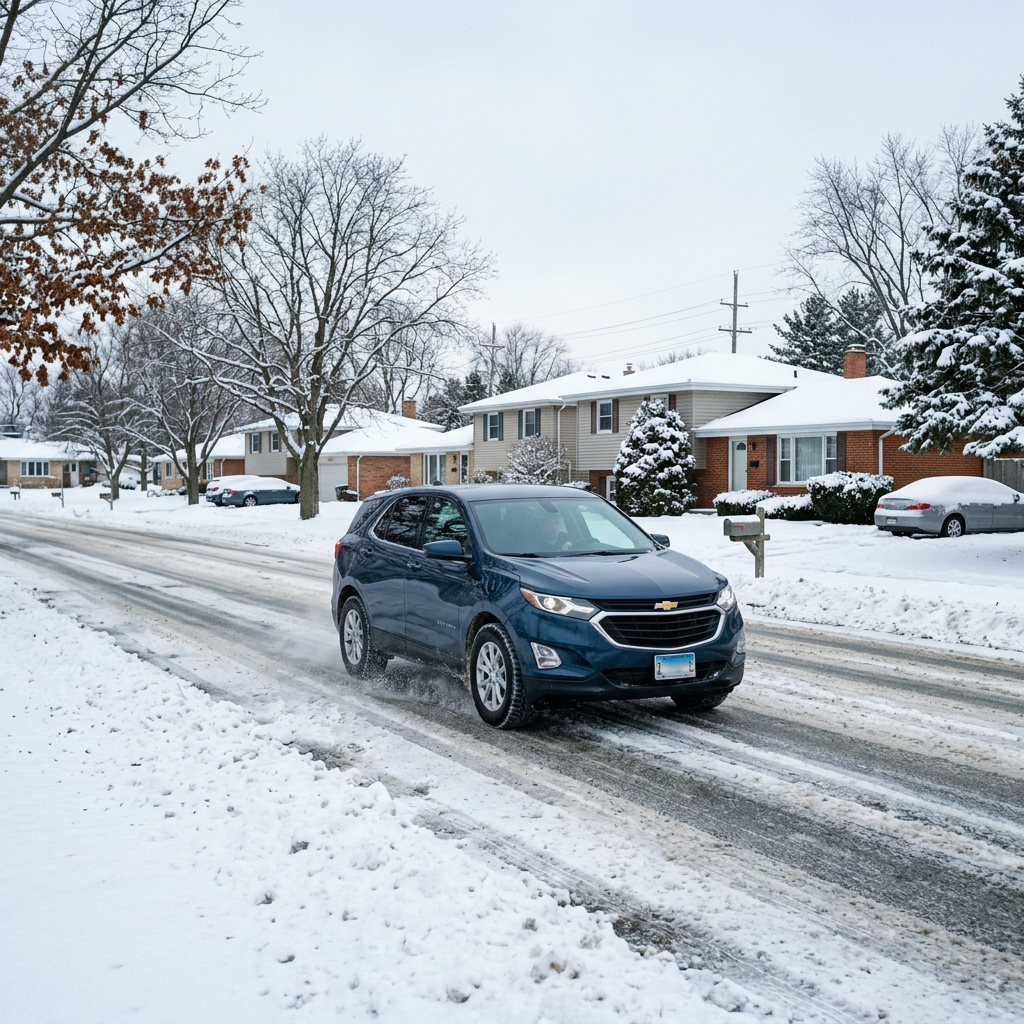
A common misconception among Midwest drivers is that having an All-Wheel Drive (AWD) Chevy SUV eliminates the need for specialized winter tires. While AWD distributes engine torque across all four wheels to accelerate from a stop without spinning out on slushy ramps along I-80 or I-55, it does not assist your vehicle in stopping or cornering.
Every vehicle on the road—whether Front-Wheel Drive (FWD), Rear-Wheel Drive (RWD), or All-Wheel Drive (AWD)—relies on four-wheel braking. When you step on the brake pedal on an icy bridge over the Des Plaines River, AWD offers zero braking advantage. A Front-Wheel Drive Chevy Equinox fitted with dedicated winter tires will consistently stop shorter, turn sharper, and resist sideways skids better than an All-Wheel Drive SUV equipped with hardened all-season tires.
Acceleration vs. Control: AWD excels at overcome inertia—getting moving from a snowbound driveway or deep snowbank. Winter tires excel at safety—steering around sudden obstacles and stopping safely in emergency conditions.
For maximum winter security on northern Illinois roads, pairing Chevrolet's advanced AWD system with dedicated snow tires gives you total vehicle control: effortless launch capability combined with unmatched stopping traction.
All-Wheel Drive vs. Front-Wheel Drive: Choosing the Right Chevy SUV for Illinois Winters
Selecting the right drivetrain configuration for daily travel between Joliet, Plainfield, and Naperville depends on your commuting distance, route vulnerability, and budget. Commuters driving along major state routes like Highway 59 that are plowed quickly after snowfall often find that a Front-Wheel Drive Chevy Trax or Equinox equipped with winter tires handles typical sub-zero weather with total confidence.
Front-Wheel Drive vehicles carry the engine's mass directly over the driving wheels, providing baseline traction in light snow. Adding winter tires elevates FWD capability dramatically, allowing drivers to navigate slushy ruts, unplowed side streets, and sudden lake-effect squalls safely. Furthermore, FWD models feature lower purchase prices and lower long-term maintenance needs.
Conversely, if your daily schedule demands traveling regardless of severe weather advisories—such as medical personnel, emergency responders, or early morning highway commuters—opting for an All-Wheel Drive Chevy SUV provides an extra layer of operational capability. Pairing AWD with winter tires represents the gold standard of Midwest winter mobility, delivering maximum peace of mind.
Is All-Wheel Drive Standard or Optional on the 2027 Chevy Equinox?
As one of America's best-selling compact crossovers, the Chevrolet Equinox enters 2027 offering versatile drivetrain configurations tailored to regional driver demands. For drivers inquiring about winter spec choices: All-Wheel Drive is optional on core trims like the 2027 Chevy Equinox LT, allowing buyers to select the ideal mechanical setup for their budget.
A 2027 Chevy Equinox LT starts at $31,295 with Front-Wheel Drive(FWD) and $33,295 with All-Wheel Drive(AWD). Opting for AWD adds exactly $2,000 to the starting MSRP. Notably, both the 2027 FWD and AWD versions utilize a refined eight-speed automatic transmission, ensuring smooth torque delivery and optimized engine braking performance on slippery winter downgrades.
2027 Equinox Tire Sizing Considerations: The Equinox LT comes equipped with standard 17-inch alloy wheels, which are highly economical when purchasing winter tires (costing around $650–$800 per set).
Upgrading to higher trims like the ACTIV or RS introduces 19-inch or available 20-inch wheel fitments. If you select these sporty trims, budget between $850 and $1,150 for matching low-profile winter tires, or downsize to a 17-inch winter wheel package for improved pothole defense. Explore current options in our Browse New Inventory catalog.
Can Switchable AWD in Chevy SUVs Save Fuel When Turned Off?
How Disconnection Works
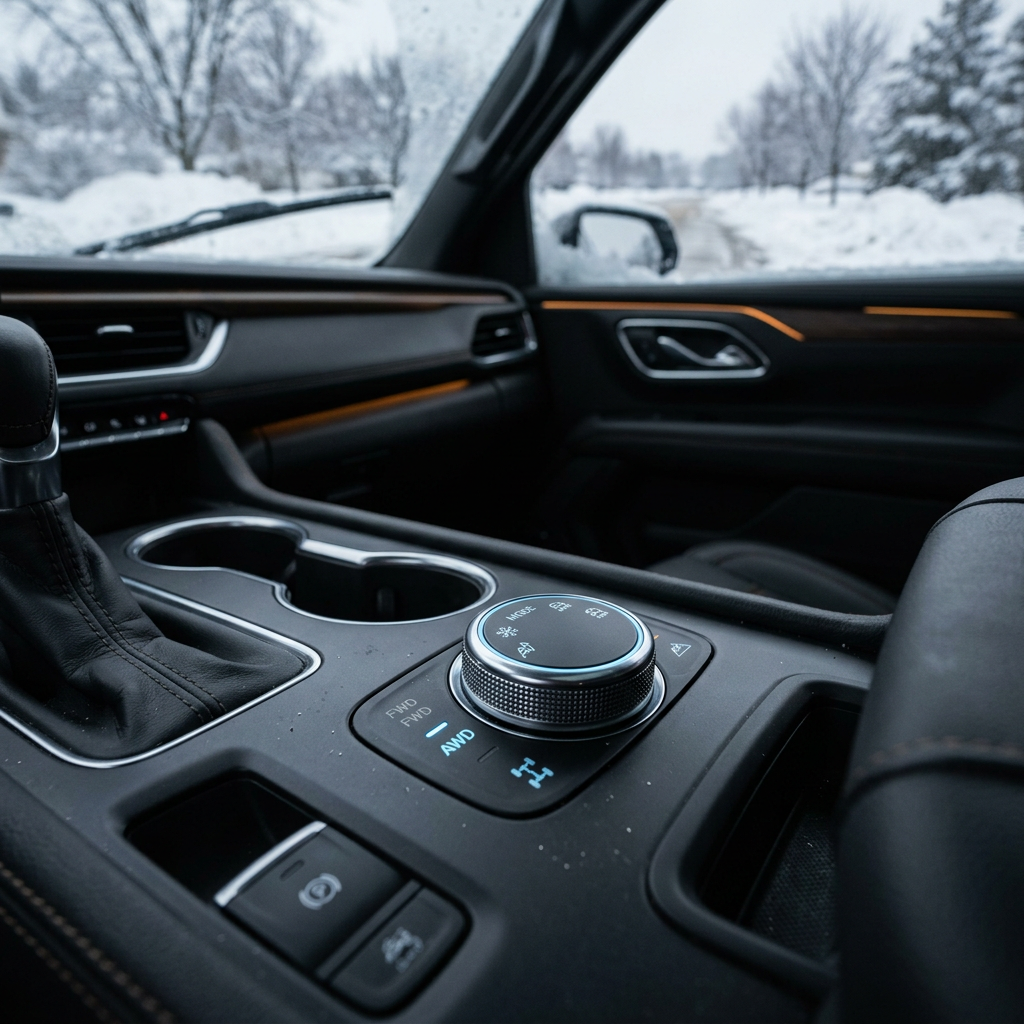
Chevrolet's selectable AWD system features a Driver Mode Selector dial. When disengaged, physical clutches mechanically disconnect the rear propshaft and differential, preventing internal gears from spinning unnecessarily when full four-wheel traction is not required.
Reducing Parasitic Drag
Traditional continuous AWD systems incur mechanical friction losses (parasitic drag) as the engine turns all four drivetrain corners full-time. Disengaging the rear axle during dry winter days or early spring highway cruising directly improves fuel economy.
Will County Commute Savings
For daily commutes along the DuPage River corridor and Highway 59, toggling to 2WD mode when roads are clear yields tangible fuel savings. When sudden snowstorms hit, rotating the dial reactivates AWD power seamlessly within milliseconds.
Can You Put Tire Chains on a Chevy FWD SUV in Illinois?
Many drivers wonder if adding inexpensive tire chains to a Front-Wheel Drive Chevy SUV provides a quick alternative to buying dedicated winter tires. While Illinois vehicle code allows snow chains when highways are declared ice-bound or hazardous, technical clearance limitations on modern Chevy crossovers make traditional thick steel tire chains unsafe.
Compact and midsize Chevy SUVs like the Trax, Trailblazer, and Equinox feature tightly engineered wheel-well clearances near front strut towers, brake hydraulic lines, and electronic steering sensors. Fitting standard heavy-gauge tire chains can lead to severe mechanical contact, destroying ABS sensor wires or damaging inner bodywork during suspension movement.
SAE Class S Alternatives vs. Winter Tires: If emergency traction devices are required by policy, Chevrolet owner manuals mandate using ultra-low-profile SAE Class S wire cables or textile snow socks designed specifically for restricted clearances.
However, snow socks and cables are strictly temporary emergency tools rated for low speeds (under 25 mph) on deep snow. Dedicated winter tires remain the superior, hassle-free solution for local roads, highway speeds on I-80, and seamless daily driving throughout northern Illinois.
All-Season Tires vs. Dedicated Winter Tires: When to Make the Switch in Joliet
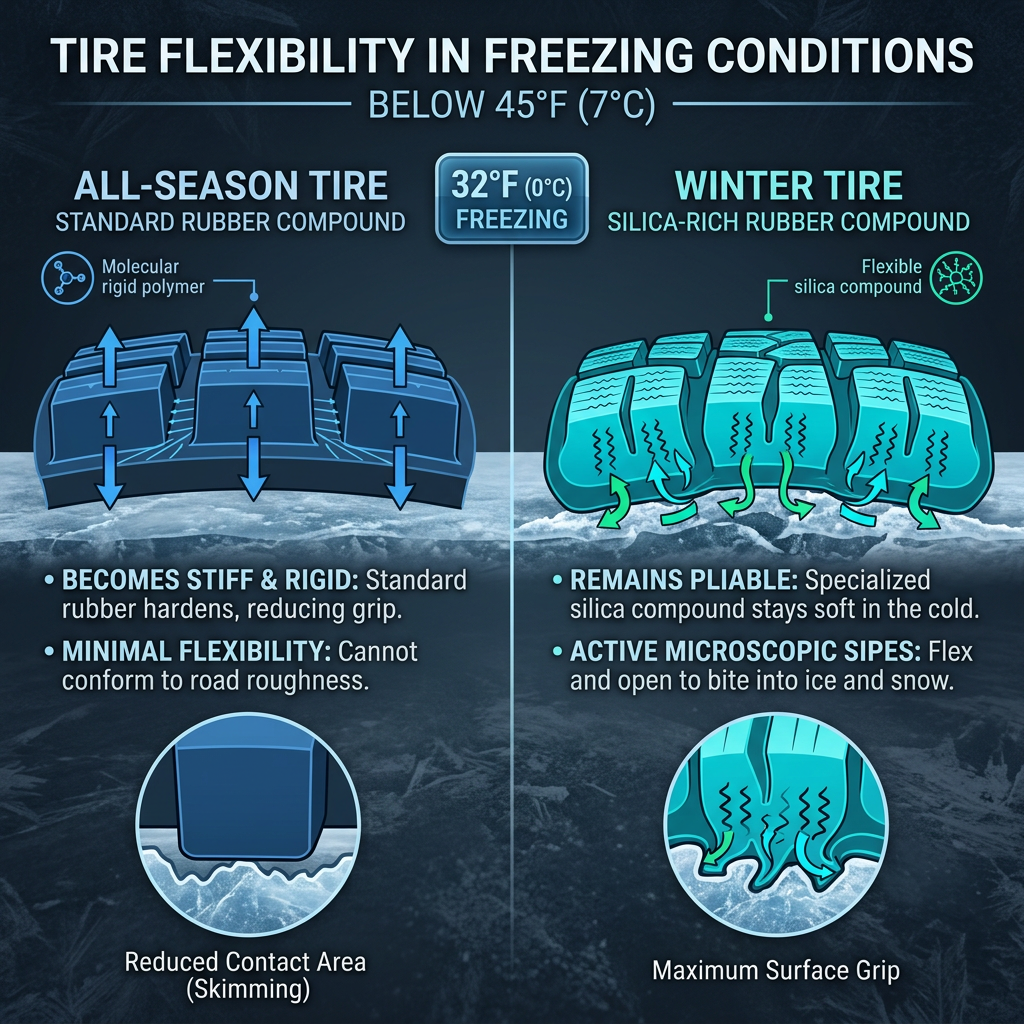
Understanding when to swap from all-season rubber to winter tires comes down to a critical thermal milestone: 45°F (7°C). All-season tire tread compounds rely on rubber formulations engineered for warm weather and mild autumn days. Once ambient air temperatures drop below 45°F, all-season rubber undergoes a process called glass transition—hardening into a stiff plastic-like state that struggles to grip pavement.
Dedicated winter tires are molded from soft, hydrophilic silica compounds that remain pliable even in deep sub-zero freezes. Additionally, winter tires feature thousands of microscopic tread slits called sipes. These sipes open up as the tire rotates, biting directly into hard-packed snow and channeling liquid water off icy road surfaces.
In emergency braking tests conducted on icy roads at 30 mph, a Chevy SUV equipped with dedicated winter tires stops up to 30 feet shorter than the exact same vehicle riding on all-season tires—a distance equivalent to two full car lengths. In Joliet and Plainfield, scheduling your seasonal tire swap in late October or early November ensures your Chevy is ready before unpredictable Midwest freeze cycles arrive.
How to Extend the Life of Your Chevy Winter Tires Across Multiple Seasons
Monitor Cold PSI Weekly
Tire pressure drops by approximately 1 PSI for every 10°F drop in outside temperature. Check your cold tire inflation weekly using your driver dashboard or a manual gauge. Underinflated snow tires wear prematurely along the outer shoulders.
Rotate Every 5,000 Miles
Front tires handle steering, braking, and primary power delivery, causing tread blocks to wear faster than rear tires. Rotating your winter tires every 5,000 miles ensures even wear patterns, extending usable tread life to four or five winter seasons.
Proper Alignment & Storage
Misaligned wheels tear through soft winter rubber compounds within months. Schedule a wheel alignment at Hawk Chevrolet of Joliet during changeover. Store off-season tires in a cool, dark, dry area away from direct heat sources.
Chevy SUV Winter Readiness Checklist for Joliet, Plainfield, and Naperville Drivers
Preparing your SUV for an Illinois winter involves more than just swapping tires. Perform these essential checks before the first major snow event across Will and DuPage counties:
1. Test Battery Cold-Cranking Amps (CCA): Freezing temperatures reduce battery output capacity by up to 50%. Have your 12V battery conductance tested to avoid unexpected non-start situations on icy mornings.
2. Inspect Wiper Blades & Washer Fluid: Replace streaking wiper blades with heavy-duty beam-style winter blades. Top off washer reservoirs with sub-zero rated (-20°F) de-icing fluid.
3. Check Engine Coolant / Antifreeze Mix: Ensure your engine cooling system has a 50/50 anti-freeze concentration to prevent fluid freezing and radiator block cracking during severe arctic cold snaps.
4. Inspect Tire Tread Depth: Winter tires lose effective snow traction when tread wears below 6/32 of an inch. Utilize the coin test or have our Certified Service technicians evaluate your tread remaining.
5. Stock a Vehicle Emergency Kit: Store heavy blankets, a snow brush/ice scraper, jumper cables, flashlight, portable phone charger, and traction sand in your rear cargo hold.
Get Your Chevy SUV Winter-Ready at Hawk Chevrolet of Joliet
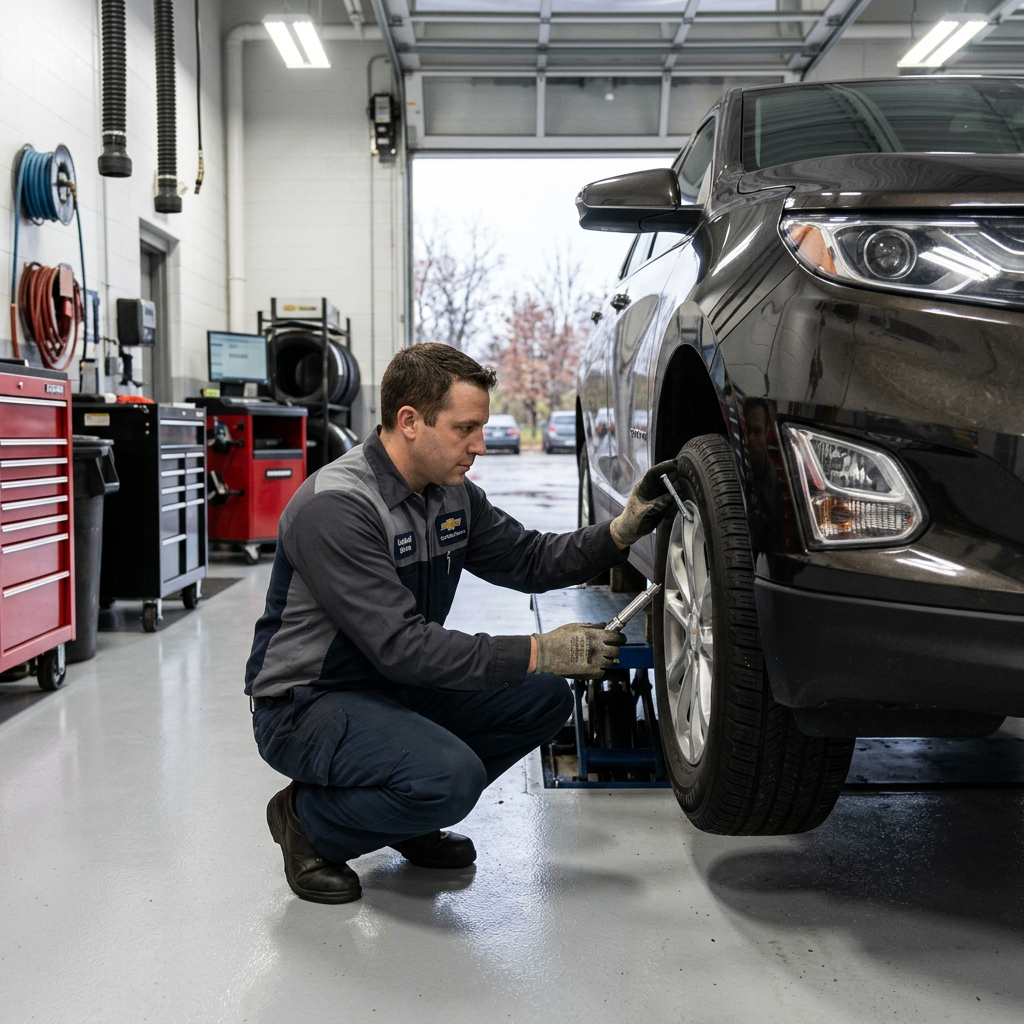
Whether you are looking to purchase a complete set of mounted winter wheels for your Blazer, order factory TPMS sensors, or test drive the latest 2027 Chevy Equinox AWD models, Hawk Chevrolet of Joliet is your trusted Will County automotive resource.
Our tire price match guarantee, expert factory-trained GM technicians, and flexible service financing ensure your vehicle gets top-tier winter care within your budget. Visit our state-of-the-art service facility at 2001 W Jefferson St, Joliet, IL 60435 or Call (815) 472-8001 to speak with a tire specialist today.