What Is the Difference Between CCA and CA on a Battery Label? The Direct Answer
When shopping for a replacement vehicle battery or inspect the label under your hood, you will inevitably see two prominent metrics: Cold Cranking Amps (CCA) and Cranking Amps (CA). While both ratings measure a battery's electric current delivery capability to spin your starter motor, the critical distinction lies in the test temperature at which those measurements are recorded. Cold Cranking Amps (CCA) measures the maximum electric current (in amperes) that a fresh, fully charged 12-volt battery can deliver for 30 seconds at 0°F (-18°C) while maintaining a minimum voltage threshold of 7.2 volts. In contrast, Cranking Amps (CA)—sometimes called Marine Cranking Amps (MCA)—measures that exact same energy discharge test, but performed at 32°F (0°C). Because lead-acid chemical reactions slow down drastically as temperatures drop, a battery delivers far higher amperage at 32°F than it can at 0°F. As a direct result, a battery's CA rating is routinely 20% to 25% higher than its CCA rating on the exact same battery label. For drivers operating in Will County, Joliet, and across Northern Illinois, understanding this temperature distinction is critical: sub-zero winter temperatures mean CCA is the single most vital metric for ensuring reliable morning vehicle starts.
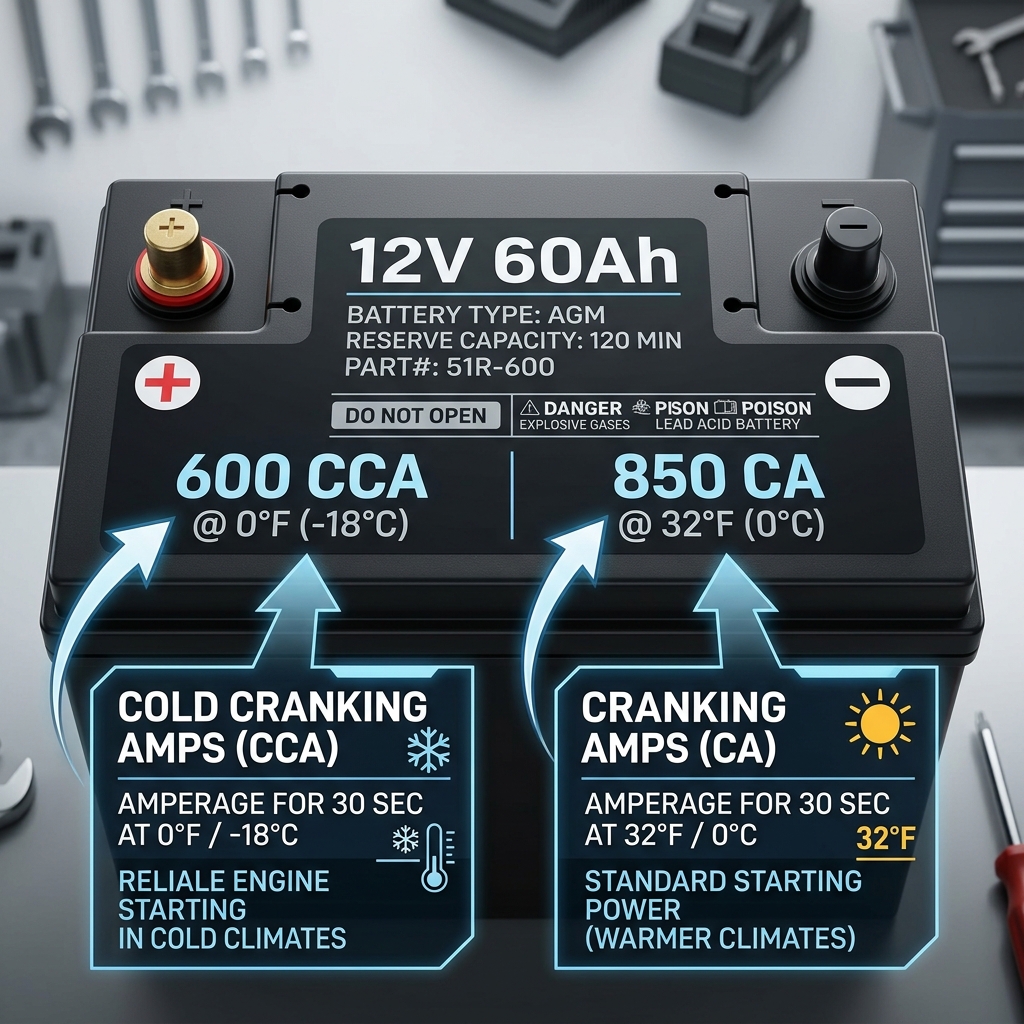
Never mistake a high CA rating for genuine sub-zero winter starting power. A budget battery showing 800 CA might only deliver 620 CCA when the temperature drops during a severe Illinois cold snap. At Hawk Chevrolet of Joliet, our service advisors always ensure your replacement battery meets or exceeds factory CCA specifications for your specific engine and regional winter demands.
What Does Cold Cranking Amps (CCA) Mean for Northern Illinois Drivers?
To appreciate why Cold Cranking Amps is the gold standard metric for Northern Illinois motorists, it helps to look at the physics inside your engine bay during a frozen morning in Joliet, Plainfield, or Naperville. When ambient temperatures plunge to 0°F or lower: • Engine Oil Thickens: Engine oil transforms into a heavy, viscous sludge. Turning over crankshafts, pistons, and camshafts requires up to two to three times more mechanical rotational force than in warm weather. • Chemical Kinetics Slow Down: Inside your battery, sulfuric acid electrolyte liquid thickens and diffuses slowly into lead plates. The electrochemical reaction generating free electrons slows down significantly. • Voltage Drop Increases: Starter motors draw massive amperage under mechanical resistance, placing an immense load on internal battery cell connections. Under Society of Automotive Engineers (SAE) standards, a battery rated at 700 CCA must maintain at least 7.2 volts continuously across its terminals for 30 full seconds under a 700-amp continuous load at 0°F. If terminal voltage collapses below 7.2 volts, your starter solenoid will click or turn over too sluggishly to fire up the engine. If you notice slow cranking on chilly mornings, it's time to Schedule Your Service Today for a full diagnostic battery load test.
Key Takeaway for Illinois Winters: A higher CCA rating provides vital safety reserve capacity when sub-zero arctic blasts sweep across the Midwest. A battery with an insufficient CCA rating may operate adequately during mild autumn conditions but fail completely when arctic air locks up your engine block.
What Is Cranking Amps (CA) and How Does It Compare to CCA?
Cranking Amps (CA) measures starting current under the exact same 30-second discharge duration and 7.2-volt threshold as CCA, but conducted at the freezing point of water— 32°F (0°C)—rather than sub-zero conditions. In marine applications, this rating is often labeled as Marine Cranking Amps (MCA). Because boats are rarely launched into frozen water bodies, marine manufacturers standardized on 32°F as their ambient baseline metric. However, automotive battery manufacturers also display CA on standard vehicle batteries alongside CCA. Why the Amperage Jump Occurs: At 32°F, chemical activity within battery cells is roughly 30% to 40% more active than at 0°F. Electrolyte liquid flows more easily, internal electrical resistance drops, and lead dioxide plates release electrons far more readily. Consequently, a battery that yields 600 CCA at 0°F will typically test out at 750 CA or higher at 32°F.
|
Rating Metric
|
Test Temp (°F / °C)
|
Min Voltage
|
Typical Rating
|
|
Cold Cranking Amps (CCA)
|
0°F / -18°C
|
7.2 V
|
600 CCA
|
|
Cranking Amps (CA)
|
32°F / 0°C
|
7.2 V
|
750 CA
|
|
Marine Cranking Amps (MCA)
|
32°F / 0°C
|
7.2 V
|
750 MCA
|
Consumer Caution: Beware of low-cost aftermarket batteries that display large 'CA' numbers on their front box label while burying the lower 'CCA' rating in small print on top. Marketing tactics sometimes attempt to make a weak 500 CCA battery appear powerful by advertising '625 Cranking Amps'.
Is CCA or CA More Important When Selecting a Vehicle Battery?
Compact & Midsize Cars
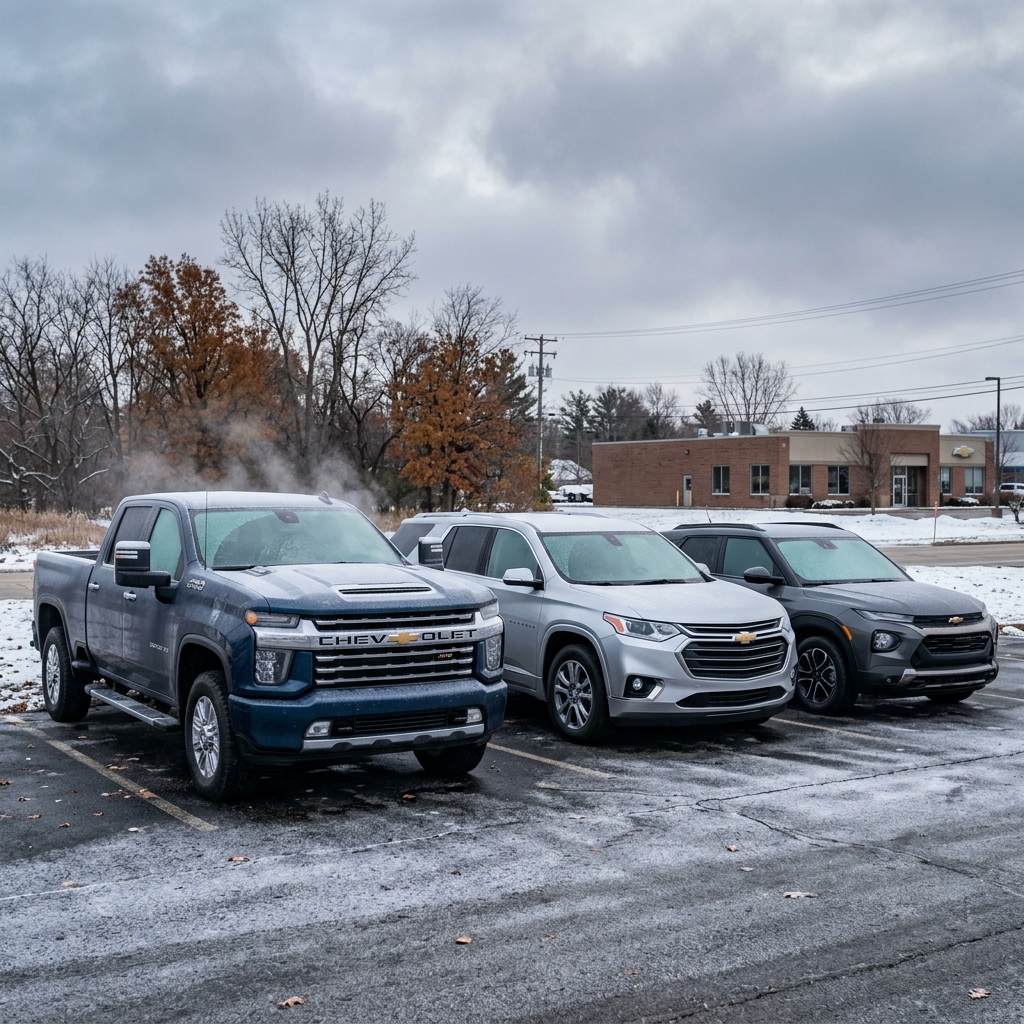
Small 4-cylinder engines require moderate starting power (typically 450 to 600 CCA). However, modern electronics, security systems, and keyless entry still demand dependable voltage baseline stability. Prioritizing correct CCA guarantees immediate starts even when parked outside overnight at Joliet Metra commuter stations.
SUVs & Crossovers
Family SUVs like the Chevrolet Traverse or Tahoe feature larger V6 or V8 engines and multi-zone climate control, power liftgates, and heated seating. Factory recommendations usually range between 600 and 750 CCA. In freezing weather, high CCA prevents voltage dips that trip dashboard error lights.
Diesel & Heavy-Duty Trucks
Duramax diesel trucks present extreme starting demands. Diesel engines operate on high compression ratios (up to 17:1 or higher) and rely on glow plugs or intake air heaters prior to cranking. Most full-size diesels utilize dual 750+ CCA batteries connected in parallel to deliver over 1,500 total CCA.
What Is Reserve Capacity (RC) on a Car Battery Label and Why Does It Matter?
While CCA and CA measure immediate cranking punch, Reserve Capacity (RC) measures endurance. RC is expressed in total minutes that a fully charged battery at 80°F (27°C) can continuously discharge a 25-amp load before terminal voltage drops below 10.5 volts. Why 25 Amps and 10.5 Volts? A 25-amp drain represents the electrical load required to run essential vehicle equipment (headlights, windshield wipers, ignition system, and engine management computer) if your alternator fails on the highway. An RC rating of 120 means your vehicle can run on battery power alone for approximately two hours under standard conditions before electrical systems shut down. Modern Power Demands Beyond Alternator Failure: In contemporary vehicles, Reserve Capacity has taken on a brand-new role: powering high-draw electrical accessories when idling or during engine start-stop cycles.
Modern Vehicle Electrical Loads Supported by High RC: • Infotainment screens, navigation systems, and 4G LTE Wi-Fi hotspots • Heated steering wheels, heated/ventilated seating, and rear defrosters • Radar-based active safety sensors, lane keep assist, and camera modules • Keyless proximity receivers and security monitoring (parasitic draw while parked) • Automatic Stop/Start engine restarting cycles in city traffic When choosing a replacement battery, matching factory Reserve Capacity is just as vital as matching Cold Cranking Amps. A battery with strong CCA but weak RC may struggle to maintain voltage during long idling periods in traffic on I-55 or I-80.
How Do You Determine the Correct CCA Rating Requirement for Your Vehicle?
Step 1: Check Manual & Label
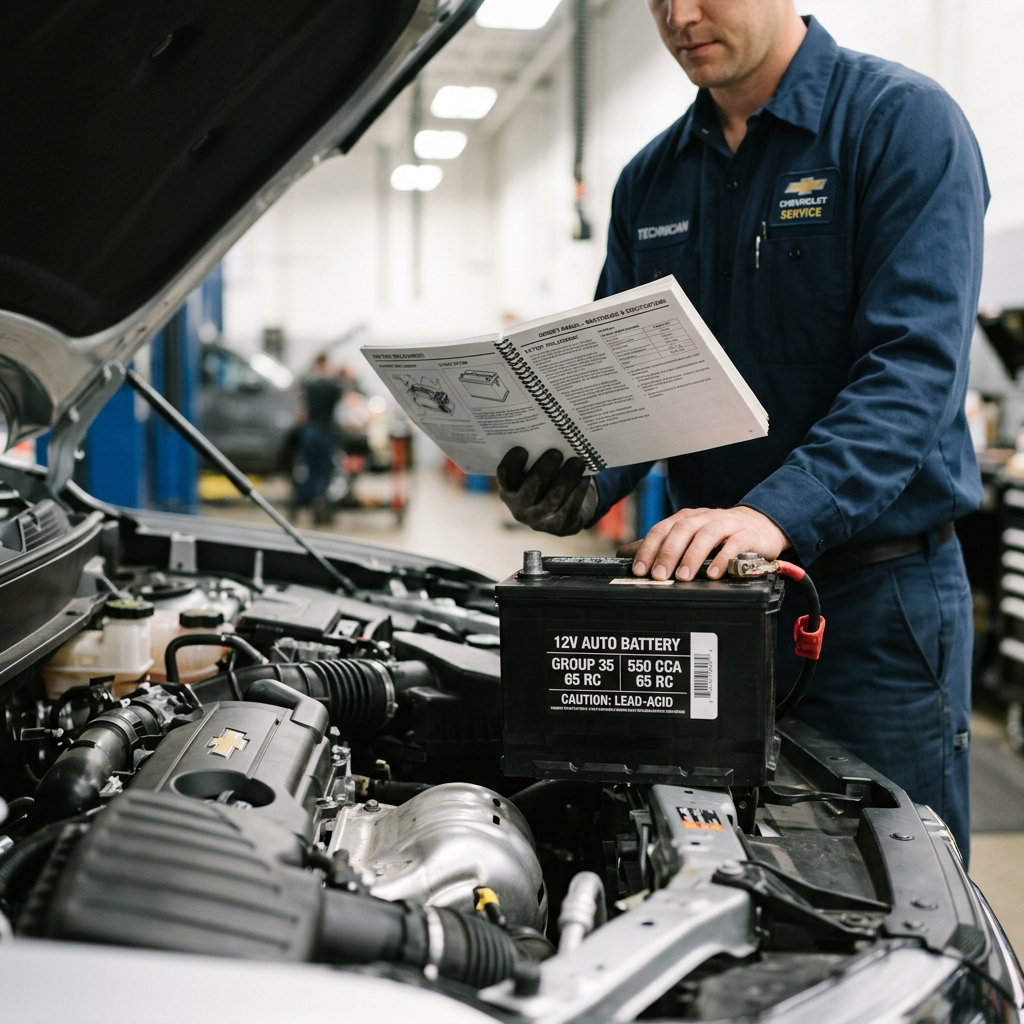
Locate the specifications section in your vehicle owner manual or check the OEM sticker on top of your existing installed battery. Manufacturers clearly state the minimum recommended CCA rating alongside the designated Battery Council International (BCI) group size.
Step 2: Note BCI Group Size
BCI group sizes (e.g., Group 24, 35, 48/H6, 94R/H7) standardize physical length, width, height, terminal post orientation, and hold-down clamp configurations. Choosing the wrong physical size can lead to loose installations or terminal short circuits.
Step 3: Factor Illinois Climate
In cold northern climates like Joliet, automobile manufacturers recommend selecting a battery at the upper end of the CCA spectrum allowed within your physical BCI group size to ensure an extra safety buffer during sub-zero cold spells.
Is Buying a Higher CCA Battery Worth the Extra Cost?
Drivers often wonder: 'If my car requires 600 CCA, should I pay $30 more for an 800 CCA premium battery?'When Upgrading Makes Sound Financial Sense:• Severe Midwest Winters: If your vehicle is parked outdoors overnight during Will County winter storms, an extra 100 to 200 CCA provides crucial starting headroom when temperatures drop to -10°F or lower. • Daily Highway Commuters: Commuters driving long stretches of I-55, I-80, or Route 59 rely heavily on instant cold starts. Preventing a single missed morning commute or tow truck call pays for the price difference immediately. • Older Vehicles: As engines age, starter motors wear down, electrical ground straps oxidize, and internal friction increases. Extra CCA helps overcome mechanical starter resistance in aging powertrains. To explore premium ACDelco replacement options designed specifically for your vehicle model, you can Order Genuine Chevrolet Parts directly through Hawk Chevrolet of Joliet.
The Technical Trade-Off: Plate Thickness vs Surface Area To pack higher CCA into the same physical BCI casing size, manufacturers must squeeze in more lead plates. To fit more plates, each individual lead plate must be manufactured thinner. While thinner plates create more surface area for rapid high-amperage chemical discharges (boosting CCA), very thin lead plates can be slightly more susceptible to hot summer thermal corrosion or vibration damage if subjected to rough off-road conditions. The Ideal Balance: Upgrading 10% to 25% above factory baseline recommendations delivers maximum starting confidence without compromising internal structural plate thickness.
At What CCA Measurement Should a Battery Be Replaced Before Winter Hits?
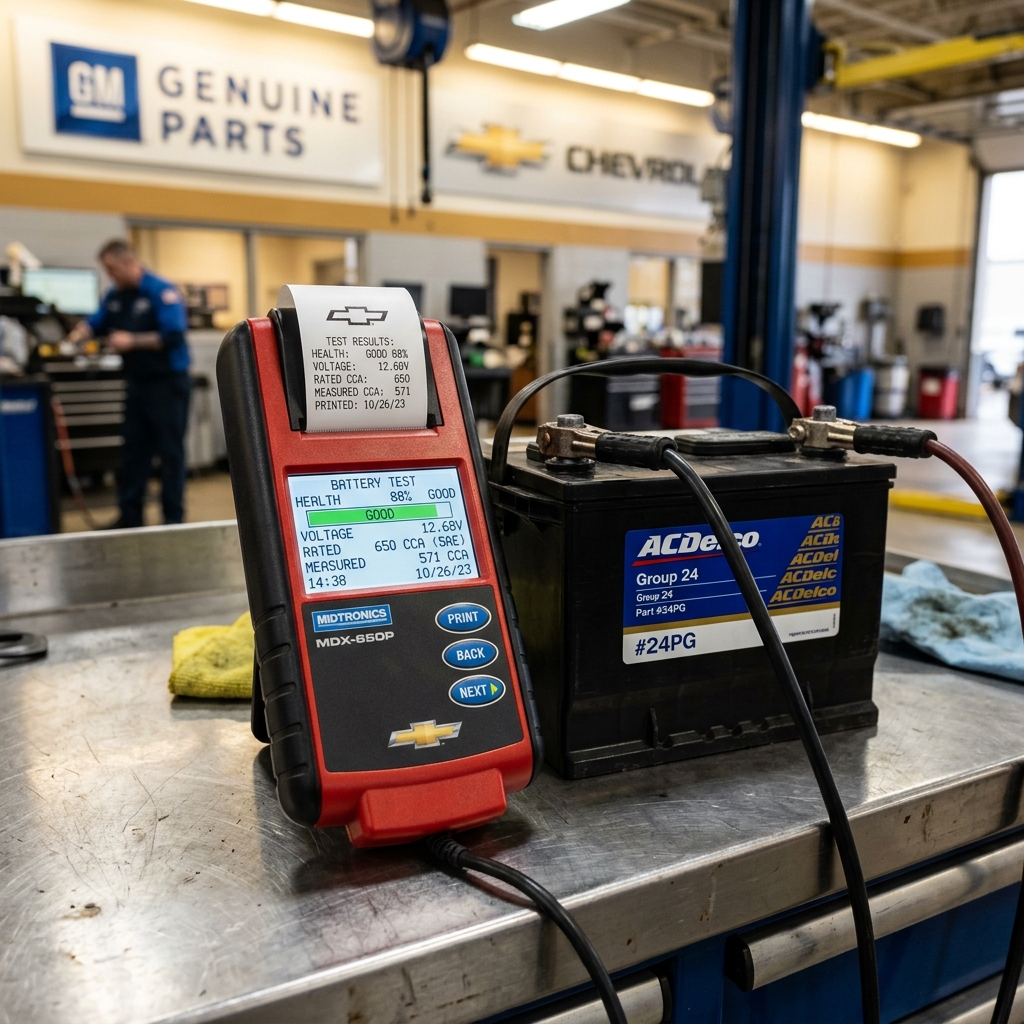
Batteries deteriorate gradually over time through lead plate sulfation, active material shedding, and electrolyte depletion. As a battery ages, its maximum available CCA capacity permanently declines. Industry Diagnostic Standards: Automotive technicians measure remaining CCA against the factory original rating published on the battery label: • 100% to 85% Rated CCA: Healthy / Good Condition. • 84% to 71% Rated CCA: Marginal / Marginal Health. May start fine in summer, but vulnerable to sudden freezing weather failure. • 70% or Below Rated CCA: Replace Immediately. The battery has lost structural chemical integrity and is statistically likely to fail during the next cold wave. For example, if a battery rated for 700 CCA tests at 480 CCA during an early autumn inspection, it retains only 68% of original capacity and should be replaced prior to freezing winter temperatures.
Warning Signs of Impending CCA Failure: • Engine cranks slowly or makes a prolonged 'r-r-r' sound before starting • Headlights dim significantly when idling or when turning on cabin heat • Clock, radio presets, or trip odometer reset automatically after starting • Power windows roll up noticeably slower on chilly mornings
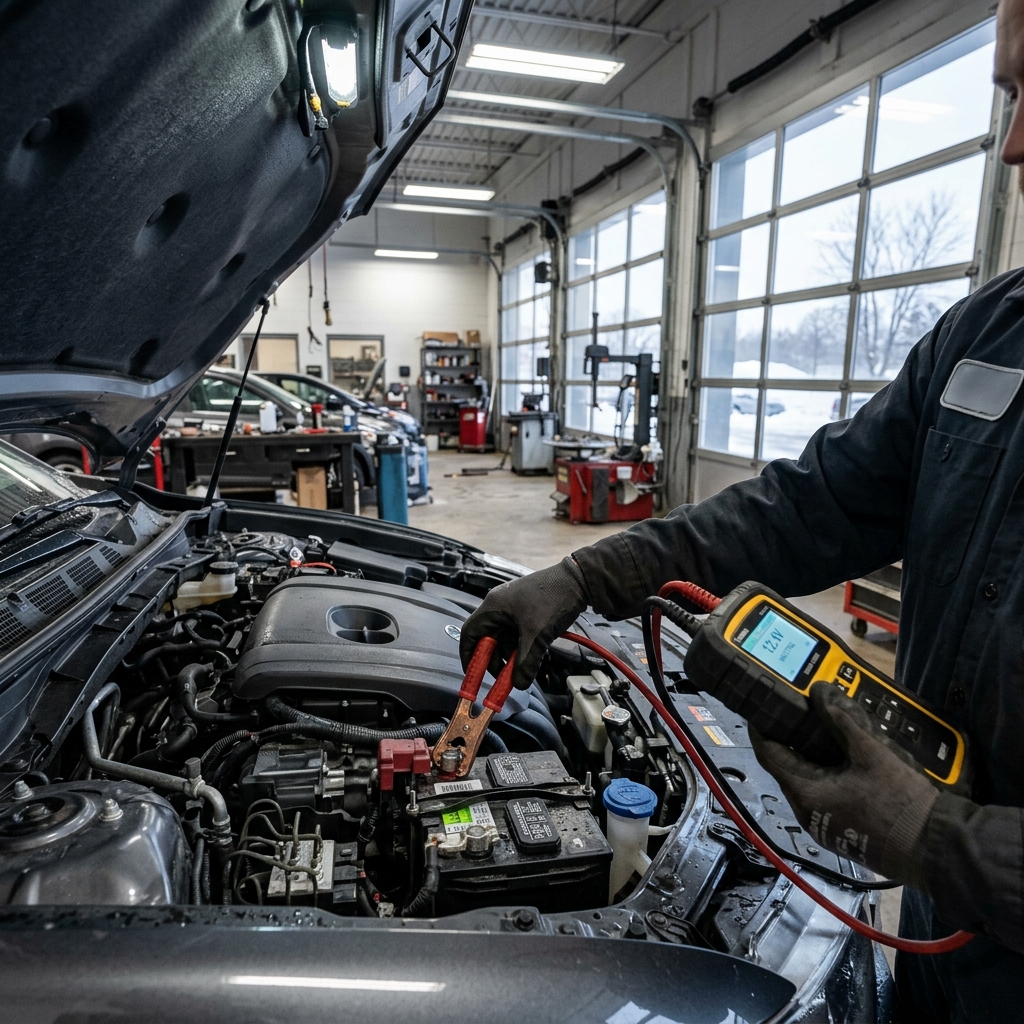
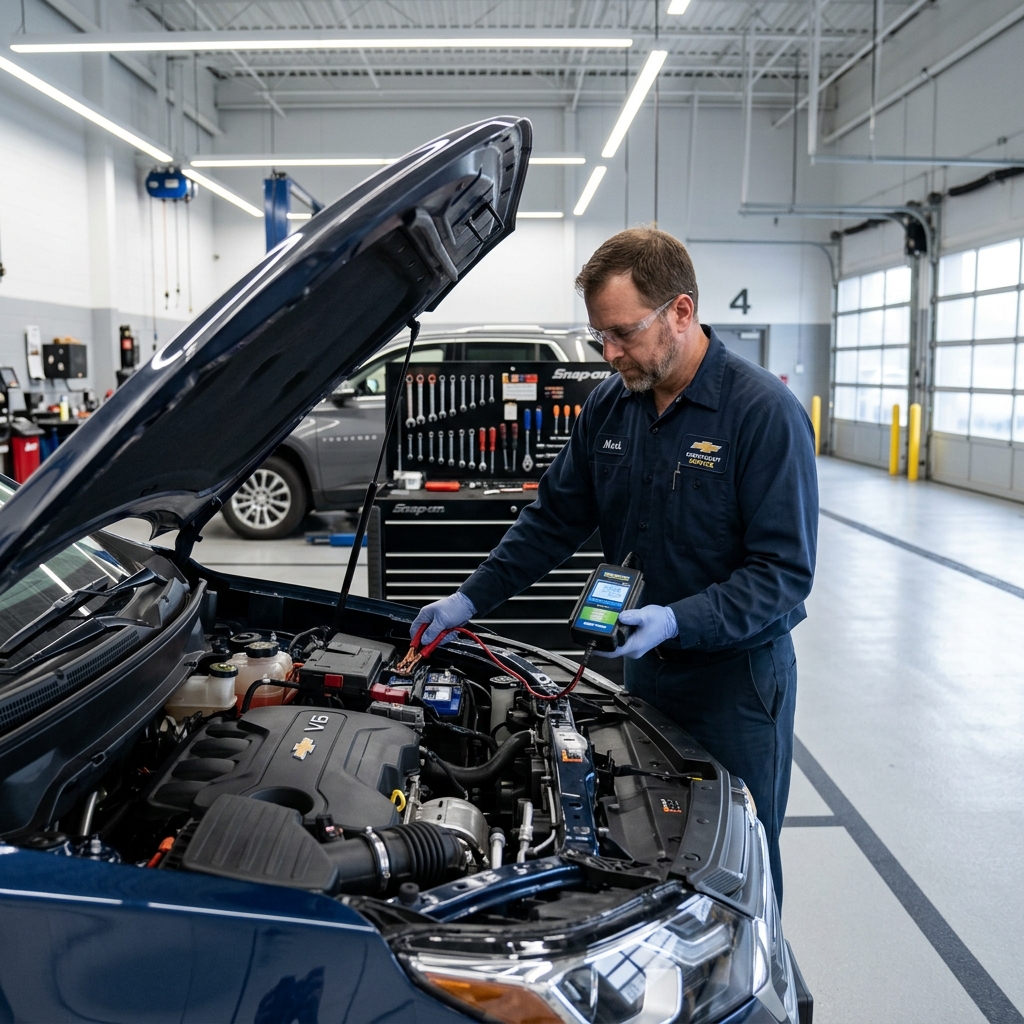
How Professional Digital Battery Testers Measure CCA and State of Health
Basic Voltmeter (SOC)
A standard digital multimeter checks State of Charge (SOC) via open-circuit static voltage (12.6V = 100%, 12.2V = 50%). However, open-circuit voltage alone cannot measure starting amperage output under heavy load.
Conductance Testing
Professional conductance analyzers send a low-frequency AC signal through internal battery plates to calculate micro-impedance (resistance). This non-destructive test instantly determines exact remaining CCA without draining cell charge.
Carbon Pile Load Test
Dynamic carbon pile testers apply a physical electrical load equal to 50% of rated CCA for 15 seconds while monitoring voltage stability. Dealership technicians combine both conductance and load testing for complete diagnostic accuracy.
How Extreme Temperatures in Joliet Accelerate Battery Degradation
A common automotive misconception is that cold weather destroys car batteries. In reality, summer heat does the damage, but winter cold reveals it. The Summer Baking Effect: During hot Midwest summer afternoons, engine bay temperatures frequently exceed 140°F to 160°F. Excessive heat accelerates internal chemical reactions, evaporating water from electrolyte liquid, corroding positive lead grids, and causing internal lead plate shedding. Even maintenance-free sealed batteries suffer internal grid degradation during intense heatwaves. The Winter Freeze Revelation: When autumn transitions into winter, the internal grid damage caused during summer heat reduces the battery's active surface area. When sub-zero temperatures arrive, the crippled battery can no longer deliver required Cold Cranking Amps, resulting in unexpected failure. If you have questions about your battery's current health, Call us at (815) 472-8001 to speak directly with our service desk team.
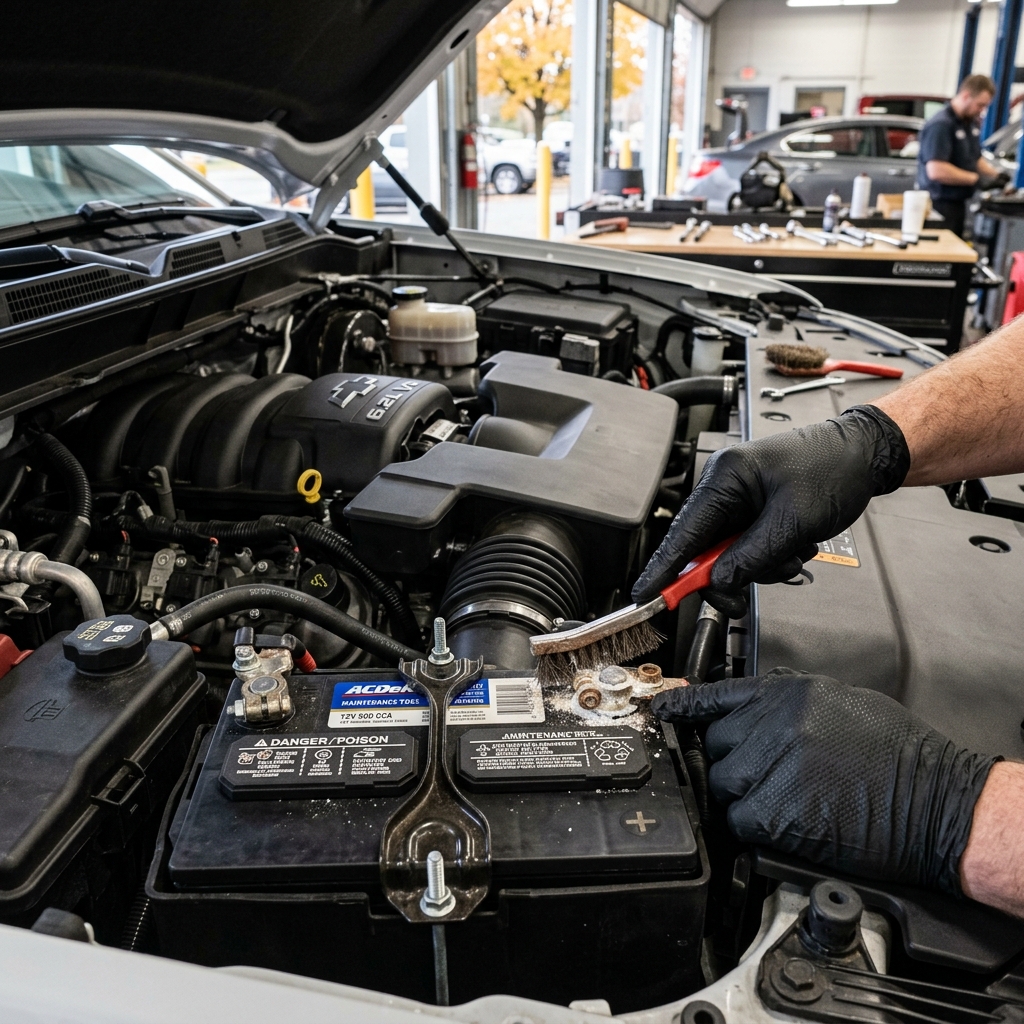
Essential Preventive Maintenance Tips: 1. Keep battery terminal posts clean and free of white acid corrosion powder. 2. Ensure hold-down clamps are securely tightened to eliminate destructive road vibration. 3. Turn off headlights and climate controls prior to turning off the ignition key.
Choosing the Right ACDelco AGM or Flooded Battery for Your Chevrolet
When replacing a battery at Hawk Chevrolet of Joliet, drivers can choose between two primary lead-acid internal design technologies: Standard Flooded Lead-Acid and Absorbent Glass Mat (AGM). Matching the correct internal construction technology to your vehicle's engineering specifications ensures peak electrical performance and warranty coverage.
|
Feature / Capability
|
ACDelco Gold Flooded
|
ACDelco Gold AGM
|
|
Internal Electrolyte
|
Liquid Sulfuric Acid Solution
|
Absorbed in Micro-Fiberglass Mats
|
|
Vibration Resistance
|
Standard OEM Level
|
Up to 3x Higher Resistance
|
|
Deep Cycle Recharging
|
Standard Recovery
|
3x Longer Deep-Cycle Life
|
|
Auto Start-Stop Compatible
|
No (Conventional Powertrains)
|
Yes (Required for Start-Stop)
|
|
Spill Proof / Sealed Design
|
Vent Cap System
|
100% Sealed Leak-Proof Valve
|
|
Average Lifespan in Midwest
|
3 to 4 Years
|
5 to 7 Years
|
Important Tech Note: If your vehicle came equipped from the factory with an AGM battery to support start-stop fuel saving technology, you must replace it with an AGM battery. Installing a conventional flooded battery in an AGM-designed vehicle can cause early battery failure within 6 months and disrupt auto start-stop system operation.
Schedule Your Battery Test and Replacement at Hawk Chevrolet of Joliet
Don't wait for the first severe sub-zero cold wave in Will County to find out whether your battery has sufficient Cold Cranking Amps. Visit the factory-certified service center at Hawk Chevrolet of Joliet for a quick, comprehensive digital battery health check. Our certified technicians will print out a detailed diagnostic health report showing your battery's actual measured CCA output, state of charge, and internal resistance baseline. If replacement is needed, we stock a full line of premium ACDelco Gold Flooded and AGM batteries with nationwide warranty coverage. Ready to inspect your battery or explore our latest inventory updates? Get Directions to Hawk Chevrolet of Joliet, check out options to Browse New Inventory, or Value Your Trade online today!