Do Auto Repair Shops Offer Lifetime or Annual Wheel Alignment Packages? Key Takeaway & Overview
The Short Answer: Yes. Many reputable auto repair centers, tire specialty chains, and premier dealership service centers offer structured wheel alignment packages. These programs typically range from 1-year unlimited realignment passes to multi-year (2-year, 3-year) programs and full lifetime alignment protection plans. Under these agreements, vehicle owners pay a single upfront fee—usually priced equivalent to 1.5 to 2 individual alignment services—and in return, gain the right to bring their vehicle back for precision digital re-alignments at set intervals or whenever symptoms arise, for as long as they own the vehicle or duration of the contract.
For daily commuters navigating the rigorous highway corridors of Northeastern Illinois—such as Interstate 80 and Interstate 55 between Joliet, Plainfield, and Naperville—these multi-year or lifetime plans offer exceptional value. Daily exposure to expansion joints, bridge transition bumps, high-speed vibration, and seasonal pothole clusters means a vehicle's suspension geometry is under perpetual stress. Investing in a recurring alignment plan ensures your wheels are recalibrated to original manufacturer specs regularly, preventing premature tread destruction on expensive tires and preserving steering feedback.
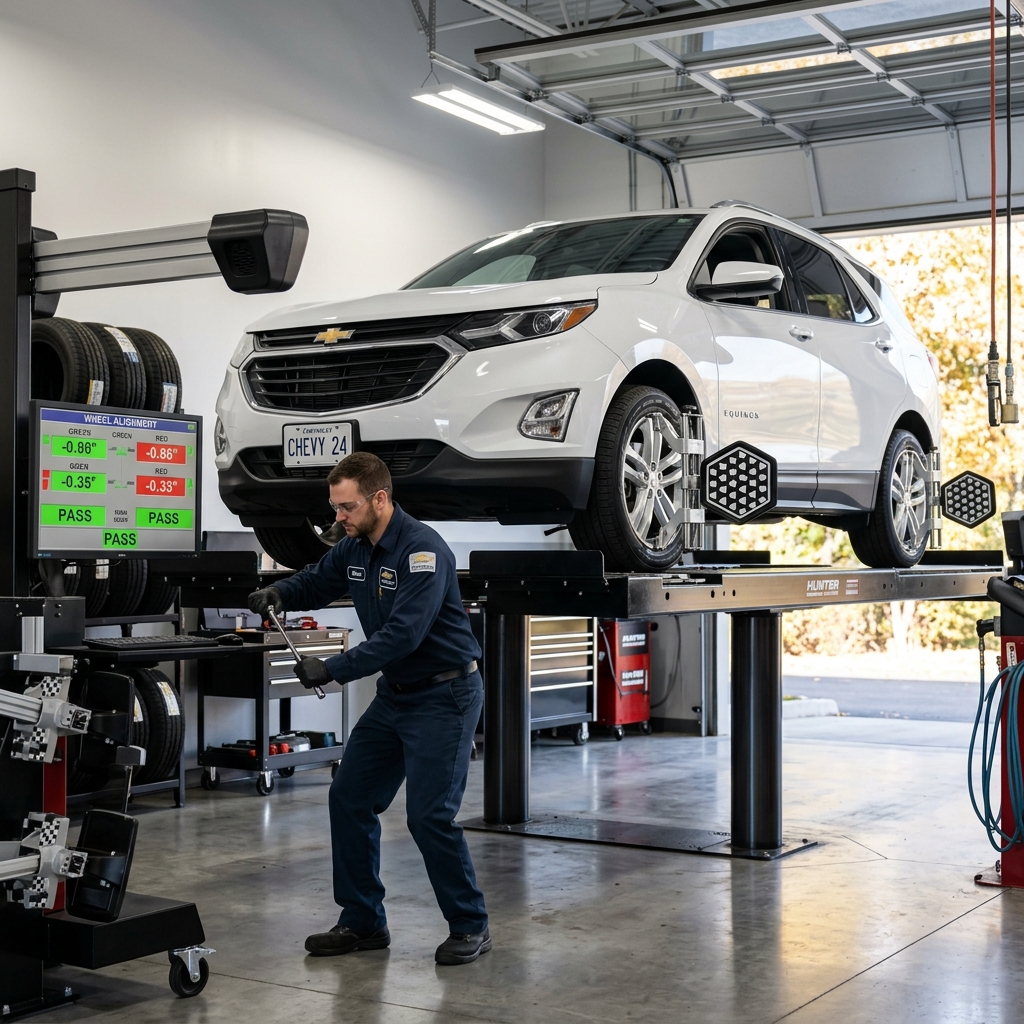
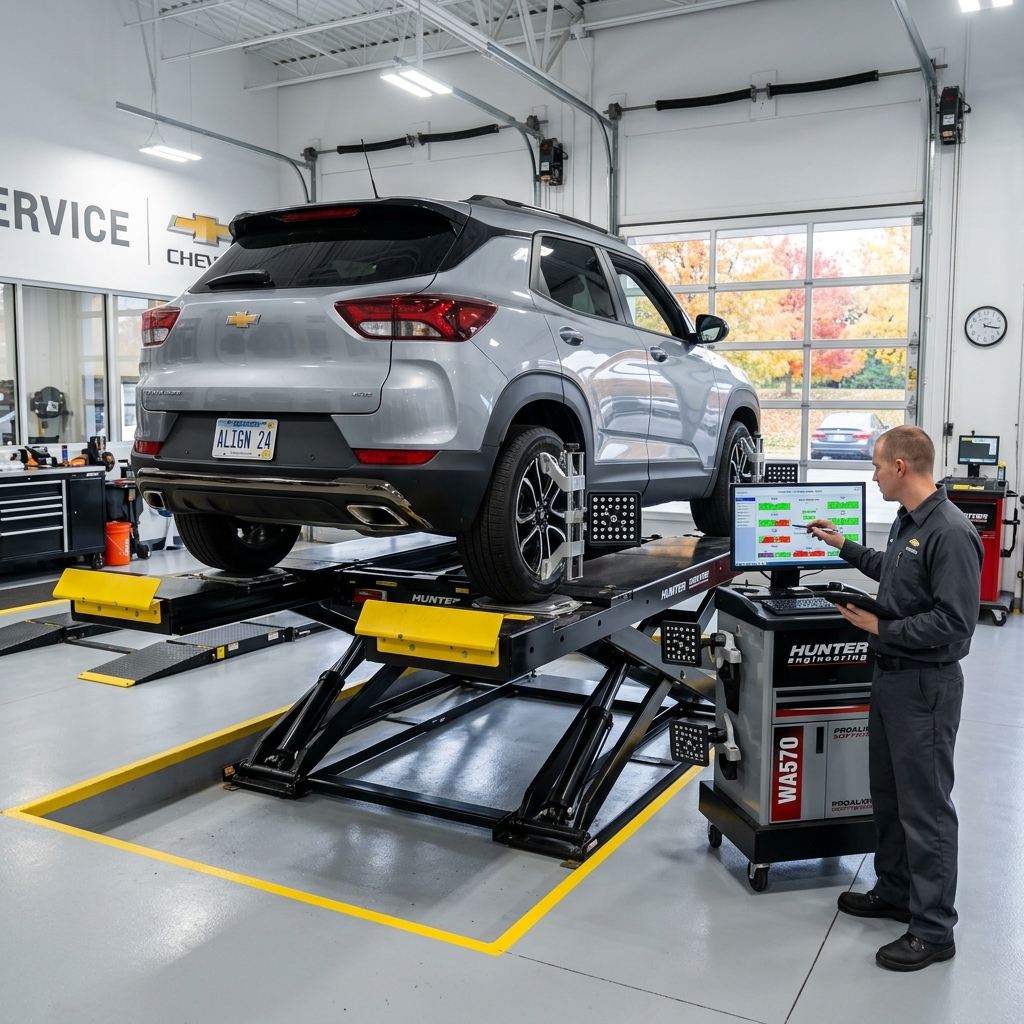
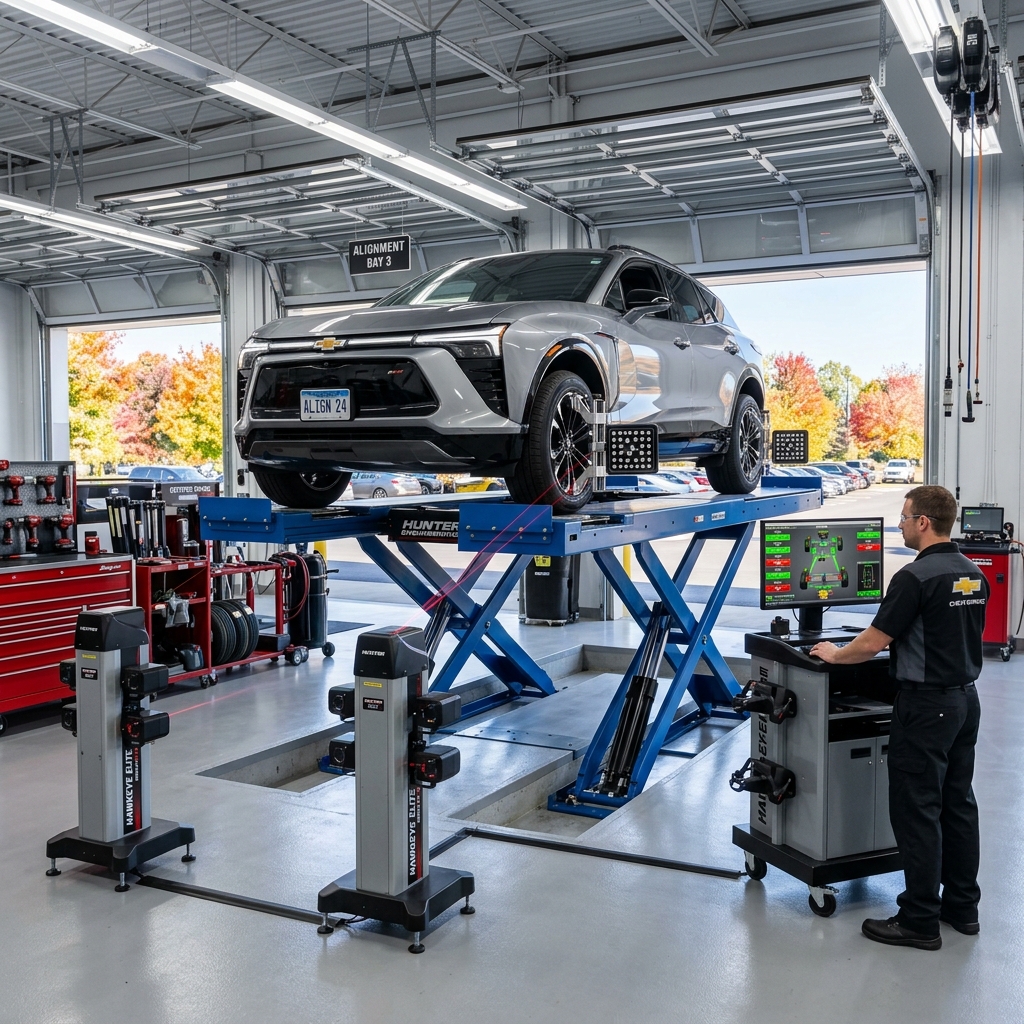
At Hawk Chevrolet of Joliet, located conveniently at 2001 W Jefferson St, Joliet, IL 60435, our factory-certified service facility provides state-of-the-art laser alignment technologies and tailored maintenance packages designed to safeguard your vehicle's handling, tire lifespan, and safety.
How Annual and Lifetime Wheel Alignment Packages Work at Repair Shops
Understanding Package Terms and Structure: When you purchase an annual or lifetime wheel alignment agreement, you are essentially buying an extended service contract specific to chassis geometry. An annual plan usually allows for either unlimited alignments within a 12-month window or up to two scheduled re-check visits per year. Lifetime plans extend this privilege for as long as you maintain ownership of the registered vehicle. Most agreements mandate that alignment checks occur every 6,000 to 12,000 miles—ideally synchronized with your regular oil change and tire rotation schedules. Because modern computerized alignment equipment reads chassis angles down to fractions of a degree, routine checks allow technicians to make subtle adjustments before uneven tread wear patterns become permanent.
Fine Print, Limitations, & Technical Fine Details: While lifetime and multi-year packages offer tremendous savings, vehicle owners should understand key policy nuances before purchasing: • Non-Transferability: Most lifetime alignment warranties are non-transferable and apply strictly to the original purchaser and vehicle VIN. • Modified Suspensions: Aftermarket lift kits, lowering springs, or oversized custom wheels often carry exclusions or require specialized labor surcharges. • Component Wear Exclusion: An alignment package covers alignment labor, but if worn ball joints, tie rods, or control arm bushings prevent proper adjustment, worn hard parts must be replaced before an alignment can be completed successfully. By keeping your steering and suspension components in healthy working order, recurring alignment coverage guarantees maximum mileage from every set of tires.
What Are the Primary Wheel Alignment Angles Checked During a Precision Alignment?
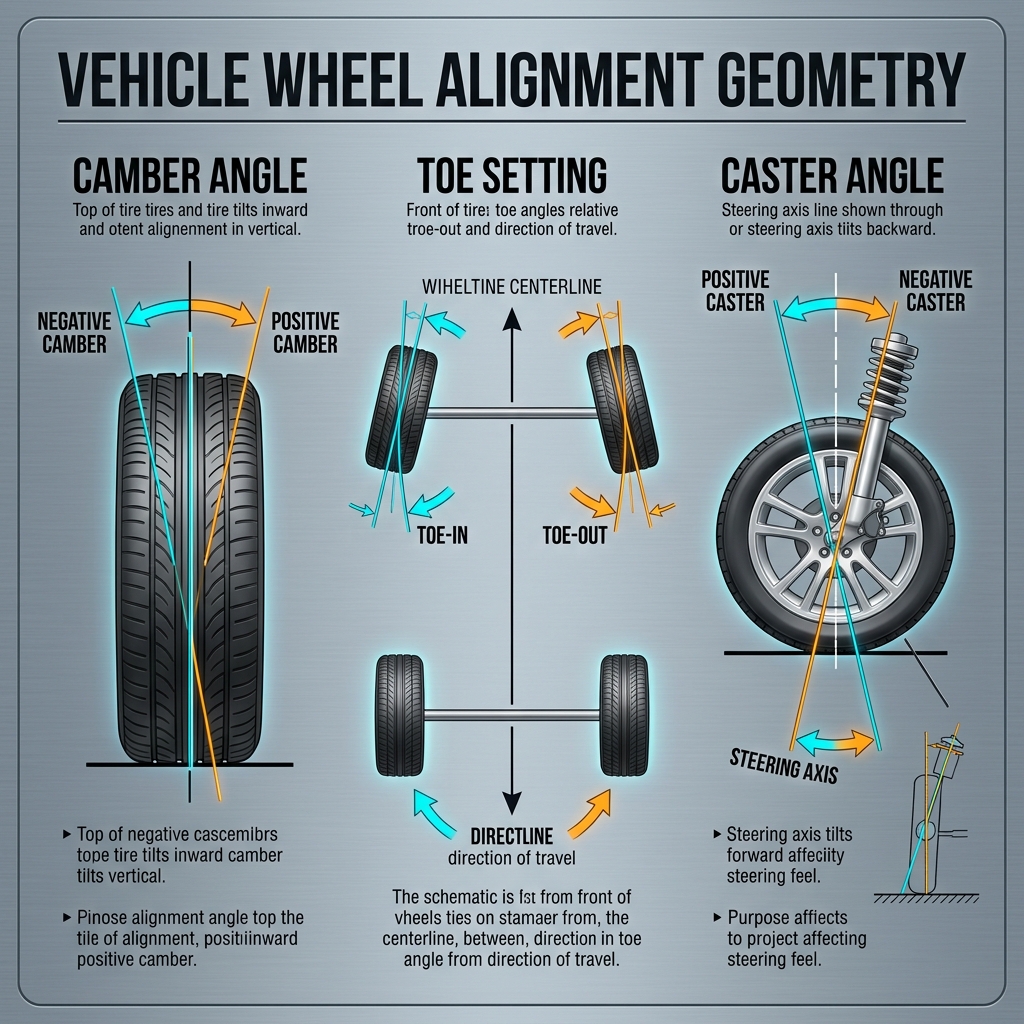
A comprehensive digital wheel alignment measures and adjusts three critical geometric angles: Camber, Caster, and Toe. Proper alignment relies on these three primary measurements being set precisely to original equipment manufacturer (OEM) specifications.
1. Camber Angle
Camber is the inward or outward tilt of the tire when viewed directly from the front of the vehicle. • Negative Camber: Top of the tire tilts inward toward the engine chassis. Excellent for aggressive cornering stability, but excessive negative camber rapidly destroys the inner tire shoulder. • Positive Camber: Top of the tire tilts outward away from the car. Excessive positive camber causes accelerated outer shoulder tire wear. Correct camber ensures an even contact patch across the full tread width under standard driving conditions.
2. Toe Setting
Toe represents the angle at which the tires point inward or outward when viewed directly from above (bird's-eye view). • Toe-In: Front edges of the tires point inward toward each other. High toe-in causes severe outer tread scrubbing. • Toe-Out: Front edges point outward away from each other. High toe-out causes inner edge feathering and rapid tire destruction. Toe misalignment is the single fastest killer of tread depth, literally scrubbing rubber off as you drive straight.
3. Caster Angle
Caster is the forward or backward angle of the steering axis line when viewed from the side of the vehicle. • Positive Caster: Steering axis tilts toward the driver. Enhances high-speed directional stability and auto-centers the steering wheel after completing turns. • Unequal Caster: If caster angles differ significantly between left and right front wheels, the vehicle will pull strongly toward the side with lower positive caster angle.
What Are the Symptoms of Unbalanced Tires Versus Misaligned Wheels?
Drivers often confuse wheel misalignment with tire imbalance because both issues cause ride discomfort and premature tire wear. However, their underlying mechanical causes, diagnostic symptoms, and corrective solutions are distinctly different.
Symptoms of Unbalanced Tires
• Rhythmic Speed-Sensitive Vibration: Steering wheel, seat, or floorboards vibrate at specific speeds (typically between 55 MPH and 70 MPH). • Cupped Wear Patterns: Scalloped dips or scoops worn into the tire tread face due to the tire bouncing down the highway. • Rotational Weight Imbalance: Caused by uneven rubber distribution or missing wheel weights. • Correction Method: Resolved using dynamic high-speed wheel balancers and precision counterweights.
Symptoms of Misaligned Wheels
• Vehicle Pulling or Drifting: Vehicle constantly veers to the left or right when traveling straight on flat road surfaces. • Crooked Steering Wheel: The steering wheel logo is off-center when the vehicle is moving perfectly straight. • Feathered Tread Wear: Smooth wear on one side of tread blocks and sharp edges on the opposite side, felt by sliding your hand across the tread. • Correction Method: Resolved by mechanically adjusting suspension tie rods, eccentric bolts, and struts to OEM specifications.
|
Symptom / Metric
|
Wheel Misalignment
|
Tire Imbalance
|
|
Primary Sensation
|
Vehicle pulls left/right, crooked steering wheel
|
Vibration in steering wheel or seat at 55+ MPH
|
|
Tread Wear Pattern
|
Feathering, single-edge shoulder wear
|
Cupped spots, scalloped patches across tread
|
|
Primary Cause
|
Suspension geometry knocked out of spec
|
Uneven tire/wheel assembly mass distribution
|
|
Fuel Economy Impact
|
High (drag caused by scrub angle)
|
Moderate (vibration loss & rolling friction)
|
Why Precision Wheel Alignment Matters for I-80 and I-55 Fall Commuters
For thousands of motorists commuting daily between Joliet, Shorewood, Plainfield, and Naperville, Interstate 80 and Interstate 55 are vital lifelines. However, these corridors carry heavy freight truck traffic and endure severe Midwest seasonal freeze-thaw cycles, resulting in concrete expansion joints, unexpected surface shifts, and bridge deck irregularities. Navigating these highways twice a day subjects steering systems to thousands of repetitive force impacts weekly.
As autumn arrives in Will and DuPage counties, commuters encounter changing driving hazards: wet fallen leaves, sudden temperature dips impacting cold tire inflation pressure, and early morning frost. Maintaining sharp handling and balanced tire contact is critical when executing high-speed emergency lane changes or emergency stopping in slick conditions.
A slight toe or camber misalignment forces you to constantly make small corrective steering adjustments on long interstate drives. Over a 45-minute commute, this subtle struggle increases driver fatigue, reduces highway confidence, and causes uneven tread scrub. Keeping your vehicle's chassis calibrated at Hawk Chevrolet of Joliet ensures maximum road contact, smooth tracking, and relaxed highway driving.
How Highway Speed on Corridors Like I-80 and I-55 Amplifies Wheel Misalignment Issues
The Physics of High-Speed Drag & Scrub
At 30 MPH around town, a fractional degree of toe-in or toe-out generates minor tire friction. However, at 65 to 70 MPH on I-80 or I-55, kinetic energy increases exponentially. A wheel misaligned by just 1/16th of an inch is equivalent to dragging that tire sideways for approximately 100 feet for every single mile driven! This continuous sideways dragging generates intense thermal friction, breakdown of rubber compounds, and rapid shoulder shredding, turning a $1,000 investment in premium tires into scrap rubber in just 15,000 miles.
Impact on Suspension & Steering Hardware
High-speed travel over bridge deck expansion joints and pavement transitions transfers heavy impact loads through your suspension. When wheels are out of alignment, these impacts do not distribute evenly across control arms and bushings. Instead, force focuses asymmetrical stress on lower ball joints, tie rod ends, wheel bearings, and electronic power steering (EPS) motors. Over time, this leads to premature component slop, costly mechanical failures, and unstable emergency handling.
Why Is Fall the Ideal Season for a Precision Alignment in Northeastern Illinois?
Automotive service experts consistently recommend fall as the strategic time for full wheel alignment and suspension inspections. Preparing your vehicle during autumn provides key safety and financial advantages before winter arrives in Illinois.
Post-Summer Repair
Summer road construction, vacation road trips, and gravel detour roads knock suspension components out of tolerance. Alignment inspections in fall reset your geometry after months of summer driving wear.
Winter Road Prep
On snow, slush, or black ice, maximum tire siping contact is mandatory. Proper camber and toe alignment ensure your tire tread lays flat, maximizing traction when stopping on slick winter roads.
Tire Investment Guard
If you are purchasing new all-season or winter tires for the upcoming cold weather, performing an alignment immediately protects your new tire investment from instant shoulder scrubbing.
Comparing Single Alignment Services vs. Multi-Year Alignment Plans
Single Alignment Service
• Average Cost:$119 - $169 per standalone service. • Best For: Drivers who lease vehicles for short periods (12-24 months) or log under 7,500 miles annually. • Drawback: Paying per visit creates a psychological barrier; drivers tend to delay alignment checks until uneven tire wear is already severe and irreversible.
Multi-Year / Lifetime Alignment Plan
• Average Cost:$229 - $299 upfront single fee. • Best For: Long-term owners, daily I-80/I-55 commuters logging 12,000+ miles per year, and families with multiple vehicles. • Break-Even Point: Pays for itself by your 2nd realignment visit. Encourages proactive bi-annual checks that maximize tire life.
When calculated over a typical 5-year vehicle ownership cycle, a multi-year alignment plan can save commuters over $400 in alignment labor alone—while adding up to 15,000 miles of usable tread life to premium tires.
Key Factors That Knock Your Wheels Out of Alignment on Local Roadways
Potholes & Pavement Gaps
Hitting deep potholes at speed delivers sharp upward shock loads that instantly shift eccentric camber bolts and bend steering tie rod ends.
Curb Impacts & Parking Bumps
Accidentally clipping concrete parking stops or aggressive curb impacts during tight urban turns twists front control arm bushings out of alignment.
Railroad Crossings & Wear
Rough industrial railroad tracks across Will County, combined with natural rubber bushing aging, cause suspension angles to drift gradually over time.
How Proper Alignment Extends Tire Life and Maximizes Fuel Efficiency
1. Minimizing Rolling Resistance for Better Fuel Economy: When tires point in slightly different directions due to bad toe angles, engine power is wasted forcing the tires to drag sideways. This friction increases rolling resistance, requiring more fuel to maintain 70 MPH highway speeds. Restoring correct alignment can improve fuel economy by up to 2% to 7%, saving real money at the pump every month.
2. Eliminating Irreversible Tread Scrub: Modern radial tires feature intricate tread siping and acoustic noise-canceling blocks. Uneven alignment concentrates full vehicle weight onto narrow tread edges, causing uneven shoulder cupping and severe road hum noise. Proper alignment ensures full contact patch distribution across all four tires.
3. Supporting Advanced Driver Assistance Systems (ADAS): Modern vehicles equipped with Lane Keep Assist, Automatic Emergency Braking, and Adaptive Cruise Control rely on accurate wheel alignment and steering angle sensors (SAS). Proper physical wheel alignment guarantees these safety systems receive accurate directional data.
What to Expect During a Professional Certified Wheel Alignment Service
Step-by-Step Professional Alignment Process: 1. Pre-Alignment Suspension Inspection: Certified technicians inspect ball joints, tie rods, control arms, sway bar links, and tire air pressure. 2. Laser Target Attachment: High-definition optical targets attach to all four wheels without touching painted wheel surfaces. 3. 3D Digital Scanning: Computerized imaging measures camber, caster, toe, thrust angle, and steering axis inclination down to hundredths of a degree. 4. Precision Mechanical Adjustment: Technicians adjust turnbuckles, eccentric cams, and shim placements to hit exact factory specs.
Calibration & Quality Assurance: 5. Steering Angle Sensor (SAS) Reset: Electronic calibration resets steering position sensors for modern traction control and lane maintenance systems. 6. Printout Verification & Road Test: A detailed before-and-after specification printout is verified, followed by a physical road test to confirm straight tracking and centered steering wheel return.
Alignment Package Checklist: What to Ask Before Buying a Plan
Coverage & Limits
• Is there a mandatory waiting period between visits? • How many re-alignments are permitted per calendar year? • Does coverage apply to both 2-wheel (front-end) and 4-wheel alignments?
Vehicle Compatibility
• Does the plan cover vehicles with aftermarket wheels or lowered/lifted suspension? • Are Steering Angle Sensor (SAS) resets included in labor costs?
Inspections & Warranty
• Is a complimentary multi-point steering and suspension check included? • What happens if worn suspension parts prevent alignment adjustment?
Schedule Your Precision Wheel Alignment Service at Hawk Chevrolet of Joliet Today
Don't let uneven roads, highway expansion joints, or sudden autumn temperature drops destroy your expensive tire set or compromise your highway commuting safety. Trust the factory-trained certified technicians at Hawk Chevrolet of Joliet to restore your vehicle's handling precision, directional stability, and fuel economy.