Northern Illinois Fall Vehicle Readiness Key Takeaways: Protecting Your Battery and Tires Before Winter Hits
Early fall—specifically September through October—is the critical maintenance window for drivers across Northern Illinois to thoroughly inspect their vehicle's battery and tires. Scorching summer temperatures accelerate internal battery grid corrosion and electrolyte evaporation, leaving chemical components degraded long before the first sub-zero morning. As ambient temperatures drop, a battery's Cold Cranking Amps (CCA) capacity can decrease by up to 35% at 32°F and 50% at 0°F, creating a perfect storm for sudden start failures. Simultaneously, tire pressure declines by 1 to 2 PSI for every 10°F drop in outside temperature. Compounding this pressure loss, standard all-season tire tread compounds begin to harden and lose flexibility at 45°F, dramatically increasing stopping distances on wet autumn foliage and early morning frost across major thoroughfares like I-80, I-55, and Route 59. Proactive testing and precision adjustments at Schedule Your Service Today ensure seamless seasonal transitions and prevent expensive emergency towing situations.
Why Northern Illinois Early Fall Weather Demands Immediate Vehicle Inspection
Northern Illinois weather transitions rapidly from muggy 80°F late-summer afternoons to sharp 30°F frosts in the river valleys. Microclimates surrounding the Des Plaines and DuPage Rivers create localized pockets of high humidity followed by swift temperature drops, which promote rapid battery terminal corrosion and accelerated rubber oxidation. Waiting until the first major snowstorm in Will or DuPage County leads to massive service center bottlenecks, long tow truck wait times, and hazardous roadside breakdowns. Early autumn inspections catch minor voltage drops and uneven tire wear patterns while weather conditions remain mild and service appointments are readily available.
When Should Joliet, IL Drivers Load-Test Car Batteries and What Values Signal Imminent Failure?
Drivers in Joliet, Plainfield, and Naperville should conduct a professional carbon-pile load test on any battery that is over three years old, or immediately if experiencing slow engine cranks, flickering headlights, or dashboard warnings. Resting voltage is the first critical indicator: a fully charged, healthy 12V battery displays 12.6V to 12.8V. A reading of 12.4V indicates a 25% discharge, while anything below 12.2V signals a compromised unit vulnerable to freeze failure.
Cold Cranking Amps (CCA) represent the battery's ability to turn over a cold engine at 0°F for 30 seconds while maintaining at least 7.2 volts. During diagnostic load testing, if the measured CCA output drops below 80% of the original factory rating stamped on the top label, the battery is on the verge of sudden chemical collapse. Replacing an exhausted unit early using Order Genuine Chevrolet Parts safeguards your morning commute against unexpected cold-weather failure.
How Much Does a Car Battery Replacement and Professional Alternator Test Cost in Northern Illinois?
Diagnostic Testing A comprehensive battery load test and alternator charging system check typically ranges from complimentary (as part of a multi-point inspection) to $20–$50. This test measures diode ripple and voltage regulation under load.
Replacement Pricing Standard flooded lead-acid batteries cost between $150 and $220 installed. Advanced Absorbed Glass Mat (AGM) units, required for modern start-stop vehicles, range from $220 to $320 including registration.
Long-Term Savings Proactive early fall replacement avoids unexpected $150+ flatbed towing fees, missed work hours, and emergency service surcharges during extreme winter freeze spikes in Will County.
At What Temperature Do All-Season Tires Lose Flexibility and Traction in Illinois?
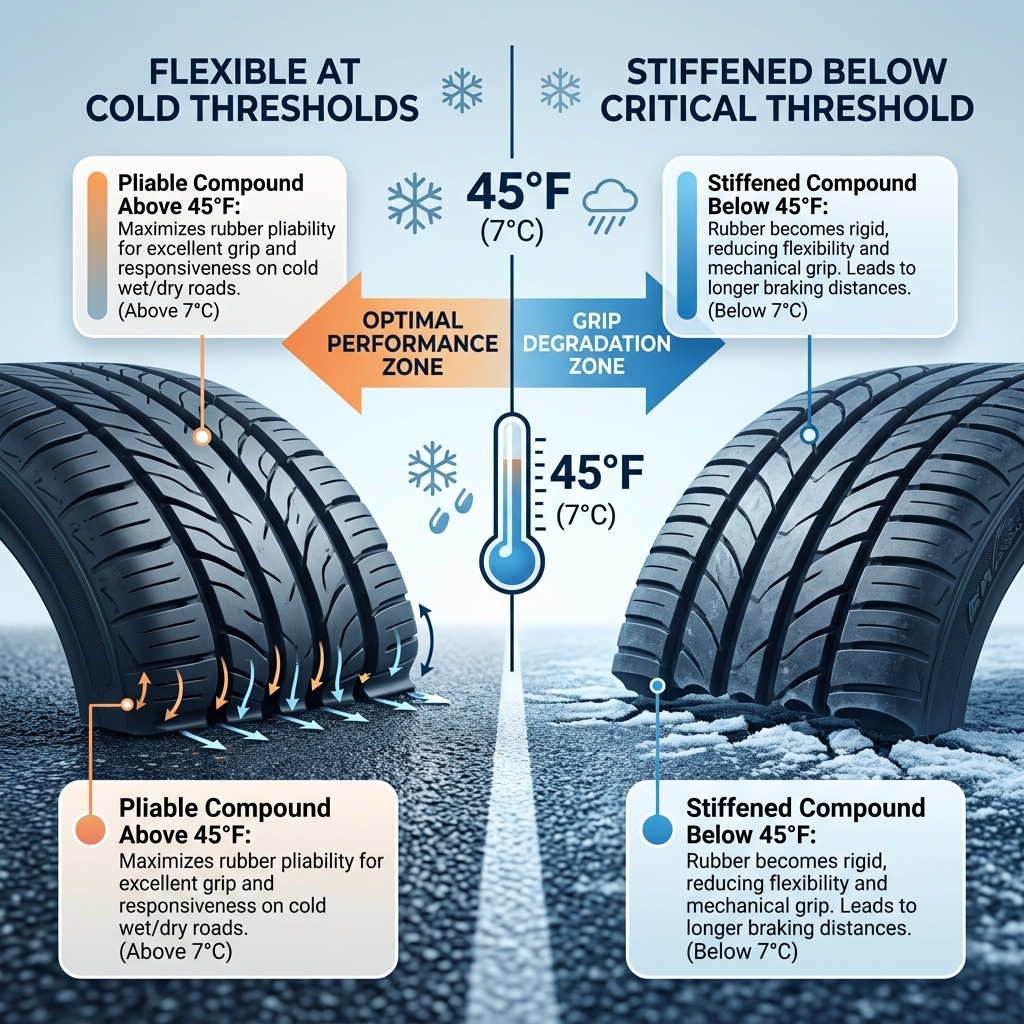
The critical temperature threshold for all-season tire compounds is 45°F (7°C). Above this temperature, the rubber compound remains pliable, gripping asphalt effectively. Once ambient temperatures dip below 45°F, the chemical polymers inside standard all-season rubber undergo glass transition, causing the tread to stiffen dramatically. This hardening effect severely reduces mechanical grip, extending emergency stopping distances by up to 20% on dry cold pavement and up to 35% on damp morning roadways. Combined with wet fallen leaves and bridge deck frost, hardened all-season rubber can lead to sudden loss of steering control during early morning suburban commutes.
Target PSI and Tread Inspection Schedules for Joliet, Plainfield, and Naperville Commuters
Door Placard Target PSI Always inflate tires to the cold inflation pressure specified on the driver-side B-pillar door placard (typically 32–36 PSI for passenger cars and crossovers). Never rely on the max pressure stamped on the tire sidewall.
Bi-Weekly Fall Audits Check tire pressure every two weeks before driving when tires are cold. Because pressure drops 1–2 PSI per 10°F decrease, autumn temperature swings can deflate tires by 4–6 PSI rapidly.
Wear Pattern Analysis Inspect inner and outer edges for uneven shoulder wear (misalignment), center tread wear (over-inflation), or cupping (worn struts/shocks) before high-speed highway commuting.
How Much Does a Set of Winter Tires Cost Compared to Maintaining All-Season Tires?
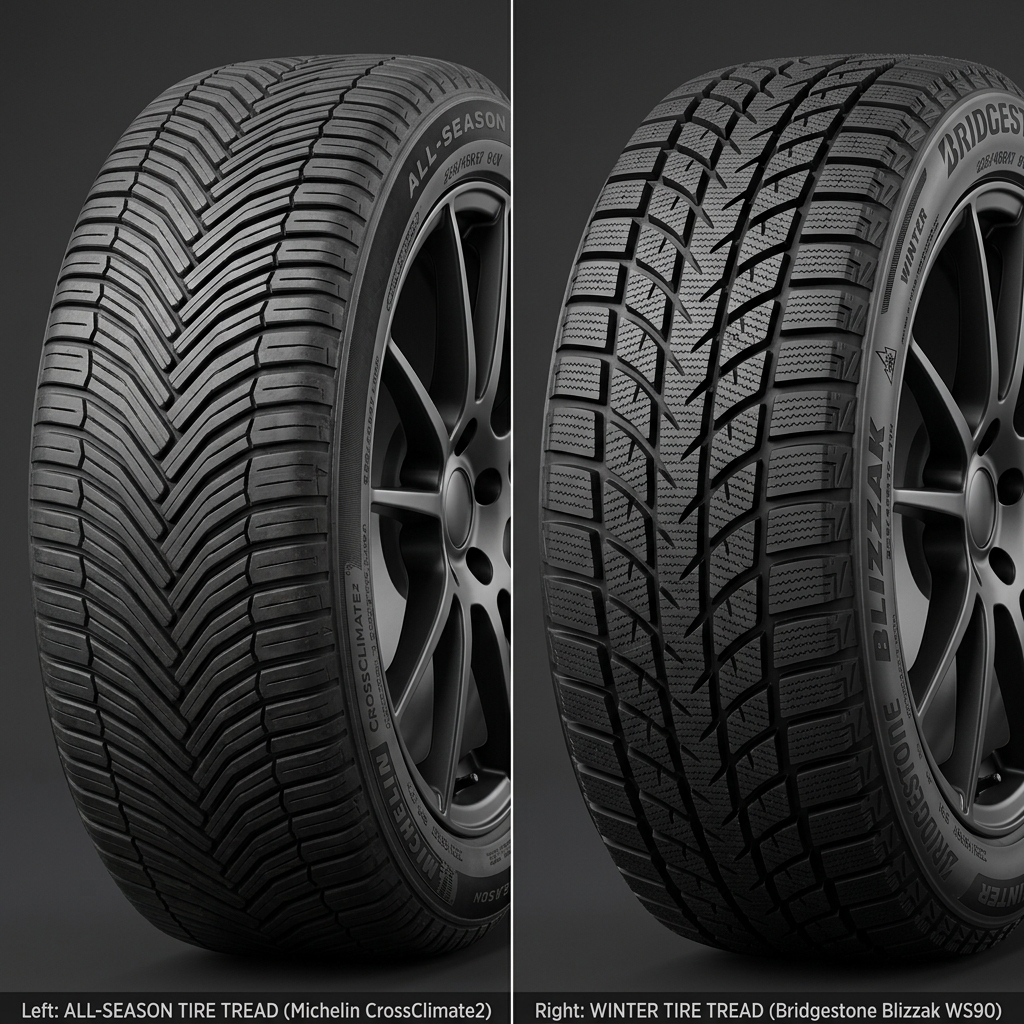
A dedicated set of four winter tires ranges from $600 to $1,200 depending on wheel diameter and vehicle class. While this initial purchase represents a standalone investment, alternating between seasonal tire sets doubles the lifespan of both pairs, neutralizing long-term mileage costs. Winter tire compounds feature high silica concentrations and 3D micro-sipes designed specifically to bite into ice and slush below 45°F. Preventing a single low-speed winter fender-bender or ditch slide easily offsets the cost of dedicated winter rubber. Drivers considering upgrading their vehicle for enhanced AWD capability can also Browse New Inventory to explore modern traction technologies.
Step-by-Step Early Fall Tire Tread Depth Assessment Using the Quarter and Penny Tests
The Penny Test (2/32") Insert a penny head-first into tread grooves. If Lincoln's entire head remains visible, tread depth is at or below 2/32". This is the legal minimum threshold, offering almost zero traction in rain or slush.
The Quarter Test (4/32") Insert a quarter head-first into tread grooves. If the top of Washington's head is covered, tread depth is at least 4/32". This is the true safety baseline for navigating wet fall leaves and winter snow slush.
Rotation & Replacement If depth is between 4/32" and 6/32", schedule rotation or replacement. If looking for dependable pre-owned vehicles with fresh rubber, local drivers can Browse Used Inventory today.
Preparing Your Vehicle for I-80, I-55, and Route 59 Commutes Across Will and DuPage Counties
High-speed commuter corridors across Will and DuPage Counties—including Interstate 80, Interstate 55, and Route 59—present severe stress tests for vehicle electrical systems and tires. River valley bridge decks over the Des Plaines and DuPage Rivers freeze significantly faster than surrounding roadways, creating isolated black ice patches on October mornings. Furthermore, heavy bumper-to-bumper stop-and-go traffic along these routes keeps engine RPMs low, limiting alternator output while high-draw accessories (defrosters, seat heaters, headlights) run continuously. A compromised battery will quickly drain under these conditions, risking a sudden engine stall in high-speed travel lanes.
Essential Early Fall Vehicle Readiness Checklist Beyond Batteries and Tires
Comprehensive seasonal preparation extends beyond tires and charging systems. Inspecting secondary components in early autumn prevents minor mechanical issues from becoming major winter hazards.
Component
Inspection Criteria
Recommended Action
Wiper Blades
Check for rubber cracking, chatter, or streaking
Replace with heavy-duty beam blades for ice resistance
Washer Fluid
Verify freeze rating of current fluid in reservoir
Drain summer fluid; fill with -20°F rated de-icing washer fluid
Engine Coolant
Test glycol concentration with a refractometer
Ensure 50/50 mixture ratio protecting down to -34°F
Drive Belts & Hoses
Examine for glazing, micro-cracks, or spongy softness
Replace worn serpentine belts before cold contraction stress
Emergency Trunk Kit
Verify presence of essential safety supplies
Pack jumper cables, flashlight, blanket, scraper, and traction sand
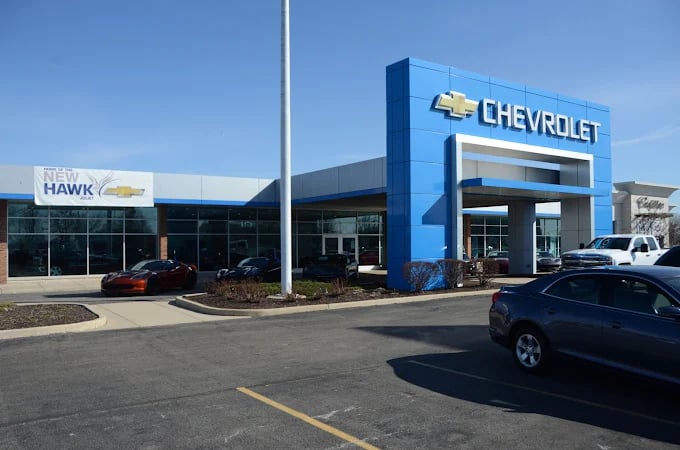
Schedule Fall Maintenance at Hawk Chevrolet of Joliet for Certified Peace of Mind
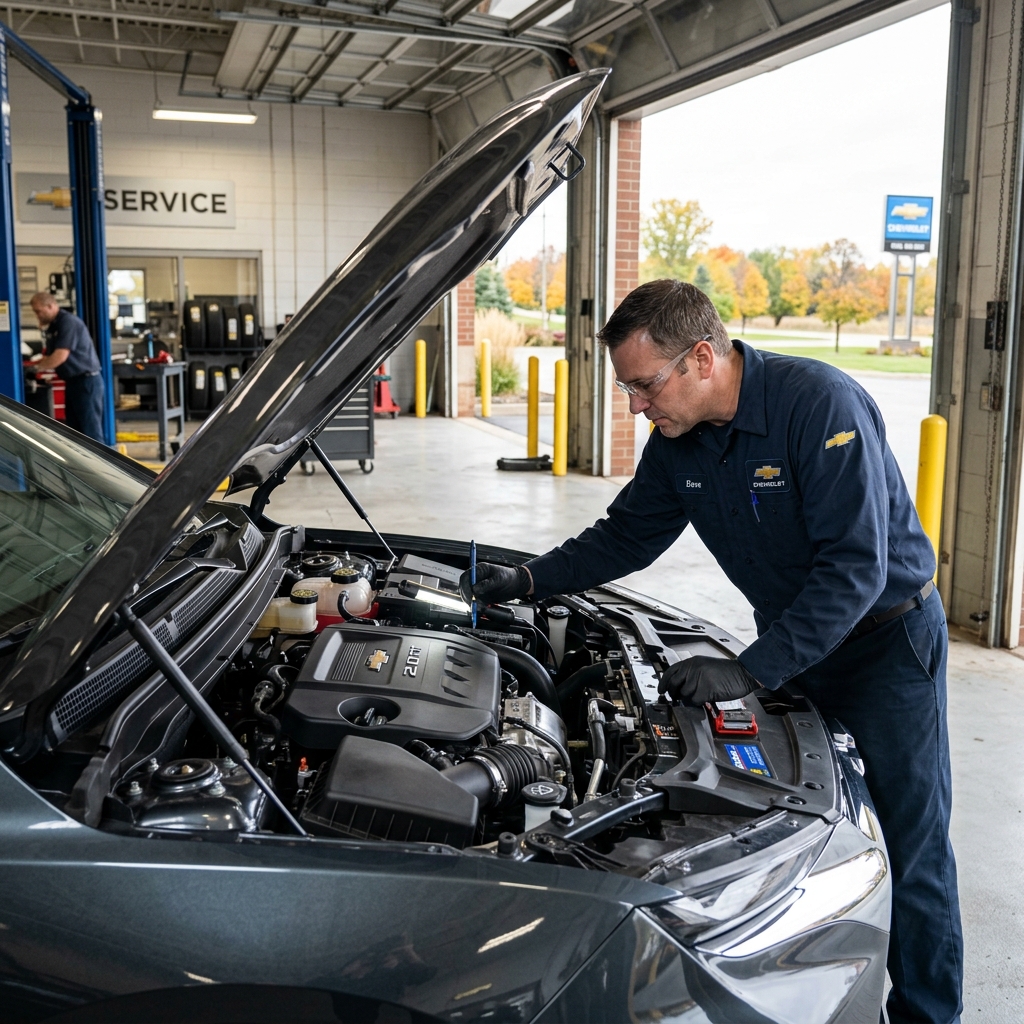
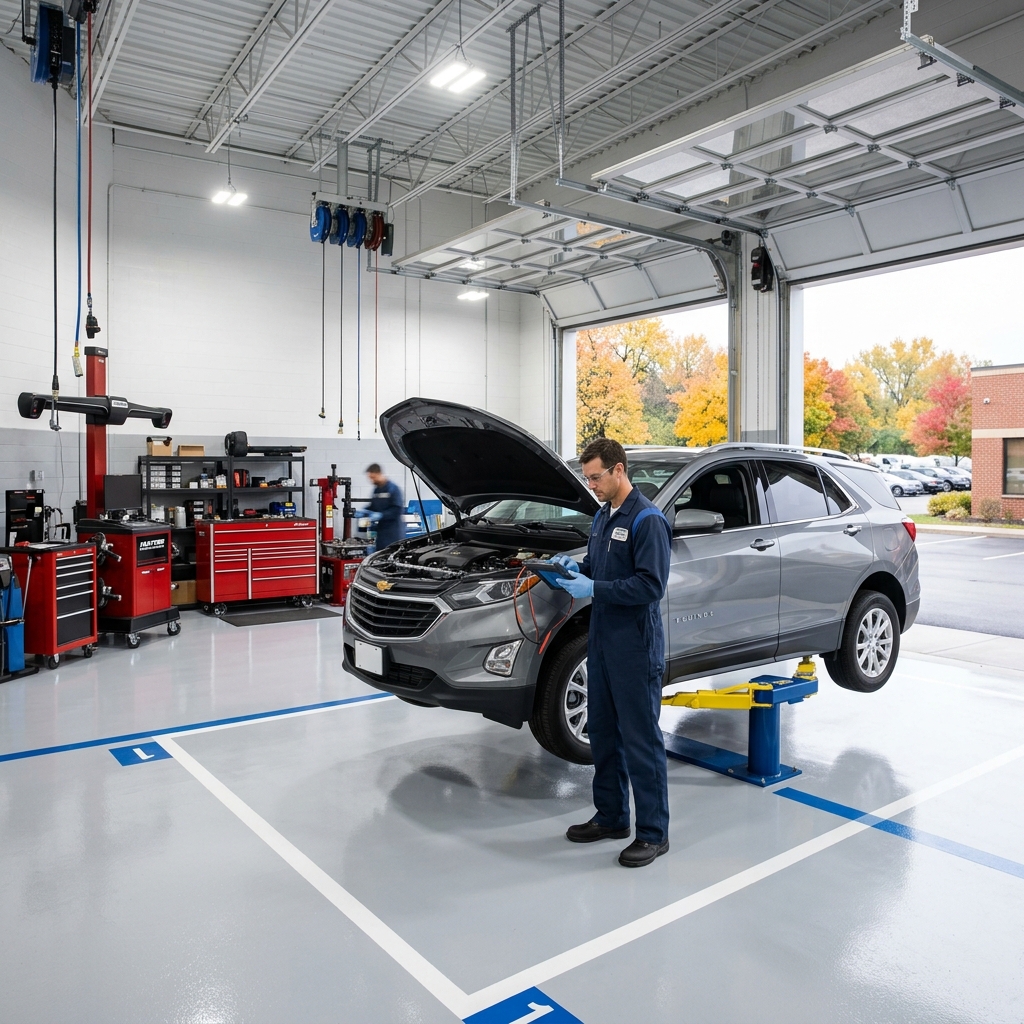
Hawk Chevrolet of Joliet provides factory-certified GM service tailored to Northern Illinois driving conditions. Our state-of-the-art facility features digital battery diagnostic analyzers and computerized laser tread depth scanners to deliver exact, transparent health reports on your vehicle. Utilizing online scheduling, seasonal maintenance rebates, and genuine OEM parts, our team makes autumn vehicle readiness effortless. If you are considering transitioning to a newer vehicle with modern cold-weather comfort features, you can Value Your Trade online or Get Pre-Approved for Financing before visiting our showroom.
Northern Illinois Early Fall Car Care FAQ: Quick Answers for Local Drivers
Why does my TPMS light come on during autumn mornings? Tire pressure drops roughly 1 PSI for every 10°F drop in ambient temperature. Cold overnight temperatures contract air inside the tire, triggering the warning light until driving warms the tire or air is added.
How long do car batteries typically last in Joliet, IL? Due to harsh temperature swings between summer heat and winter freezing, automotive batteries in Northern Illinois average a 3 to 5 year lifespan. Load testing every autumn after year three is highly recommended.
What is the best month to get pre-winter service done? Late September through October is ideal. This window allows drivers to fix battery or tire deficiencies before freeze events begin while avoiding peak pre-storm service center rushes in November.
Protect Your Investment Before the First Frost: Visit Hawk Chevrolet of Joliet
Do not wait for sub-zero weather to reveal a weak battery or worn tires. Protect your passengers and ensure dependable commuting across Joliet, Plainfield, and Naperville by scheduling your comprehensive early fall vehicle readiness inspection today. Visit our dealership located at 2001 W Jefferson St, Joliet, IL 60435. You can easily Get Directions to Hawk Chevrolet of Joliet or Call us at (815) 472-8001 to speak directly with a certified service advisor.